 flip
flipRisotto alla Milanese
Risotto alla Milanese
Why this dish? Verdi spent his theatre life between Milan and La Scala, where he created *Nabucco* and *Otello*. Saffron risotto, golden yellow, is THE Milanese dish that every opera man ate between rehearsals — simple, nourishing, no fuss, exactly what he liked.
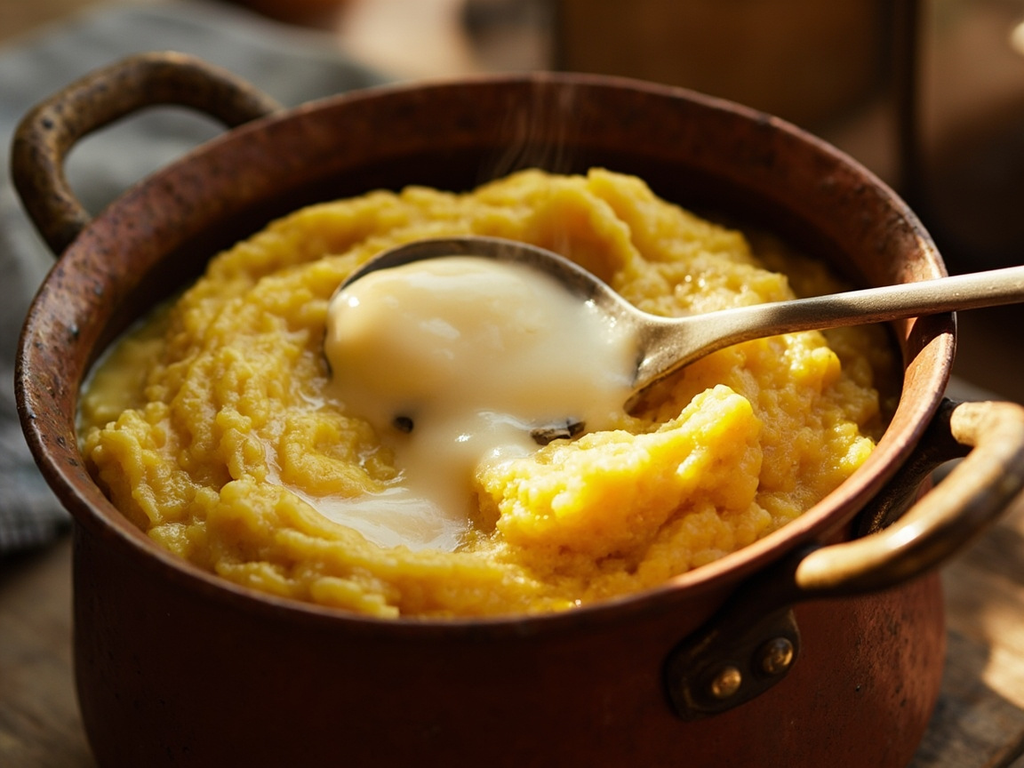
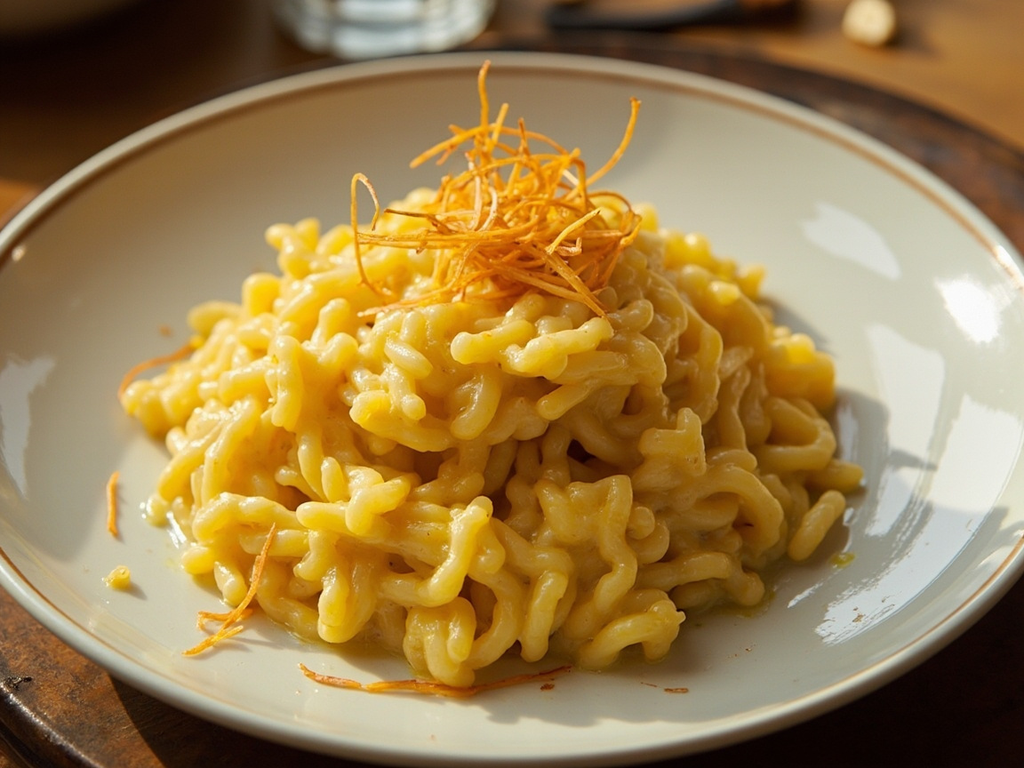
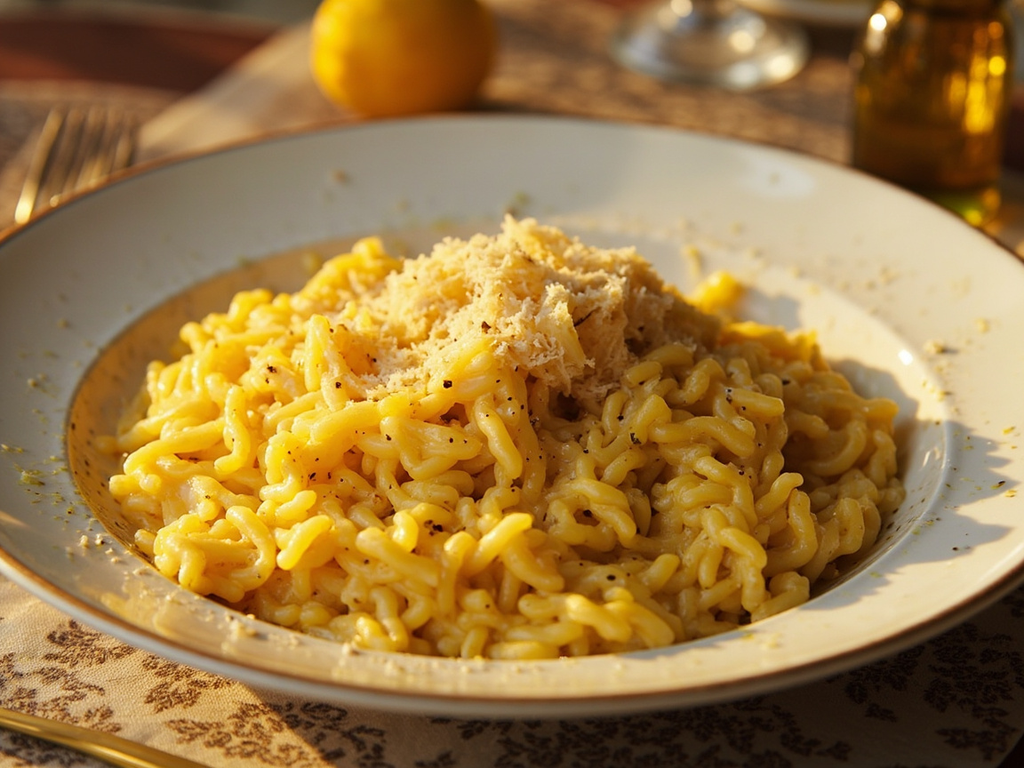
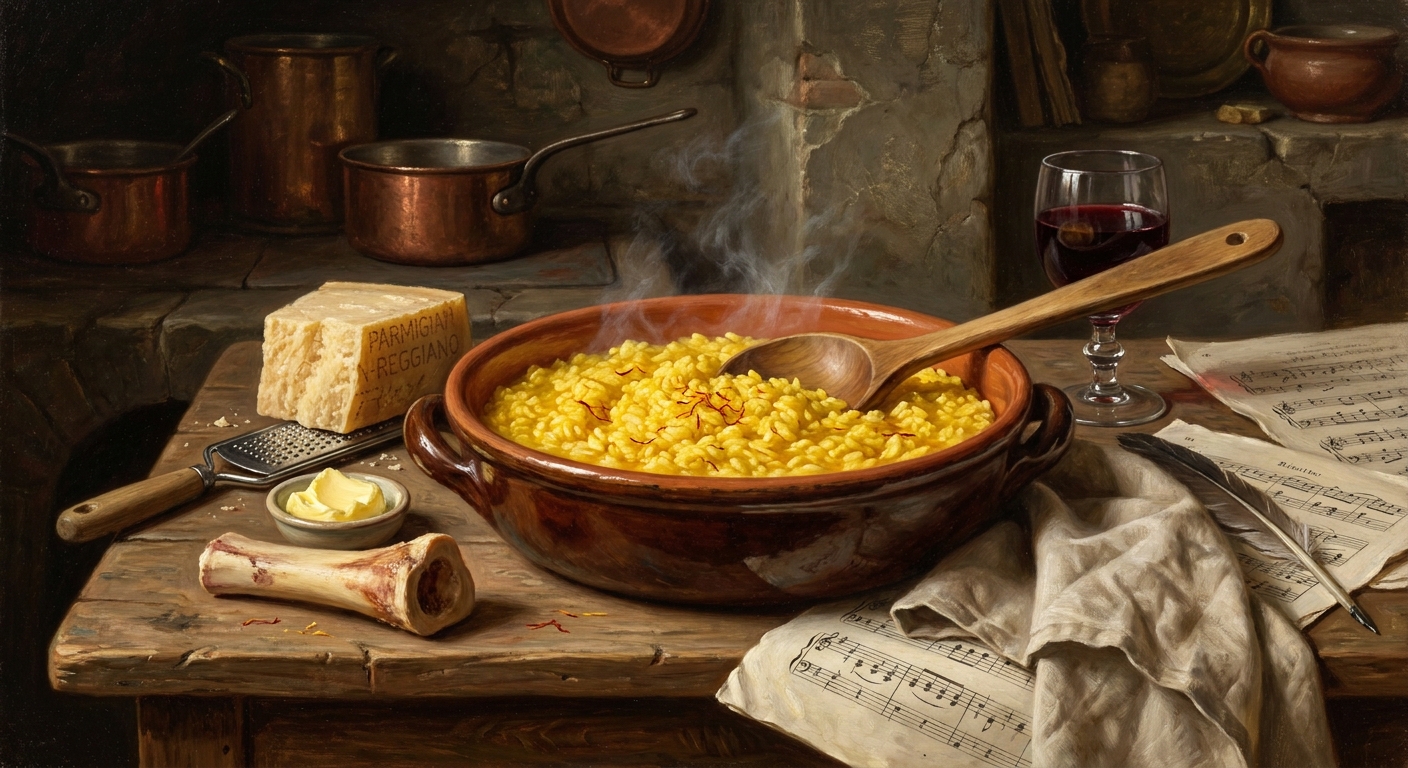
A creamy rice tinted gold by saffron, bound with butter and Parmigiano. Comforting, golden, the everyday dish of a busy Milanese.
Here, sit down — I have no time for banquets. At La Scala, between two fits of rage with the singers, this is what they brought me: rice dyed gold by saffron, butter, and our own cheese grated over it by the handful. You stir, you stir tirelessly, as you lead an orchestra — if you let go of the spoon, everything is ruined. Eat it hot, and leave the frills to the salons.
- •Rice from Lombardy — two handfuls per guest (base)
- •Saffron threads — a pinch (color and aroma)
- •Butter — a good knob (binding)
- •Beef marrow — a piece (richness (old-fashioned way))
- •Meat broth — as needed (cooking)
- •Parmigiano-Reggiano — as much as you like (umami)
Risotto alla Milanese
A creamy rice tinted gold by saffron, bound with butter and Parmigiano. Comforting, golden, the everyday dish of a busy Milanese.
Why this dish? Verdi spent his theatre life between Milan and La Scala, where he created *Nabucco* and *Otello*. Saffron risotto, golden yellow, is THE Milanese dish that every opera man ate between rehearsals — simple, nourishing, no fuss, exactly what he liked.
Here, sit down — I have no time for banquets. At La Scala, between two fits of rage with the singers, this is what they brought me: rice dyed gold by saffron, butter, and our own cheese grated over it by the handful. You stir, you stir tirelessly, as you lead an orchestra — if you let go of the spoon, everything is ruined. Eat it hot, and leave the frills to the salons.
Ingredients (period version)
- Rice from Lombardy — two handfuls per guest (base)
- Saffron threads — a pinch (color and aroma)
- Butter — a good knob (binding)
- Beef marrow — a piece (richness (old-fashioned way))
- Meat broth — as needed (cooking)
- Parmigiano-Reggiano — as much as you like (umami)
Ingredients
- Risotto rice (Carnaroli or Arborio) — 320 g (base)
- Saffron threads — 1 g (1 sachet) (color and aroma)
- Butter — 60 g (binding)
- Onion — 1 small (base)
- Hot chicken or beef broth — 1.2 L (cooking)
- Grated Parmigiano-Reggiano — 80 g (umami)
- Dry white wine — 1 glass (acidity)
Method
- Melt half the butter and gently fry the finely chopped onion until translucent.
- Add the rice, toast for 2 minutes while stirring, then deglaze with white wine.
- Add the hot broth ladle by ladle, stirring continuously, for about 17-18 minutes.
- Halfway through, dissolve the saffron in a ladle of broth and add it.
- Remove from heat, bind (*mantecare*) with the remaining butter and Parmigiano. Cover for 2 minutes and serve.
How it was made : In the 19th century, risotto was enriched with beef marrow, now omitted. Saffron, imported and precious, signified the wealthy tables of Milan; its golden color made the dish famous.
The contemporary twist : Serve mounded in a ring and place a shaving of 36-month-aged Parmigiano in the center — 'the Maestro's golden opening'.
Sources : Pellegrino Artusi, *La scienza in cucina e l'arte di mangiar bene*, 1891
Giuseppe Verdi · Charactorium