 Flip the card
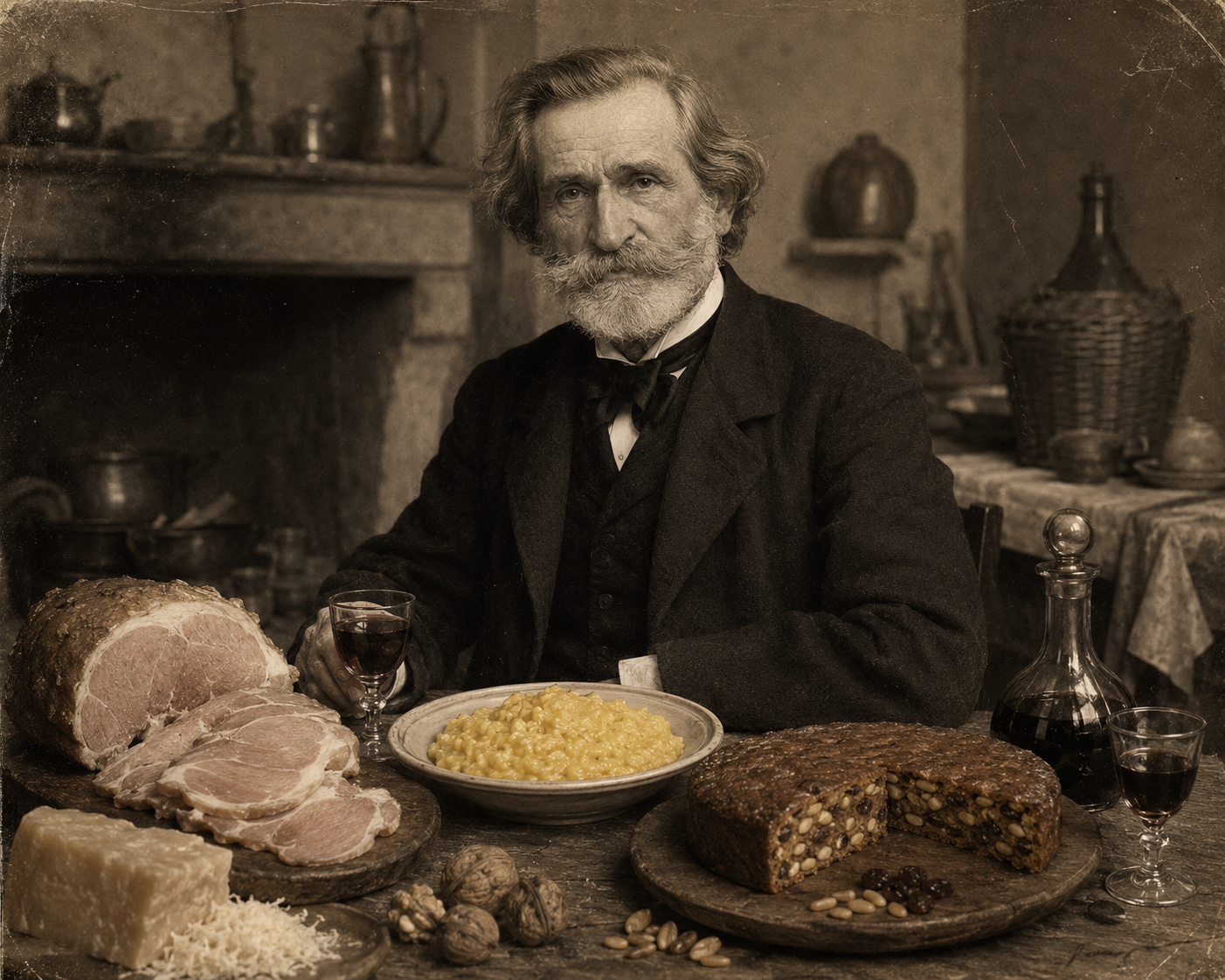
Giuseppe Verdi at the table
1813 — 1901
On the menu
The Lunch of the Bassa Parmense
The peasant-bourgeois meal of the Po plain as served at Verdi's table: you start with *salumi* (cured meats) and a chunk of Parmigiano, then a comforting *primo* (rice or stuffed pasta in broth), followed by a farm meat, and end with a dense, keepable *dolce*. All washed down with wine produced on the Sant'Agata estate. No French-style 'starter-main-dessert' order: *salumi* → *primo* → *secondo* → *dolce*, around the family table.
Signature : The Cured Pig of the Bassa and Parmigiano-Reggiano
The signature of Verdi's table lies in the salted, aged pork of the damp plain between Parma and the Po — *spalla*, *culatello* — and the Parmigiano-Reggiano grated over everything. The Maestro proudly sent them by post to his friends: it was the pride of his land, not a salon luxury.
click to flip back
Giuseppe Verdi at the table
1813 — 1901
4 period recipes
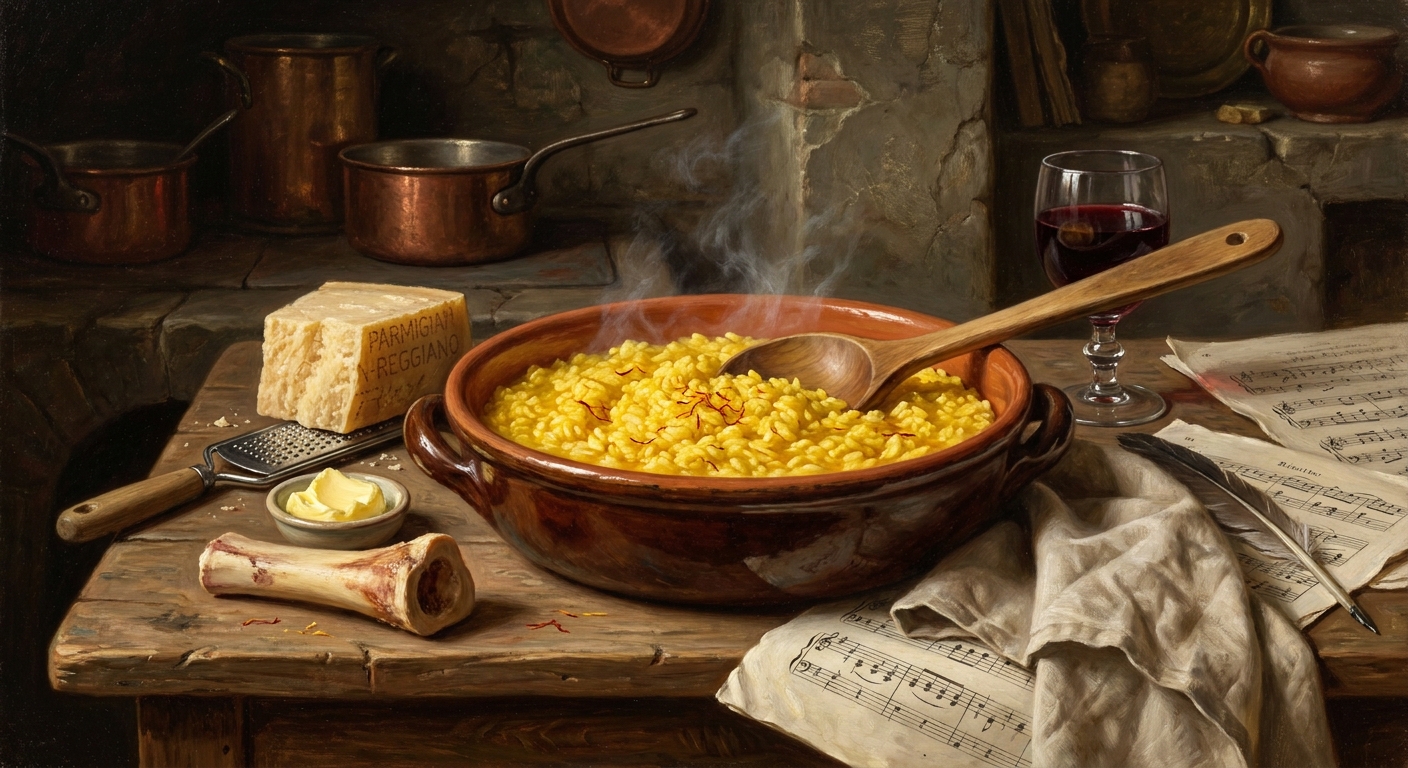 Everyday
Risotto alla Milanese
*Primo* — the rice dish that opens the real meal
🧂 🍄· 35 min
View the recipe
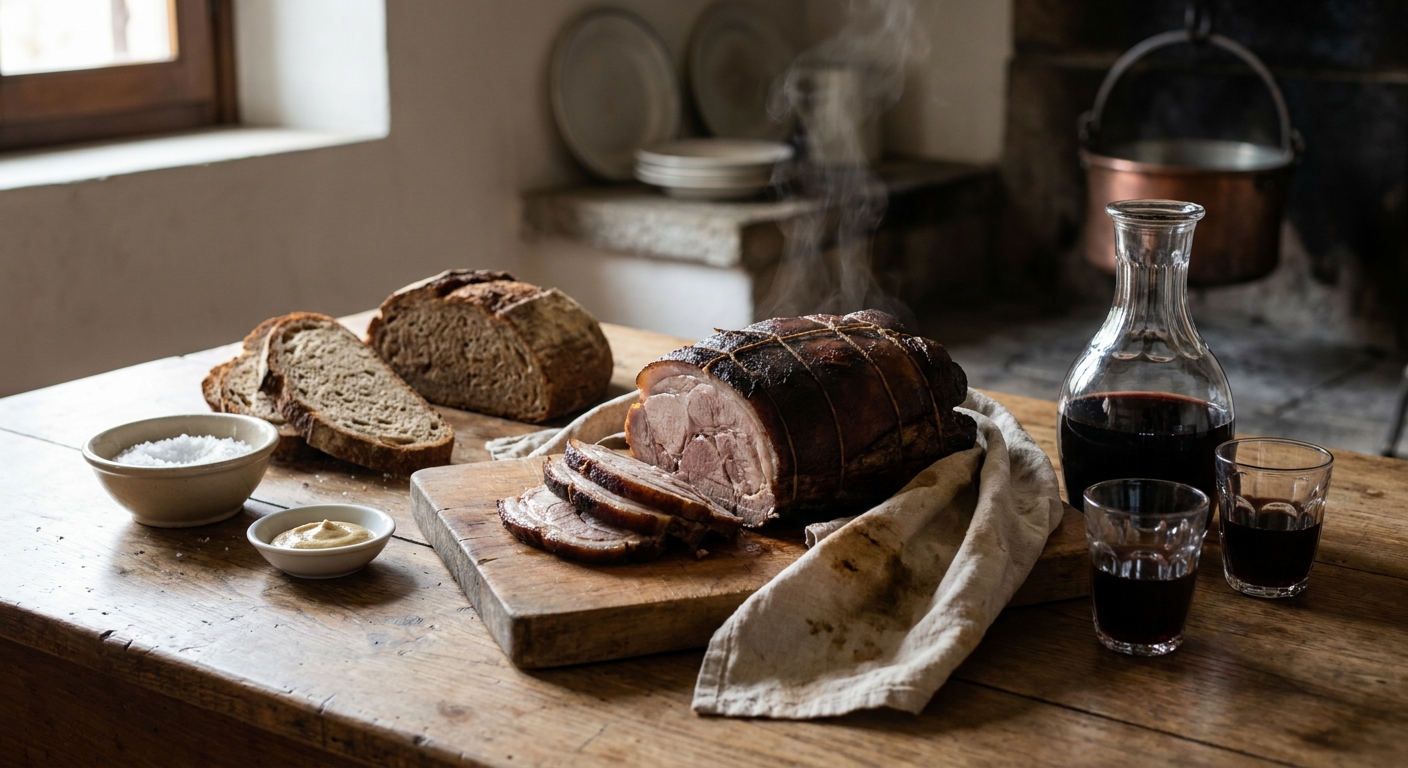 Festive
Spalla Cotta di San Secondo
*Salume cotto* — the hot cured meat that opens the festive meal
🧂 🍄 🫙· 4 h (plus curing)
View the recipe
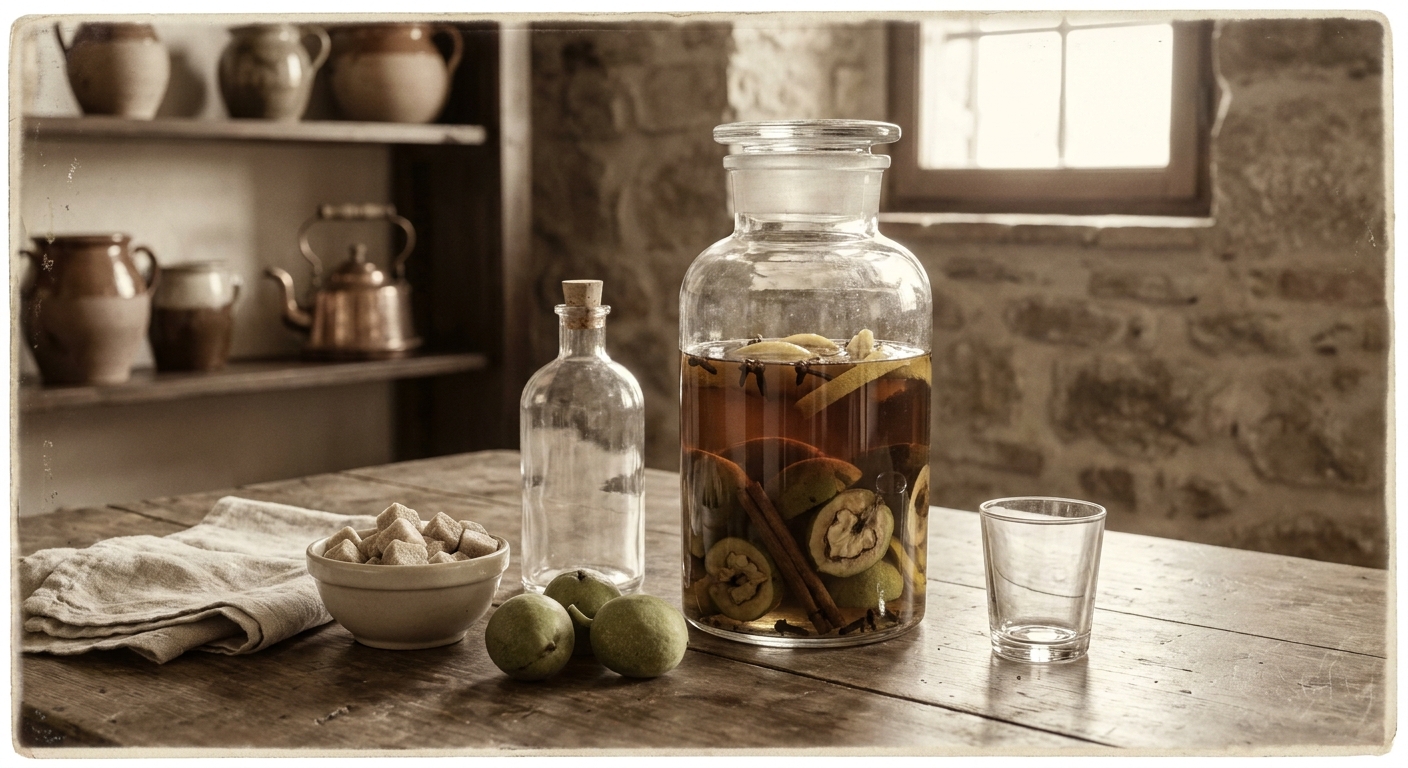 Drink
DrinkNocino — Walnut Liqueur of St. John's Day
*Liquore di casa* — the after-dinner liqueur, made on the farm
☕ 🍯· 40 days maceration
View the recipe
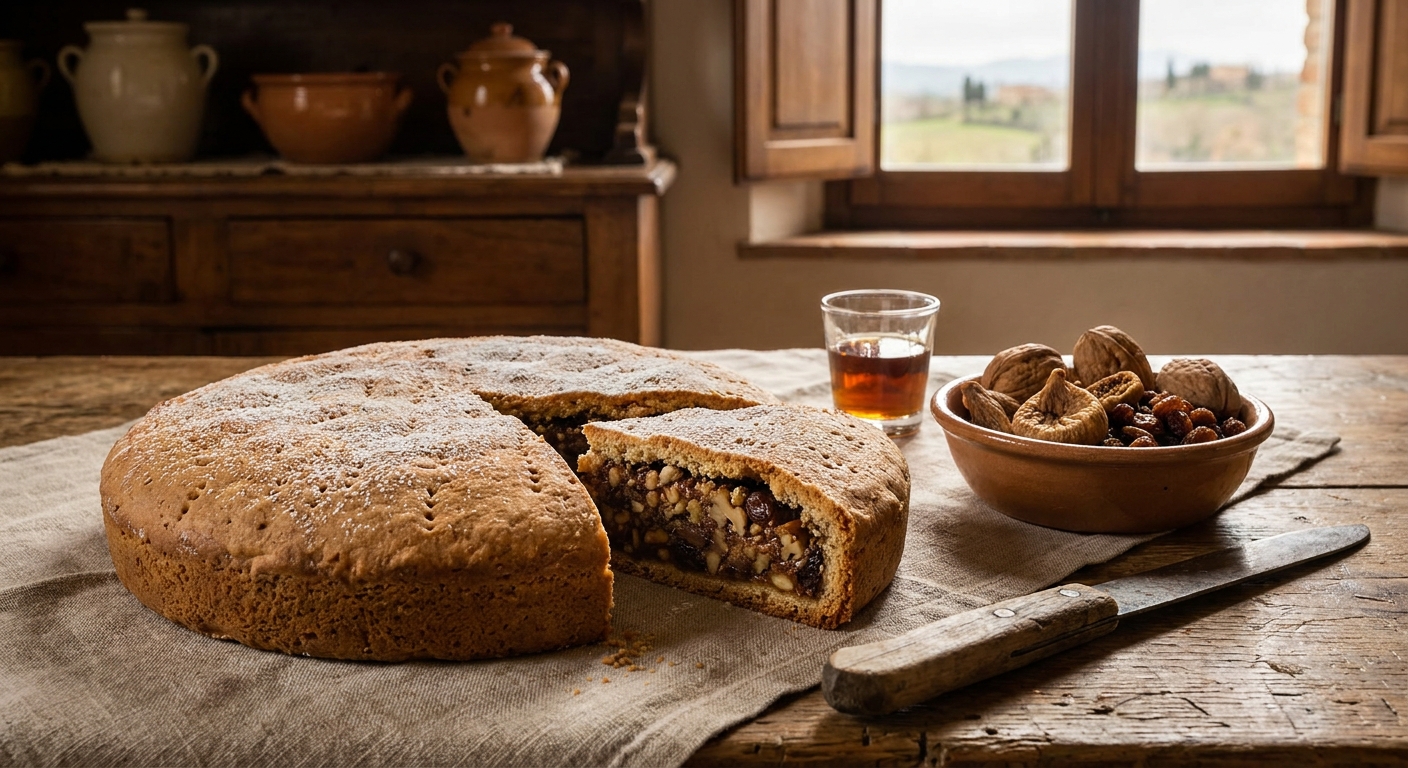 Preserving
Spongata di Busseto
*Dolce di credenza* — the dense cake that keeps in the cupboard
🍯 🌶️· 1 h 15 (+ resting 2-3 days)
View the recipe