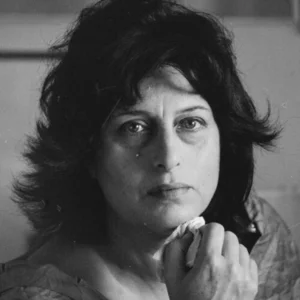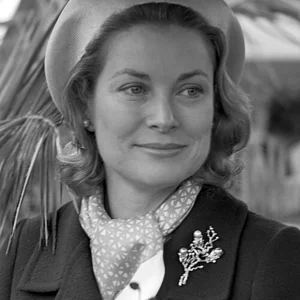

An Oscar-winning American actress of the 1950s, Grace Kelly left Hollywood at the height of her fame to marry Prince Rainier III of Monaco in 1956. As princess consort, she embodied elegance and cultural prestige until her accidental death in 1982.
Grace Kelly(1929 — 1982)
Grace Kelly
États-Unis, Monaco
8 min read
Frequently asked questions
Famous Quotes
« Simplicity is the hallmark of true refinement.»
Key Facts
- 1929: Born in Philadelphia into a wealthy Irish-American family
- 1954: Academy Award for Best Actress for The Country Girl
- 1950s: Collaboration with Alfred Hitchcock in Rear Window, Dial M for Murder, and To Catch a Thief
- 1956: Marriage to Prince Rainier III of Monaco, bringing her acting career to an end
- 1982: Died at the age of 52 following a car accident on the roads of Monaco
Works & Achievements
Her first major film role alongside Gary Cooper earned her immediate recognition in Hollywood and marked the beginning of her meteoric rise.
This John Ford film earned her her first Oscar nomination for Best Supporting Actress, confirming her status as a rising star.
Alfred Hitchcock's masterpiece thriller established her as the embodiment of the 'Hitchcock blonde': beautiful, mysterious, and dangerously alluring.
Playing against type as an exhausted, ordinary woman opposite Bing Crosby, this film earned her the Academy Award for Best Actress in 1955 and proved the full range of her talent.
Filmed on the French Riviera with Cary Grant under Hitchcock's direction, this film was the last major success of her Hollywood career before her royal marriage.
Her final film, a musical comedy with Bing Crosby, Frank Sinatra, and Louis Armstrong, released just weeks after her wedding and her official farewell to cinema.
A cultural institution she founded and led to make Monaco a showcase for the performing arts in Europe, reflecting her deep commitment to culture beyond her film career.
Anecdotes
In 1955, Grace Kelly won the Academy Award for Best Actress for 'The Country Girl', beating out Judy Garland among others. The victory surprised Hollywood: Kelly had played a drab, unglamorous character — a far cry from her usual image as a sophisticated blonde. She proved that her beauty was no mask for her talent.
It was at the 1955 Cannes Film Festival, during the filming of 'To Catch a Thief' on the French Riviera, that Grace Kelly met Prince Rainier III of Monaco during an official visit arranged by Paris Match. That chance encounter would change the fate of the star and the principality alike. Their wedding in April 1956 was watched by 30 million viewers across Europe.
The iconic Hermès 'Kelly' bag owes its name to the star. In 1956, Grace Kelly was photographed using the Hermès bag to conceal her pregnancy from photographers, making it world-famous overnight. Hermès officially renamed it the 'Kelly' in 1977, in tribute to the princess who had made it iconic.
Alfred Hitchcock, who directed Kelly in three films ('Rear Window', 'Dial M for Murder', 'To Catch a Thief'), offered her the lead role in 'Marnie' in 1962. Grace Kelly, by then Princess of Monaco, accepted enthusiastically. But pressure from Monégasque public opinion — which considered it improper for a princess to return to acting — forced her to turn down the offer.
Grace Kelly did not speak a word of French when she arrived in Monaco in 1956. She threw herself into an intensive study of the language, making it an absolute priority so she could speak directly to her subjects. She went on to master French with great fluency and took personal pride in it, as a symbol of her wholehearted commitment to her new homeland.
Primary Sources
Grace Kelly, visibly moved, said simply: 'I have no words. I must thank all the people who gave me this chance, who believed in me.'
"I never wanted to be a great Hollywood star. I loved my craft as an actress, but I needed something more — a life with meaning beyond the sound stages. Monaco gave me that."
"I am very happy. Prince Rainier is a remarkable man and Monaco is a beautiful country. I am ready to devote my life to this new mission."
"The arts are the living heart of a nation. They convey what words cannot express; they connect people across borders and differences. That is why Monaco must be a welcoming home for artists from around the world."
"My dear Hitch, you know better than anyone how tempting this role was for me. But my life now belongs to Monaco and to my children. I must step away."
Key Places
Grace Kelly's hometown, where her Irish-American bourgeois family gave her a strict Catholic upbringing and social ambition that shaped her character.
It was in the MGM studios of Hollywood that Grace Kelly became an international star between 1951 and 1956, before permanently leaving cinema behind for life as a princess.
It was at the 1955 Cannes Film Festival that Grace Kelly met Prince Rainier III of Monaco during a visit arranged by Paris Match magazine — an encounter that would change her life forever.
Her official residence from the time of her marriage in 1956, the palace perched on the Rock of Monaco became the setting for her new life as a princess and the symbol of her European destiny.
The princely family's private estate in the hills behind Monaco, it was on the road connecting this property to Monaco that Grace Kelly suffered the fatal accident on September 13, 1982.
Typical Objects
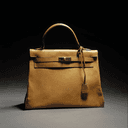
Grace Kelly used this Hermès bag in 1956 to hide her pregnancy from photographers; the house of Hermès officially named it after her in 1977. It has since become one of the most iconic fashion accessories of the 20th century.
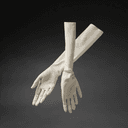
A signature element of Grace Kelly's style on red carpets and at official ceremonies, long white silk gloves embodied the sophisticated elegance of the 1950s.

Won at the 27th Academy Awards ceremony in 1955 for her role in 'The Country Girl', this statuette symbolizes the peak of her artistic career before her departure for Monaco.

The princess's signature accessory, her strand of pearls accompanied most of her official outfits, reflecting the ideal of classic elegance she embodied throughout her life.
📷 CC BY 3.0 · Wikimedia Commons ↗
An avid amateur photographer and filmmaker, Grace Kelly captured her family's everyday life with a lightweight camera — a hobby that revealed her attachment to private life away from royal protocol.
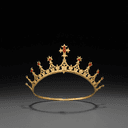
Worn at state ceremonies, the crown symbolized the transformation of the Hollywood actress into a European sovereign — a shift in roles she sometimes experienced as an artistic abdication.
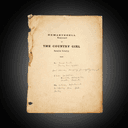
Preserved by the Kelly family, the annotated script for this film illustrates the actress's meticulous approach: she deliberately chose this challenging role to prove her dramatic range beyond her glamorous image.
School Curriculum
Vocabulary & Tags
Key Vocabulary
Tags
Daily Life
Morning
The princess rose early, dedicating the first hours to official correspondence with her personal secretary. She reviewed the day's audience schedule, then had breakfast with her children Caroline, Albert, and Stéphanie — a moment of family life shielded from protocol.
Afternoon
Afternoons were filled with official audiences with dignitaries, and visits to hospitals, schools, and charitable organizations. She also devoted time to her cultural projects, most notably organizing Monaco's Printemps des Arts festival.
Evening
Evenings were marked by state dinners, galas, and theater or opera premieres. Grace Kelly, always impeccably dressed in haute couture, embodied the cultural and diplomatic prestige of the principality before its international guests.
Food
The princess favored a light Mediterranean cuisine, built around fish, fresh vegetables, and olive oil. Influenced by French gastronomy, she took a personal interest in cooking and personally oversaw the menus for the palace's official receptions.
Clothing
Dressed by the greatest Parisian haute couture houses — Dior, Givenchy, Balenciaga — Grace Kelly wore understated, structured outfits always paired with gloves, pearls, and coordinated shoes. Her princely wardrobe defined the codes of European elegance throughout the 1960s and 1970s.
Housing
The princely family resided at the Prince's Palace of Monaco, an imposing medieval fortress perched on the Rock overlooking the harbor. In summer, the family retreated to their private estate at Roc Agel in the hinterland, to enjoy a simpler, more pastoral way of life.
Historical Timeline
Period Vocabulary
Visual Style
L'esthétique visuelle de Grace Kelly fusionne le glamour maîtrisé du Hollywood des années 1950 — lumières chaudes Technicolor, tenues Haute Couture — avec l'élégance aristocratique et ensoleillée de la Côte d'Azur monégasque.
Sound Ambience
Un univers sonore mêlant le faste des premières hollywoodiennes des années 1950 à l'atmosphère raffinée et méditerranéenne de la principauté de Monaco, entre jazz, vagues et protocole royal.
Liens externes & ressources
Références
Œuvres
Rear Window (Fenêtre sur cour)
1954