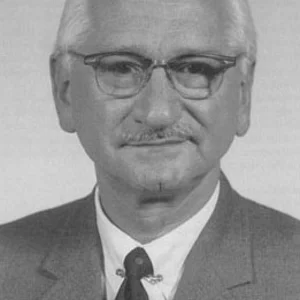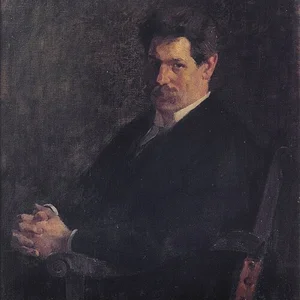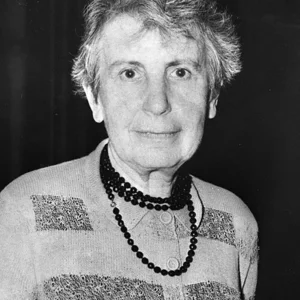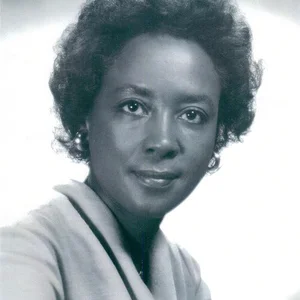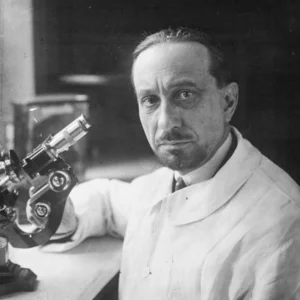

Franco-Swiss neurologist and oncologist (1874–1948), he founded the Paris Cancer Institute in 1921 — today known as the Institut Gustave Roussy — the first cancer center in Europe. His pioneering work on brain tumors and cancer laid the foundations of modern oncology in France.
Gustave Roussy(1874 — 1948)
Gustave Roussy
Suisse, France
8 min read
Frequently asked questions
Key Facts
- 1874: born in Vevey, Switzerland
- 1921: founded the Paris Cancer Institute in Villejuif
- Author of foundational research on Roussy-Lévy disease (hereditary cerebellar ataxia)
- Dean of the Paris Faculty of Medicine (1933–1945)
- 1948: death; the institute was named in his honor
Works & Achievements
A landmark article describing the intense pain and sensory disturbances caused by vascular lesions of the thalamus. The Déjerine-Roussy syndrome is still taught today in medical schools around the world.
A comprehensive synthesis on the thalamus that established Roussy as one of the world's leading specialists on this brain structure. A standard reference in French medical schools for several decades.
A major institutional achievement: the creation of the first European cancer center, bringing together surgery, radiotherapy, and research under one roof for the first time. This model of multidisciplinary medicine was subsequently adopted across Europe.
A clinical description of a rare hereditary neuropathy, known as Roussy-Lévy disease. One of the earliest examples of the precise characterization of a genetic disease of the nervous system in France.
As rector, Roussy oversaw the scientific and educational policy of France's largest university during a period of major crisis. He sought to preserve the institution's independence in the face of political pressures during the Occupation.
Anecdotes
In 1906, the young intern Gustave Roussy collaborated with the eminent neurologist Joseph Jules Déjerine to describe a little-known condition: intense, persistent spontaneous pain caused by a lesion in the thalamus, deep within the brain. This "thalamic syndrome," immediately named Déjerine-Roussy syndrome, became a worldwide reference in neurology and is still studied today in medical schools.
In 1921, Roussy persuaded French health authorities to establish in Villejuif, on the outskirts of Paris, Europe's first cancer center. His idea was revolutionary: bringing surgeons, radiologists, pathologists, and researchers together under one roof to fight cancer as a team, rather than each working in isolation within their own department. That institution now bears his name: the Institut Gustave Roussy.
In 1926, Roussy and his collaborator Gabrielle Lévy described a rare hereditary neurological disease combining gait disorders and nerve damage: Roussy-Lévy disease. It stands as one of the earliest examples of official collaboration between a department head and a female physician in French neurology, at a time when women remained a small minority in hospital careers.
Appointed rector of the University of Paris in 1937, Roussy found himself at the head of French higher education during the collapse of 1940. Faced with demands from the occupying authorities to enforce antisemitic laws in the universities, he attempted to protect his threatened colleagues and students before being forced out of his post under Nazi pressure.
Born Swiss in Vevey on the shores of Lake Geneva, Roussy devoted his entire adult life to France, acquiring French citizenship and rising through every rank of Parisian academic medicine. His career illustrates the essential role played by foreign scholars in building French science at the turn of the twentieth century.
Primary Sources
The authors describe a syndrome characterized by violent spontaneous pain, deep sensory disturbances, and mild hemiplegia, resulting from vascular lesions of the optic thalamus, without major impairment of voluntary motor function.
A comprehensive clinico-anatomical study of thalamic lesions and their sensory, motor, and autonomic consequences; a foundational synthesis that shaped subsequent research on thalamic syndrome and the neuropathology of central pain.
A clinical and anatomopathological description of a familial condition combining cerebellar ataxia, tendon areflexia, and sensory disturbances of peripheral origin, clearly distinguished from Friedreich's ataxia by its hereditary and progressive features.
Roussy argues for the creation of specialized centers bringing together all available therapeutic and scientific resources, contending that only a concentrated, multidisciplinary approach can improve the prognosis of cancer patients.
A collection of clinical cases documenting neurological injuries observed in soldiers wounded during the Great War, advancing the understanding of spinal cord and peripheral nerve trauma.
Key Places
Birthplace of Gustave Roussy, on the shores of Lake Geneva. He was born there on **August 5, 1874** before leaving to study medicine in Paris, a city he would never leave.
A landmark of French neurology, where Roussy worked alongside the eminent Professor Déjerine. It was in this iconic hospital, founded in the 17th century, that he conducted his early research on the thalamus and sensory syndromes.
Founded by Roussy in 1921 under the name Institut du Cancer, this establishment in Villejuif was the first cancer center in Europe. It now bears its founder's name and remains one of the largest cancer research and treatment centers on the continent.
Roussy taught pathological anatomy and neurology there for many years. He became its dean in 1934, then Rector of the University of Paris in 1937, overseeing all of Parisian higher education until the Occupation.
Roussy spent his entire adult life in Paris and died there on **September 26, 1948**. The French capital was the center of his medical, scientific, and administrative career for more than forty years.
Typical Objects

The central instrument of neuropathology, it allowed Roussy to examine thin sections of brain tissue to identify vascular lesions, tumors, and nerve damage. Through the microscope, he was able to precisely describe the thalamic lesions underlying the syndrome that bears his name.

From 1921, the Institut du Cancer in Villejuif was equipped with radiotherapy machines, then a cutting-edge technique. Roussy saw it as a major therapeutic tool to be combined with surgery to destroy tumors, foreshadowing modern oncology protocols.

A basic instrument of the neurological examination, used daily by Roussy to test his patients' deep tendon reflexes. The loss of these reflexes in certain hereditary diseases was one of the fundamental clinical signs he described in Roussy-Lévy disease.

Roussy was among the first to systematically collect clinical data on cancer patients. These handwritten registers, forerunners of modern medical databases, allowed him to compare patient outcomes across different treatments and to compile statistics on therapeutic effectiveness.

Like all neuropathologists of his era, Roussy built a collection of histological sections of brains and tumors, mounted on glass slides and preserved. These preparations were used to teach medical students and for comparative research on diseases of the nervous system.

Used for lumbar punctures to analyze cerebrospinal fluid, an essential diagnostic technique in neurology since the late nineteenth century. Roussy and his teams relied on it to differentiate nervous system infections from brain tumors.
School Curriculum
Vocabulary & Tags
Key Vocabulary
Daily Life
Morning
Roussy began his days with a ward round visiting hospitalized patients in his service, examining each one with the meticulous care of a clinician trained at the Salpêtrière school. He tested reflexes, assessed sensitivity, discussed cases with his junior doctors, and decided on treatment pathways — surgery, radiotherapy, or watchful waiting — in the early hours of the morning.
Afternoon
Afternoons were divided between outpatient consultations, teaching sessions with medical students, and pathological anatomy work at the microscope. At the Institut du Cancer, he took part in multidisciplinary meetings where surgeons, radiologists, and internists discussed complex cases together — a practice that was innovative at the time and that he himself had introduced.
Evening
In the evenings, Roussy wrote scientific articles and read French, German, and English medical journals to keep abreast of worldwide advances in cancer research and diseases of the nervous system. As much an administrator as a researcher, he also devoted part of his evenings to institutional correspondence and university governance files.
Food
Like any Parisian notable of the interwar period, Roussy followed the habits of French bourgeois cuisine: meals taken at fixed hours, soup, meat and seasonal vegetables, cheese. During the Occupation (1940–1944), food shortages and rationing books imposed a meagre and uncertain diet on all Parisians, public figures included.
Clothing
At the hospital and the Institut du Cancer, Roussy wore the white coat, symbol of the scientific and hygienist medicine that had been standard in healthcare institutions since the late nineteenth century. In his roles as dean and later rector, he wore a dark three-piece suit and tie — the obligatory dress of a senior servant of the republican State — accompanied at official ceremonies by academic robes and a mortarboard.
Housing
Roussy lived in Paris in a Haussmann-style apartment, the typical domestic setting of prominent physicians and university professors of his era. His positions as dean of the Faculty of Medicine and then rector of the University of Paris also entitled him to official residences in university buildings, a mark of the prestige attached to those offices.
Historical Timeline
Period Vocabulary
Liens externes & ressources
Références
Œuvres
Le syndrome thalamique (avec J. Déjerine)
1906
La couche optique — anatomie, physiologie, pathologie (thèse de doctorat)
1907
Fondation de l'Institut du Cancer de Villejuif
1921
La dystasie aréflexique héréditaire (avec G. Lévy)
1926
Direction et développement de l'Université de Paris (rectorat)
1937