 flip
flipBowl of rice with namul and doenjang soup
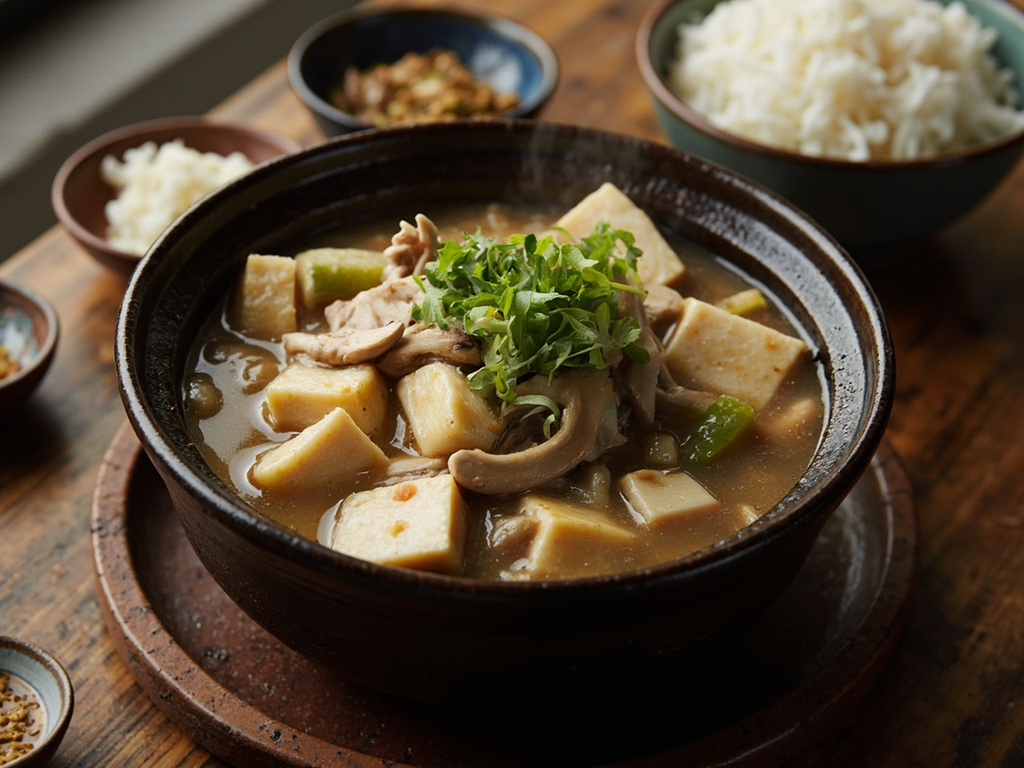
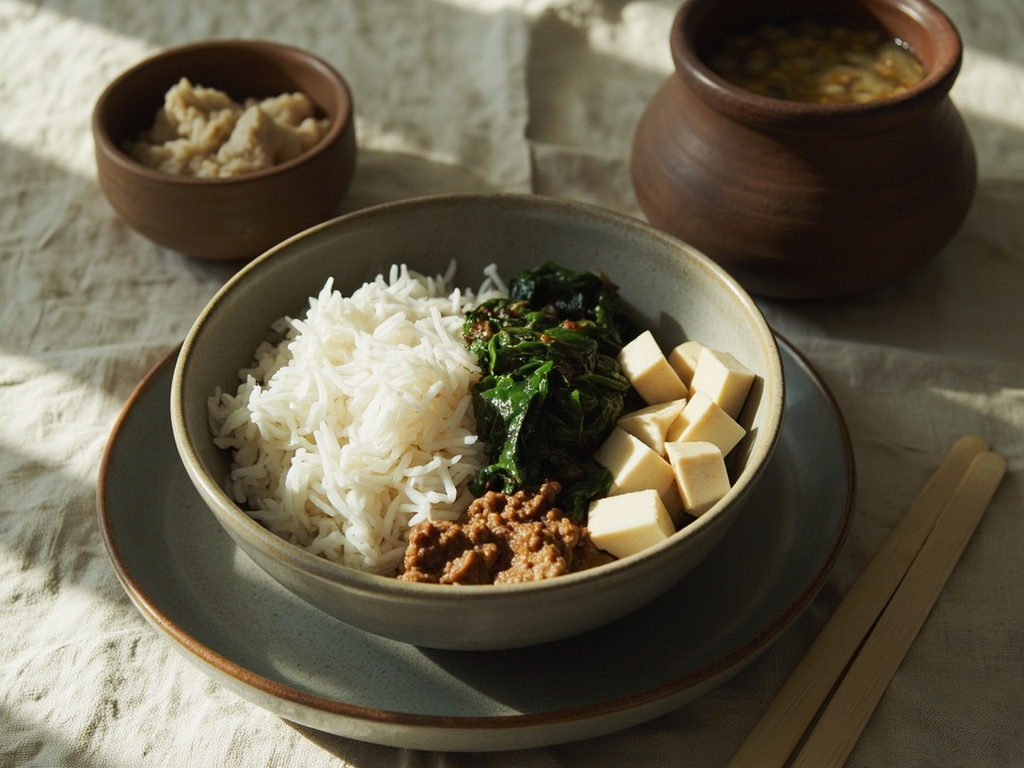
Bowl of rice with namul and doenjang soup
Why this dish? Han Kang is described as following a simple, low-meat diet — rice, fermented vegetables, tofu, light broths — in resonance with the themes of her work. This bowl of rice surrounded by namul and a clear doenjang soup is the most ordinary Korean meal, the one of a writer retired to her table in Seoul, between two pages.
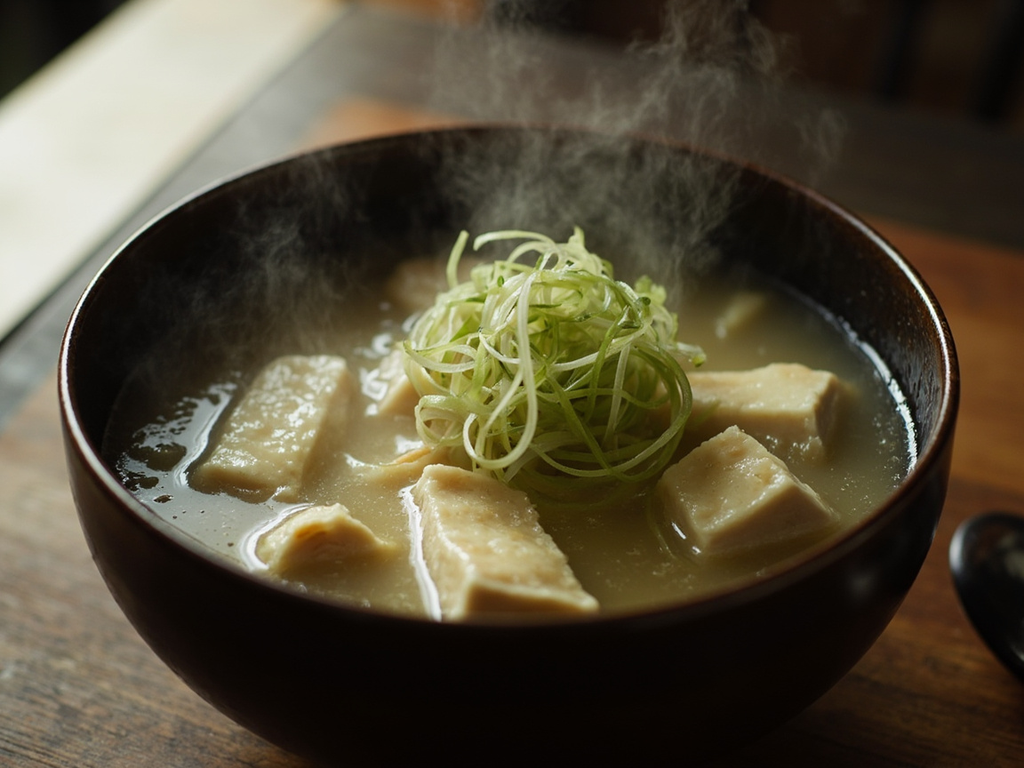
A bowl of steaming white rice, placed at the center, and around it a few namul (green vegetables blanched then seasoned with sesame oil and garlic), a cube of tofu, and a light soup of fermented soybean paste with zucchini and tofu floating in it. Nothing spectacular: the cuisine of calm, made of repeated gestures.
I cook the rice first, always — it waits, not the other way around. While it rests under its lid, I blanch the spinach for just a few seconds, squeeze it between my hands to remove the water, then massage it with a little sesame oil, a hint of garlic, salt. You see, you don't cover the vegetable, you reveal it: it keeps its color, its texture, its grassy taste. The doenjang soup, I let it barely simmer, never boil hard, otherwise the ferment turns bitter. When everything is placed on the table at the same time, I sit down, and I start with a spoonful of plain rice.
- •Short-grain white rice — two bowls (foundation of the meal)
- •Spinach (or other young seasonal greens) — one bunch (green namul)
- •Toasted sesame oil — a drizzle (flavored seasoning)
- •Garlic — one clove (aromatic)
- •Doenjang (fermented soybean paste) — two spoons (soup base)
- •Tofu — one block (mild protein)
- •Zucchini or radish — half (soup vegetable)
Bowl of rice with namul and doenjang soup
A bowl of steaming white rice, placed at the center, and around it a few namul (green vegetables blanched then seasoned with sesame oil and garlic), a cube of tofu, and a light soup of fermented soybean paste with zucchini and tofu floating in it. Nothing spectacular: the cuisine of calm, made of repeated gestures.
Why this dish? Han Kang is described as following a simple, low-meat diet — rice, fermented vegetables, tofu, light broths — in resonance with the themes of her work. This bowl of rice surrounded by namul and a clear doenjang soup is the most ordinary Korean meal, the one of a writer retired to her table in Seoul, between two pages.
I cook the rice first, always — it waits, not the other way around. While it rests under its lid, I blanch the spinach for just a few seconds, squeeze it between my hands to remove the water, then massage it with a little sesame oil, a hint of garlic, salt. You see, you don't cover the vegetable, you reveal it: it keeps its color, its texture, its grassy taste. The doenjang soup, I let it barely simmer, never boil hard, otherwise the ferment turns bitter. When everything is placed on the table at the same time, I sit down, and I start with a spoonful of plain rice.
Ingredients (period version)
- Short-grain white rice — two bowls (foundation of the meal)
- Spinach (or other young seasonal greens) — one bunch (green namul)
- Toasted sesame oil — a drizzle (flavored seasoning)
- Garlic — one clove (aromatic)
- Doenjang (fermented soybean paste) — two spoons (soup base)
- Tofu — one block (mild protein)
- Zucchini or radish — half (soup vegetable)
Ingredients
- Round rice (japonica/sushi) — 300 g raw, rinsed (foundation of the meal)
- Fresh spinach — 250 g (green namul)
- Toasted sesame oil — 2 tsp (seasoning)
- Garlic — 1 clove, grated (aromatic)
- Sesame seeds — 1 tsp (finishing)
- Doenjang — 2 tbsp (soup base)
- Firm tofu — 200 g, cubed (protein)
- Zucchini — 1/2, half-moons (soup vegetable)
- Water — 700 ml (broth)
Method
- Rinse the rice until the water runs clear, then cook (rice cooker or covered pot, water level +1 cm) and let rest 10 min off the heat.
- Blanch the spinach for 30 seconds in salted boiling water, refresh, squeeze firmly to dry.
- Season by hand with sesame oil, garlic, a pinch of salt, and sesame seeds: this is the namul.
- For the soup, dilute the doenjang in simmering water through a strainer, add zucchini then tofu, let simmer 8-10 min without boiling hard.
- Plate: one bowl of rice per person, namul and tofu in small dishes around, soup on the side. Eat by alternating.
How it was made : The Korean bapsang has remained structurally stable for centuries: a starch base (rice), a soup, and banchan including ferments (jang, kimchi) that allowed survival through winter. Cooking without fat and quickly blanching green vegetables are ancient gestures, designed to preserve freshness and conserve precious resources.
The contemporary twist : Serve everything in a single bowl, 'one bowl' style: rice at the bottom, namul and tofu in colorful quarters on top, soup on the side — the sober and photogenic aesthetic of contemporary Korean tables.
Han Kang · Charactorium