 Flip the card
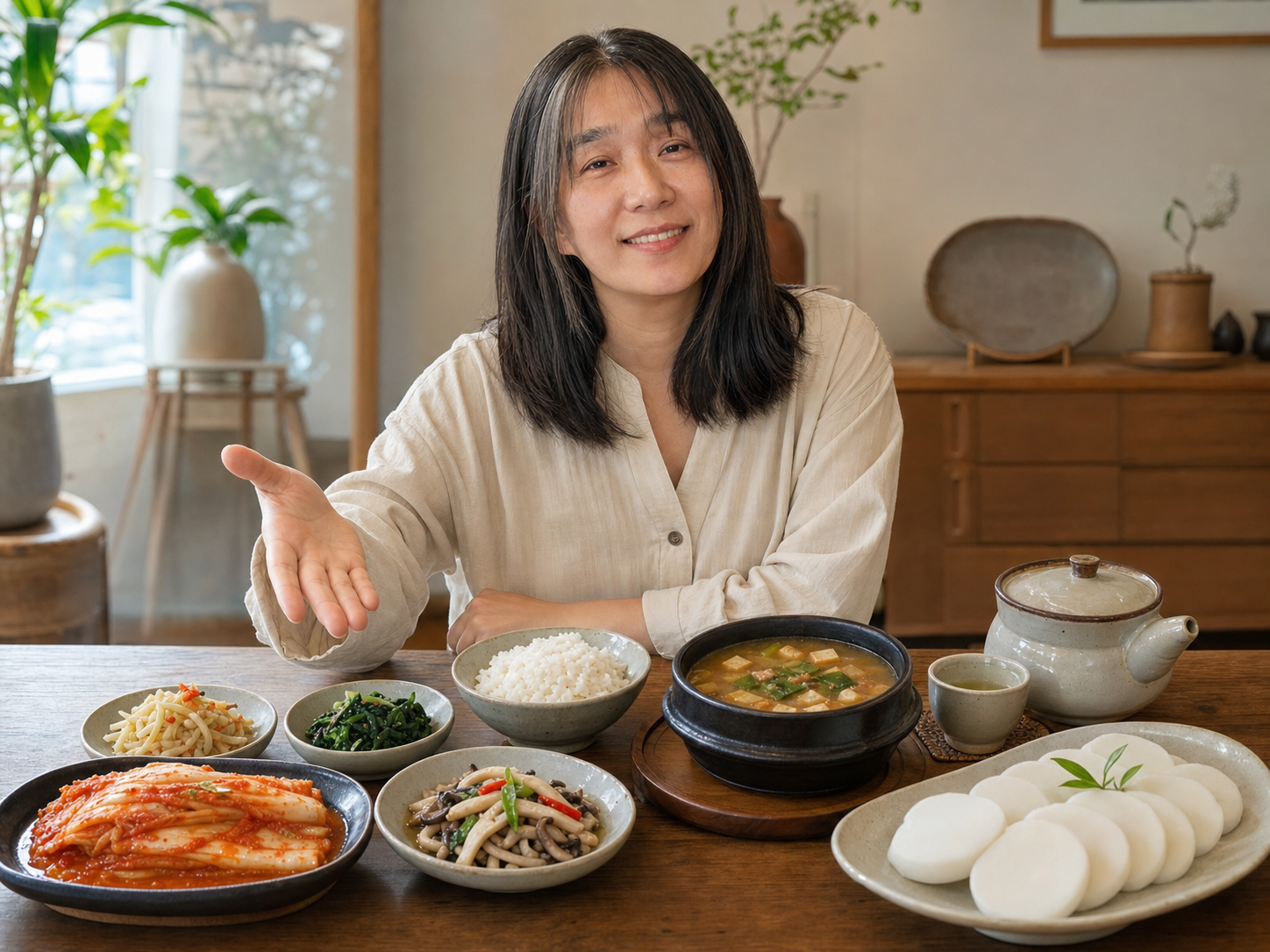
Han Kang at the table
1970 — ?
On the menu
Bapsang — the table around rice
The Korean meal is not divided into starter-main-dessert but unfolds around bap (plain steamed rice), the silent foundation of every table. Everything gravitates around it: a guk (soup-broth), and a constellation of banchan (small shared side dishes placed together) — seasoned vegetables (namul), ferments (kimchi, jang). You don't eat in order: you move from one bowl to another, a mouthful of rice, a fermented leaf, a sip of broth. Sweetness, bitterness, and sugar often arrive separately, in a cup of tea or a rice cake on special days.
Signature : Jang and slow fermentation
At the heart of this cuisine live the jang — fermented soybean pastes (doenjang, ganjang) — and vegetables left to mature in salt and time. Fermentation here is a memory: it transforms, preserves, brings out flavor. In Han Kang, whose work questions the body, violence, and what survives, this simple, low-meat cuisine — rice, namul, tofu, ferments — resonates with an attention to the living and fragility.
click to flip back
Han Kang at the table
1970 — ?
5 period recipes
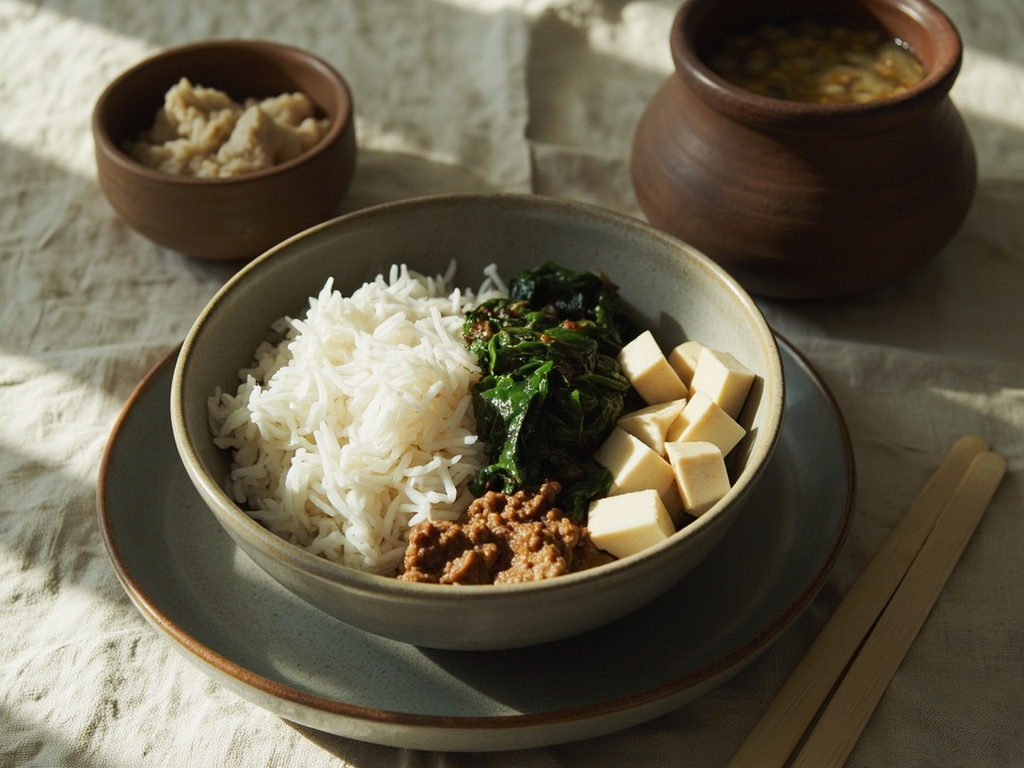 Everyday
Bowl of rice with namul and doenjang soup
Everyday bapsang — the foundational meal
🫙 🍄 🧂· 40 min
View the recipe
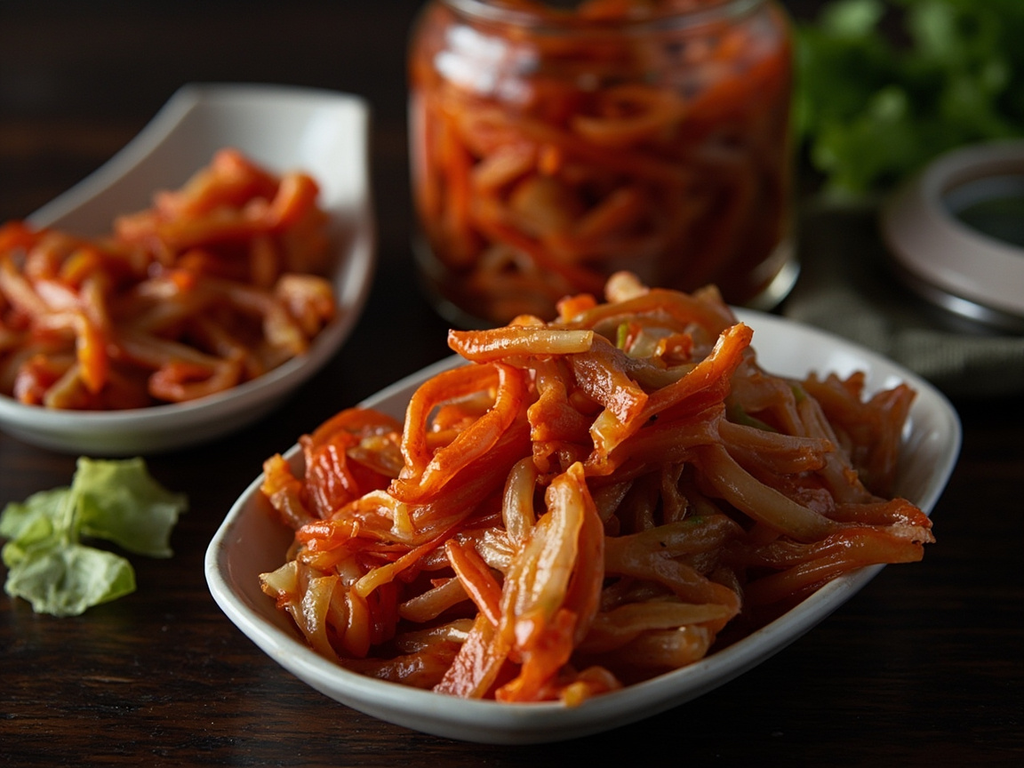 Preserving
Baechu-kimchi (fermented napa cabbage with chili)
Banchan for storage — the ferment that crosses seasons
🫙 🌶️ 🍋· 1 h active + 4 h salting + fermentation
View the recipe
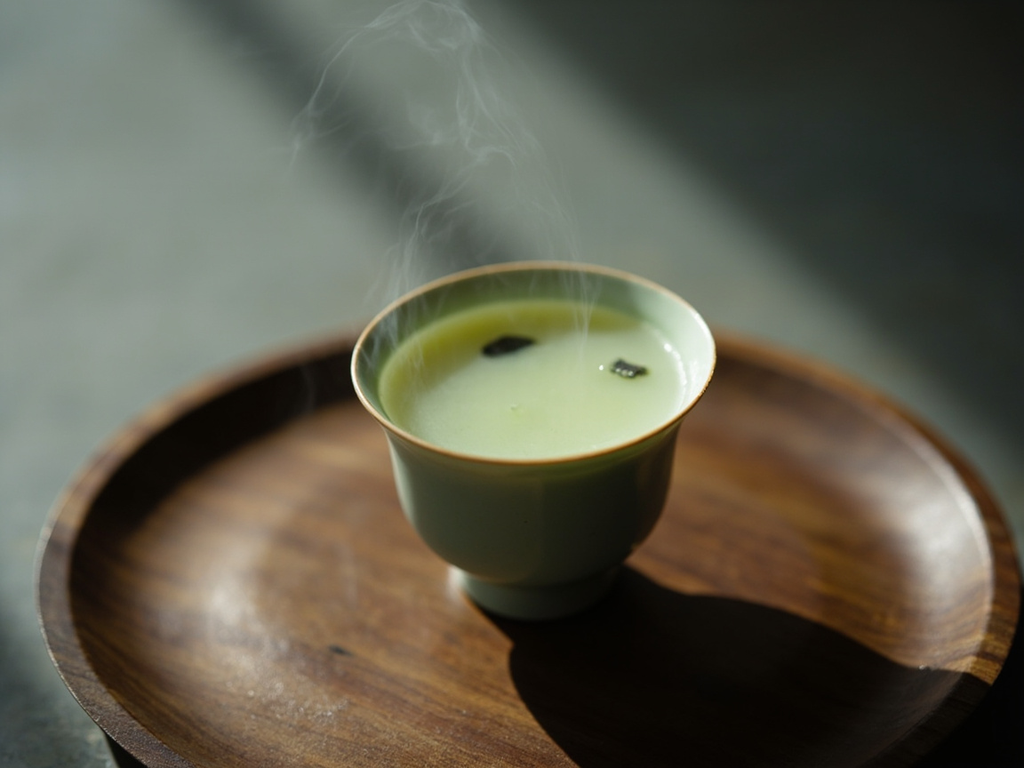 Drink
DrinkNokcha — Korean green tea brewed with warm water
Cha — the suspended time of the cup
☕· 10 min
View the recipe
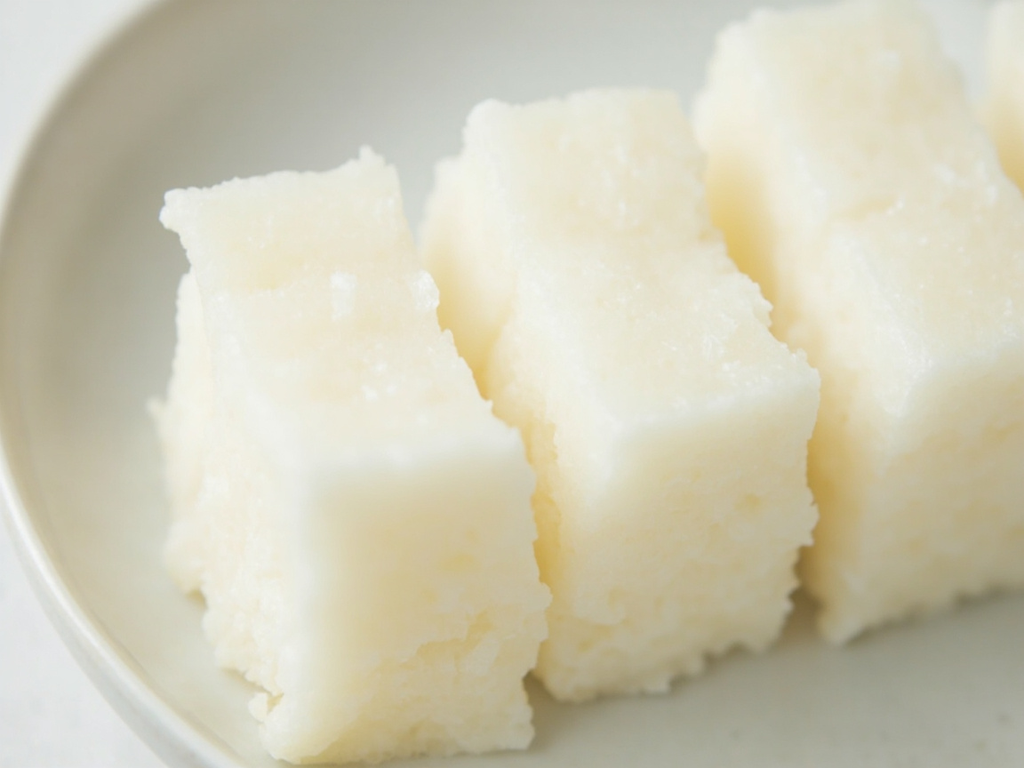 Offering
Baekseolgi — white steamed rice cake
Tteok of memory — the offering of special days
🍯· 45 min
View the recipe
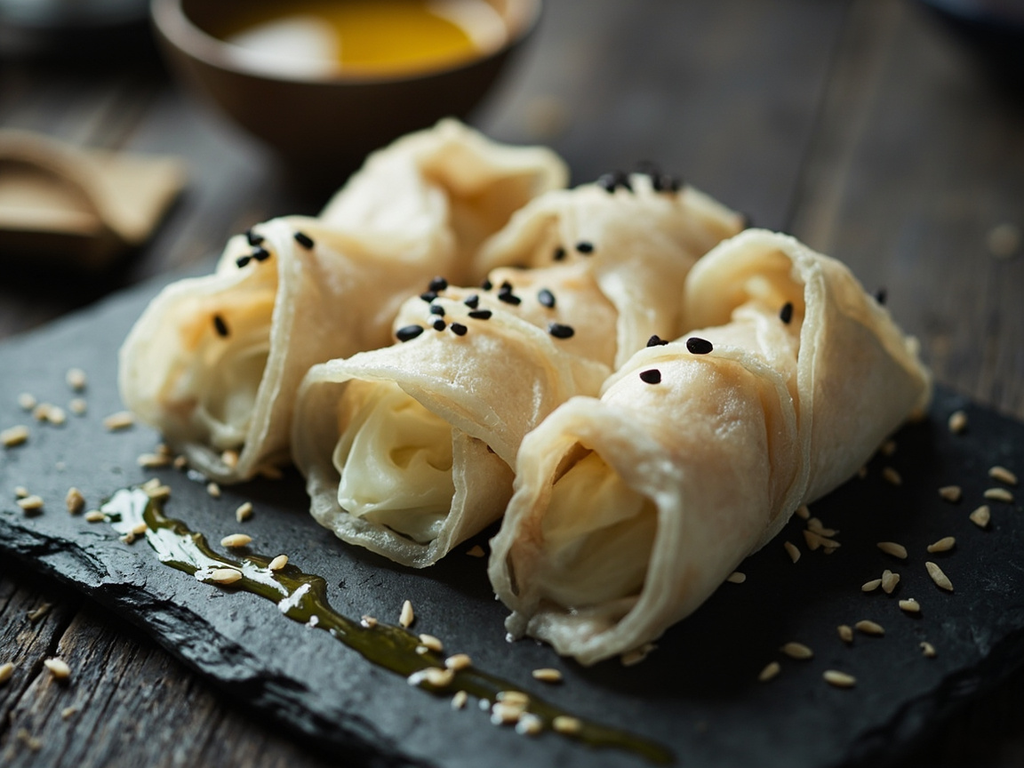 Travel
Jeju bingtteok — buckwheat crepe rolled with radish
Island snack — the frugal cuisine of Jeju
🧂 🍄· 45 min
View the recipe