 flip
flipPuls Punica: Punic Porridge with Honey and Cheese
Puls Punica: Punic Porridge with Honey and Cheese
Why this dish? Hanno was a notable of Carthage before being a navigator. At his table, as in every Punic home, the cereal porridge — the famous *puls punica* that Cato the Elder deemed worthy of recording — formed the heart of the daily meal.
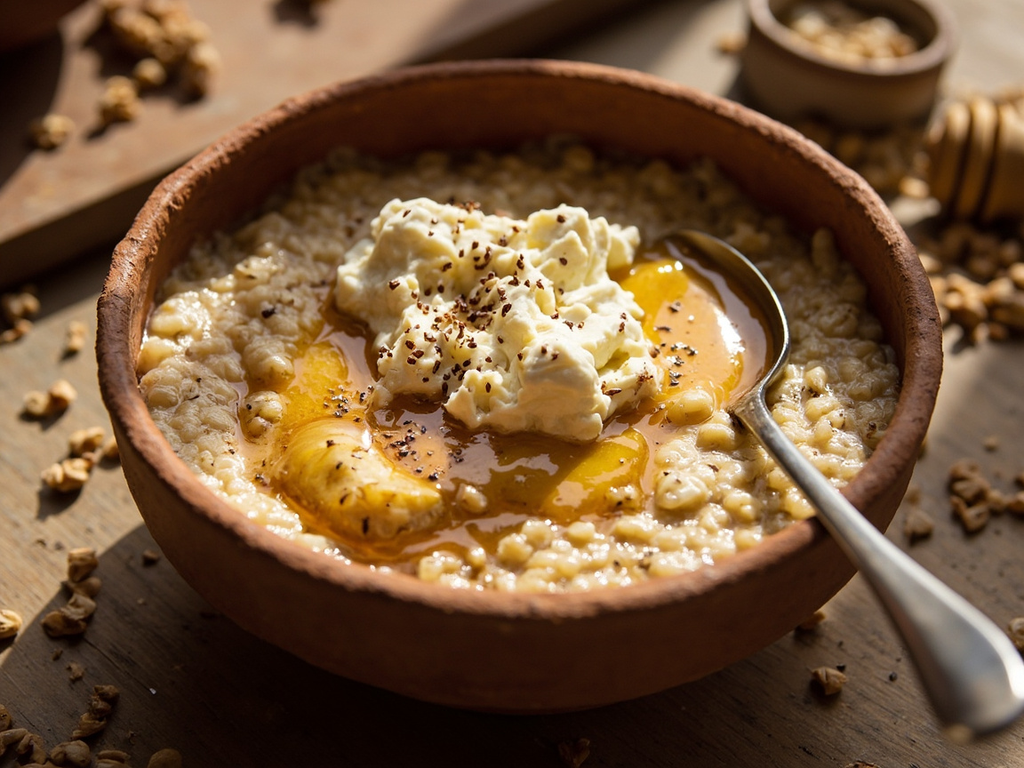
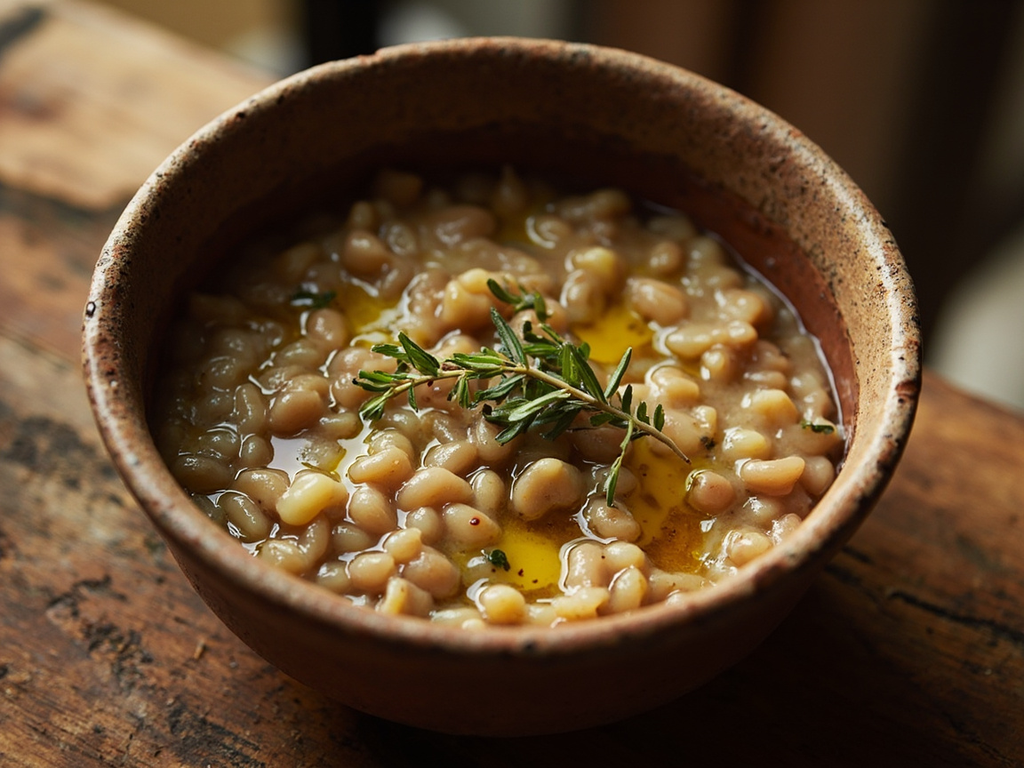
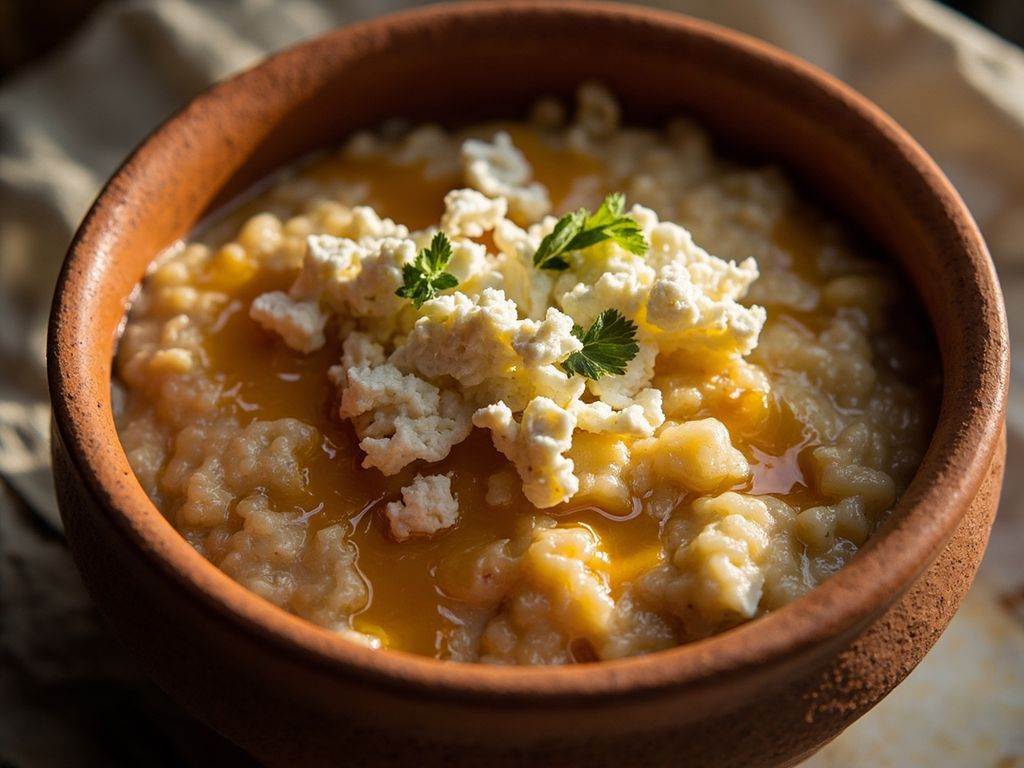
A creamy spelt porridge loosened with fresh cheese, bound with egg, and sweetened with honey. Comforting, straddling sweet and savory, it is the quintessential Punic domestic dish.
Before the waters called me, I grew up in the shadow of Byrsa, and it was this porridge that opened our days. You let the grain swell in water until it becomes tender as a cloud, then you melt into it fresh cheese, egg, and honey from the hills. Beware not to take your eyes off it and stir constantly, for Tanit does not like burnt porridge. A bowl of this, and a man stands upright from the rising of Shapash to her setting.
- •Far (cracked spelt or emmer) — a generous handful (cereal, the porridge base)
- •Fresh cheese — a good piece (creaminess and light saltiness)
- •Honey — as much as you like (sweetness)
- •Egg — one (binder)
- •Water — plenty (cooking the grain)
Puls Punica: Punic Porridge with Honey and Cheese
A creamy spelt porridge loosened with fresh cheese, bound with egg, and sweetened with honey. Comforting, straddling sweet and savory, it is the quintessential Punic domestic dish.
Why this dish? Hanno was a notable of Carthage before being a navigator. At his table, as in every Punic home, the cereal porridge — the famous *puls punica* that Cato the Elder deemed worthy of recording — formed the heart of the daily meal.
Before the waters called me, I grew up in the shadow of Byrsa, and it was this porridge that opened our days. You let the grain swell in water until it becomes tender as a cloud, then you melt into it fresh cheese, egg, and honey from the hills. Beware not to take your eyes off it and stir constantly, for Tanit does not like burnt porridge. A bowl of this, and a man stands upright from the rising of Shapash to her setting.
Ingredients (period version)
- Far (cracked spelt or emmer) — a generous handful (cereal, the porridge base)
- Fresh cheese — a good piece (creaminess and light saltiness)
- Honey — as much as you like (sweetness)
- Egg — one (binder)
- Water — plenty (cooking the grain)
Ingredients
- Spelt semolina (or cracked small spelt) — 200 g (base cereal)
- Water — 1 liter (cooking)
- Fresh cheese (such as brousse or ricotta) — 150 g (creaminess)
- Honey — 3 tbsp (sweetness)
- Egg — 1 (binder)
- Salt — 1 pinch (balance)
Method
- Bring salted water to a boil, sprinkle in the spelt semolina and cook over low heat for 20 to 25 minutes, stirring, until a tender porridge forms.
- Remove from heat, stir in the fresh cheese until it melts into the porridge.
- Beat the egg and add it quickly, whisking so it binds without forming lumps; return to very low heat for 1 minute.
- Remove from heat and stir in the honey.
- Serve warm in a bowl, with an extra drizzle of honey on top.
How it was made : Cato the Elder, in his treatise on agriculture (2nd century BC), gives the recipe for *puls punica*: soak emmer, add fresh cheese, honey, and an egg. Cereal porridge (*puls*) preceded leavened bread as a staple throughout the ancient Mediterranean; the Romans called this version 'Punic,' meaning Carthaginian.
The contemporary twist : Presented in a morning bowl like an ancient porridge, sprinkled with toasted almond slivers and a drizzle of thyme honey: a '2,500-year-old' breakfast.
Sources : Cato the Elder, De Agricultura, ch. 85 (recipe for puls punica)
Hanno the Navigator · Charactorium