 flip
flipBarley flatbread with sesame and honey (ta-hedj)
Barley flatbread with sesame and honey (ta-hedj)
Why this dish? Bread is the primary offering placed before Hathor in all her temples, from Dendera to Sinai. On offering tables, conical and round loaves are stacked by the dozens: to nourish the goddess is first to present her with bread, the fruit of the wheat and barley of the Nile whose harvests she protects.
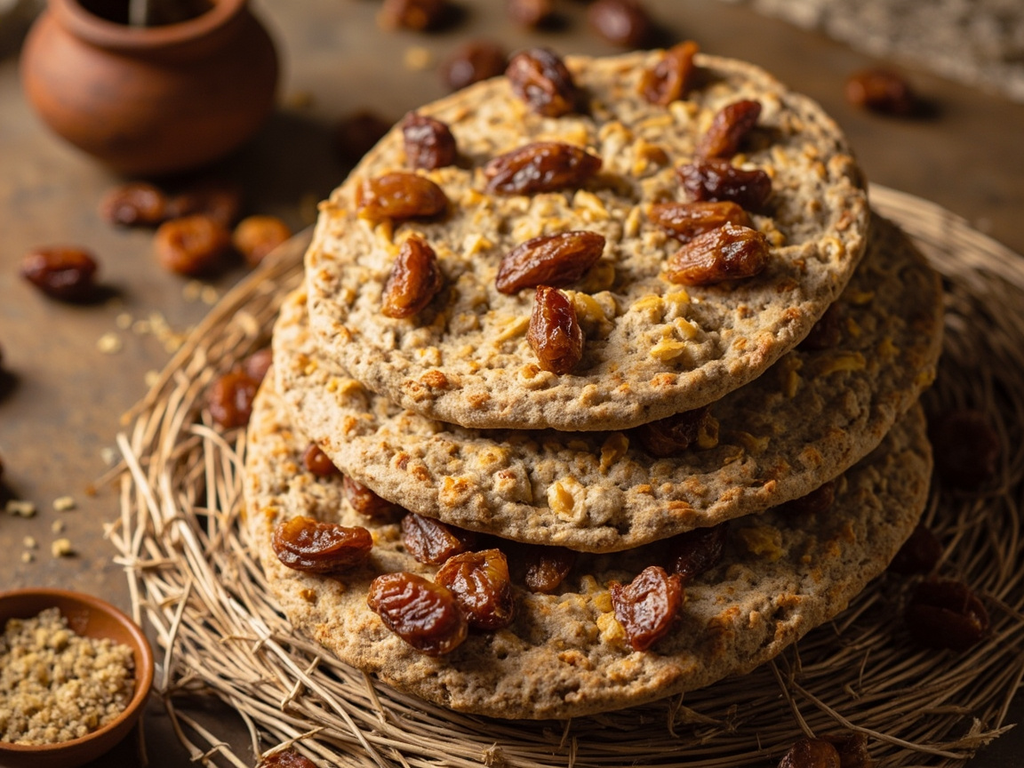
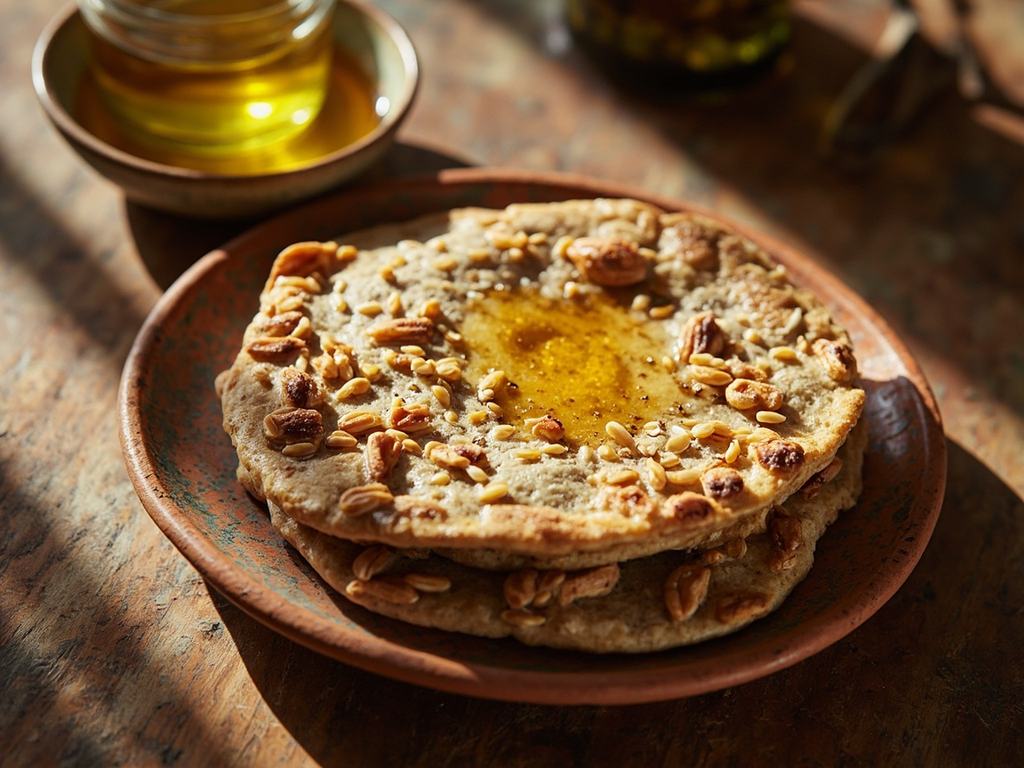
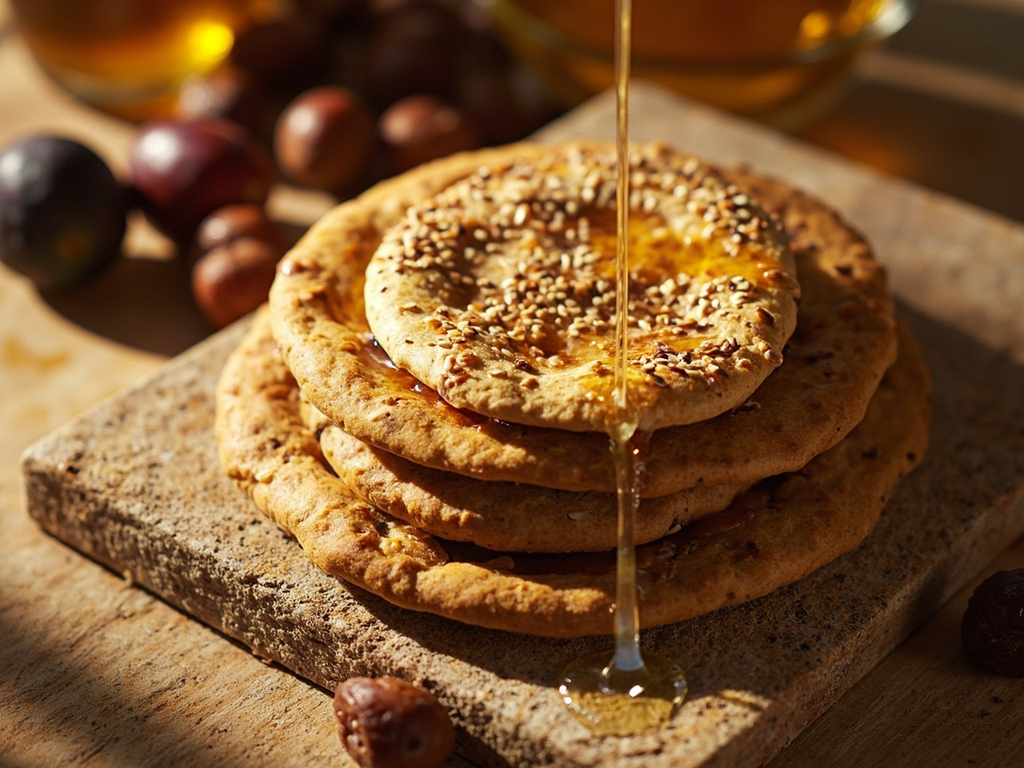
A dense, slightly sweet flatbread made from barley or emmer flour, sprinkled with sesame and drizzled with honey — the festive bread of the Egyptians, attested by thousands of depictions and archaeological remains in tombs.
Approach, child of the black earth, and see this golden bread that is laid each morning on my table at Dendera. My priestesses knead the barley beaten in a mortar, roll it in sesame, and bathe it in the honey that is said to have been born from my tears of joy. Break off a piece: as long as the bread rises in the temple ovens, the Nile will not fail and the dance will never cease.
- •Barley flour (or emmer/spelt) — a good measure (base)
- •Honey — as much as you like (sweet binder)
- •Sesame seeds — a handful (signature)
- •Nile water — enough (hydration)
- •Natural sourdough (yesterday's dough) — a little (fermentation)
Barley flatbread with sesame and honey (ta-hedj)
A dense, slightly sweet flatbread made from barley or emmer flour, sprinkled with sesame and drizzled with honey — the festive bread of the Egyptians, attested by thousands of depictions and archaeological remains in tombs.
Why this dish? Bread is the primary offering placed before Hathor in all her temples, from Dendera to Sinai. On offering tables, conical and round loaves are stacked by the dozens: to nourish the goddess is first to present her with bread, the fruit of the wheat and barley of the Nile whose harvests she protects.
Approach, child of the black earth, and see this golden bread that is laid each morning on my table at Dendera. My priestesses knead the barley beaten in a mortar, roll it in sesame, and bathe it in the honey that is said to have been born from my tears of joy. Break off a piece: as long as the bread rises in the temple ovens, the Nile will not fail and the dance will never cease.
Ingredients (period version)
- Barley flour (or emmer/spelt) — a good measure (base)
- Honey — as much as you like (sweet binder)
- Sesame seeds — a handful (signature)
- Nile water — enough (hydration)
- Natural sourdough (yesterday's dough) — a little (fermentation)
Ingredients
- Barley flour — 200 g (base)
- Spelt flour — 100 g (structure)
- Honey — 3 tbsp (sweet binder)
- Sesame seeds — 40 g (signature)
- Warm water — 180 ml (hydration)
- Sourdough starter (or 5 g yeast) — 50 g (fermentation)
- Salt — 1 tsp (seasoning)
Method
- Mix the flours, salt, and starter, then add the warm water and 1 tbsp of honey. Knead for 10 minutes until a supple dough forms.
- Cover with a cloth and let rise for 2 to 3 hours in a warm place.
- Divide into round, flat patties 1.5 cm thick, moisten them, and roll in sesame seeds.
- Bake on a baking sheet or hot stone at 220 °C for 18 to 20 minutes, until golden brown.
- Upon removal from the oven, brush with the remaining honey and let cool slightly.
How it was made : The Egyptians primarily cultivated barley and emmer (an ancient wheat). Bread was baked in conical clay molds or on hot stones; charred bread has been found in tombs, sometimes enriched with honey, dates, and figs for festive loaves. Yeast arose spontaneously or came from yesterday's dough, akin to beer fermentation.
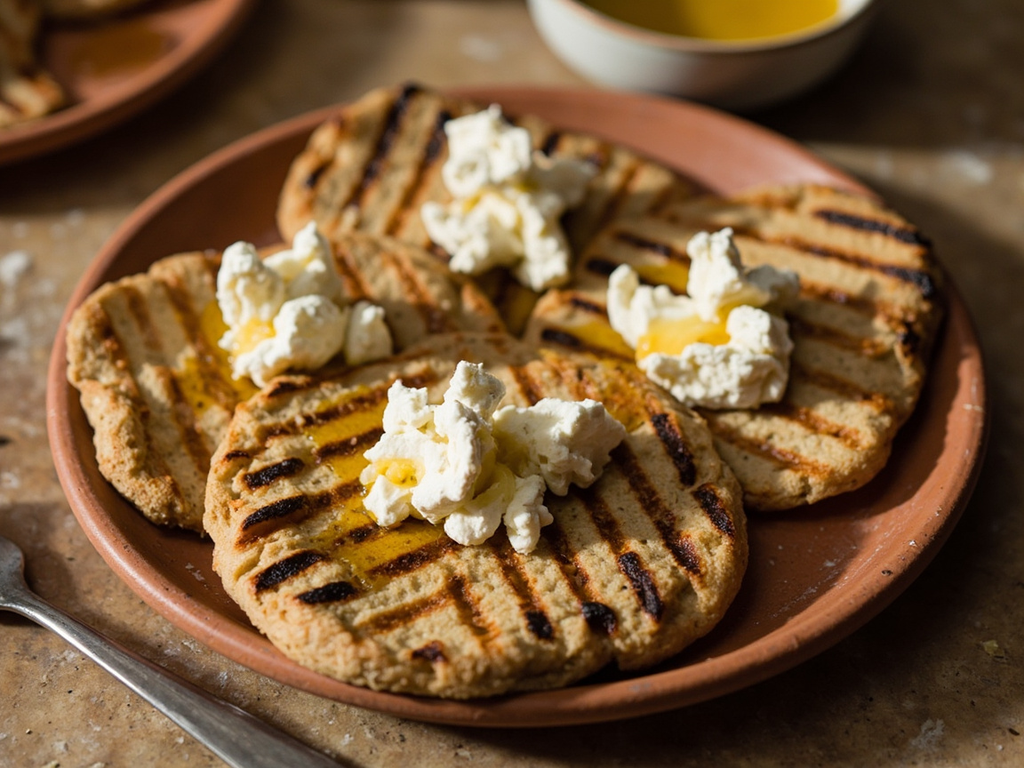
The contemporary twist : Serve warm, split and filled with a spoonful of fresh cheese and a drizzle of sesame honey — a "Hathor bread" for brunch.
Sources : Pierre Tallet, Histoire de la cuisine et de la gastronomie égyptiennes (Éditions Khéops) · Delwen Samuel, research on bread and beer in ancient Egypt (Amarna)
Hathor · Charactorium