 Flip the card
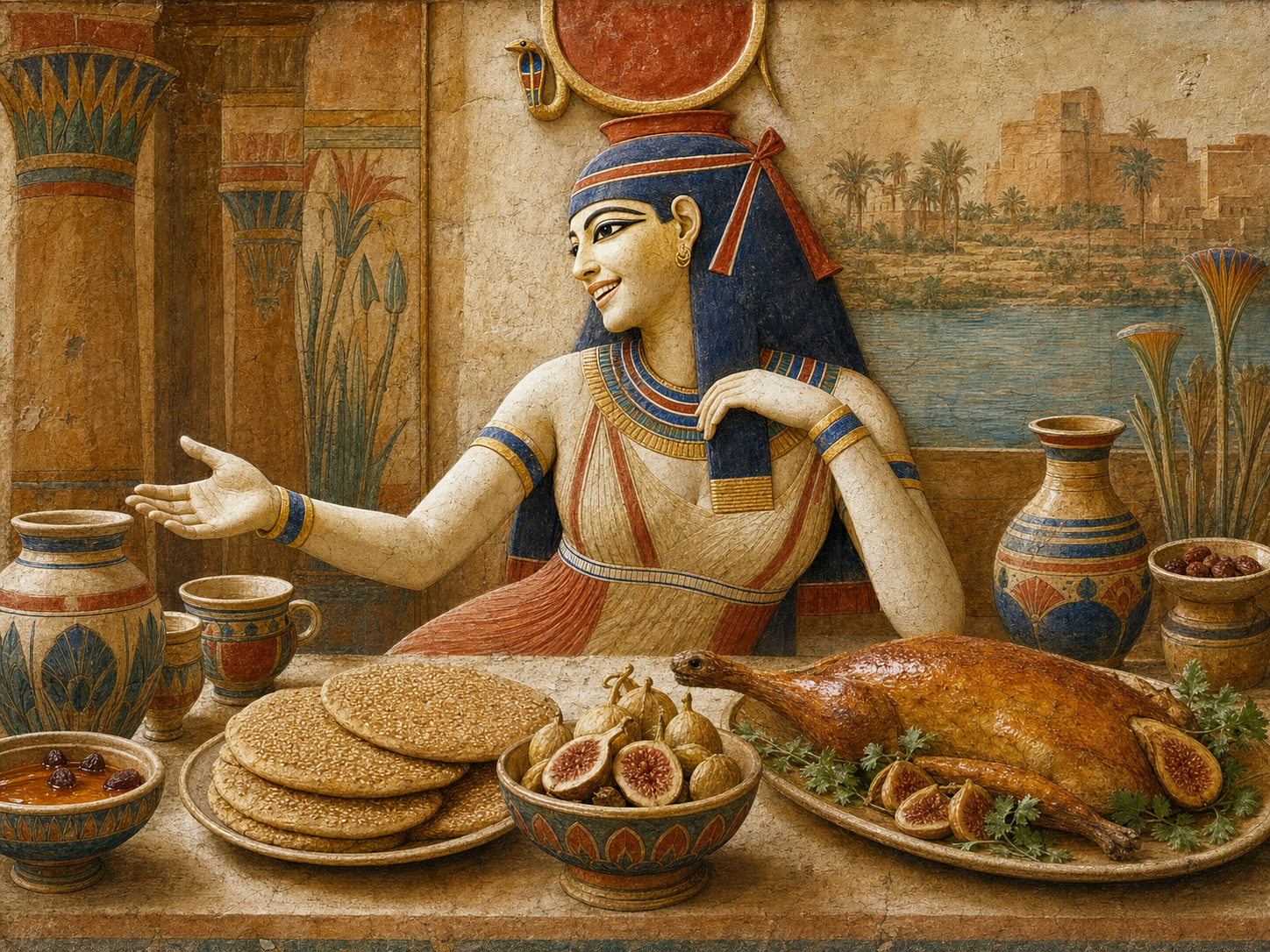
Hathor at the table
On the menu
Hetep — the temple offering table
In ancient Egypt, the meal is organized around the "hetep" (offering/satisfaction): bread, beer jars, fruits, and roasted meats are placed before the deity or the deceased, then the priests "overturn" the offering to consume it themselves. No starter-main-dessert: a simultaneous assortment laid on mats or low stone tables, where bread and beer form the foundation (the nourishing duo of all Egypt), surrounded by honey and date sweets, poultry, and Nile vegetables.
Signature : Honey and the sycamore date
Hathor, "lady of the sycamore" and mistress of joy, is linked to sweets: honey (associated with her tears according to some texts), the date, and the sycamore fig perfume her offerings. Sweetness is not a dessert but a mark of love and celebration — the gustatory signature of the goddess of music and drunkenness.
click to flip back
Hathor at the table
5 period recipes
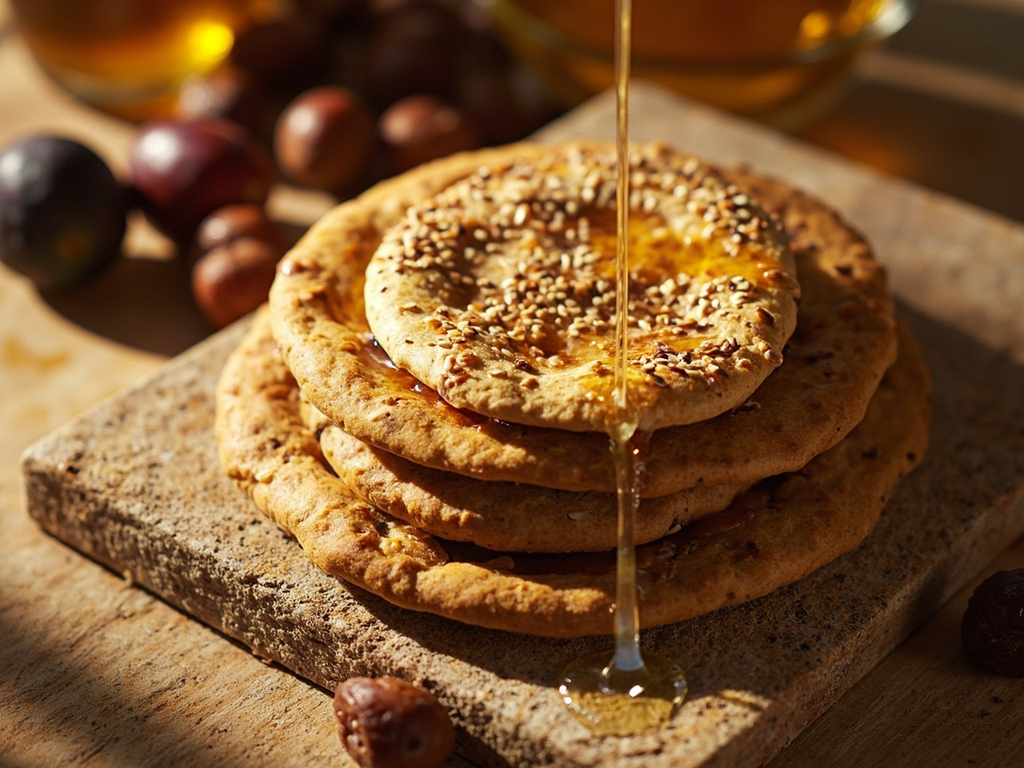 Everyday
Barley flatbread with sesame and honey (ta-hedj)
Foundation of hetep (bread, the base of every offering)
🍯· 3 h 30 (including rising)
View the recipe
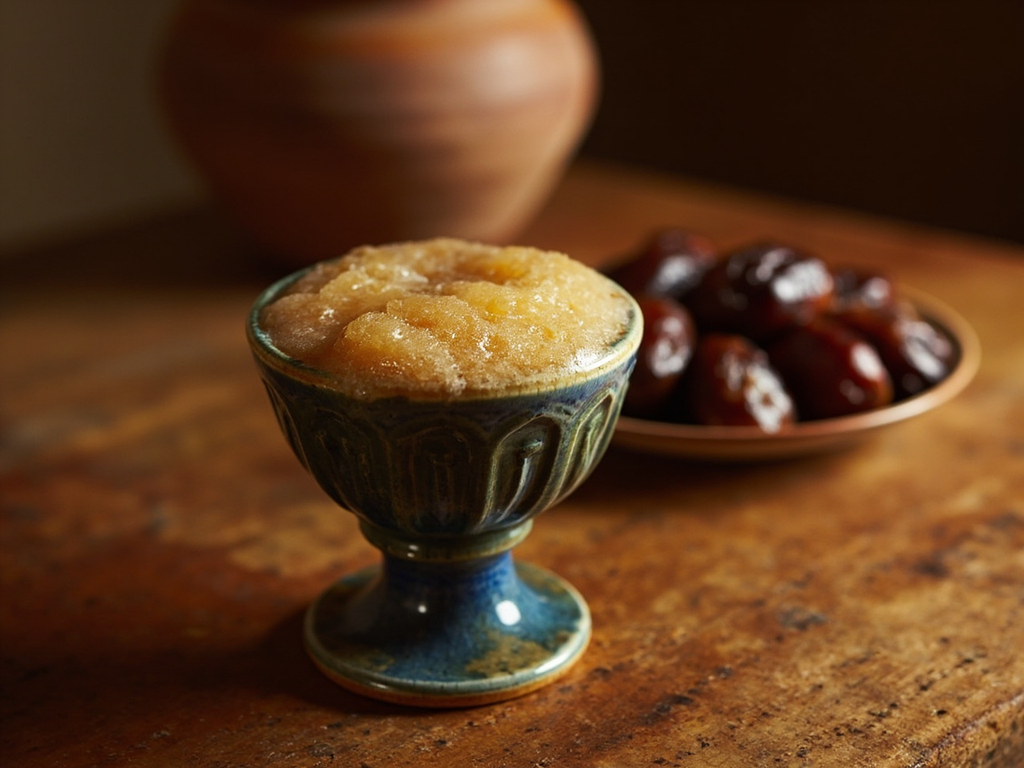 Drink
DrinkSweet barley beer with dates (henqet)
Libation of hetep (the jug, companion of bread)
🍯 🫙· 3 days (fermentation)
View the recipe
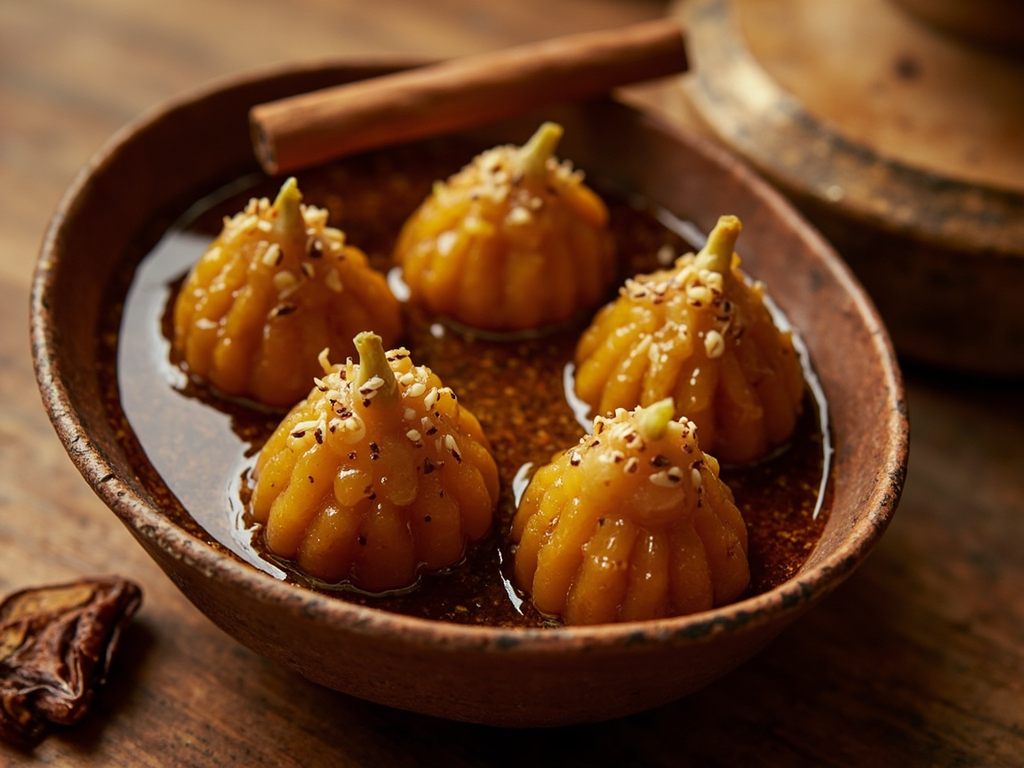 Offering
Sycamore figs candied in honey and cinnamon
Offering sweet (fruits on Hathor's table)
🍯 🍋· 40 min
View the recipe
 Festive
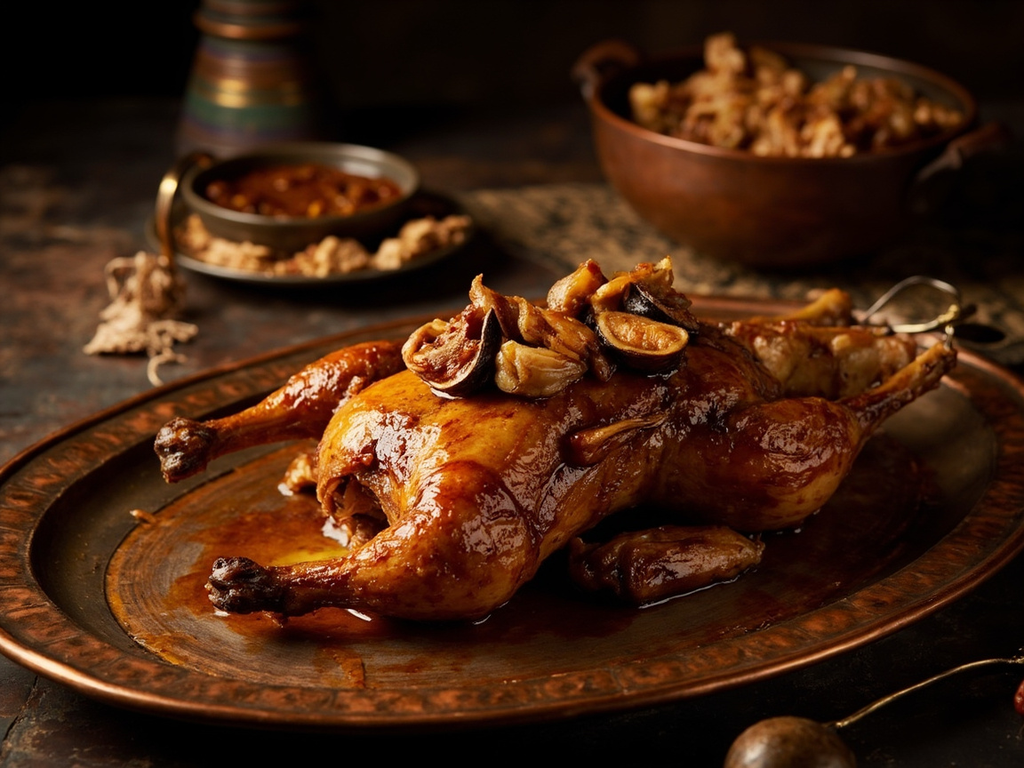
Roast goose with honey, fig, and coriander
Banquet meat (the centerpiece of great temple feasts)
🧂 🍯 🍄· 2 h 30
View the recipe
 Travel
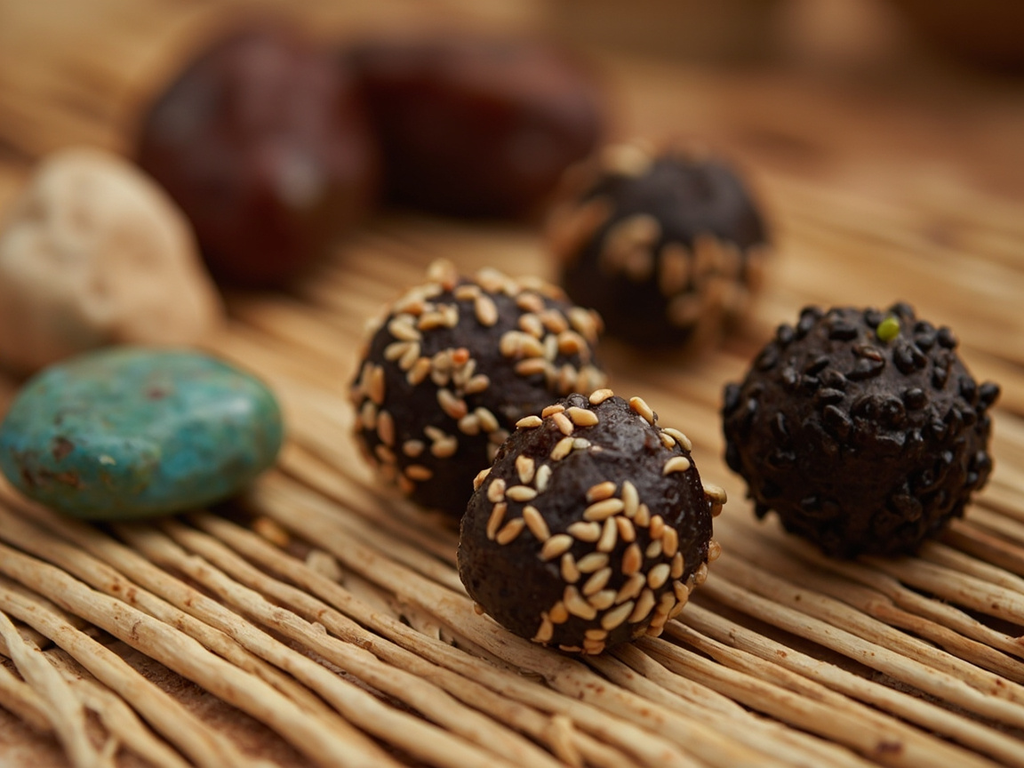
Date paste with sesame and coriander (traveler's provisions)
Road provisions (dried desert rations)
🍯 🌶️· 30 min
View the recipe