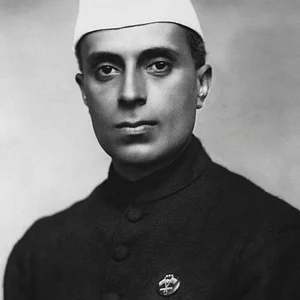

Prime Minister of independent India from 1947 to 1964, Nehru was one of the architects of independence alongside Gandhi. Architect of the modern Indian state, he embodied the Non-Aligned Movement during the Cold War.
Jawaharlal Nehru(1889 — 1964)
Jawaharlal Nehru
Inde, Raj britannique, Union indienne
8 min read
Frequently asked questions
Famous Quotes
« At the stroke of the midnight hour, when the world sleeps, India will awake to life and freedom.»
« Culture is the ability to respond to the greatness of a civilization.»
Key Facts
- 1889: Born in Allahabad into a wealthy Brahmin family
- 1916–1947: Activist in the Indian National Congress alongside Gandhi
- 15 August 1947: Becomes the first Prime Minister of independent India
- 1955: Co-founder of the Non-Aligned Movement with Nasser and Tito
- 27 May 1964: Dies in office after 17 years in power
Works & Achievements
Written in prison, this autobiography traces his personal and political journey up to the 1930s. It reveals a man torn between his Indian roots and his British education at Cambridge.
A collection of 196 letters written to his daughter Indira from prison, recounting the history of the entire world. Translated into many languages, it is one of the most widely read introductions to world history of the 20th century.
A masterwork written during his imprisonment at Ahmadnagar Fort, this essay explores five thousand years of Indian civilization. A founding text of modern Indian national consciousness, it was adapted into a television series in 1988.
Delivered to Parliament on the night of independence, this speech is considered one of the great political texts of the 20th century. It set out the vision of a secular, democratic, and sovereign India.
Nehru established these elite engineering schools to train the scientific leaders of independent India. The IITs are today among the most selective higher education institutions in the world.
Nehru launched three socialist-inspired five-year plans to industrialize and modernize India, laying the foundations of a mixed economy with a strong public sector. This policy established the groundwork for the country's industrial development.
Anecdotes
On the night of August 14–15, 1947, Nehru delivered his famous 'Tryst with Destiny' speech in New Delhi at the stroke of midnight, at the exact moment India gained independence. The speech is considered one of the greatest political texts of the 20th century. It was broadcast live on All India Radio and heard by millions of Indians who had waited decades for that moment.
Nehru was imprisoned nine times by British authorities, spending a total of roughly nine years behind bars. It was during his final imprisonment at Ahmadnagar Fort (1942–1945) that he wrote his masterwork, 'The Discovery of India' — a historical and philosophical essay of over 500 pages, written entirely from memory with no access to a library.
Although he was a close companion of Gandhi, Nehru disagreed with him on fundamental points: where Gandhi dreamed of a rural, artisanal India, Nehru envisioned an industrial and scientific nation. He established the IITs (Indian Institutes of Technology) and oversaw the construction of major dams, declaring these achievements the 'temples of modern India.'
Nehru was known for wearing a fresh red rose in the buttonhole of his white sherwani every single day. This habit, inherited from his father Motilal Nehru, became his trademark at all public appearances and diplomatic meetings, from New York to Moscow.
At the Bandung Conference in April 1955, Nehru was one of the architects of the Non-Aligned Movement, bringing together 29 Afro-Asian nations that refused to choose between the American and Soviet blocs. This historic moment marked the emergence of the Third World as an autonomous international political force.
Primary Sources
Long years ago we made a tryst with destiny, and now the time comes when we shall redeem our pledge... At the stroke of the midnight hour, when the world sleeps, India will awake to life and freedom.
India is a geographical and economic entity, a cultural unity amidst diversity, a bundle of contradictions held together by strong but invisible threads.
These letters, written to his daughter Indira from Naini Prison between 1930 and 1933, trace the entire history of humanity to introduce a teenager to world politics.
I have become a queer mixture of the East and the West, out of place everywhere, at home nowhere. Perhaps my thoughts and approach to life are more akin to what is called Western than Eastern.
The five principles of peaceful coexistence: mutual respect for territorial sovereignty, mutual non-aggression, mutual non-interference in internal affairs, equality and mutual benefit, peaceful coexistence.
Key Places
Nehru's birthplace in 1889, in the grand family estate Anand Bhavan. The house is now a national museum dedicated to the Nehru-Gandhi family.
Nehru's official residence throughout his 17 years as Prime Minister. Converted into a museum after his death, it preserves his personal archives and his study just as he left it.
Colonial prison where Nehru was held from 1942 to 1945 alongside the leading figures of the Congress party. It was here that he wrote 'The Discovery of India' on makeshift notebooks.
City that hosted the Afro-Asian Conference in April 1955, bringing together 29 nations. Nehru played a central role in shaping the principles of non-alignment at this historic gathering.
The site where Nehru delivered his landmark 'Tryst with Destiny' speech on the night of 14 August 1947, and where he governed India for 17 years as its elected Prime Minister.
Typical Objects
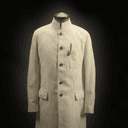
A traditional long coat buttoned up to the collar, which Nehru wore daily as a symbol of Indian identity. The straight collar of this garment has since been called the 'Nehru collar' in international fashion.

Iconic headwear of the Indian independence movement, worn by Nehru and Congress activists. It became a universally recognizable symbol of political resistance.

Nehru wore a fresh red rose in his buttonhole every day, a habit inherited from his father Motilal. This rose became his personal trademark at all his public appearances and diplomatic ceremonies.
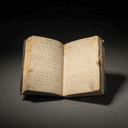
During his nine cumulative years of imprisonment, Nehru wrote his major works by hand in notebooks, without access to a library. These objects stand as symbols of his intellectual resistance to colonial imprisonment.

A symbol of the Gandhian movement of economic resistance to British colonialism. Nehru, though more of a modernist than Gandhi, used it during public appearances to express his commitment to the independence movement.

Nehru was a tireless traveler, present at all the major international conferences of the post-war era. His personal and intense diplomacy made India an indispensable player on the emerging world stage.
School Curriculum
Vocabulary & Tags
Key Vocabulary
Daily Life
Morning
Nehru rose early, around 6 a.m., beginning his day with physical exercises and a walk through the gardens of Teen Murti Bhavan. He read several Indian and foreign newspapers before his first cabinet meetings, keeping himself informed of world affairs in both English and Hindi.
Afternoon
Afternoons were devoted to parliamentary sessions, audiences with ministers and foreign ambassadors, and meetings of the Council of State. Nehru was personally involved in international affairs, receiving heads of state from around the world at New Delhi himself.
Evening
Evenings gave him a measure of calm: he drafted speeches and letters, read works of history or philosophy, and spent time with his daughter Indira, who ran his household. He also enjoyed tending to his rose bushes in the garden at sunset.
Food
Nehru followed a simple, Brahmin-inspired diet: rice, dal (lentils), cooked vegetables, and yogurt. Educated in England, he also enjoyed the British tradition of afternoon tea. He did not smoke and drank alcohol only in moderation at diplomatic receptions.
Clothing
He invariably wore the white sherwani and Gandhi topi, symbols of the nationalist movement. This understated yet elegant outfit served as both his everyday working attire and his formal ceremonial dress, visible in all his public photographs.
Housing
From 1948 to 1964, Nehru lived at Teen Murti Bhavan, a grand colonial residence set within a 24-hectare park in the heart of New Delhi. Originally built for the British Commander-in-Chief of India, it also housed a working library and large reception rooms for diplomatic functions.
Historical Timeline
Period Vocabulary
Visual Style
Esthétique politique de l'Inde des années 1940-1960 : blanc immaculé du sherwani, foules d'indépendance, architecture coloniale réappropriée et tons chauds du sous-continent indien.
Sound Ambience
Ambiance sonore de New Delhi des années 1947-1964 : sessions parlementaires, cérémonies de l'indépendance, bruits de rue mêlant modernité naissante et traditions indiennes millénaires.
Liens externes & ressources
Références
Œuvres
An Autobiography (Une autobiographie)
1936
Glimpses of World History (Aperçus de l'histoire du monde)
1934
The Discovery of India (La Découverte de l'Inde)
1946
Discours 'Tryst with Destiny'
14-15 août 1947
Fondation des IIT (Indian Institutes of Technology)
1951-1959
Plans quinquennaux de développement économique
1951-1964