 flip
flipSplit Pea and Leek Pottage with Dark Bread
Split Pea and Leek Pottage with Dark Bread
Why this dish? It is reported that Calvin, plagued by chronic digestive troubles, often ate only one meal a day and favored bread, vegetables, and legumes. This thick pottage of dried peas and leeks is exactly the kind of simple, single dish that nourished his Genevan table without falling into the luxury he condemned.
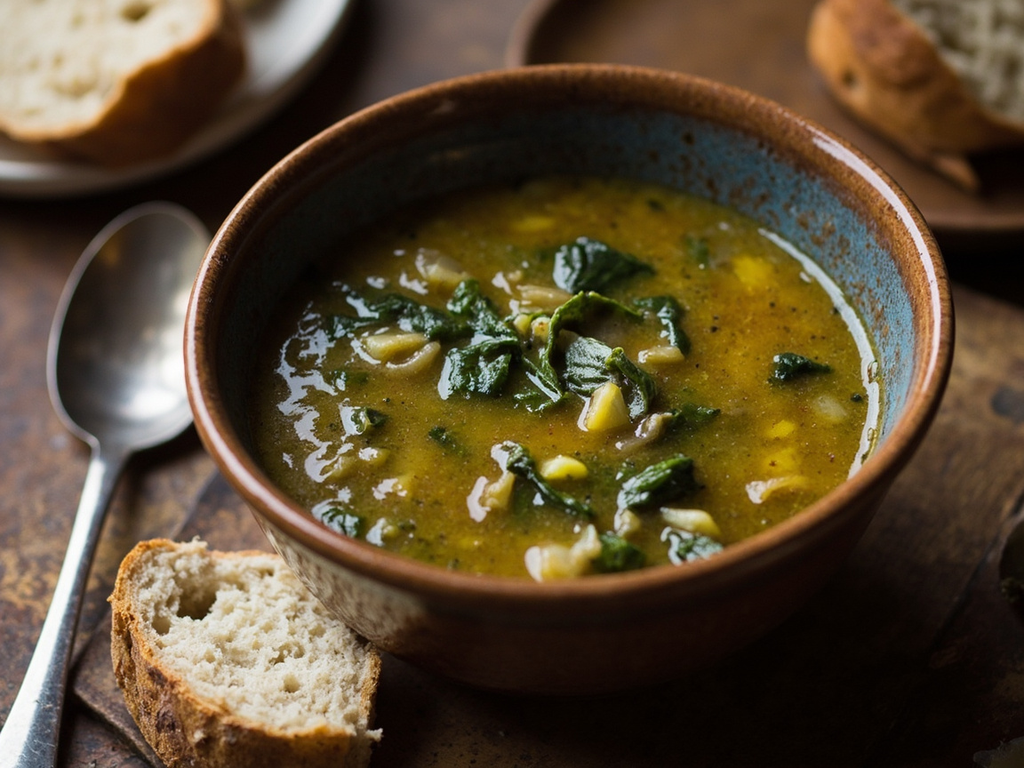
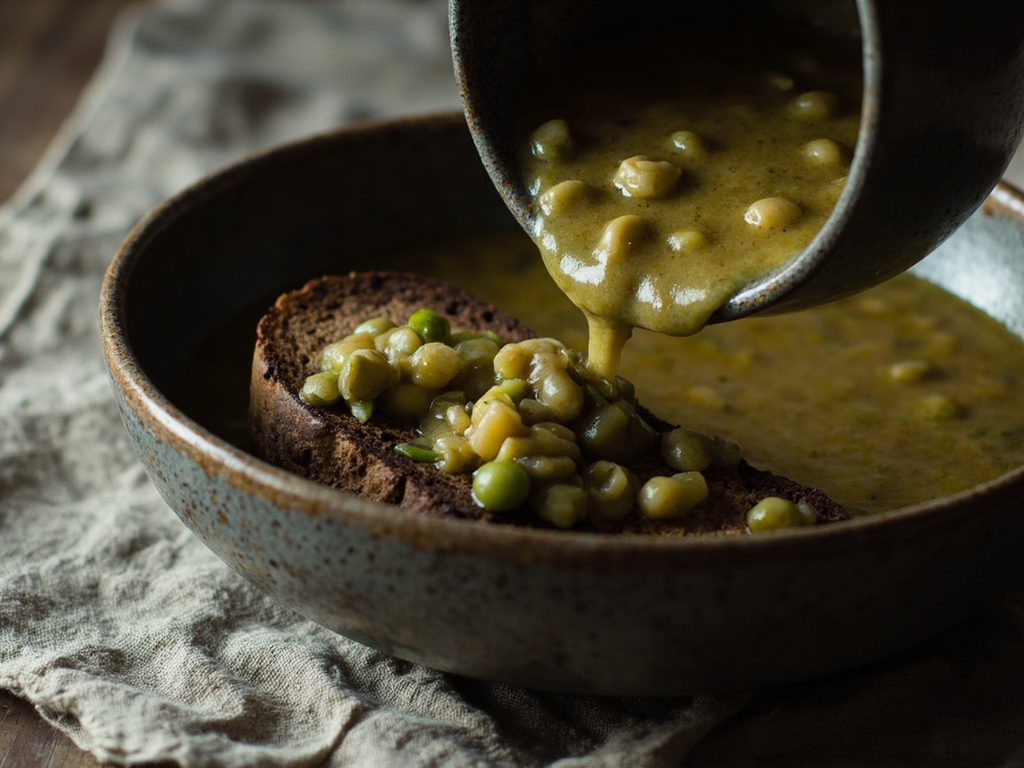
A thick pottage where split peas melt into a velvety purée, flavored with leek and garden herbs, poured over slices of stale dark bread to make a complete meal.
Come near, and seek not here the sumptuous table of the great: a man is content with little, and his fragile stomach commands this better than any rule. I soak my peas the night before, then cook them gently with a leek from my garden and a few herbs, without a surfeit of spices that flatter the mouth and corrupt the heart. When the purée is bound, I pour it over two-day-old dark bread, and there is my whole dinner. Eat soberly, for a full belly makes the spirit heavy, and God did not create meats for our intemperance.
- •Split peas (or dried peas) — a good bowlful (nourishing base)
- •Leeks — two or three (main aromatic)
- •Onion — one (foundation)
- •Herbs (parsley, sage, savory) — a handful (flavor)
- •Salt — to taste (seasoning)
- •Stale dark bread — a few slices (support)
Split Pea and Leek Pottage with Dark Bread
A thick pottage where split peas melt into a velvety purée, flavored with leek and garden herbs, poured over slices of stale dark bread to make a complete meal.
Why this dish? It is reported that Calvin, plagued by chronic digestive troubles, often ate only one meal a day and favored bread, vegetables, and legumes. This thick pottage of dried peas and leeks is exactly the kind of simple, single dish that nourished his Genevan table without falling into the luxury he condemned.
Come near, and seek not here the sumptuous table of the great: a man is content with little, and his fragile stomach commands this better than any rule. I soak my peas the night before, then cook them gently with a leek from my garden and a few herbs, without a surfeit of spices that flatter the mouth and corrupt the heart. When the purée is bound, I pour it over two-day-old dark bread, and there is my whole dinner. Eat soberly, for a full belly makes the spirit heavy, and God did not create meats for our intemperance.
Ingredients (period version)
- Split peas (or dried peas) — a good bowlful (nourishing base)
- Leeks — two or three (main aromatic)
- Onion — one (foundation)
- Herbs (parsley, sage, savory) — a handful (flavor)
- Salt — to taste (seasoning)
- Stale dark bread — a few slices (support)
Ingredients
- Split peas — 250 g (nourishing base)
- Leeks — 2 large (main aromatic)
- Onion — 1 (foundation)
- Parsley, sage, and savory — 1 small bunch (flavor)
- Salt — 1 tsp (seasoning)
- Water — 1.2 L (cooking liquid)
- Stale country bread — 4 slices (support)
Method
- Rinse the split peas (no need to soak long, but 1 hour in cold water speeds up cooking).
- Slice the onion and leeks (white and tender green), sweat them gently in a little water or a drizzle of oil.
- Add the peas and water, bring to a simmer, skim, then cook covered for 45 min to 1 hour until the peas fall apart.
- Add the chopped herbs at the end of cooking, season with salt, and blend or mash with a fork for a rustic velouté.
- Place a slice of dark bread in each bowl and ladle the hot pottage over it.
How it was made : Legume pottages were the foundation of popular and monastic diets in Northern Europe in the 16th century. They were often thickened with stale bread (the "trencher"), which served as both plate and thickener — nothing was wasted.
The contemporary twist : A drizzle of hazelnut oil and a few oven-toasted croutons transform this Lenten pottage into a bistro-style velouté, without betraying its simplicity.
Jean Calvin · Charactorium