 flip
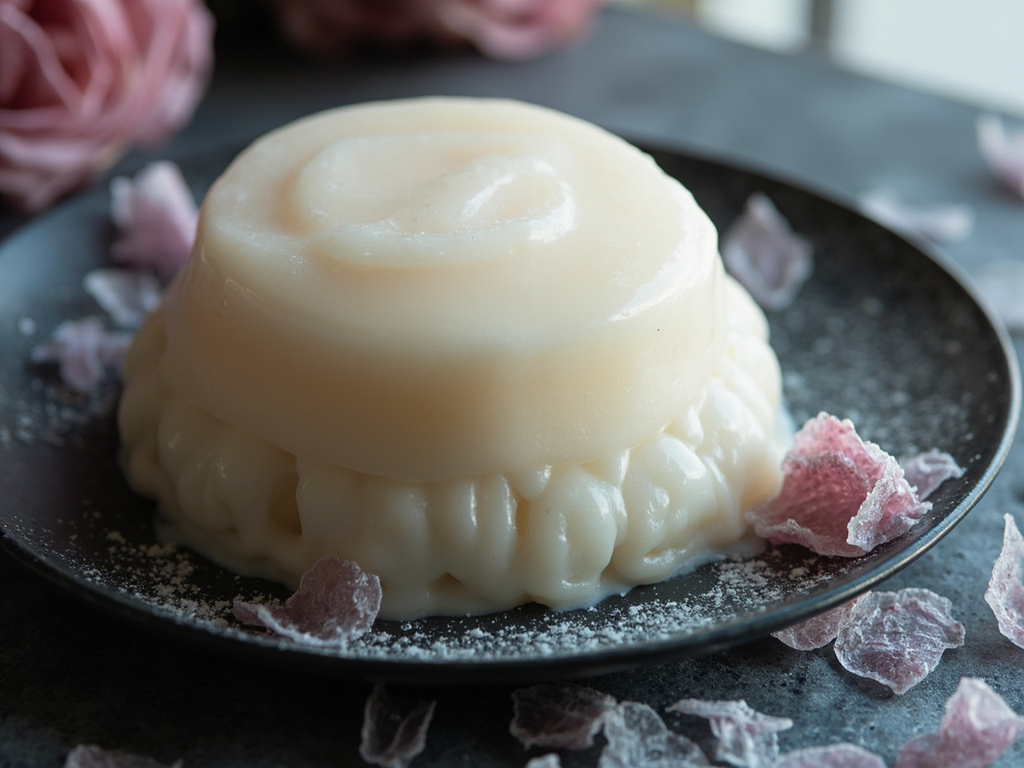
Almond Blancmange
Almond Blancmange
Why this dish? In *Les Caractères*, La Bruyère mocks gluttons who make their stomachs a matter of state. Himself measured, he nonetheless encountered, at Chantilly, those delicate end-of-meal entremets. The blancmange, an immaculate and refined sweetness, crowned the princely tables he described with such a lucid eye.
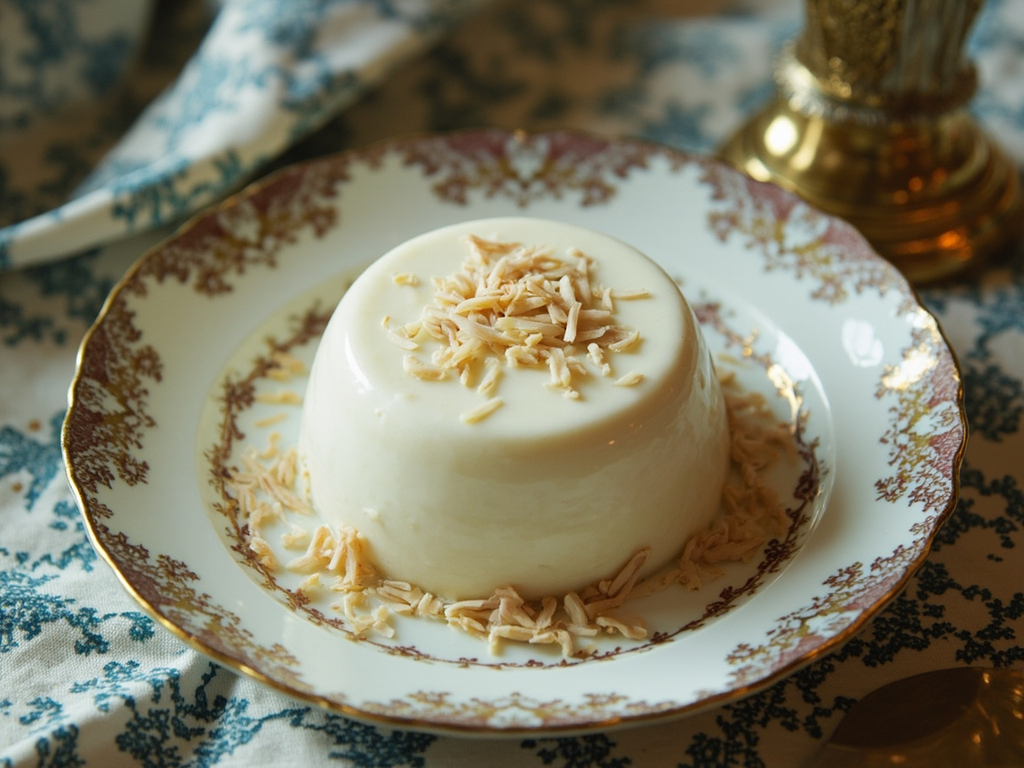
A white, trembling cream made from almond milk, perfumed with orange flower water, set with natural gelatin. Elegance and purity.
At last the entremets are brought, and among them this blancmange that wins the admiration of the ladies. It is an almond milk, sweetened and set into a jelly, white as snow, perfumed with a dash of orange flower water. Nothing simpler, nothing more delicate: the very opposite of those learned ragouts where one no longer recognizes anything one eats. I taste a spoonful — moderation in all things makes for good taste.
- •Sweet almonds — a good handful, blanched (almond milk)
- •Sugar — to discretion (sweetness)
- •Isinglass / calf's foot — as needed (sets the jelly)
- •Orange flower water — a few drops (fragrance)
Almond Blancmange
A white, trembling cream made from almond milk, perfumed with orange flower water, set with natural gelatin. Elegance and purity.
Why this dish? In *Les Caractères*, La Bruyère mocks gluttons who make their stomachs a matter of state. Himself measured, he nonetheless encountered, at Chantilly, those delicate end-of-meal entremets. The blancmange, an immaculate and refined sweetness, crowned the princely tables he described with such a lucid eye.
At last the entremets are brought, and among them this blancmange that wins the admiration of the ladies. It is an almond milk, sweetened and set into a jelly, white as snow, perfumed with a dash of orange flower water. Nothing simpler, nothing more delicate: the very opposite of those learned ragouts where one no longer recognizes anything one eats. I taste a spoonful — moderation in all things makes for good taste.
Ingredients (period version)
- Sweet almonds — a good handful, blanched (almond milk)
- Sugar — to discretion (sweetness)
- Isinglass / calf's foot — as needed (sets the jelly)
- Orange flower water — a few drops (fragrance)
Ingredients
- Ground almonds (or blanched almonds, blended) — 150 g (base of almond milk)
- Milk — 50 cl (liquid)
- Sugar — 80 g (sweetness)
- Gelatin (leaves) — 5 g (≈ 2.5 leaves) (sets the cream)
- Orange flower water — 1 tsp (signature fragrance)
Method
- Heat the milk with the ground almonds and sugar, without boiling, then let infuse for 20 minutes off the heat.
- Strain through a cloth, pressing well to extract all the almond milk.
- Soften the gelatin in cold water, squeeze it out, and dissolve it in the warm almond milk.
- Flavor with orange flower water, pour into small molds.
- Refrigerate for at least 4 hours until set. Unmold gently to serve.
How it was made : Blancmange is one of the oldest sweet dishes in Europe; in the 17th century it was made in a sweet version, perfumed with orange flower water (very fashionable under Louis XIV) and set with jelly from calf's feet or isinglass. Its perfect whiteness was a sign of luxury and technical mastery.
The contemporary twist : Unmold it as a dome napped with a tangy red berry coulis: the white/ruby contrast and the touch of acidity modernize this classic without betraying it.
Sources : La Varenne, Le Cuisinier françois, 1651 · François Massialot, Nouvelle Instruction pour les confitures, 1692
Jean de La Bruyère · Charactorium