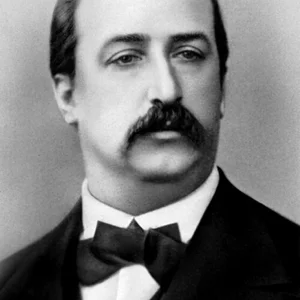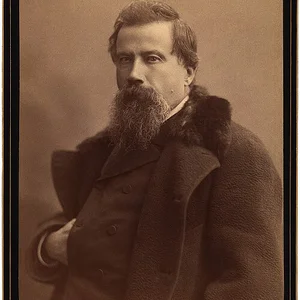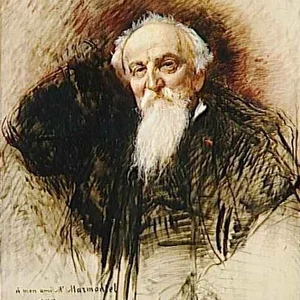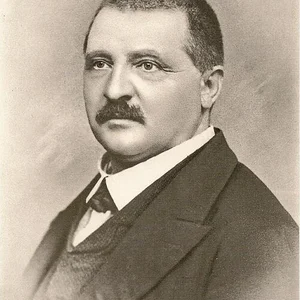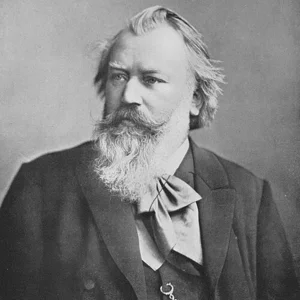

German composer, pianist, and conductor (1833–1897), Brahms is one of the towering figures of musical Romanticism. He is celebrated for his four symphonies, his German Requiem, and his chamber music of remarkable formal rigor.
Johannes Brahms(1833 — 1897)
Johannes Brahms
Allemagne, Hambourg
11 min read
Frequently asked questions
Key Facts
- Born in Hamburg on 7 May 1833, died in Vienna on 3 April 1897
- Composed his 4 symphonies between 1876 and 1885
- The German Requiem (1868) is one of the major choral works of the 19th century
- Friend and champion of Robert and Clara Schumann
- Considered, alongside Bach and Beethoven, one of the “three Bs” of German classical music
Works & Achievements
A major work for soprano, baritone, chorus, and orchestra set to texts from the Lutheran Bible. Premiered at Bremen Cathedral on 10 April 1868, it is considered his vocal masterpiece and one of the most important choral works of the 19th century.
The product of more than twenty years of work, this symphony was nicknamed “Beethoven’s Tenth.” It bears witness to Brahms’s formal rigor and his deep respect for the classical tradition inherited from Haydn and Beethoven.
Composed for and with violinist Joseph Joachim, this concerto is one of the cornerstones of the violin repertoire. Its demanding technique and musical depth, which goes well beyond mere virtuosity, make it a central work of the orchestral Romantic era.
Brahms’s final symphony, often regarded as his most accomplished orchestral work. Its finale in the form of a Baroque passacaglia illustrates the unique synthesis Brahms achieves between the legacy of the past and the Romantic musical language.
Composed after his meeting with clarinetist Richard Mühlfeld, this quintet stands as one of the high points of 19th-century chamber music. Its melancholic atmosphere and refined writing make it a work of consummate maturity.
A set of two books of virtuosic variations for solo piano, considered among the most technically demanding pieces in the piano repertoire. They bear witness to Brahms’s gifts as an accomplished concert pianist.
A cycle of four lieder for bass voice and piano, composed shortly before Brahms’s death, set to biblical texts (Ecclesiastes, Sirach, the Epistle to the Corinthians). Regarded as his spiritual testament, these austere songs carry a striking intensity.
Anecdotes
In October 1853, when Brahms was only twenty years old and still unknown, the great composer Robert Schumann published an enthusiastic article titled ‘Neue Bahnen’ (‘New Paths’) in the Neue Zeitschrift für Musik. He presented the young Hamburger as the musical genius of the future, ‘destined to give the highest ideal expression to the aspirations of our time.’ This sudden recognition propelled Brahms to the forefront of the European musical scene overnight.
Brahms spent more than twenty years completing his First Symphony, begun around 1855 and premiered only in 1876 in Karlsruhe. He so feared being compared to Beethoven that he kept putting off publication. When the symphony was finally performed, conductor Hans von Bülow nicknamed it “Beethoven’s Tenth” — illustrating just how squarely Brahms had faced the challenge of music’s greatest shadow.
Brahms was known for his blunt manner and sharp sarcasm, yet concealed a genuine generosity. One evening, after leaving a dinner table with friends, he reportedly called out as he departed: “If there is anyone here whom I have not insulted, I beg his pardon.” Yet he quietly supported many young musicians starting out and regularly sent money to members of his family in need.
A great perfectionist, Brahms destroyed a large part of his early works, including entire symphonies and string quartets he deemed unworthy of publication. It is estimated that he burned more than twenty piano sonatas and several large orchestral compositions. This strict self-discipline explains why his official catalogue, though rich, is considerably smaller than those of his contemporaries.
A devoted lover of coffee and cigars, Brahms brewed his own very strong coffee each morning in his modest Viennese apartment on Karlsgasse. This morning ritual invariably preceded his composing sessions. He was a regular at Viennese coffeehouses — notably the ‘Café Gangl’ — where he enjoyed discussing music and politics with his friends, including the feared critic Eduard Hanslick.
Primary Sources
Schumann presents Brahms as a musician whose 'wings are already spread to fly toward other horizons', announcing that he is 'called to give the highest ideal expression to the aspirations of our time, one whose mastery is revealed not gradually but springs forth fully formed from the very first'.
In his letters to Clara Schumann, Brahms expresses deep admiration and affection: 'I would like to write to you with as much tenderness as I feel for you [...] You have given me more pleasures and elevated hours than all the others combined.' This correspondence, spanning more than forty years, reveals the intellectual and emotional bond that united the two musicians.
Brahms clarifies that his Requiem is not a strictly Lutheran confessional work: 'I would have gladly omitted the word 'German' and simply written 'human' [menschlich].' He emphasizes the universal dimension of the work, open to all listeners regardless of their faith.
The renowned Viennese critic Hanslick hails the first symphony as 'the most important, most imposing orchestral work that any composer has written since Beethoven', highlighting the formal rigor and emotional depth of a score that had been awaited for more than twenty years.
Upon Robert Schumann's death at Endenich in July 1856, Brahms writes to Clara: 'I do not know what to say to you. At this moment I can only weep with you. [...] You are so alone, so forsaken.' This letter bears witness to the profound solidarity that bound Brahms to the Schumann family throughout his entire life.
Key Places
Brahms's birthplace, where he was born on 7 May 1833 in the working-class Gängeviertel district. It was in Hamburg that he received his first piano lessons and gave his first public performances, including in the harbour taverns to help support his family.
The city where Brahms met Robert and Clara Schumann in 1853, a defining moment in his career. He returned in 1854 to support Clara after her husband's committal to an asylum, living in the family home and taking on part of its musical life.
A town in the Principality of Lippe where Brahms held a position as choral director and court pianist from 1857 to 1860. It was here that he conducted his first orchestral works and honed his skills as a conductor.
The musical capital of Europe, where Brahms settled permanently in 1862 and spent most of his adult life. He lived in a modest apartment at 4 Karlsgasse, and was a regular presence at the city's concerts, cafés, and musical circles.
A spa town in the Black Forest where Brahms spent regular summer stays, close to Clara Schumann's villa in Lichtenthal. Several important works were composed there in a peaceful rural setting conducive to creative work.
The city where the *German Requiem* was premiered in a near-complete version at the cathedral on 10 April 1868, conducted by Brahms himself. The evening was a triumph and marked the decisive turning point in the composer's international career.
Typical Objects

Brahms composed and performed on Steinway pianos, a brand that was then rapidly rising to prominence across Europe. He owned a grand piano in his Viennese apartment on Karlsgasse, where he worked every morning.

Brahms was an inveterate cigar smoker, a habit he kept throughout his life. He was rarely seen without a cigar, even during orchestral rehearsals or in Viennese cafés.

Brahms composed by hand on standard music manuscript paper, crossing out and rewriting endlessly. His musical autographs bear witness to an exacting compositional process, marked by numerous corrections.

A devoted lover of very strong coffee, Brahms prepared his coffee maker himself every morning before composing, refusing to delegate this ritual. His morning cup of coffee was, for him, the indispensable signal to begin work.

Brahms was a fervent admirer and deep connoisseur of Johann Sebastian Bach. He owned numerous Baroque scores and contributed to the complete edition of Bach's works, drawing on them for his own compositions — fugues, passacaglias, and canons.

Brahms conducted without a baton, beating time with his hand or a rolled-up score. He held positions as orchestral and choral conductor throughout his career, most notably at the Gesellschaft der Musikfreunde in Vienna from 1872 to 1875.
School Curriculum
Vocabulary & Tags
Key Vocabulary
Daily Life
Morning
Brahms rose early, often before dawn, and made his own very strong coffee himself — a ritual he delegated to no one. He would then settle at his desk or at the piano to compose, considering the morning hours the most conducive to creation. He worked in absolute silence, endlessly crossing out and rewriting his scores before judging them worthy of publication.
Afternoon
In the afternoon, Brahms liked to walk through the streets of Vienna or in the surrounding countryside, stopping at a café to read or chat. He visited musician friends, attended rehearsals, or gave private piano lessons himself. His favorite café in Vienna was the 'Café Gangl' in the Prater, where he regularly met the critic Eduard Hanslick and other musicians.
Evening
Brahms frequently attended concerts and the opera in Vienna, keeping a close eye on the city's musical life. He took part in private musical evenings (*Hausmusik*) at the homes of middle-class friends, where he played the piano or accompanied singers. His dinners, taken at popular Viennese restaurants rather than luxury establishments, sometimes ended very late in good company.
Food
Brahms had simple, unpretentious culinary tastes, enjoying traditional Viennese cuisine: Wiener Schnitzel, hearty soups, and cold cuts. He drank large quantities of strong coffee and beer, and smoked cigars throughout the day. He readily ate at popular *Gasthäuser* rather than elegant restaurants, staying true to his modest origins.
Clothing
Brahms was known for his disheveled and unkempt appearance, which contrasted with the elegance expected of a celebrated musician in bourgeois Vienna. He wore worn jackets, trousers that were often too short, and tended to neglect his tie. As he aged, he grew a long, thick beard that became his trademark and the subject of many caricatures.
Housing
In Vienna, Brahms lived in a modest apartment at 4 Karlsgasse (4th district), which he occupied from 1872 until his death. His lodgings, cluttered with scores, books, and manuscripts, reflected his bachelor lifestyle with little regard for bourgeois conventions. He owned a grand piano, a well-stocked musical library, and a few mementos from his friends, notably portraits of Clara Schumann.