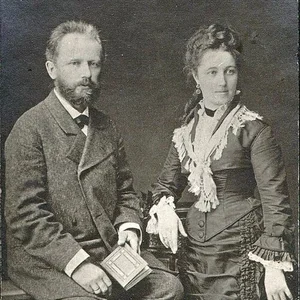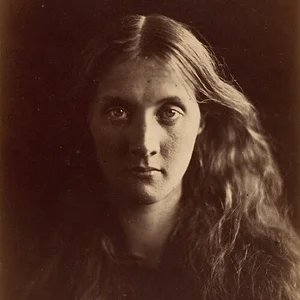

English philanthropist and artist's model of the Victorian era, wife of the man of letters Leslie Stephen and mother of Virginia Woolf and Vanessa Bell. Devoted to caring for the sick and the poor, she wrote a handbook on home nursing.
Julia Stephen(1846 — 1895)
Julia Prinsep Stephen
6 min read
Frequently asked questions
Key Facts
- Born in 1846 in British India, into a family connected to English artistic and intellectual circles
- Marries the writer and critic Leslie Stephen in 1878, her second marriage
- Mother of Virginia Woolf and the painter Vanessa Bell, future figures of the Bloomsbury Group
- Writes “Notes from Sick Rooms” (1883), a practical guide to caring for the sick at home
- Dies in 1895; her loss triggers Virginia Woolf's first depressive breakdown, at the age of 13
Works & Achievements
A practical handbook on caring for the sick at home, drawn from her experience as a nurse. Reissued in the 20th century, it bears witness to the role of women in family health.
A collection of tales that Julia wrote for her own children, published much later. They reveal her gift for storytelling within the home.
Short texts, including a notice devoted to her aunt Julia Margaret Cameron. She also contributed her ideas to her husband's work.
Regular visits to the sick, the dying, and the needy in her circle and beyond. This commitment embodied the Victorian ideal of feminine charity.
Her face inspired Edward Burne-Jones and was immortalized in the photographs of Julia Margaret Cameron. She became an icon of Victorian beauty.
Anecdotes
Before her marriage to Leslie Stephen, Julia had married Herbert Duckworth, a barrister full of promise. His sudden death in 1870, after only three years of marriage, left her a widow at 24 with three children; this profound grief left a lasting mark on her character and her sense of duty.
Julia posed at a very young age for the Pre-Raphaelite painters, who were friends of her family. The celebrated artist Edward Burne-Jones drew inspiration from her face for several of his paintings, and her aunt, the pioneering photographer Julia Margaret Cameron, made superb portraits of her.
In 1883, she published a small handbook titled *Notes from Sick Rooms*, drawn from her long experience at the bedside of sick relatives and the poor. With quiet humour, she devotes an entire passage to the breadcrumbs in the invalid's bed, which she calls the worst enemies of rest.
Mother of eight children in all (from her two marriages and from her second husband's first marriage), Julia ran an enormous household at Hyde Park Gate in London, while also making countless visits to the sick outside the home. Her constant exhaustion no doubt contributed to her premature death at 49.
Julia's death in 1895 devastated her daughter Virginia, then 13 years old, and triggered her first major nervous breakdown. Years later, Virginia Woolf would bring her mother to life through the character of Mrs Ramsay in the novel *To the Lighthouse*.
Primary Sources
Among the number of small evils which haunt illness, the greatest, in the misery which it can cause, though the smallest in size, is crumbs.
The origin of most things has been decided on, but the origin of crumbs in bed has never excited sufficient attention.
She had the whole of the other sex under her protection; for reasons she could not explain, for their chivalry and valour.
She has haunted me... I could hear her voice, see her, imagine what she would do or say as I went about my day's doings.
Key Places
City of the British Indian Empire where Julia was born in 1846, her family being part of the Anglo-Indian elite. She returned to England as a child.
Large London house where Julia raised her large family and where Virginia Woolf and Vanessa Bell grew up. The heart of the Stephens' domestic and social life.
Holiday home where the family spent its summers by the sea. Its landscapes would later inspire Virginia Woolf's *To the Lighthouse*.
The home of her aunt, the photographer Julia Margaret Cameron, which welcomed a circle of artists and writers. Julia sat there for many portraits.
London cemetery where Julia was buried after her death in 1895. Her passing plunged her family into a long period of mourning.
Typical Objects

A small, practical book aimed at women caring for their loved ones at home, filled with concrete advice on patient comfort. Julia wrote one, *Notes from Sick Rooms*.

An instrument for measuring a patient's fever, which became widespread in well-off Victorian households. An essential tool for the home sickroom nurse.

A glass support used by 19th-century photographers to fix portraits. Julia's aunt, Julia Margaret Cameron, used it for her famous photographs of her niece's face.

A woman's outfit fitted at the waist with a corset and completed by voluminous petticoats, a symbol of the “angel of the house.” Julia, renowned for her beauty, was often painted in such attire.

Porcelain service and teapot used during the ritual of “afternoon tea,” a central moment in Victorian social life. The lady of the house received visitors and friends here.

Correspondence supplies indispensable to a high-society woman, who kept up with family, friends, and charitable causes by mail. Julia wrote abundantly every day.
School Curriculum
Vocabulary & Tags
Key Vocabulary
Tags
Lieu
Daily Life
Morning
Julia rose early to organize her vast household: giving instructions to the servants, overseeing the children's breakfast and lessons. Running the home at Hyde Park Gate already took up a large part of her morning.
Afternoon
In the afternoon, she often went out to visit the sick, grieving friends, or poor families she helped. She might also host afternoon tea and keep up her abundant correspondence.
Evening
The evening brought the family together around Leslie Stephen, who sometimes read aloud. Julia made sure the youngest children went to bed and found little time for personal rest.
Food
The diet of a Victorian middle-class household included roast meats, fish, boiled vegetables, puddings, and pastries. Tea accompanied several moments of the day, from breakfast to afternoon tea.
Clothing
Julia wore the long, fitted dresses of Victorian fashion, with a waist cinched by a corset and full skirts. Renowned for her beauty, she favored simple, elegant outfits, often dark after her bereavements.
Housing
The family lived in a tall, narrow house spread over several floors at Hyde Park Gate, in the heart of London, filled with children and servants. In summer, she retreated to Talland House, facing the sea in Cornwall.
Historical Timeline
Period Vocabulary
Liens externes & ressources
Références
Œuvres
Notes from Sick Rooms
1883
Stories for Children (contes pour enfants)
années 1880
Essais et notices biographiques
années 1880-1890
Action philanthropique auprès des malades et des pauvres
années 1870-1890
Modèle des peintres préraphaélites et de la photographie
années 1860-1870