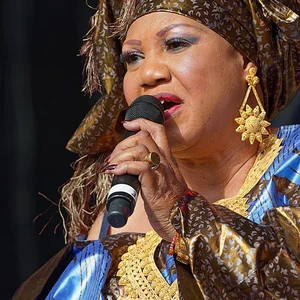

Born in 1959 in Mali, Kandia Kouyaté is a Mandinka griot singer nicknamed "the Diva of the Mande." From the renowned Kouyaté griot lineage, she is one of the greatest voices of the oral griot tradition, transmitting epic songs and the collective memory of the Mali Empire.
Kandia Kouyaté(1958 — ?)
Kandia Kouyaté
Mali
9 min read
Frequently asked questions
Key Facts
- Born in 1959 in Mali into the Kouyaté griot family, a celebrated lineage of keepers of the Mande tradition
- Nicknamed "the Diva of the Mande" for her voice and mastery of the epic griot repertoire
- Carries on the Mande epic tradition, particularly stories linked to Sundiata Keita and the Mali Empire
- Internationally recognized as an ambassador of traditional West African music
- Her transmission is rooted in an oral family lineage, not in written sources
Works & Achievements
Kandia Kouyaté's first major international album, which introduced her to a global audience. Biriko brings together traditional Mande songs and compositions blending ancient instruments with contemporary arrangements.
Considered her masterpiece, universally acclaimed by international critics. Kandan (meaning "heritage" in Mande) showcases her vocal mastery and her deep faithfulness to the griot tradition.
An album that reflects Kandia Kouyaté's artistic maturity and her ability to renew her repertoire while remaining rooted in tradition. Hayani means "here" in Mande.
Kandia Kouyaté is one of the foremost contemporary performers of the Sundiata epic, the founding narrative of the Mali Empire. This oral performance is at once an artistic, historical, and spiritual act.
Her presence on world stages brought the Mande griot tradition to international audiences, helping to raise awareness of this intangible cultural heritage beyond West Africa.
Anecdotes
Kandia Kouyaté was born into a Kouyaté griot family, one of the great djeli lineages of the Mande people. From childhood, she learned epic songs, genealogies, and the history of the Mali Empire from her elders, following an oral transmission tradition spanning several centuries. Her musical education was not academic but physical and memorial: thousands of verses memorized before she ever learned to read.
Nicknamed "the Diva of the Mande," Kandia Kouyaté is renowned for the power and precision of her voice. She can sing for hours during ceremonies, weddings, or national celebrations, holding audiences spellbound through her mastery of ancient repertoires. Her timbre is often described as one of the purest in the Mande griot tradition.
Kandia Kouyaté is one of the foremost interpreters of the epic of Sundiata Keita, founder of the Mali Empire in the 13th century. She passes down this founding narrative through song, keeping alive a living tradition that predates writing by far. For the Mande peoples, hearing these songs is a powerful cultural and identity-affirming act, comparable to the reading of foundational texts in other civilizations.
Over the course of her international career, Kandia Kouyaté has represented Mande music on the world's greatest stages, most notably at the WOMAD world music festival. Her presence at these events has helped bring the griot tradition to audiences far beyond West Africa, drawing the attention of ethnomusicologists and the general public to this intangible oral heritage.
Kandia Kouyaté has recorded several studio albums that now stand as precious archives of the Mande oral tradition. These recordings help preserve songs and narratives that, without this modern medium, risk being lost across generations. She thus embodies the tension between living transmission and archiving, between tradition and modernity.
Primary Sources
Sundiata, son of Sogolon and Maghan Konfara, rose and walked. The earth trembled beneath his feet. The lions fell silent. The Manding was born.
The songs gathered here belong to the classical repertoire of the jelis of the Manding. They celebrate the founding heroes, the warrior virtues, and the collective memory of the Manding people.
I did not choose to be a griot — I was born into it. My mother taught me the songs, and so did my grandmother. It is a chain that must never be broken. Each generation receives and passes on.
The djali is at once musician, historian, genealogist, and counselor. He preserves the memory of noble families and founding events. Without the djalis, Manding history would be silent.
I am Djeli Mamoudou Kouyaté, son of Bintou Kouyaté and Djeli Kedian Kouyaté, master of the art of speaking. Since time immemorial, the Kouyatés have been in the service of the Keita princes of the Manding.
Key Places
Kandia Kouyaté's hometown and a major center of Mandingo griot tradition. Kita is considered one of the living cradles of djeli culture, where griot lineages have been passed down for centuries.
The capital of Mali, where Kandia Kouyaté built her career and performed at major national celebrations. Bamako is the country's cultural and musical hub, where griot tradition and modern music converge.
A sacred city of the Mande world and the mythical birthplace of the empire founded by Sundiata Keita. Here stands the Kamabolon, a sanctuary where griots renew the transmission of founding memory every seven years.
The city from which Kandia Kouyaté launched her international career. Paris is home to a significant Mandingo diaspora and numerous world music labels that have helped bring her work to a global audience.
The legendary site of Sundiata Keita's victory over Soumaoro Kanté — the founding event of the Mali Empire that Kouyaté griots have sung about for centuries. Kandia Kouyaté carries on this epic tradition in her performances.
Typical Objects
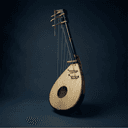
The kora is the emblematic string instrument of Manding griots, traditionally used to accompany the epic songs of djélis. Although Kandia Kouyaté is primarily a singer, the kora is the instrument that accompanies her performances at major ceremonies.

A traditional West African xylophone used in Manding griot ensembles. The balafon punctuates sung narratives and marks important moments in the ceremonies at which Kandia Kouyaté performs.

The traditional ceremonial garment worn by Kandia Kouyaté during her performances. The colorful, embroidered boubou signals the high social and cultural standing of the griotte, whose dress is itself a statement of identity.

A traditional Manding drum that accompanies singing at festivals and ceremonies. In Kandia Kouyaté's performances, the djembe provides the rhythmic pulse that underpins her voice.

A traditional Manding lute, likely an ancestor of the banjo, used in griot ensembles. This plucked string instrument accompanies epic narratives in the repertoire that Kandia Kouyaté keeps alive.

A percussion instrument made from a dried gourd, struck against water or the ground. A constant presence in Manding ceremonies, the calabash keeps the beat for ritual and festive songs.
School Curriculum
Vocabulary & Tags
Key Vocabulary
Daily Life
Morning
Kandia Kouyaté begins her day early, in keeping with the rhythms of Malian life shaped by morning prayers. She devotes part of the morning to warming up her voice and rehearsing songs from her repertoire — a daily practice that keeps alive the memory of epic texts she learned since childhood. Visits from extended family members or griot apprentices are common from early in the day.
Afternoon
Afternoons are often spent in rehearsal with her accompanying musicians — kora, balafon, or ngoni players. In the Malian context, this time is also given over to social obligations: attending family ceremonies (weddings, naming ceremonies, funerals) where the presence of a renowned griot is considered an honor by the inviting family. She may also receive requests to compose praise songs for notable individuals.
Evening
Evening is the time for grand performances. Ceremonies are often held after nightfall, when the heat has eased. Kandia Kouyaté can sing for hours, carried along by the energy of the audience and the living exchange between the griot and her listeners, who respond, cheer, and offer gifts. It is in these moments that the griot tradition is expressed in its fullest form.
Food
Daily meals follow traditional Malian cuisine: rice (tô, the staple dish), sauces made with peanuts, okra, or leafy greens, and meat or fish depending on availability. Meals are a communal event, shared with family. Water and very sweet mint tea — served in three ritual rounds — punctuate the social day.
Clothing
In everyday life, Kandia Kouyaté wears garments in wax print or bazin riche fabric, dyed and embroidered in Mali. For ceremonies and concerts, she dons magnificent boubous embroidered with gold thread and a matching grand headscarf — an outfit that signals her standing and affirms her Mande cultural identity. The care given to dress is an integral part of a griot's status.
Housing
In her hometown of Kita and in Bamako, Kandia Kouyaté lives in a family compound — a large house built around an inner courtyard shared with the extended family, following the traditional Malian model of communal living. This spatial arrangement encourages intergenerational exchange and the passing down of griot knowledge from elders to the young. When on international tour, she stays in urban accommodations.
Historical Timeline
Period Vocabulary
Visual Style
Portrait de femme griotte mandingue dans des tons chauds d'ocre, d'or et d'indigo, vêtue d'un boubou brodé, capturant la majesté et la présence scénique d'une diva de la tradition orale africaine.
Sound Ambience
Ambiance d'une soirée de cérémonie mandingue : kora, balafon, djembé et voix de griotte puissante s'entremêlent, portant la mémoire épique de l'empire du Mali sous un ciel étoilé du Sahel.