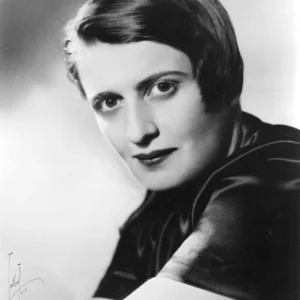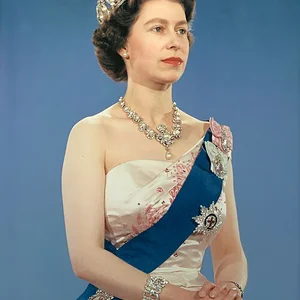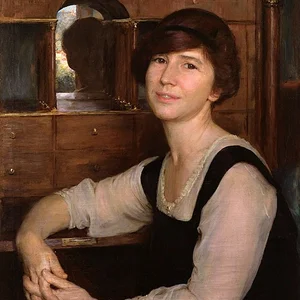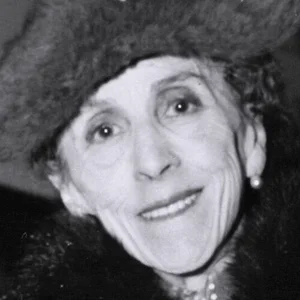

Danish writer (1885-1962), author of *Out of Africa*, an autobiographical account of her life in Kenya. She ran a coffee plantation in British East Africa for seventeen years and wrote under the pseudonym Isak Dinesen.
Karen Blixen(1885 — 1962)
Karen Blixen
Royaume de Danemark
8 min read
Frequently asked questions
Famous Quotes
« I had a farm in Africa, at the foot of the Ngong Hills.»
« If I had known it was my last time, I would have looked longer.»
Key Facts
- 1885: Born in Rungsted, Denmark
- 1914: Moved to Kenya with her husband Baron Bror von Blixen-Finecke
- 1931: Returned to Denmark after the coffee plantation went bankrupt
- 1937: Publication of *Out of Africa* under the pseudonym Isak Dinesen
- 1962: Died in Rungsted, having been considered for the Nobel Prize in Literature
Works & Achievements
Her first short story collection, published in English under the pen name Isak Dinesen, it was an immediate success in the United States. These tales blending fantasy, romanticism, and irony established Karen Blixen's international reputation.
An autobiographical account of her seventeen years in Kenya, considered her masterpiece. This lyrical and melancholic work, adapted into a film in 1985 starring Meryl Streep, established Karen Blixen as a major voice in world literature.
A short story collection published during the Nazi occupation of Denmark, in which Karen Blixen explores themes of fate and freedom. It was circulated clandestinely as an act of cultural resistance.
A late collection confirming Karen Blixen's singular style: nested narratives, aristocratic characters, and a deep philosophical dimension — acclaimed by international critics.
A novella telling the story of a French cook who has taken refuge in Norway and offers a sumptuous banquet to a Puritan community. Adapted into a film in 1987, it won the Academy Award for Best Foreign Language Film.
A nostalgic memoir revisiting her years in Africa and her former Kikuyu servants. This work complements *Out of Africa* and bears witness to Karen Blixen's deep attachment to Africa and its people.
Anecdotes
Karen Blixen married Swedish baron Bror von Blixen-Finecke in 1914 primarily to obtain the title of baroness and move to British East Africa. This marriage of convenience came at a high price: her husband gave her syphilis, a disease she was treated for multiple times in Nairobi and Copenhagen, and from which she suffered for the rest of her life.
For seventeen years, Karen Blixen single-handedly managed a coffee plantation of nearly 1,800 hectares in the Ngong Hills, Kenya. She oversaw hundreds of Kikuyu and Somali workers on a daily basis, administered justice for her employees according to local customs, and became a respected figure in the surrounding African community.
English aviator Denys Finch Hatton, the great love of Karen Blixen's life, took her up in his plane several times over the Kenyan plains to show her the savanna from above — an experience she described as one of the most beautiful of her life. In 1931, Finch Hatton died in the crash of his small Gipsy Moth aircraft, leaving Karen devastated.
Forced to sell the plantation in 1931 due to falling coffee prices and drought, Karen Blixen returned to Denmark penniless. It was this painful loss that drove her to write: she transformed her African memories into literature, publishing *Out of Africa* in 1937 under the male pseudonym Isak Dinesen in order to be taken seriously in a literary world dominated by men.
Toward the end of her life, Karen Blixen was several times considered for the Nobel Prize in Literature, but never received it. In 1954, Ernest Hemingway won the prize and publicly declared that Isak Dinesen deserved it more than he did — a rare and sincere tribute from one great writer to another.
Primary Sources
“I had a farm in Africa, at the foot of the Ngong Hills. The Equator runs across these highlands, a hundred miles to the north, and the farm lay at an altitude of over six thousand feet.”
“I am truly happy here, happier than I have ever been anywhere else. Africa has given me something that Europe could never give me.”
“The natives of East Africa are natural storytellers. They have a way of telling a story that gives it a mythic dimension, as though every event carries within it the echo of all similar events that came before.”
“A story ought to have something inevitable about it, like the song of a bird. We must receive it as a gift from fate.”
Key Places
The Dinesen family estate where Karen Blixen was born in 1885 and died in 1962. Now the Karen Blixen Museum, the house preserves her manuscripts, library, and personal belongings.
The roughly 1,800-hectare farm that Karen Blixen managed from 1914 to 1931 at the foot of the Ngong Hills, near Nairobi. The central setting of *Out of Africa*, it has since been converted into a museum.
Capital of British East Africa, which Karen Blixen visited regularly for business, medical care, and social life within the European colonial community.
Karen Blixen stayed here on several occasions to receive treatment for syphilis and to meet with her publishers following the international success of her works.
Typical Objects

Karen Blixen wrote her manuscripts on a portable typewriter. After her return to Denmark, this tool became the center of her creative life, allowing her to transcribe her African memories into literary works.

The Blixen plantation grew high-altitude arabica coffee, prized for its quality. These plants marked Karen's seasons and represented both economic hope and the cause of her ultimate ruin.

Like many settlers in Kenya, Karen Blixen hunted in the African bush. Her rifle symbolized colonial life and her ability to provide for her household alone in the wilderness.

The wide-brimmed hat, typical of European settlers in Africa, shielded against the intense sun of the Kenyan highlands. It has become one of the defining visual symbols of Karen Blixen as explorer and writer.

Karen Blixen recorded her observations, invented stories, and reflections in notebooks. She was renowned among Africans as an exceptional storyteller, and her notes fed directly into her literary works.

Denys Finch Hatton's Gipsy Moth biplane allowed Karen Blixen to discover Africa from the sky. These flights over the savanna are among the most lyrical memories in *Out of Africa*.
School Curriculum
Vocabulary & Tags
Key Vocabulary
Daily Life
Morning
At the Ngong farm, Karen Blixen rose at dawn to supervise the farmworkers before the heat became too intense. She kept the plantation's accounts, settled disputes between Kikuyu and Somali workers, and sometimes dispensed an informal form of justice that was respected by the local community.
Afternoon
Afternoons were devoted to writing letters to her family in Denmark and to the administrative management of the plantation. During harvest season, she oversaw the processing of coffee cherries in the drying sheds. When Denys Finch Hatton came to visit, they would sometimes set off on safari into the surrounding bush.
Evening
Karen Blixen was renowned for her gift as a storyteller: she invented tales for her European visitors and her African servants, who eagerly asked for more. She read widely, especially Shakespeare and Danish classics, by the light of oil lamps.
Food
At the farm, Karen Blixen cooked in the European tradition while making use of local ingredients: game hunted in the bush, vegetables from the kitchen garden, and coffee from her own plantation. She entertained her guests with elegance, setting a refined table that stood in striking contrast to the wild surroundings of the African bush.
Clothing
On the plantation, Karen Blixen wore the practical clothing of a settler: riding breeches, light cotton shirts, and a wide-brimmed hat to shield herself from the sun. At receptions in Nairobi's British colonial society, she dressed in elegant attire, mindful of upholding a social standing befitting her title of baroness.
Housing
The Ngong house was a single-story colonial stone farmhouse surrounded by verandas, perched at an altitude of approximately 1,800 meters. The rooms were decorated with Persian rugs, books, and European mementos alongside African objects, creating an atmosphere that was both refined and deeply rooted in the Kenyan landscape.
Historical Timeline
Period Vocabulary
Liens externes & ressources
Références
Œuvres
Sept contes gothiques (Seven Gothic Tales)
1934
Contes d'hiver (Winter's Tales)
1942
Derniers contes (Last Tales)
1957
Ombres sur la prairie (Shadows on the Grass)
1960