 flip
flipPanchamrit (the nectar of five gifts)
Panchamrit (the nectar of five gifts)
Why this dish? Panchamrit (“five nectars”) is the quintessential sacred offering made to Krishna and Vishnu: milk, yogurt, ghee, honey and sugar, the five gifts of the cow and nature, which he cherished as protector of cattle.
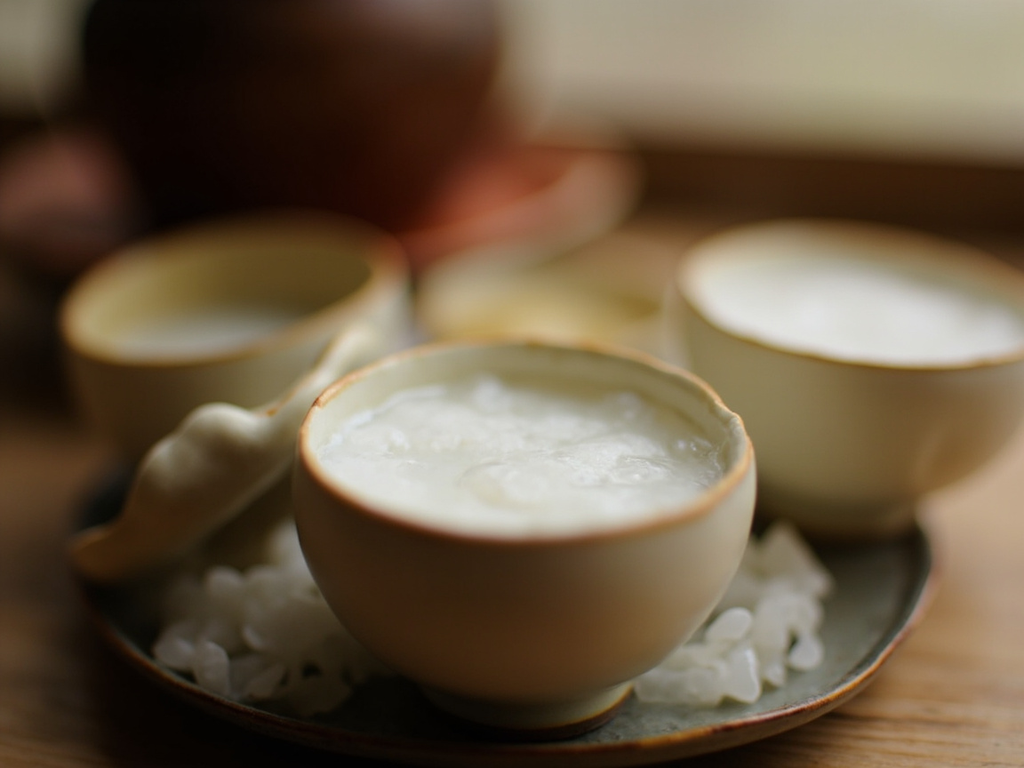
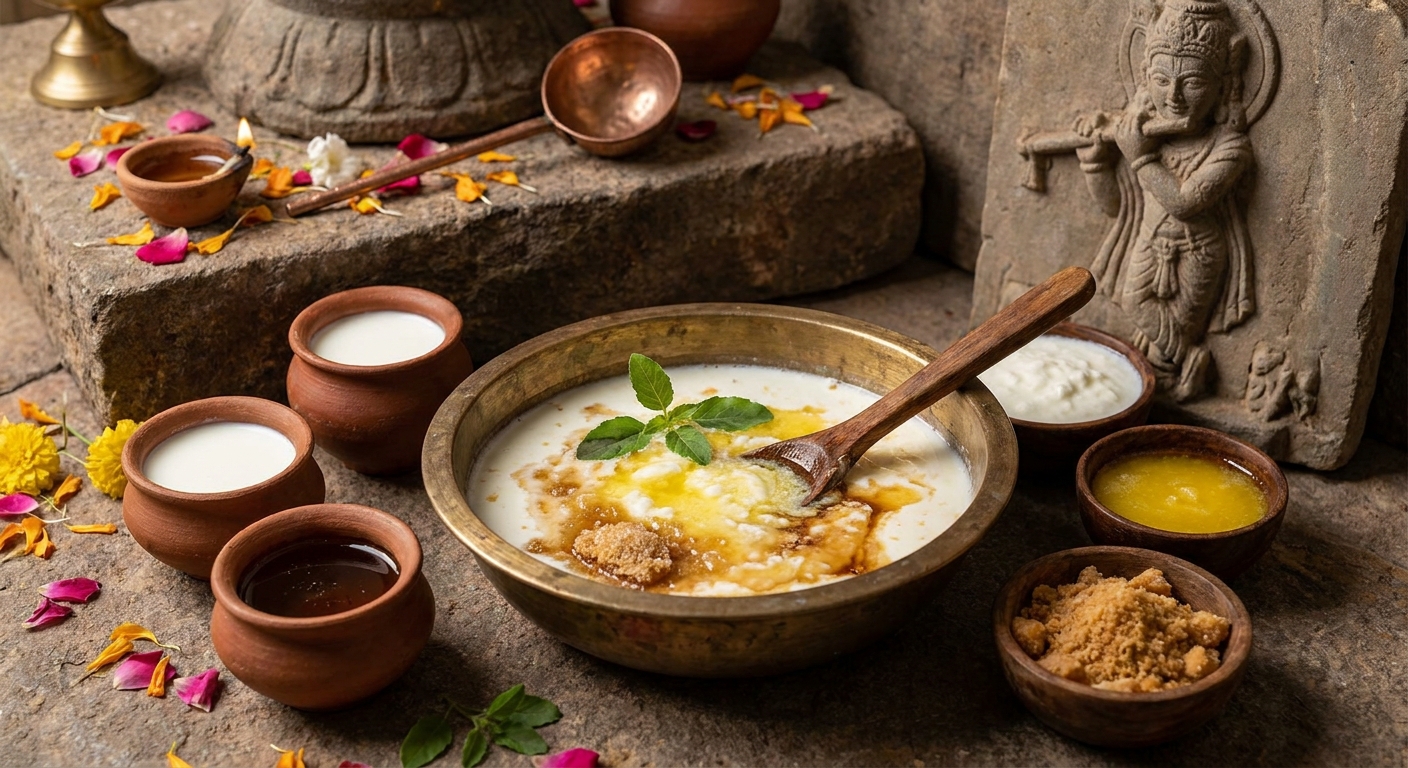
A liquid and sacred mixture of five pure ingredients — milk, yogurt, ghee, honey, sugar — enhanced with a tulsi leaf (holy basil). Fresh, sweet and slightly tangy, it is poured in a few drops as blessed prasad.
Here is the simplest and highest offering: five gifts gathered in a cup. The milk of the cow I led to graze, the tangy curd drawn from patience, the molten gold of ghee, the honey gathered by the bees of Govardhan, and the sugar of the cane. Mix them without cooking, place a tulsi leaf, and take only a spoonful in the hollow of your right hand: it is not the quantity that feeds the soul, but the intention of the one who offers.
- •Raw cow's milk — one measure (first nectar)
- •Yogurt (dahi) — one measure (second nectar, tanginess)
- •Ghee — a drizzle (third nectar)
- •Honey — a drizzle (fourth nectar)
- •Sugar / jaggery — a pinch (fifth nectar)
- •Tulsi leaves (holy basil) — a few (consecration (inspired by ritual))
Panchamrit (the nectar of five gifts)
A liquid and sacred mixture of five pure ingredients — milk, yogurt, ghee, honey, sugar — enhanced with a tulsi leaf (holy basil). Fresh, sweet and slightly tangy, it is poured in a few drops as blessed prasad.
Why this dish? Panchamrit (“five nectars”) is the quintessential sacred offering made to Krishna and Vishnu: milk, yogurt, ghee, honey and sugar, the five gifts of the cow and nature, which he cherished as protector of cattle.
Here is the simplest and highest offering: five gifts gathered in a cup. The milk of the cow I led to graze, the tangy curd drawn from patience, the molten gold of ghee, the honey gathered by the bees of Govardhan, and the sugar of the cane. Mix them without cooking, place a tulsi leaf, and take only a spoonful in the hollow of your right hand: it is not the quantity that feeds the soul, but the intention of the one who offers.
Ingredients (period version)
- Raw cow's milk — one measure (first nectar)
- Yogurt (dahi) — one measure (second nectar, tanginess)
- Ghee — a drizzle (third nectar)
- Honey — a drizzle (fourth nectar)
- Sugar / jaggery — a pinch (fifth nectar)
- Tulsi leaves (holy basil) — a few (consecration (inspired by ritual))
Ingredients
- Whole milk — 4 tbsp (first nectar)
- Plain yogurt — 3 tbsp (second nectar, tanginess)
- Ghee — 1 tsp (third nectar)
- Honey — 1 tbsp (fourth nectar)
- Fine brown sugar — 1 tbsp (fifth nectar)
- Fresh basil (if tulsi unavailable) — 2 leaves (flavor (inspired by ritual, not sacred))
Method
- In a clean bowl, gently whisk the yogurt to smooth it.
- Add the milk, warm melted ghee, honey and sugar; mix without cooking until the sugar dissolves.
- Add the basil leaves (as a nod to tulsi; out of respect, the sacred rite is not reproduced).
- Keep chilled and consume the same day, in small quantities, as a nectar drink.
How it was made : Panchamrit (“amrit” = nectar of immortality) is a very ancient Vedic offering, codified in puja rituals. The five cow products and honey symbolize purity and abundance; the mixture is also used to anoint statues (abhishekam) before being distributed to devotees. The family version remains a tangy-sweet drink.
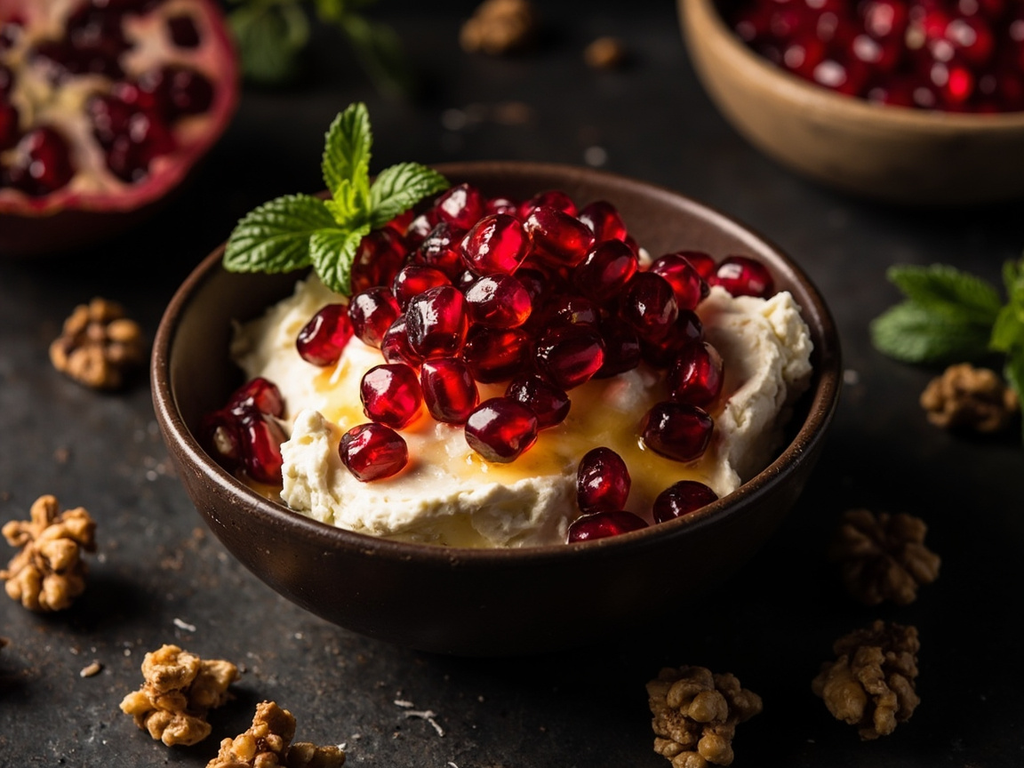
The contemporary twist : Served very cold in a copper cup with a few pomegranate seeds and a sprinkle of coconut flakes, it becomes a refreshing “nectar bowl” for summer.
Krishna · Charactorium