 Flip the card
Krishna at the table
3227 av. J.-C. — 3101 av. J.-C.
On the menu
The Bhog (shared offering, then prasad)
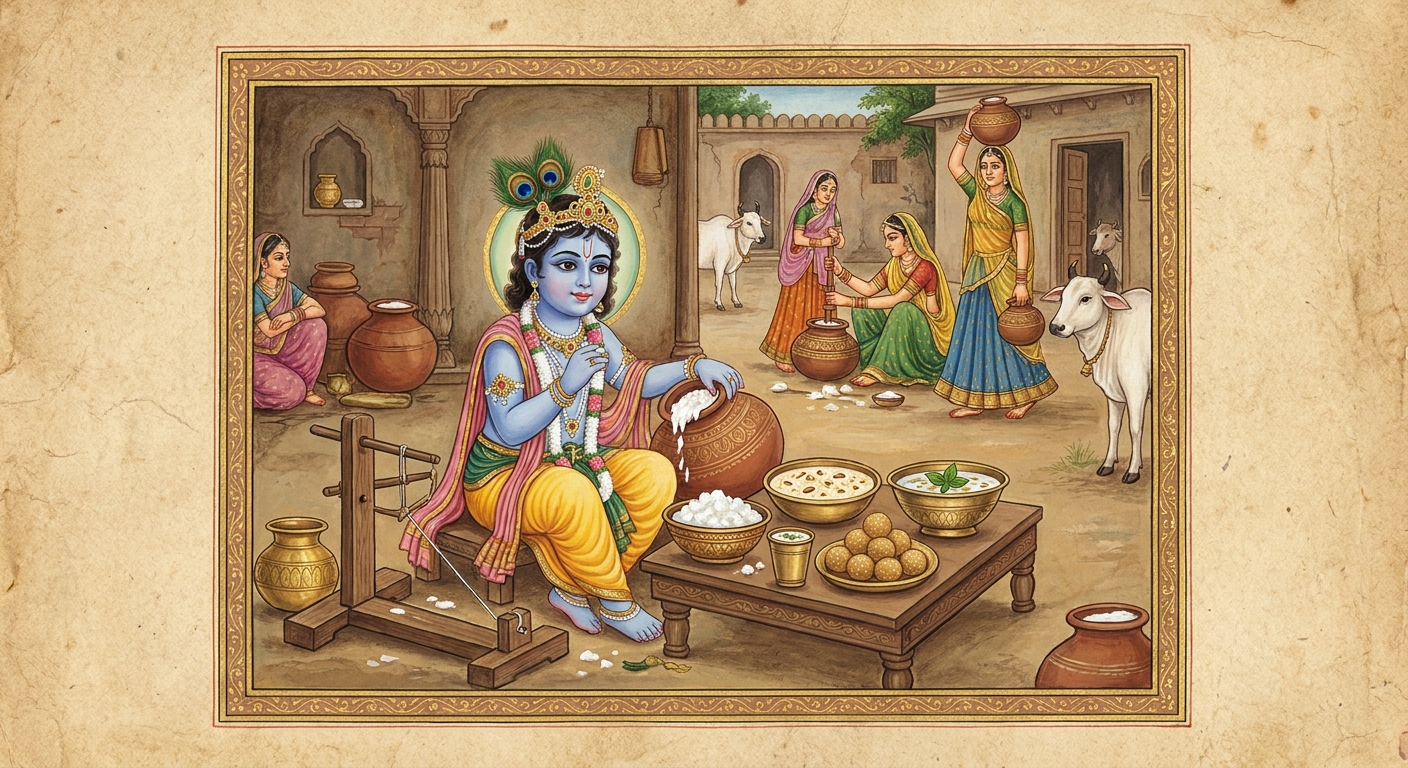
In the pastoral Hindu tradition at the heart of which is Krishna, meals are not ordered as starter-main-dessert but revolve around the bhog: first the dishes are prepared to offer to the deity, then redistributed as prasad (blessed food) to all, without hierarchy. The core of this cuisine is dairy-based and sattvic (pure, without meat, onion or garlic in the ritual context): the milk of Vrindavan's cows, fresh butter, ghee, yogurt, sweetened with jaggery (brown cane sugar), fruits, sesame and mild spices. During great festivals like Govardhan Puja, this principle culminates in the Annakut, the “mountain of food”: dozens of dishes piled up as an offering.
Signature : Makhan (fresh butter) and ghee
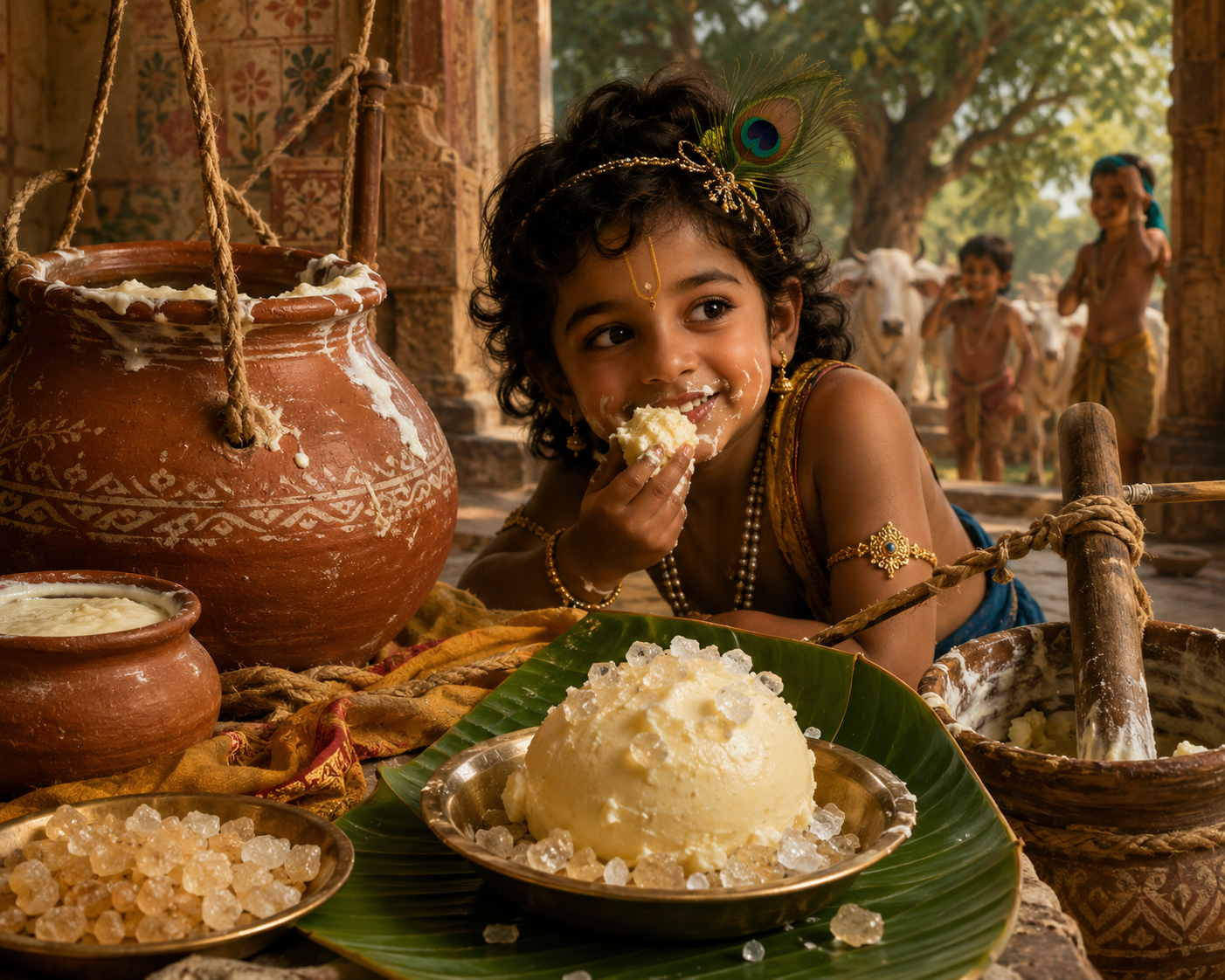
Krishna as a child is nicknamed Makhan Chor, the “butter thief”: he would steal freshly churned butter from the pots of the milkmaids of Vrindavan. Hand-churned butter and its clarified gold, ghee, are the absolute signature of his pastoral cuisine — nourishing fat and symbol of divine sweetness.
click to flip back
Krishna at the table
3227 av. J.-C. — 3101 av. J.-C.
4 period recipes
 Everyday
Makhan-Mishri (fresh butter and rock sugar)
Daily Bhog — the young cowherd's snack
🍯· 20 min
View the recipe
 Festive
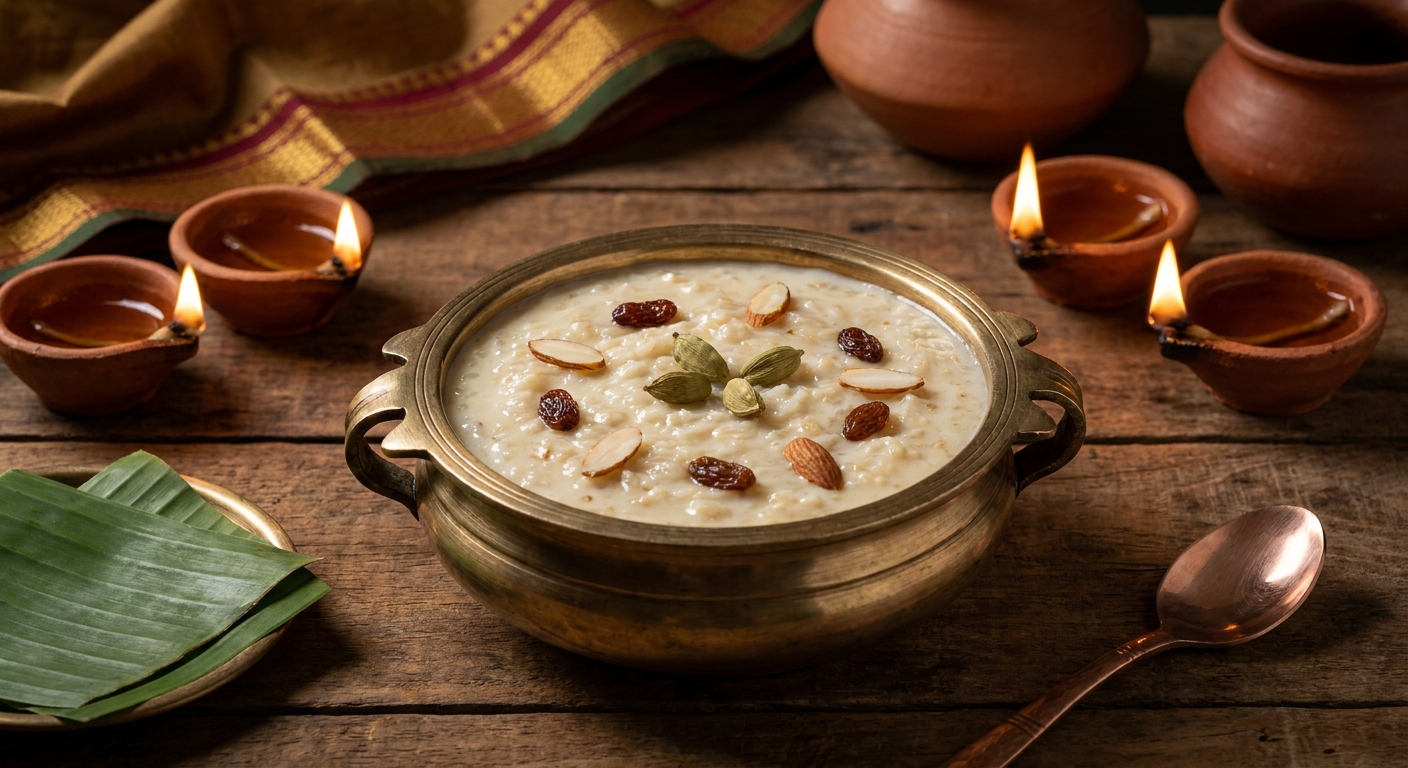
Kheer (rice pudding with cardamom and jaggery)
Festive Bhog — the offering for great days
🍯· 55 min
View the recipe
 Offering
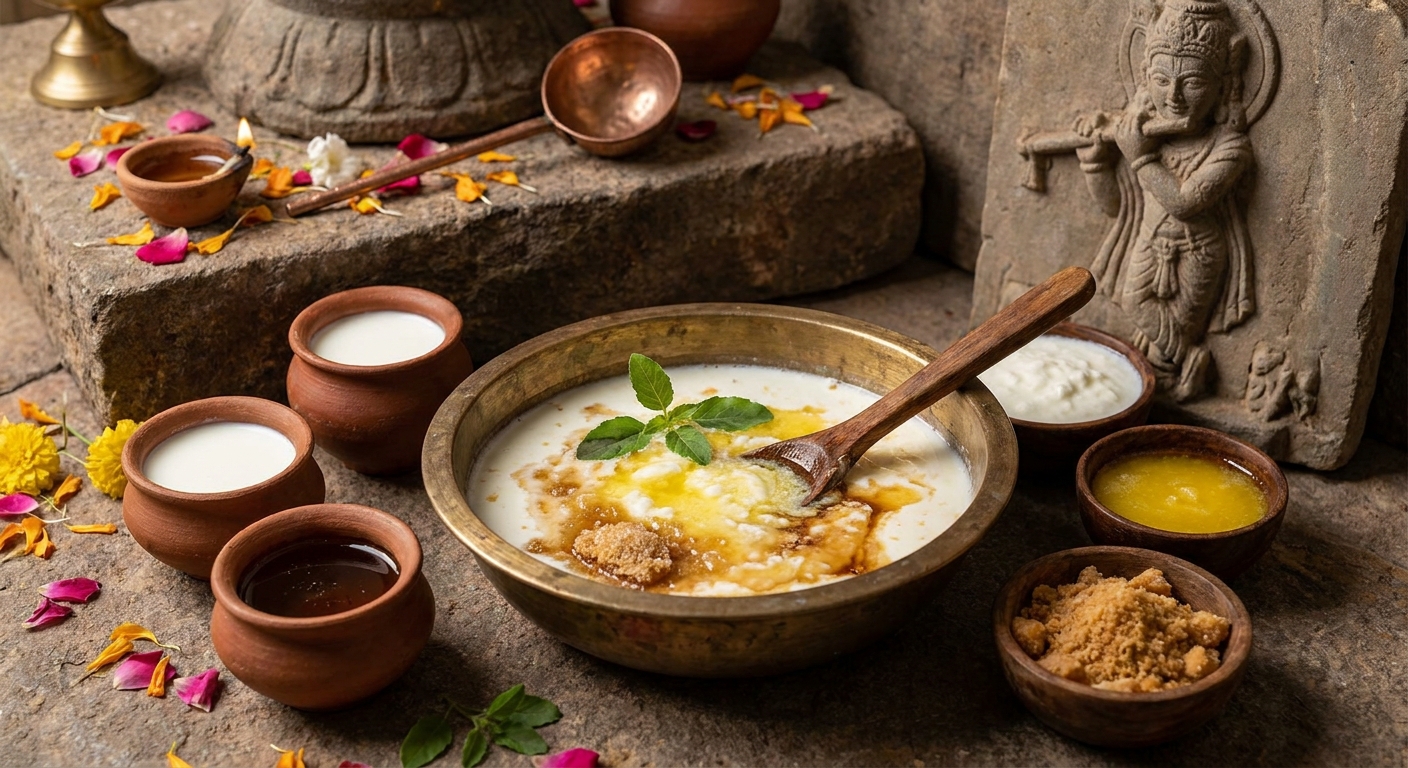
Panchamrit (the nectar of five gifts)
Offering Bhog — the ritual naivedya
🍯 🍋· 10 min
View the recipe
 Drink
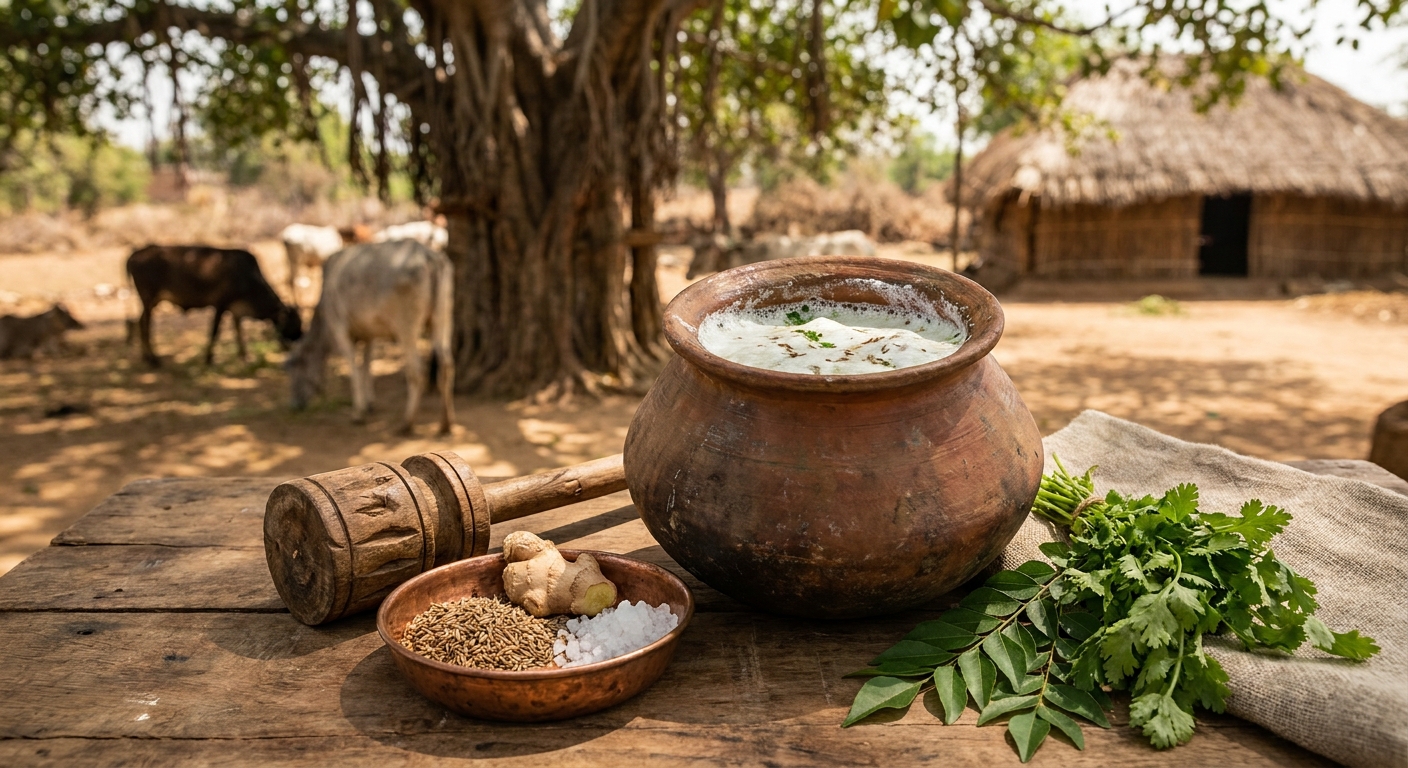
DrinkMasala Chaas (spiced buttermilk of the cowherd)
Refreshing Bhog — the drink of the pastures
🍋 🫙 🧂
View the recipe