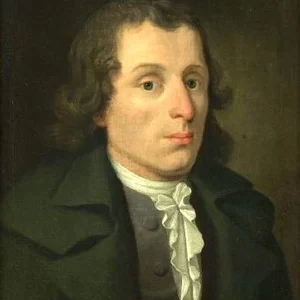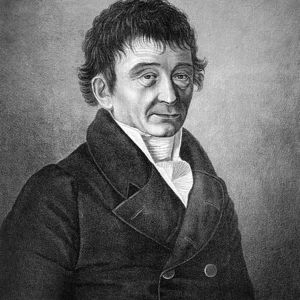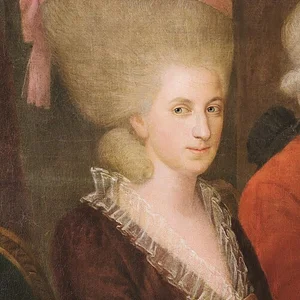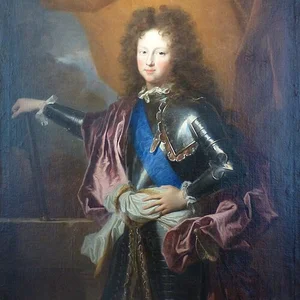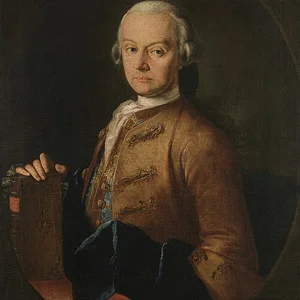

German composer, violinist, and pedagogue (1719-1787), father and first teacher of Wolfgang Amadeus Mozart. Author of a celebrated treatise on the violin, he devoted much of his life to promoting his son's genius across Europe.
Leopold Mozart(1719 — 1787)
Leopold Mozart
Saint-Empire romain germanique
8 min read
Frequently asked questions
Key Facts
- Born on 14 November 1719 in Augsburg (Germany)
- Published in 1756 the Versuch einer gründlichen Violinschule, a landmark violin treatise
- Father and first teacher of Wolfgang Amadeus Mozart, born the same year as his treatise
- Organized numerous European tours to showcase the talents of his children (1762-1773)
- Died on 28 May 1787 in Salzburg, in the service of the archiepiscopal court
Works & Achievements
A foundational pedagogical treatise on violin technique, considered one of the most important of the 18th century. Translated into Dutch and French, it influenced violin teaching across Europe for several generations.
A humorous symphony imitating the folk instruments of the Bavarian countryside. Picturesque and inventive, it is one of Leopold's most frequently performed compositions today and showcases his gift for comic writing.
One of Leopold's best-known concertante works, written for the natural trumpet in use at the time. It demonstrates his mastery of writing for the brass instruments of the Salzburg court.
A collection of light pieces composed for Salzburg court festivities in the fashionable galant style. These works reveal Leopold as a capable composer, even if they were ultimately overshadowed by his son's output.
Several hundred letters addressed to his wife, daughter, and son during their travels. Published in the 19th century, they form a vital historical document on musical life and the customs of the Enlightenment era.
Anecdotes
In 1763, Leopold Mozart embarked with his two children — Wolfgang (age 7) and Maria Anna, known as Nannerl (age 12) — on a grand three-year tour across Europe. They performed before Louis XV at Versailles, before King George III in London, and at numerous princely courts. Leopold managed everything: contracts, itineraries, costumes, and the growing reputation of his children.
In 1756, Leopold Mozart published his *Versuch einer gründlichen Violinschule*, one of the most important pedagogical treatises of the 18th century. The manual was translated into several languages and used throughout Europe. Ironically, that same year saw the birth of Wolfgang Amadeus — the one who would forever overshadow his father's fame.
Leopold was an exceptionally ambitious and methodical father: from the time Wolfgang was three years old, he kept a meticulous journal of the boy's musical progress, recording the pieces the child learned within a matter of hours. His conviction that his son was a gift from Heaven led him to sacrifice his own composing career to devote himself entirely to Wolfgang.
The relationship between Leopold and Wolfgang deteriorated when the latter decided, as an adult, to settle in Vienna and marry Constanze Weber in 1782, against his father's wishes. Leopold, who had hoped to steer his son's career from Salzburg, experienced this separation as a betrayal. Their letters from this period bear witness to a painful tension between paternal love and authority.
Leopold Mozart was a remarkable letter writer. His letters to his wife and children, sent from courts across Europe, are today considered invaluable historical documents. They describe with great precision the musical life, the customs of royal courts, and the conditions of travel in the 18th century, offering a vivid testimony of the Age of Enlightenment.
Primary Sources
The bow must be guided with suppleness and regularity; freedom of the wrist is the primary condition for expressive playing and true intonation. Without this mastery, no beautiful music is possible.
Our Wolfgang is admired by everyone here. The king and queen spoke to him with great familiarity at supper, and he played before the entire court with a confidence and grace that surprised even me.
You must remember that you are not yet free from want. Work and save while you are young and in good health, for one cannot count forever on the generosity of the great of this world.
Haydn told me, with tears in his eyes, that your brother is the greatest composer he knows, in person or by reputation. These words from such a man are worth more than all the applause of the courts of Europe.
Key Places
Leopold Mozart's birthplace, where he was born in 1719 into a family of craftsmen. An important commercial and cultural city, it provided his early education before he left for Salzburg.
The city where Leopold spent his entire professional life in service of the archiepiscopal court. It was in the apartment at 9 Getreidegasse that Wolfgang was born in 1756 and where the family lived until their great tours began.
In January 1764, Leopold presented his children to King Louis XV during the Grand Tour. This resounding success was one of the defining moments in the Mozart family's European fame.
A major stop on the Grand Tour (1764–1765), where Leopold and his children performed before King George III. It was here that the young Wolfgang wrote his first symphonies, under the influence of Johann Christian Bach.
The musical capital of the Empire, which the Mozarts visited on several occasions. It was here that Leopold hoped to see his son appointed to an official post, and here that Wolfgang settled permanently from 1781 onwards.
Typical Objects

Leopold's everyday working instrument as a professional violinist at the Salzburg court. It also stood at the heart of his 1756 pedagogical method, which standardised bowing technique across Europe.

His most celebrated written work, printed in Augsburg in 1756. This illustrated teaching manual covers posture, bowing, fingering, and musical expression; it was used throughout Europe for several decades.

An indispensable means of transport during the European tours of 1763–1766. Leopold personally managed the family's itineraries, stopovers, and expenses aboard these heavy vehicles, which sometimes covered several hundred kilometres a week.

Leopold was a prolific letter-writer: he sent hundreds of letters to his wife and children from courts across Europe. Largely preserved to this day, these letters are an irreplaceable historical source on musical life in the 18th century.

A fixture in the family home on the Getreidegasse, used to teach Nannerl and Wolfgang from their earliest years. It was on this instrument that Leopold introduced his son to music before the boy could even read.

An essential item of dress for any appearance at court in the 18th century. Leopold and his children had to follow the dress codes of the nobility whenever they performed before the sovereigns of Europe.

Like all musicians of his era, Leopold copied out his own scores by hand, and carefully gathered those his son composed as a child. These manuscripts are today held in several European libraries.
School Curriculum
Vocabulary & Tags
Key Vocabulary
Daily Life
Morning
Leopold rose early to fulfill his obligations at the Archiepiscopal Court of Salzburg, where he served first as a violinist and later as Vice-Kapellmeister. He also devoted the first hours of the day to his children's musical education, organizing solfège and instrument practice sessions from early morning.
Afternoon
Afternoons were often taken up by orchestral rehearsals and religious services, as church music held a central place in the duties of the archiepiscopal court. During European tours, this schedule gave way to visits with nobles and patrons, before whom the children performed private concerts.
Evening
Evenings were sometimes devoted to concerts, balls, or opera performances at aristocratic homes. Leopold also used these moments to keep up his correspondence, writing detailed letters about his children's successes and planning the next stages of their journey.
Food
The Mozart family ate according to Bavarian and Austrian customs of the time: soups, boiled or roasted meats, vegetables, bread, and light beer. During their long travels, Leopold noted the culinary differences of each country in his letters — sometimes with surprise, sometimes with displeasure.
Clothing
As a court musician, Leopold wore good-quality attire: a frock coat, breeches, white stockings, and a powdered wig for official occasions. For concerts before the high nobility, he and his children dressed in elegant outfits that patrons sometimes gave them as gifts.
Housing
The Mozart family lived in an apartment on the first floor of 9 Getreidegasse, in the historic center of Salzburg — a modest bourgeois townhouse typical of court musician families. During their long European tours, they stayed at inns, with nobles, or in furnished apartments rented for several weeks at a time.