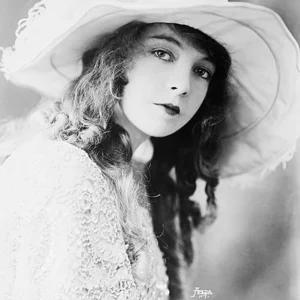

Lillian Gish (1893–1993) was a pioneering American actress of the silent film era, nicknamed "the First Lady of American Cinema." She worked closely with D.W. Griffith and brought to life iconic female roles in films that shaped the art of cinema.
Lillian Gish(1893 — 1993)
Lillian Gish
États-Unis
8 min read
Frequently asked questions
Famous Quotes
« Movies are the art form that touches the emotions more than any other art.»
« I never wanted to be famous. I just wanted to do good work.»
Key Facts
- 1912: Film debut under the direction of D.W. Griffith
- 1915: Lead role in *The Birth of a Nation*, a controversial yet landmark film
- 1921: Acclaimed performance in *Orphans of the Storm*
- 1927: Nominated for Best Actress at the very first Academy Awards
- 1984: Received an Honorary Oscar for lifetime achievement
Works & Achievements
D.W. Griffith's landmark film in which Lillian Gish plays Elsie Stoneman, caught up in the upheaval of the Civil War. Despite fierce controversy over its content, the film revolutionized the language of cinema and established Gish as an international star.
A masterpiece of parallel editing in which Lillian Gish embodies the allegory of the Cradle of Humanity, eternally rocking her child. One of the most ambitious films ever made, it showcases Griffith's absolute command of cinematic language.
A deeply moving drama in which Lillian Gish plays Lucy, a young English girl who is mistreated and finds refuge with a Chinese immigrant. Her performance in the famous closet scene is considered one of the absolute pinnacles of acting in silent cinema.
A melodrama whose climactic scene on a drifting ice floe remains one of the most famous in film history. Lillian Gish's physical courage during shooting in genuinely freezing conditions became the stuff of legend.
Victor Sjöström's film, considered one of the absolute masterpieces of silent cinema, in which Lillian Gish plays a young woman broken down by the relentless winds of the American Great Plains. Her expressive performance dazzled critics worldwide.
Charles Laughton's cult classic in which Lillian Gish plays Rachel Cooper, a courageous woman who shelters children from a murderous preacher. This role marks her triumphant return to cinema and confirms the full range of her talent in the sound era.
Lillian Gish's final screen appearance, at the age of 93, alongside Bette Davis. This intimate film about old age brings to a close an eighty-five-year career — an absolute record in the history of American cinema.
Anecdotes
During the filming of *Way Down East* in 1920, Lillian Gish spent several hours drifting on real ice floes in a flooding river, in freezing temperatures. Her left hand, trailing in the icy water, suffered such severe frostbite that she bore lasting damage for the rest of her life — a testament to the absolute dedication she brought to her craft.
Born into a very modest family in Ohio after her father abandoned his wife and children, Lillian Gish took to the stage at the age of five to help her mother put food on the table. She traveled across the United States with touring companies, learning her trade under harsh conditions that forged an extraordinary resilience.
It was through her childhood friend Mary Pickford that Lillian Gish met director **D.W. Griffith** in 1912 at the Biograph Studios in New York. The encounter proved decisive: Griffith saw in her the ideal interpreter of his heroines and directed her in more than twenty films, together inventing a new cinematic language.
To portray a dying heroine in *La Bohème* (1926), Lillian Gish subjected herself to a strict diet and refused to drink water for several days in order to make her face look authentically gaunt. Her perfectionism was such that she would sometimes reshoot the same scene dozens of times to achieve exactly the right expression.
Lillian Gish had a career of unmatched longevity: she made her stage debut in **1902** and shot her final film, *The Whales of August*, in **1987**, at the age of 93. She received an honorary Academy Award in **1971** for her lifetime achievement, honoring more than sixty years of contribution to American cinema.
Primary Sources
Cinema is a young art form, but it has already proven it can touch the human heart as deeply as any other art. Mr. Griffith taught me that the camera never lies.
I don't perform for the camera, I perform for the character. If the character is true, the camera will be too.
We grew up in the wings, Dorothy and I. The theater was our home, the actors our family. We knew no other world.
D.W. Griffith gave us an art form. He transformed simple moving images into something that could move millions of people around the world without a single word being spoken.
Key Places
Birthplace of Lillian Gish, born on October 14, 1893. Coming from a modest family whose father abandoned his wife and children, she left her hometown very early to work on traveling theater circuits.
The site of the pivotal meeting between Lillian Gish and D.W. Griffith in 1912, where she shot her first short films. These Manhattan studios were the cradle of modern cinematic language.
A major hub of American film production where Lillian Gish shot most of her landmark films with Griffith during the 1910s and 1920s. Hollywood became the world capital of cinema during this period.
The location where D.W. Griffith set up his independent studios in the 1920s, where Lillian Gish filmed notable works including *Way Down East* and *Orphans of the Storm*.
The city where Lillian Gish lived for most of her adult life and where she passed away on February 27, 1993. There she pursued a parallel theater career alongside her film work and moved in artistic and intellectual circles.
Typical Objects

A silent-film camera operated manually at a rate of 16 to 18 frames per second. Lillian Gish learned early on to work within its constraints, including the need to move slowly in order to appear natural on screen.

Silent-film actresses wore heavy, very pale makeup because orthochromatic film stock rendered natural skin tones poorly. Lillian Gish mastered the art of expressive stage makeup, which was essential for conveying emotion without words.
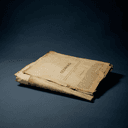
A written document describing scenes, sets, and acting directions, often revised during shooting by D.W. Griffith. Lillian Gish worked closely with her director to refine her character and the dramatic situations.

A highly flammable photographic medium used for silent films, whose deterioration led to the loss of many works. The films of Lillian Gish have partly survived thanks to preservation efforts launched in the 1950s.
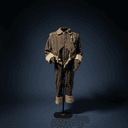
Long dresses with high collars and billowing petticoats, characteristic of the heroines Lillian Gish portrayed — typically innocent, persecuted young women. These costumes visually reinforced the fragility and purity of the characters she played.
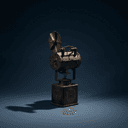
A forerunner of the cinema projector, used in theaters and nickelodeons to project moving images. It symbolizes the transition from fairground entertainment to the seventh art — a transformation to which Lillian Gish made a founding contribution.
School Curriculum
Vocabulary & Tags
Key Vocabulary
Tags
Daily Life
Morning
Lillian Gish rises early, a habit instilled since childhood by the discipline of traveling theater troupes. On Griffith's sets, crews began at dawn to make the most of natural light, essential for the light-sensitive film stock of the era. She devoted the first part of the morning to memorizing her acting notes and rehearsing expressions in front of the mirror.
Afternoon
The afternoon was dominated by filming — sometimes endless — under arc lights or in full sunlight. Griffith frequently demanded dozens of takes for each scene, requiring extraordinary concentration and physical endurance. Between takes, Lillian Gish rehearsed with her co-stars or studied the next day's shooting plans.
Evening
Evenings were often spent reading, making music, or engaging in artistic discussions with Griffith and the crew. In New York, she moved in theatrical and literary circles, maintaining an intense intellectual life. Sober and hardworking, she avoided the flashy social scene that characterized some Hollywood stars of the time.
Food
Lillian Gish kept a frugal and disciplined diet, sometimes pushed to extremes when preparing demanding roles. She avoided alcohol and excess, attributing her exceptional longevity in part to her rigorous lifestyle. Her meals remained simple, in keeping with her modest Ohio upbringing.
Clothing
In daily life, Lillian Gish dressed simply and elegantly, faithful to a discreet, feminine style typical of the 1910s and 1920s. On screen, she wore costumes designed by Griffith's wardrobe teams: high-waisted dresses, lace collars, and curled hair that reinforced the image of fragility and innocence her characters projected.
Housing
During the peak years of her collaboration with Griffith, Lillian Gish lived in modest apartments in New York or temporary lodgings near the studios. Later, she settled permanently in Manhattan in an apartment that became a gathering place for artistic and intellectual figures until the end of her long life.