American History
Presidents, pioneers, inventors and activists — the figures who built and transformed the United States.
643 characters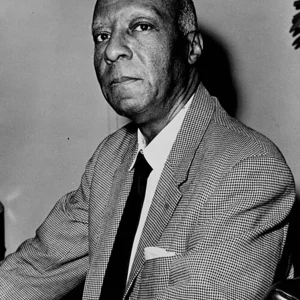
643 characters
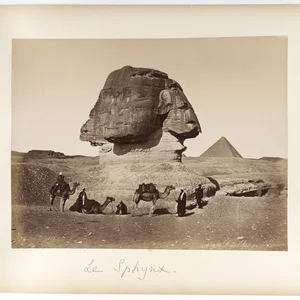
Sphinx
A monster from Greek mythology with the body of a lion and the head of a woman, the Sphinx guarded the gates of Thebes. It posed a deadly riddle to travelers and devoured those who failed to answer. Defeated by Oedipus, it threw itself off a cliff.
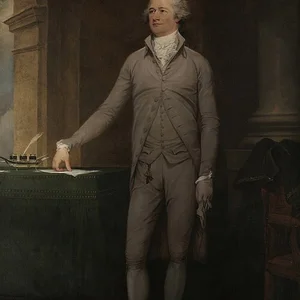
Alexander Hamilton
1757 — 1804
A Founding Father of the United States, Alexander Hamilton was the first Secretary of the Treasury (1789-1795). The architect of the American financial system, he created the first national bank and laid the foundations of the young United States' economy. He died in 1804 in a duel with Aaron Burr.
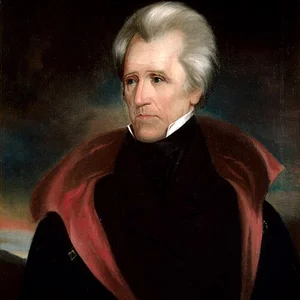
Andrew Jackson
1767 — 1845
An American general and hero of the War of 1812, Andrew Jackson became the 7th President of the United States (1829–1837). A populist figure, he embodied Jacksonian democracy while also being a slaveholder and the architect of the policy to forcibly remove Native Americans from their lands.
Ann Putnam
1679 — 1716
Ann Putnam Jr. was one of the principal accusers during the Salem witch trials of 1692, when she was only twelve years old. Her testimony contributed to the conviction of several people. In 1706, she made a public apology, acknowledging that she had been deceived by the devil.
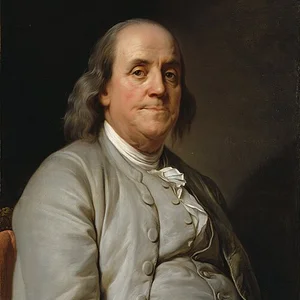
Benjamin Franklin
1706 — 1790
An 18th-century American statesman, scientist, and writer, Benjamin Franklin is one of the Founding Fathers of the United States. The inventor of the lightning rod, he contributed to drafting the Declaration of Independence and negotiated the Franco-American alliance.
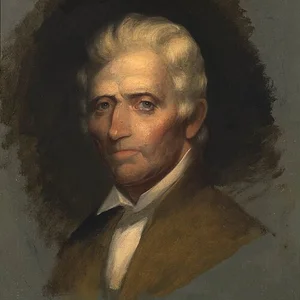
Daniel Boone
1734 — 1820
Daniel Boone (1734-1820) was an American pioneer, trapper, and explorer, an iconic figure of the conquest of the West. In 1775 he blazed the Wilderness Road through the Appalachians and founded Boonesborough, in present-day Kentucky.
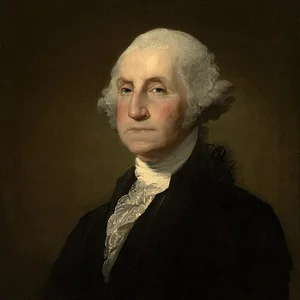
George Washington
1732 — 1799
Commander-in-Chief of the Continental Army during the American War of Independence, George Washington became the first President of the United States (1789–1797). A Virginia planter and slaveholder, he embodies the contradictions of the young Republic — torn between ideals of liberty and the reality of slavery.
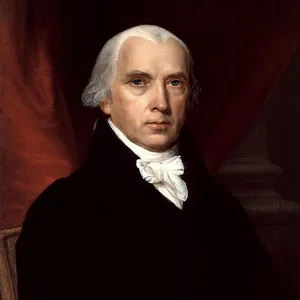
James Madison
1751 — 1836
American statesman (1751–1836), regarded as the "Father of the Constitution" of the United States. Architect of the Bill of Rights and fourth President of the United States, he was one of the foremost theorists of American republicanism.
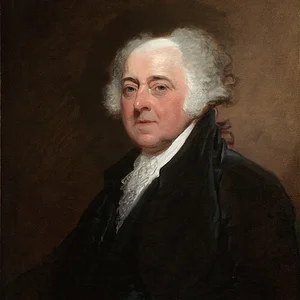
John Adams
1735 — 1826
John Adams (1735-1826) was an American lawyer, diplomat, and statesman, one of the Founding Fathers of the United States. Vice President under George Washington, he became the second President of the United States (1797-1801). A key figure of the American Revolution, he contributed to the drafting of the Constitution.
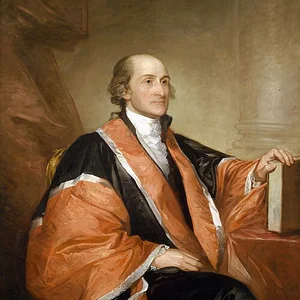
John Jay
1745 — 1829
John Jay (1745-1829) was an American statesman, diplomat, and jurist, one of the Founding Fathers of the United States. A co-author of the Federalist Papers, he was the first Chief Justice of the United States Supreme Court.
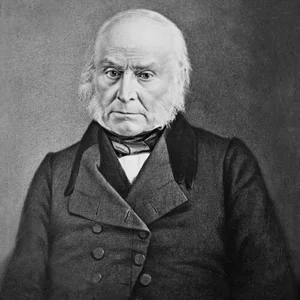
John Quincy Adams
1767 — 1848
Son of President John Adams, John Quincy Adams was the sixth President of the United States (1825–1829). A seasoned diplomat, he negotiated the Treaty of Ghent (1814) ending the Anglo-American War and helped formulate the Monroe Doctrine. He later championed the rights of enslaved people as a congressman.
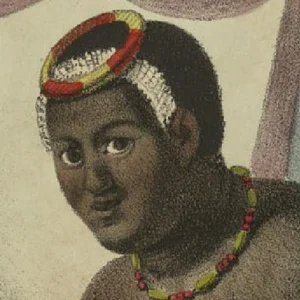
Ka'ahumanu
1768 — 1832
Queen consort and later regent of the Kingdom of Hawaii, Kaʻahumanu was the favorite wife of King Kamehameha I. In 1819, she abolished the system of religious taboos (kapu) and played a key role in introducing Christianity to Hawaii.
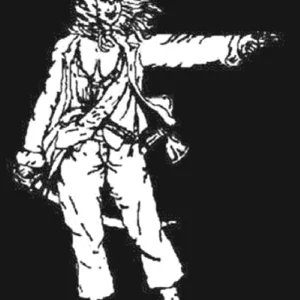
Rachel Wall
1760 — 1789
Rachel Wall (c. 1760-1789) is considered the first female pirate born in America. Together with her husband, she plundered the coasts of New England from Essex Island, luring ships with fake distress signals. Hanged in Boston in 1789, she was one of the last women to be executed in Massachusetts.
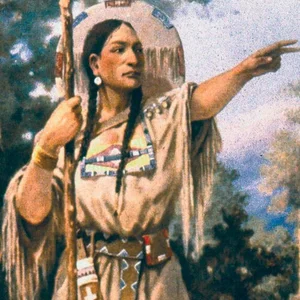
Sacagawea
1786 — 1812
A Shoshone woman (c. 1788–1812), Sacagawea served as the indispensable interpreter and guide for the Lewis and Clark Expedition (1804–1806). Her knowledge of the land, languages, and Indigenous peoples enabled the American expedition to cross the continent all the way to the Pacific.
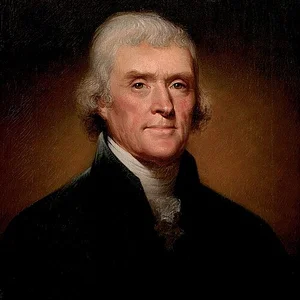
Thomas Jefferson
1743 — 1826
An American statesman, Thomas Jefferson was one of the Founding Fathers of the United States and the principal author of the Declaration of Independence (1776). A philosopher of the Enlightenment, he also served as the third President of the United States (1801–1809).
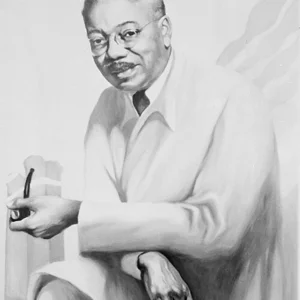
Aaron Douglas
1899 — 1979
Aaron Douglas was an African American painter and illustrator, a major figure of the Harlem Renaissance. Nicknamed the “father of African American art,” he developed a style blending geometric patterns, silhouettes, and references to African art to celebrate Black history and identity.
Abraham Lincoln
1809 — 1865
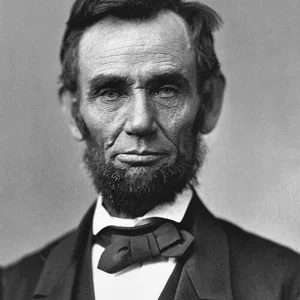
Abraham Lincoln (1809-1865) was the 16th President of the United States. He led the country through the Civil War and abolished slavery in the United States in 1863 with the Emancipation Proclamation.
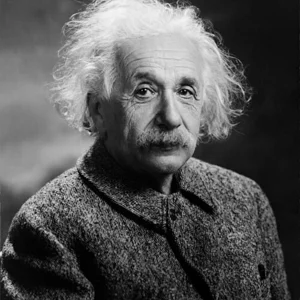
Albert Einstein
1879 — 1955
German-born physicist who became Swiss and later American (1879–1955), Albert Einstein revolutionized physics by developing the theories of special and general relativity. He is the author of the famous equation E=mc² and received the Nobel Prize in Physics in 1921 for his work on the photoelectric effect.
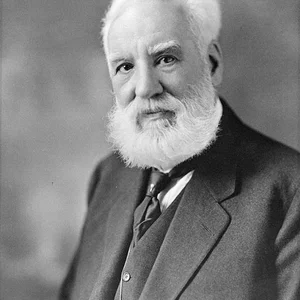
Alexander Graham Bell
1847 — 1922
A Scottish-born inventor who became a naturalized American citizen, Alexander Graham Bell is best known for filing the patent for the telephone in 1876. He also conducted research on hearing and communication, particularly to help people who were deaf.
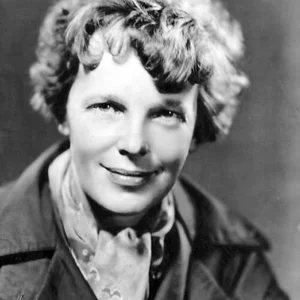
Amelia Earhart
1897 — 1939
A pioneering American aviator of the 20th century, Amelia Earhart made history in aviation by becoming the first woman to cross the Atlantic by plane in 1928. She disappeared in 1937 during an attempt to circumnavigate the globe along the equator, becoming a legendary figure in the history of aerial exploration.

Anne Royall
1769 — 1854
Anne Royall was an American writer and journalist, considered one of the first professional women reporters in the United States. The author of travel narratives, she founded newspapers that denounced corruption and championed the separation of Church and State.
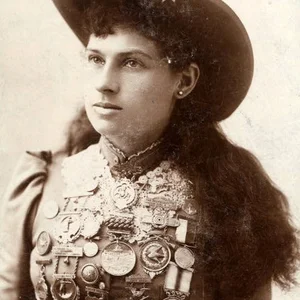
Annie Oakley
1860 — 1926
Annie Oakley (1860-1926) was an American sharpshooter who became the star of Buffalo Bill's Wild West Show. Nicknamed “Little Sure Shot,” she embodied the mythologized figure of the conquest of the West while pushing back the limits placed on the women of her time.
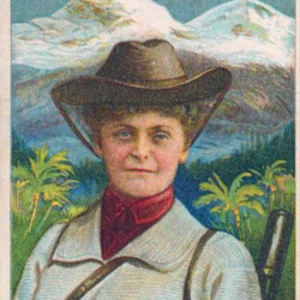
Annie Smith Peck
1850 — 1935
American mountaineer and educator (1850–1935), pioneer of women's mountaineering. In 1908 she climbed Huascarán in Peru, a summit of nearly 6,800 meters, setting an altitude record for the Western Hemisphere. A women's rights activist, she planted a suffragist flag at the top of a Peruvian mountain.
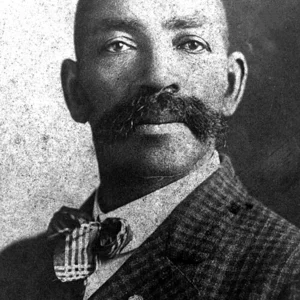
Bass Reeves
1838 — 1910
Bass Reeves (1838-1910) was the first African American deputy U.S. marshal west of the Mississippi. Born into slavery, he became one of the most famous lawmen of the Wild West, credited with more than 3,000 arrests over a thirty-two-year career.
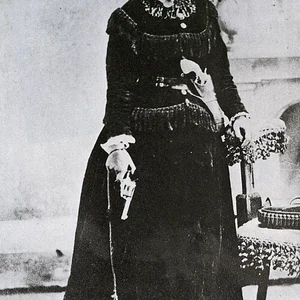
Belle Starr
1848 — 1889
Belle Starr (1848-1889) was an American outlaw of the Wild West, nicknamed the “Bandit Queen.” A fence, horse thief, and associate of several gangs in the Indian Territory, she became a legendary figure popularized by the sensationalist press and dime novels.
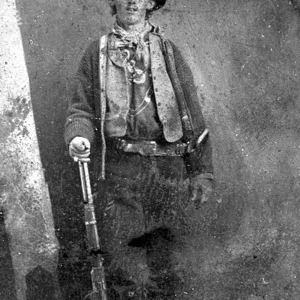
Billy the Kid
1859 — 1881
American outlaw of the Wild West, famous for his skill as a gunfighter and his involvement in the Lincoln County War. Killed at age 21 by Sheriff Pat Garrett, he became a legendary figure of the conquest of the American West.
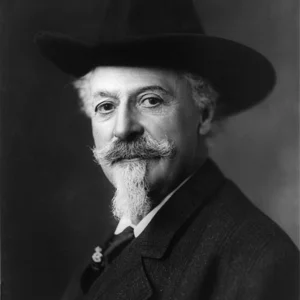
Buffalo Bill
1846 — 1917
William Cody (1846-1917), known as Buffalo Bill, was a scout for the U.S. Army and a bison hunter before becoming a worldwide showman. His Wild West Show staged the conquest of the West before millions of spectators in America and Europe.
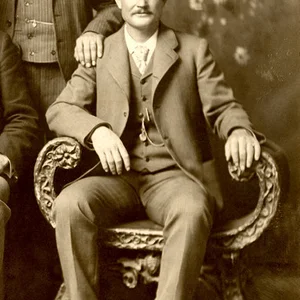
Butch Cassidy
1866 — 1908
An American outlaw of the Old West, Butch Cassidy was the leader of the Wild Bunch gang, which specialized in robbing banks and trains. Hunted by detective agencies, he fled to South America, where he is believed to have met his death in Bolivia.
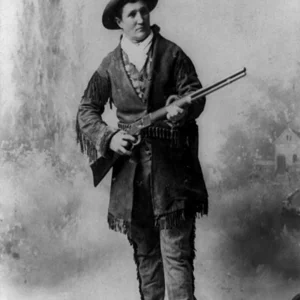
Calamity Jane
1852 — 1903
Martha Jane Cannary (c. 1852-1903), known as Calamity Jane, was a scout, stagecoach driver, and iconic figure of the American conquest of the West. A legend in her own lifetime, she performed in Wild West shows and was associated with the gunfighter Wild Bill Hickok.
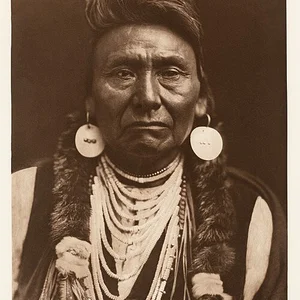
Chief Joseph
1840 — 1904
Chief of the Nez Perce Native American tribe. In 1877, he led his people on a desperate retreat of nearly 1,700 km to escape the U.S. Army and reach Canada, before surrendering just a few kilometers from the border.
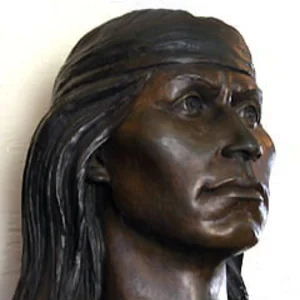
Cochise
1812 — 1874
An Apache chief of the Chiricahua band, Cochise led the armed resistance against the U.S. Army in the Southwest for more than ten years. A major figure of the Apache Wars, he finally made peace in 1872.
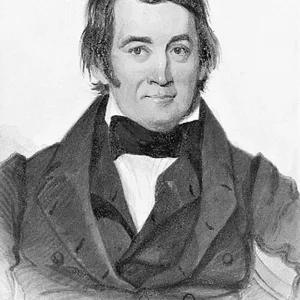
Davy Crockett
1786 — 1836
American pioneer, hunter, and politician, elected several times to Congress for the state of Tennessee. Having become a legendary figure of the conquest of the West, he died defending Fort Alamo during the Texas Revolution in 1836.
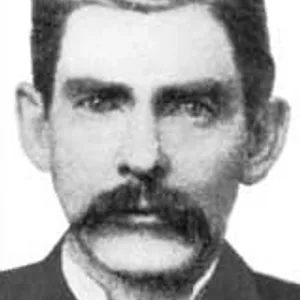
Doc Holliday
1851 — 1887
American dentist turned professional gambler and gunfighter, an iconic figure of the Wild West. A friend and ally of Wyatt Earp, he took part in the Gunfight at the O.K. Corral in 1881 in Tombstone, Arizona.
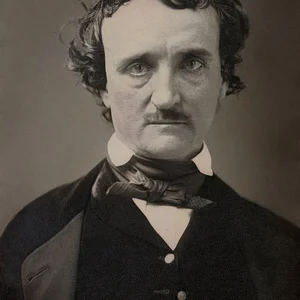
Edgar Allan Poe
1809 — 1849
An American writer of the 19th century, Edgar Allan Poe is the undisputed master of the gothic tale and horror literature. His psychological short stories and dark poems deeply influenced world literature and laid the foundations of the modern detective genre.
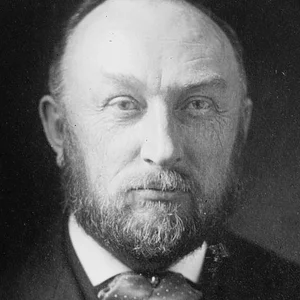
Edward Charles Pickering
1846 — 1919
American astronomer (1846–1919), director of the Harvard Observatory for 42 years. He revolutionized stellar classification and led the famous group known as the "Harvard Computers," composed mostly of women scientists.
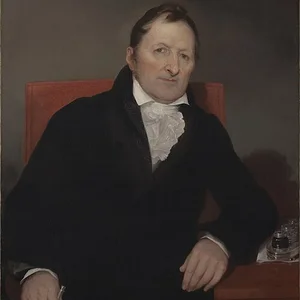
Eli Whitney
1765 — 1825
American inventor and industrialist (1765–1825), Eli Whitney is famous for inventing the cotton gin in 1793 and for developing the concept of interchangeable parts in industrial production. His innovations profoundly transformed the American economy and foreshadowed the Industrial Revolution.
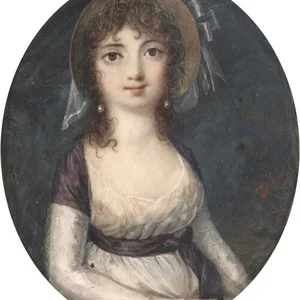
Elizabeth Arnold Poe
1787 — 1811
American actress of English origin, a figure of the traveling theater of the early years of the United States. Mother of the famous writer Edgar Allan Poe, she died young of tuberculosis, leaving her children orphaned.
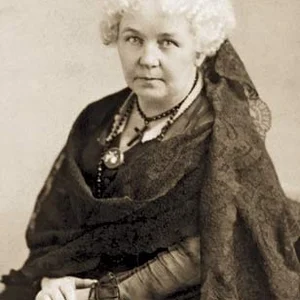
Elizabeth Cady Stanton
1815 — 1902
American women's rights activist (1815–1902), she co-organized the Seneca Falls Convention in 1848, the first major gathering for women's suffrage in the United States. Author of the Declaration of Sentiments, she devoted her life to the civic and political equality of women.
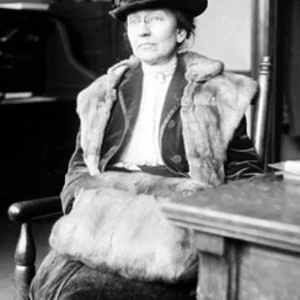
Ellen Gates Starr
1859 — 1940
American social reformer, co-founder with Jane Addams of Hull House in Chicago in 1889. An activist in the Arts and Crafts movement and workers' rights, she worked for popular education and improving the living conditions of immigrants.
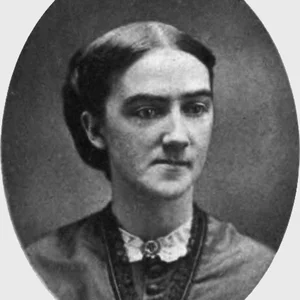
Ellen Swallow Richards
1842 — 1911
Pioneering American chemist, the first woman admitted to MIT, where she became an instructor. A specialist in sanitary chemistry, she analyzed water and air quality and founded scientific home economics.
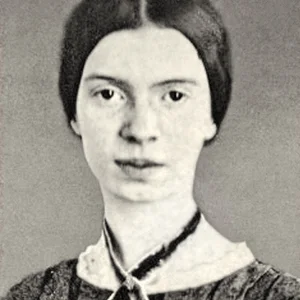
Emily Dickinson
1830 — 1886
Emily Dickinson is one of the greatest American poets of the 19th century. A recluse in her home in Amherst, she composed nearly 1,800 poems, most of which were not published until after her death. Her work, innovative in form and depth, explores death, nature, and the human soul.
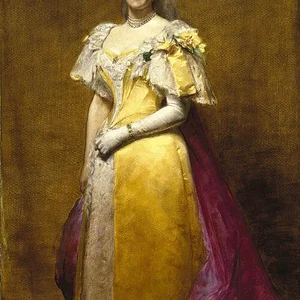
Emily Warren Roebling
1843 — 1903
Emily Warren Roebling was an American pioneer of civil engineering. When her husband, chief engineer Washington Roebling, was struck by caisson disease, she took over the technical supervision of the Brooklyn Bridge construction until its completion in 1883.
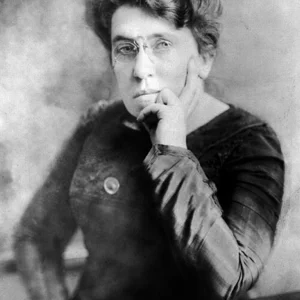
Emma Goldman
1869 — 1940
Emma Goldman (1869-1940) was a Lithuanian-born anarchist and feminist activist who emigrated to the United States. A leading figure in the American labor movement, she championed individual freedom, women's emancipation, and opposed war and capitalism.
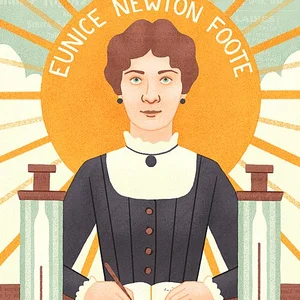
Eunice Newton Foote
1819 — 1888
An American scientist, Eunice Newton Foote demonstrated as early as 1856 the ability of carbon dioxide to trap heat, anticipating the understanding of the greenhouse effect. An activist as well, she was a forgotten pioneer of climate science.
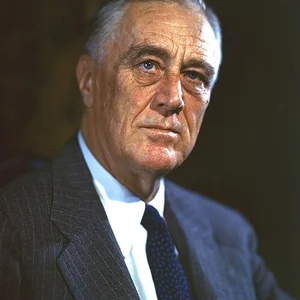
Franklin D. Roosevelt
1882 — 1945
President of the United States from 1933 to 1945, Franklin D. Roosevelt led the country through the Great Depression and World War II. He implemented the New Deal, a sweeping program of social and economic reforms, and played a decisive role in the Allied victory.
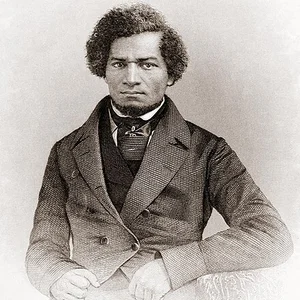
Frederick Douglass
1818 — 1895
abolitionist orator and writer, leader of the African-American community in the 19th century
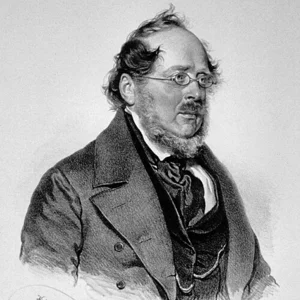
Friedrich List
1789 — 1846
German economist and publicist, theorist of educational protectionism. He advocated the temporary protection of infant industries to allow developing nations to catch up with England.
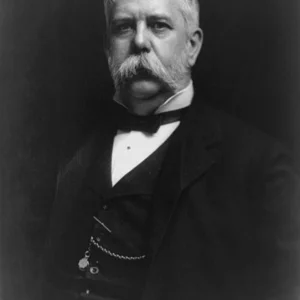
George Westinghouse
1846 — 1914
American engineer and industrialist (1846–1914), George Westinghouse invented the air brake for trains, revolutionizing railroad safety. He championed alternating current (AC) against Thomas Edison in the famous "War of Currents," helping to electrify the modern world.
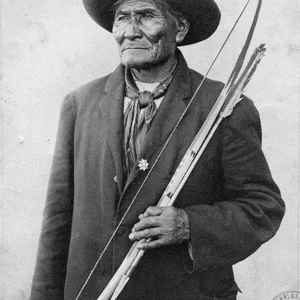
Geronimo
1829 — 1909
A Chiricahua Apache war leader and medicine man, Geronimo led the armed resistance against the expansion of the United States and Mexico in the American Southwest. His surrender in 1886 marked the end of the great Indian Wars.
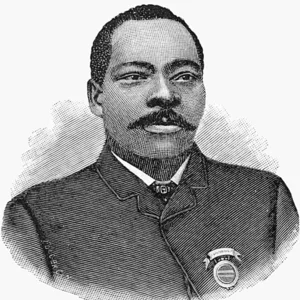
Granville Woods
1856 — 1910
African American inventor and engineer (1856–1910), nicknamed the "Black Edison," he filed more than 60 patents in electricity and railroad engineering, including the multiplex telegraph that allowed communication between moving trains.
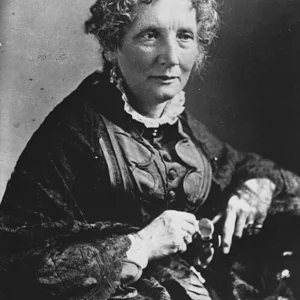
Harriet Beecher Stowe
1811 — 1896
An American novelist and abolitionist activist, she was the author of “Uncle Tom's Cabin” (1852), a novel denouncing slavery that had a worldwide impact. Her work helped to mobilize public opinion against slavery in the United States.
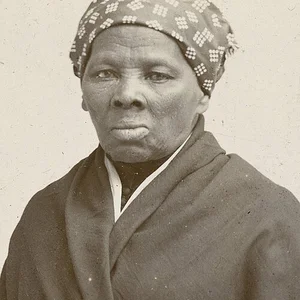
Harriet Tubman
1820 — 1913
Born into slavery around 1822, Harriet Tubman escaped in 1849 and became one of the most celebrated conductors of the Underground Railroad, helping hundreds of enslaved people flee to the North. An abolitionist, a spy for the Union during the Civil War, and an advocate for women's rights, she is a towering figure in the American struggle for freedom.
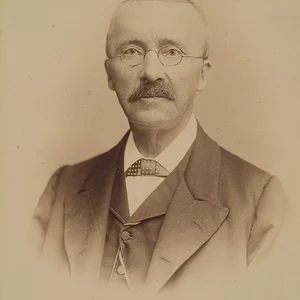
Heinrich Schliemann
1822 — 1890
A self-taught German archaeologist (1822–1890), he devoted his fortune to finding the Homeric Troy. His excavations at Hisarlik in Turkey revealed several superimposed cities, one of which he identified — incorrectly — as the Troy of the *Iliad*.
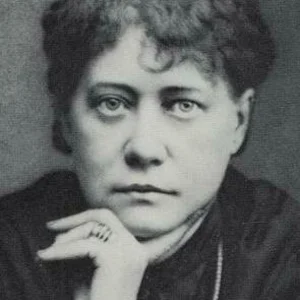
Helena Blavatsky
1831 — 1891
Helena Blavatsky (1831-1891) was a Russian occultist, philosopher, and writer who co-founded the Theosophical Society in 1875. A tireless traveler, she synthesized Eastern spiritualities and Western esotericism in her major works.
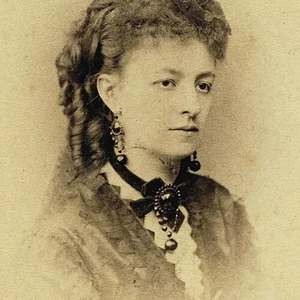
Helena Modrzejewska
1840 — 1909
Polish actress regarded as one of the greatest tragediennes of her time. After emigrating to the United States in 1876, she pursued a brilliant career under the name Helena Modjeska, particularly in Shakespearean roles. She inspired Susan Sontag's novel 'In America'.
Henrietta Leavitt
1868 — 1921
Henrietta Swan Leavitt (1868-1921) was an American astronomer who discovered the period-luminosity relationship of Cepheid stars, giving humanity a tool to measure distances across the universe. Working as a "human computer" at the Harvard Observatory, she transformed astronomy despite the discrimination she faced because of her gender.
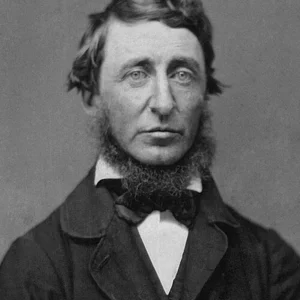
Henry David Thoreau
1817 — 1862
American writer, philosopher, and naturalist, a figure of transcendentalism. He is famous for *Walden; or, Life in the Woods*, an account of his experience of solitary living in close contact with nature, and for his essay *Civil Disobedience*, a plea for individual resistance to the injustice of the State.
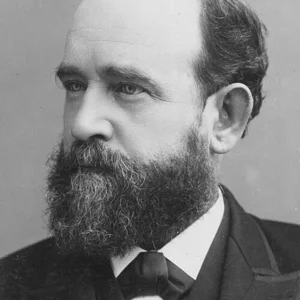
Henry George
1839 — 1897
Henry George was an American economist and journalist. He is famous for his book Progress and Poverty (1879), in which he argues for a single tax on land value as a remedy for inequality.
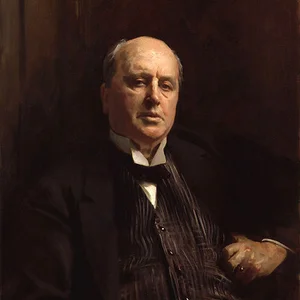
Henry James
1843 — 1916
Henry James (1843-1916) was an American writer who became a naturalized British citizen in 1915. A master of the psychological novel, he explored the relationship between the European Old World and the American New World. He is the author of the celebrated novel The Portrait of a Lady (1881).
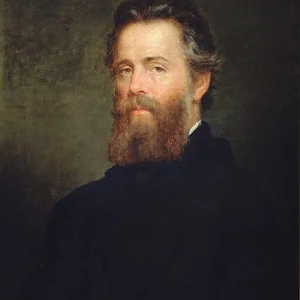
Herman Melville
1819 — 1891
Herman Melville (1819-1891) was an American novelist, short-story writer, and poet. Author of Moby-Dick, a masterpiece of world literature, he drew on his experience as a sailor to explore obsession, evil, and the human condition.
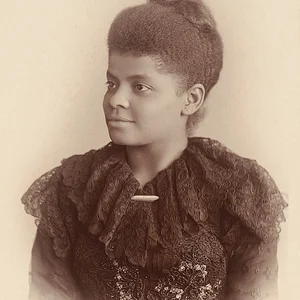
Ida B. Wells
1862 — 1931
African American journalist and activist born into slavery in 1862, Ida B. Wells conducted rigorous investigations into lynching in the United States and co-founded the NAACP. A pioneering figure in investigative journalism and the civil rights movement.
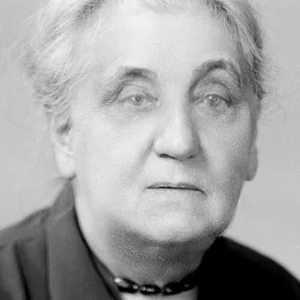
Jane Addams
1860 — 1935
An American social reformer, Jane Addams founded Hull House in Chicago in 1889, a settlement house serving immigrants and disadvantaged communities. A sociologist and committed pacifist, she was awarded the Nobel Peace Prize in 1931.
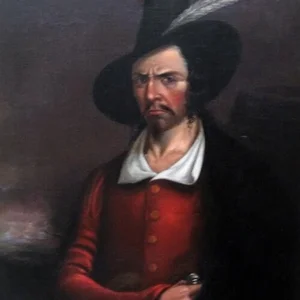
Jean Lafitte
1776 — 1826
French privateer and smuggler based in the Gulf of Mexico in the early 19th century. As leader of the buccaneer community of Barataria, near New Orleans, he came to the aid of the Americans at the Battle of New Orleans in 1815.
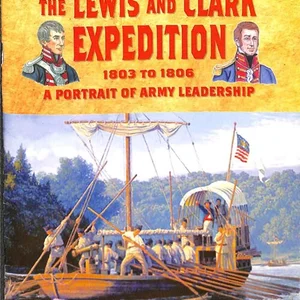
Jean-Baptiste Charbonneau
1805 — 1866
Son of Sacagawea and Toussaint Charbonneau, Jean-Baptiste Charbonneau was born in 1805 during the Lewis and Clark Expedition. He became a guide, trapper, and scout in the American West, roaming the Great Plains and the Rockies for decades.
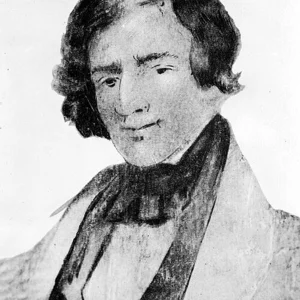
Jedediah Smith
1799 — 1831
American trapper, explorer, and cartographer. The first known man to cross the Sierra Nevada range and the Great Basin desert overland, he helped map the American West before his early death at age 32.
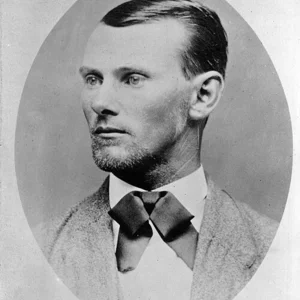
Jesse James
1847 — 1882
American outlaw, a former Confederate guerrilla who became the leader of the James-Younger gang. A robber of banks and trains across the Midwest after the American Civil War, he was assassinated in 1882 and became a legendary figure of Western folklore.
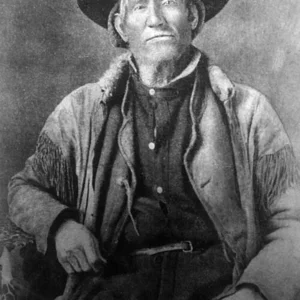
Jim Bridger
1804 — 1881
American trapper, guide, and explorer, an iconic figure among the “mountain men” of the Rockies. In 1824, he was one of the first Anglo-Americans to reach the Great Salt Lake. He founded Fort Bridger, a key way station on the western trails.
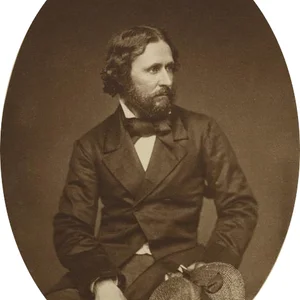
John C. Frémont
1813 — 1890
American explorer, military officer and politician nicknamed “the Pathfinder.” He mapped the American West and the Oregon Trail, played a role in the conquest of California, and then became the first Republican candidate in the 1856 presidential election.
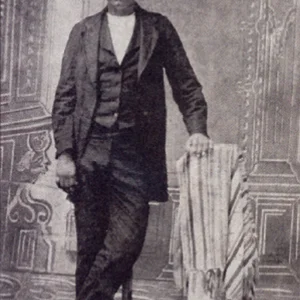
John Wesley Hardin
1853 — 1895
American outlaw from Texas, regarded as one of the most feared gunfighters of the Wild West. He claimed more than 40 killings before being imprisoned, then became a lawyer after his release, before being shot dead in 1895.
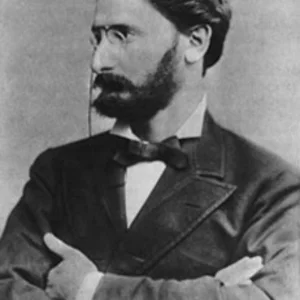
Joseph Pulitzer
1847 — 1911
American journalist and publisher of Hungarian origin (1847–1911), founder of modern journalism. He built a press empire and established the famous Pulitzer Prize, the supreme award in American journalism.
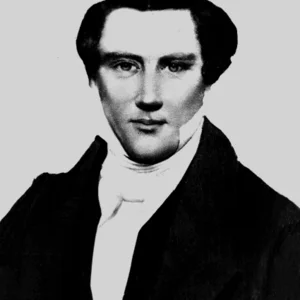
Joseph Smith
1805 — 1844
Joseph Smith was an American religious leader and founder of the Latter Day Saint movement (Mormonism) in 1830. He published the Book of Mormon, which he presented as a translation of golden plates revealed by an angel, and organized a new church before being assassinated in 1844.
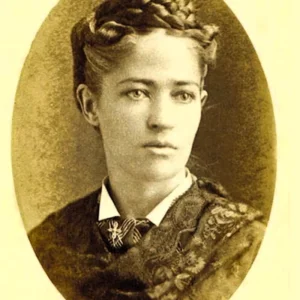
Josephine Cochrane
1839 — 1913
Josephine Cochrane was an American inventor who designed the first truly functional mechanical dishwasher, patented in 1886. A well-to-do woman from Illinois, she devised a machine using water jets to protect her porcelain dishes from breakage caused by her servants.
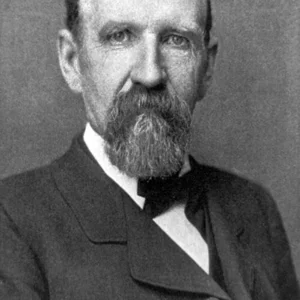
Joshua Slocum
1844 — 1909
Joshua Slocum (1844-1909) was a Canadian-American deep-sea captain. Between 1895 and 1898, he completed the first solo circumnavigation of the globe under sail aboard the Spray. He recounted his feat in a narrative that became a classic of maritime literature.
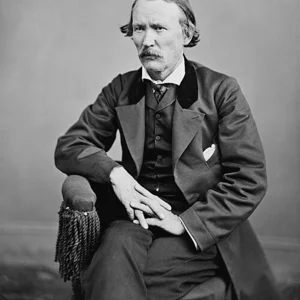
Kit Carson
1809 — 1868
American trapper, guide, and soldier, an iconic figure of the conquest of the West. As guide for John C. Frémont's expeditions to the Rockies and California, he later became a Union Army officer and Indian agent, marked by the deportation of the Navajo.
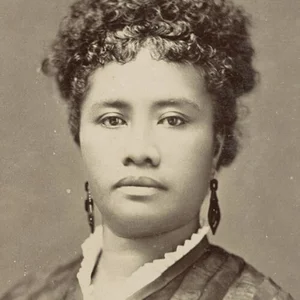
Liliuokalani
1838 — 1917
Liliuokalani was the last queen of the Kingdom of Hawaii, overthrown in 1893 by a coup supported by American settlers. A composer and stateswoman, she fought peacefully for Hawaiian sovereignty and remains a symbol of resistance to American imperialism.
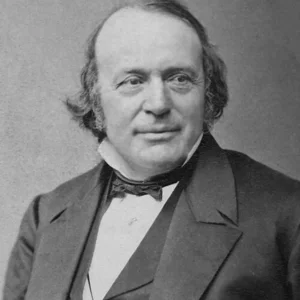
Louis Agassiz
1807 — 1873
American naturalist of Swiss origin, zoologist, ichthyologist and geologist. A pioneer in the study of fossil fish and a theorist of the great ice ages, he was also a famous opponent of Darwin's theory of evolution.
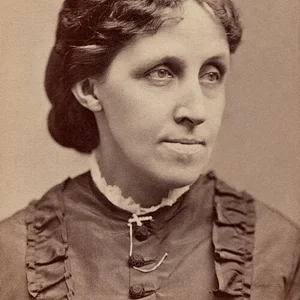
Louisa May Alcott
1832 — 1888
American novelist and short-story writer, famous for her novel *Little Women* (1868), largely inspired by her own childhood. A committed advocate for the abolition of slavery and women's rights, she served as a nurse during the Civil War.
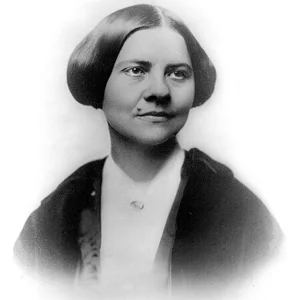
Lucy Stone
1818 — 1893
Lucy Stone (1818-1893) was one of the first American activists to fight simultaneously for the abolition of slavery and women's right to vote. The first woman from Massachusetts to earn a college degree, she refused to take her husband's name after marriage.
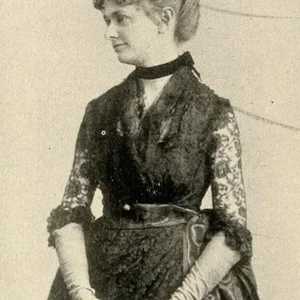
Mabel Loomis Todd
1856 — 1932
An American editor and writer, she was the first to edit and publish Emily Dickinson's poems after the poet's death, playing a decisive role in introducing one of the greatest voices in American poetry.
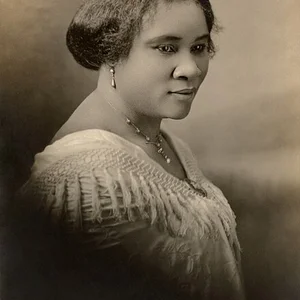
Madam C.J. Walker
1867 — 1919
First self-made female millionaire in the USA, born to formerly enslaved parents
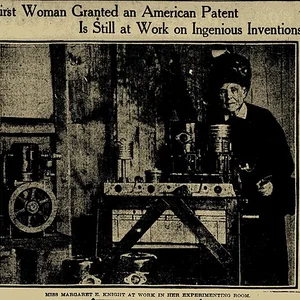
Margaret Knight
1838 — 1914
Margaret Knight (1838–1914) was a prolific American inventor who revolutionized the packaging industry by developing the machine that produces flat-bottomed paper bags. Over the course of her life she filed more than 27 patents across fields as varied as textiles, mechanics, and automotive engineering.
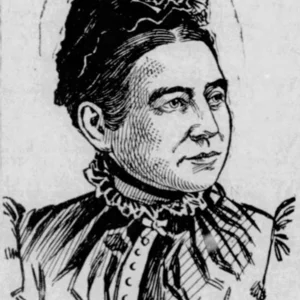
Maria Beasley
1836 — 1913
Maria Beasley (1836-1904) was an American inventor and entrepreneur. She is famous for perfecting the life raft and for designing a barrel-making machine that made her fortune.
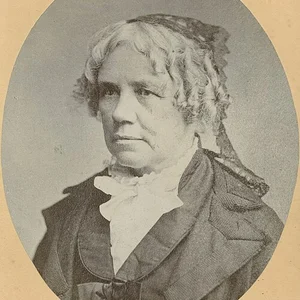
Maria Mitchell
1818 — 1889
America's first professional female astronomer, Maria Mitchell discovered a comet in 1847, earning her a gold medal from the King of Denmark. She was the first woman elected to the American Academy of Arts and Sciences and advocated for the scientific education of women.
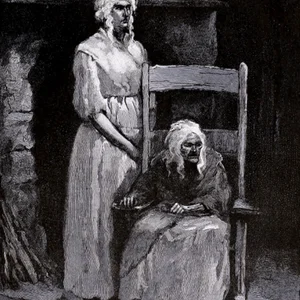
Marie Laveau
1801 — 1881
Marie Laveau (c. 1801–1881) was the famous 'Voodoo Queen' of New Orleans. A free woman of color, she practiced Louisiana Voodoo, blending African and Caribbean traditions with Creole Catholicism. Her spiritual and social influence in Louisiana's Afro-Creole community remains legendary.
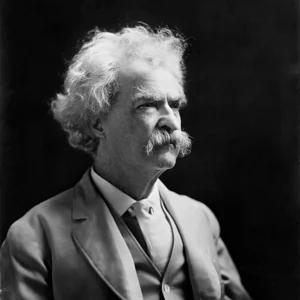
Mark Twain
1835 — 1910
American writer, journalist, and humorist, considered one of the fathers of modern American literature. His novels, rooted in the Mississippi River valley, blend social satire, criticism of racism, and vernacular speech.
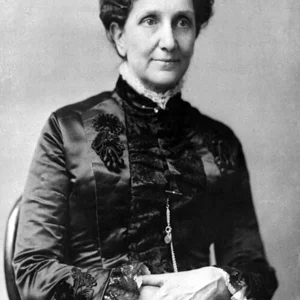
Mary Baker Eddy
1821 — 1910
American theologian, founder of Christian Science, a religious movement based on healing through prayer. In 1875 she published the movement's foundational work and established a Church as well as a respected newspaper.
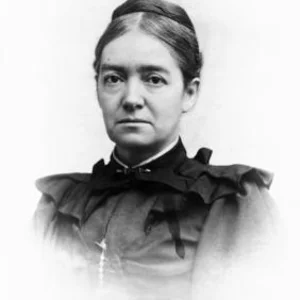
Mary Putnam Jacobi
1842 — 1906
American physician, a pioneer for the place of women in medicine in the 19th century. A rigorous researcher and suffragist activist, she scientifically refuted the medical prejudices that deemed women unfit for intellectual and physical effort.
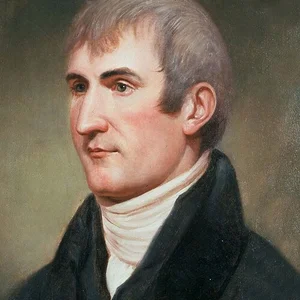
Meriwether Lewis
1774 — 1809
American army officer and explorer, Meriwether Lewis co-led with William Clark the 1804–1806 expedition commissioned by Thomas Jefferson to explore the American West all the way to the Pacific. This expedition, known as the Corps of Discovery, crossed the newly acquired Louisiana Territory and paved the way for the westward settlement of the continent.
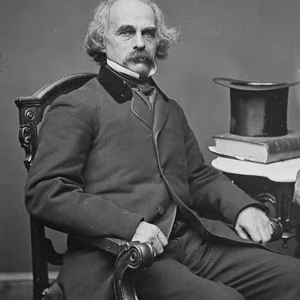
Nathaniel Hawthorne
1804 — 1864
Nathaniel Hawthorne (1804-1864) was an American novelist and short-story writer, a major figure of dark romanticism. He explores guilt, sin, and the Puritan legacy of New England in a psychological and allegorical body of work.
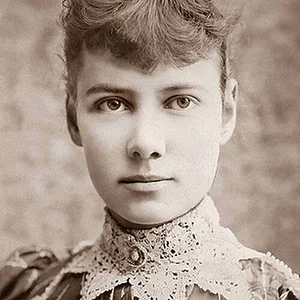
Nellie Bly
1864 — 1922
A pioneering American journalist, Nellie Bly made her mark through undercover investigative journalism, most notably by having herself committed to a psychiatric asylum to expose its conditions. In 1889, she traveled around the world in 72 days, breaking the fictional record of Phileas Fogg.
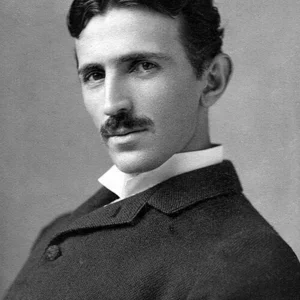
Nikola Tesla
1856 — 1943
Serbian-American inventor and engineer (1856-1943), Nikola Tesla is one of the central figures of the electrical revolution. His work on alternating current and his technological innovations transformed modern electricity and energy transmission.
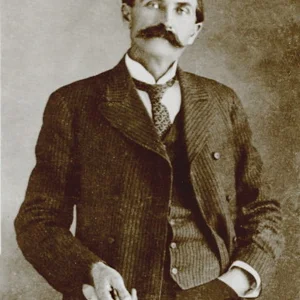
Pat Garrett
1850 — 1908
Pat Garrett was an American lawman of the Old West, who became famous for tracking down and killing the outlaw Billy the Kid in 1881. A former cowboy and buffalo hunter, he embodied the figure of the law during the Lincoln County War in New Mexico.
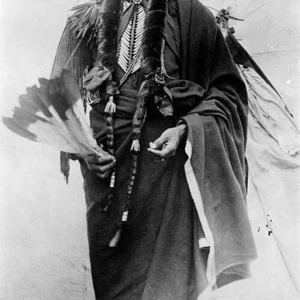
Quanah Parker
1845 — 1911
Quanah Parker was the last great chief of the Quahadi Comanches. The son of Chief Peta Nocona and Cynthia Ann Parker, a white captive, he led armed resistance against the advance of settlers and the U.S. Army, before becoming a respected mediator between his people and the United States government.
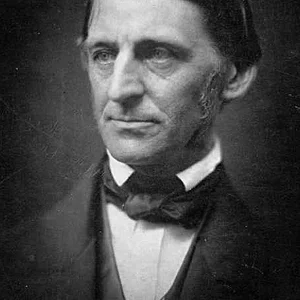
Ralph Waldo Emerson
1803 — 1882
American philosopher, essayist, and poet (1803-1882), a central figure of transcendentalism. He championed self-reliance, intuition, and the spiritual bond between humanity and nature, leaving a lasting mark on American thought.
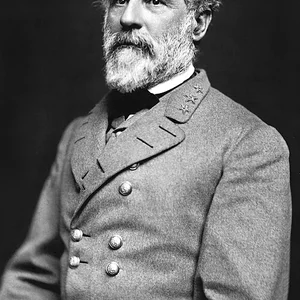
Robert E. Lee
1807 — 1870
Robert E. Lee was the principal general of the Confederate army of the Southern states during the American Civil War. A brilliant tactician commanding the Army of Northern Virginia, he surrendered at Appomattox in 1865, sealing the Southern defeat.
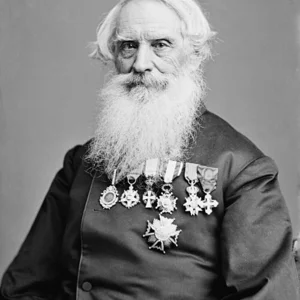
Samuel Morse
1791 — 1872
American inventor and painter (1791–1872), Samuel Morse is famous for developing the electric telegraph and the code that bears his name. His invention revolutionized long-distance communications in the 19th century.
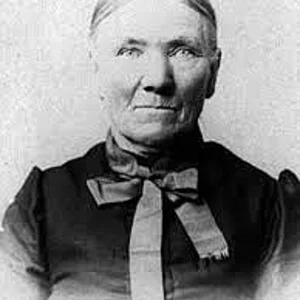
Sarah E. Goode
1855 — 1905
Sarah E. Goode was an American inventor and entrepreneur, one of the first African American women to receive a patent in the United States. Born into slavery, she became a furniture merchant in Chicago and invented a folding cabinet bed in 1885.
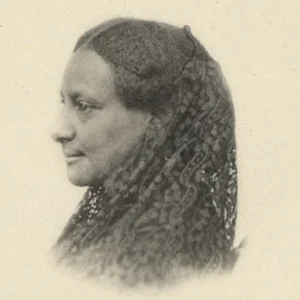
Sarah Parker Remond
1824 — 1894
African American abolitionist and suffragist activist of the nineteenth century. She traveled across Europe to raise public awareness of the anti-slavery cause, and settled in Italy where she became a physician.
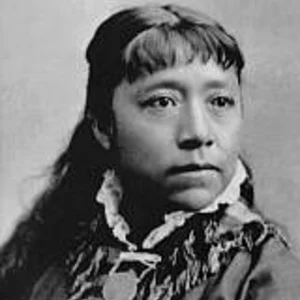
Sarah Winnemucca
1844 — 1891
A Paiute activist and author from Nevada, Sarah Winnemucca defended the rights of her Native American people in the face of American colonization. In 1883, she became the first Native American woman to publish a book in English, a major testimony on the condition of Indigenous nations.
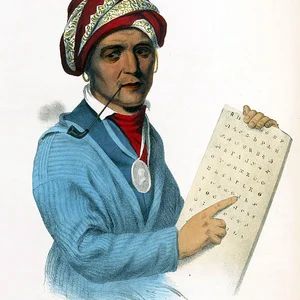
Sequoyah
1770 — 1843
Sequoyah was a Cherokee silversmith and scholar, famous for single-handedly inventing the Cherokee syllabary around 1821. He is the only individual known in history to have created a writing system entirely from scratch without being literate himself beforehand.
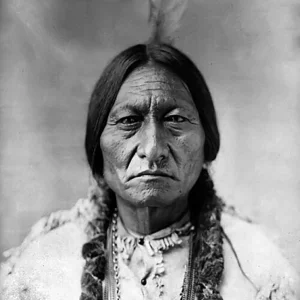
Sitting Bull
1831 — 1890
Sitting Bull (c. 1831-1890) was a chief and medicine man (wičháša wakȟáŋ) of the Hunkpapa clan of the Lakota Sioux. A leading figure of Native American resistance against the expansion of the United States, he embodied the defense of the territory and the way of life of the Plains.
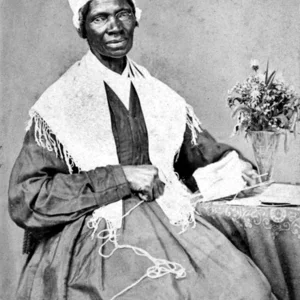
Sojourner Truth
1797 — 1883
African-American abolitionist and women's rights activist
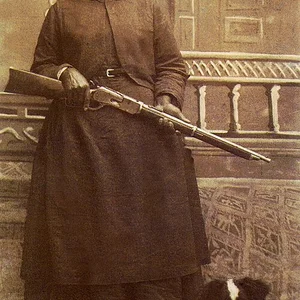
Stagecoach Mary
1832 — 1914
Born into slavery in Tennessee around 1832, Mary Fields became in 1895 the first African American woman mail carrier (Star Route) in the United States, in Montana. Nicknamed “Stagecoach Mary,” she became a legendary figure of the American conquest of the West.
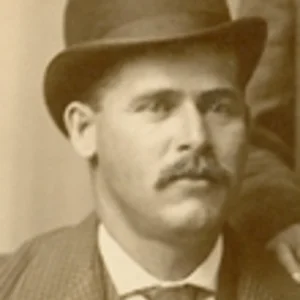
Sundance Kid
1867 — 1908
The Sundance Kid was an American Old West outlaw and a member of the famous Wild Bunch gang. A loyal sidekick of Butch Cassidy, he took part in numerous train and bank robberies before fleeing to South America.
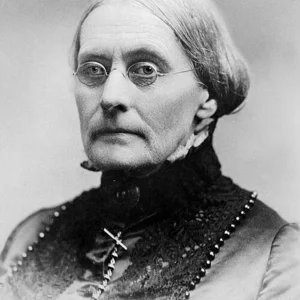
Susan B. Anthony
1820 — 1906
American civil rights activist (1820–1906), Susan B. Anthony is one of the founding figures of the American suffragist movement. She devoted her life to the abolition of slavery and to securing the right to vote for women.

Tabitha Babbitt
1779 — 1853
Tabitha Babbitt (1779-1853) was an American inventor and a member of the Shaker community in Harvard, Massachusetts. She is credited with inventing the circular saw adapted for sawmills, as well as improvements to cut nails and carding teeth.
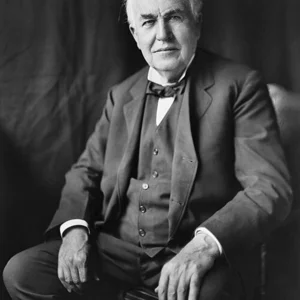
Thomas Edison
1847 — 1931
American inventor and industrialist (1847–1931), Edison is one of the greatest innovators in history. He filed more than 1,000 patents and created the incandescent light bulb, the phonograph, and the electrical distribution system.
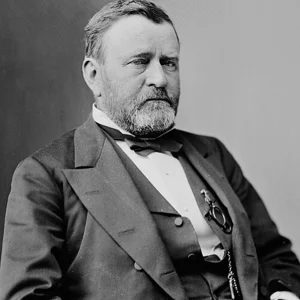
Ulysses S. Grant
1822 — 1885
Commanding general of the Union armies during the American Civil War, Ulysses S. Grant secured the surrender of Confederate general Robert E. Lee at Appomattox in 1865. A military hero, he went on to become the 18th president of the United States from 1869 to 1877.
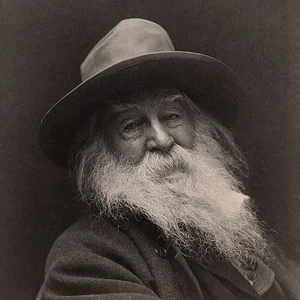
Walt Whitman
1819 — 1892
American poet, journalist, and essayist (1819-1892), regarded as the father of modern poetry in the United States. His collection *Leaves of Grass*, with its groundbreaking free verse, celebrates democracy, the body, and nature.
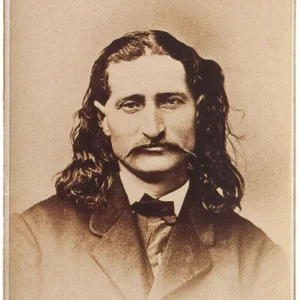
Wild Bill Hickok
1837 — 1876
An iconic figure of the American West, James Butler Hickok was in turn a Union scout, a Kansas lawman, a professional gambler, and a stage performer. A renowned gunfighter, he became a living legend before being shot in the back in 1876.
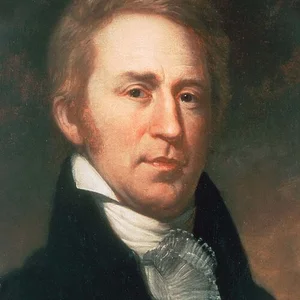
William Clark
1770 — 1838
An American army officer and explorer, William Clark co-led the Corps of Discovery expedition (1804–1806) with Meriwether Lewis, commissioned by President Jefferson. The expedition crossed North America to the Pacific Ocean, paving the way for the settlement of the American West.
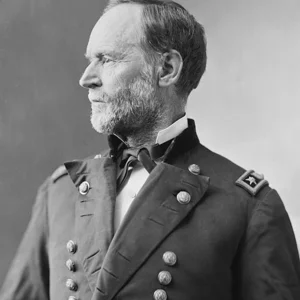
William Sherman
1820 — 1891
American general in the Union Army during the Civil War. He is famous for his “march to the sea” across Georgia in 1864, an early application of the concept of total war.
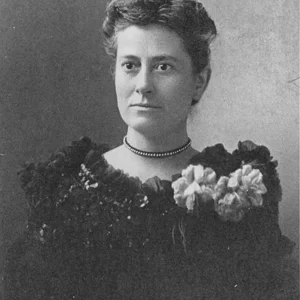
Williamina Fleming
1857 — 1911
Scottish-American astronomer, she joined the Harvard Observatory as a "Harvard Computer." She developed a system for classifying stellar spectra and discovered the Horsehead Nebula in 1888.
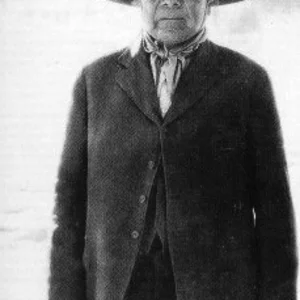
Wovoka
1856 — 1932
A Paiute prophet from Nevada, Wovoka founded the Ghost Dance in 1889, a messianic religious movement that spread among the Native American peoples of the Great Plains. His preaching, which foretold the return of the dead and the disappearance of the settlers, became associated with the Wounded Knee Massacre of 1890.
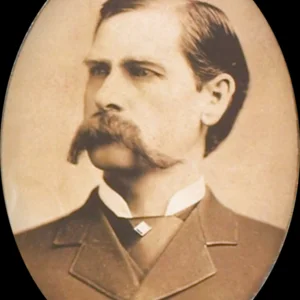
Wyatt Earp
1848 — 1929
Wyatt Earp (1848-1929) is an iconic figure of the American conquest of the West. A roving lawman, gambler, and entrepreneur, he owes his fame to the Gunfight at the O.K. Corral in 1881, which became a founding myth of the Wild West.
A. Philip Randolph
1889 — 1979
A. Philip Randolph was an African-American trade unionist and civil rights activist. Founder of the first major Black union in the United States, he was a key architect of desegregation and the 1963 March on Washington.
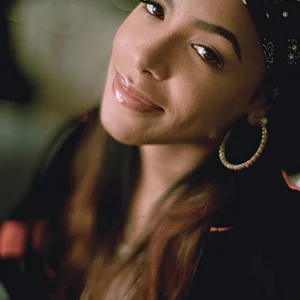
Aaliyah
1979 — 2001
American singer and actress (1979–2001), nicknamed the "Princess of R&B." A revelation at 15 with her debut album, she profoundly influenced pop and R&B music of the 1990s–2000s before dying tragically in a plane crash.
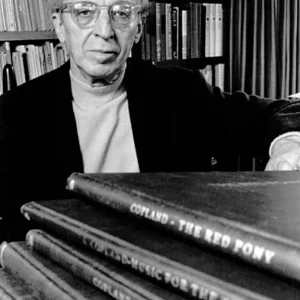
Aaron Copland
1900 — 1990
American composer (1900–1990) and a defining figure of 20th-century classical music. He sought to forge a distinctly American musical style by weaving together elements of jazz, folk music, and popular traditions.
Abbey Lincoln
1930 — 2010
American jazz singer, songwriter, and actress, a major figure of artistic commitment to the civil rights movement. Her expressive voice and her lyrics make her an emblematic artist of 20th-century jazz.
Abraham Joshua Heschel
1907 — 1972
An American rabbi, theologian and Jewish philosopher of Polish origin, Abraham Joshua Heschel was one of the great spiritual figures of the 20th century. A thinker on Judaism and biblical prophecy, he stood alongside Martin Luther King in the American civil rights movement.
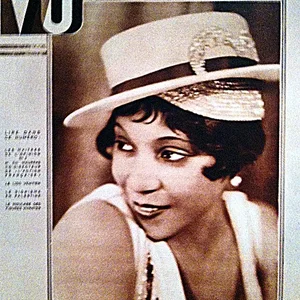
Adelaide Hall
1901 — 1993
Adelaide Hall was an American jazz singer, later a naturalized British citizen, with an exceptionally long career. A pioneer of wordless singing, she rose to prominence in 1927 alongside **Duke Ellington** before becoming a star of the European stage.
Adele Goldberg
1945 — ?
American computer scientist born in 1945, Adele Goldberg worked at Xerox PARC where she contributed to the development of the Smalltalk programming language. She played a pioneering role in the design of graphical user interfaces and object-oriented programming.
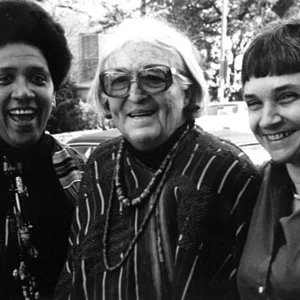
Adrienne Rich
1929 — 2012
American poet and essayist (1929-2012), a major figure of literary feminism. Her work explores female identity, sexuality, and political commitment. She received the National Book Award in 1974 for “Diving into the Wreck”.
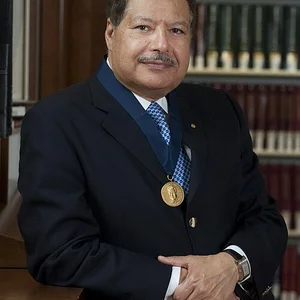
Ahmed Zewail
1946 — 2016
Egyptian-American chemist and pioneer of femtochemistry, he revolutionized the observation of chemical reactions by filming the movement of atoms at the femtosecond timescale. Winner of the Nobel Prize in Chemistry in 1999, he is regarded as the father of ultrafast chemistry.
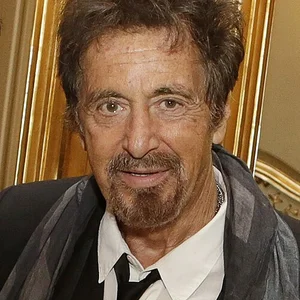
Al Pacino
1940 — ?
Al Pacino is an American actor born in 1940, a major figure of the New Hollywood movement. Brought to fame by his role as Michael Corleone in 'The Godfather' (1972), he established himself as one of the greatest performers in American cinema, trained at the Actors Studio.
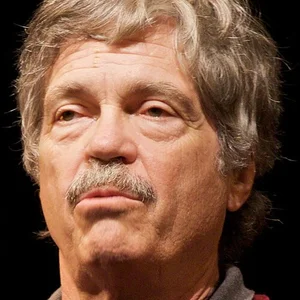
Alan Kay
1940 — ?
A pioneering American computer scientist in object-oriented programming, Alan Kay designed the Smalltalk language and envisioned the concept of a portable personal computer (the Dynabook) in the 1970s. His work at the Xerox PARC laboratories transformed modern computing.
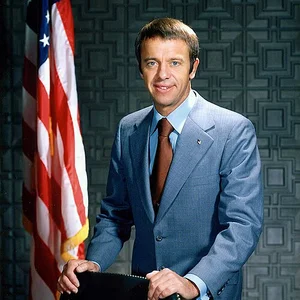
Alan Shepard
1923 — 1998
Alan Shepard was the first American to travel in space, on May 5, 1961, during the suborbital flight of Freedom 7. A Navy pilot turned NASA astronaut, he also walked on the Moon in 1971 during the Apollo 14 mission.
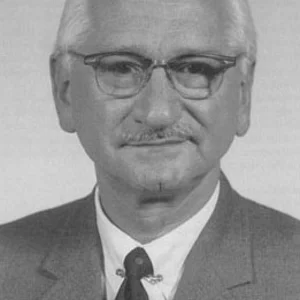
Albert Sabin
1906 — 1993
American physician and virologist of Polish origin. In the 1950s he developed the live attenuated oral vaccine against poliomyelitis, administered on a sugar cube, which made possible mass vaccination campaigns around the world.
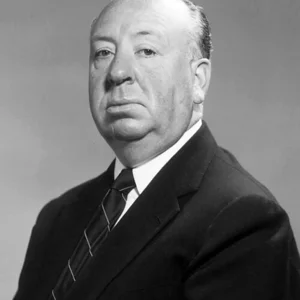
Alfred Hitchcock
1899 — 1980
A British filmmaker and naturalized American citizen, Alfred Hitchcock was nicknamed the “master of suspense.” A pioneer of a cinema built on psychological tension and dread, he profoundly reinvented the conventions of the thriller with works such as *Psycho*, *The Birds*, and *Vertigo*.
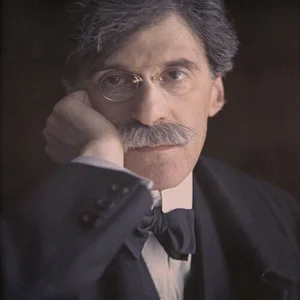
Alfred Stieglitz
1864 — 1946
Alfred Stieglitz (1864–1946) was an American photographer and gallery owner who played a fundamental role in establishing photography as a fine art in its own right. He founded Gallery 291 in New York and edited influential journals such as Camera Notes and Camera Work.
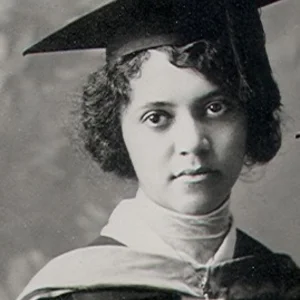
Alice Ball
1892 — 1916
Alice Ball was an African American chemist known for developing an injectable treatment for leprosy made from chaulmoogra oil. She died at just 24, and her pioneering work was not recognized until decades later.
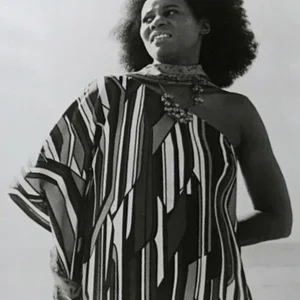
Alice Coltrane
1937 — 2007
American jazz pianist, harpist, organist and composer, a major figure of spiritual jazz. The wife of John Coltrane, she pursued a body of work blending modal jazz, Indian music and a mystical quest.
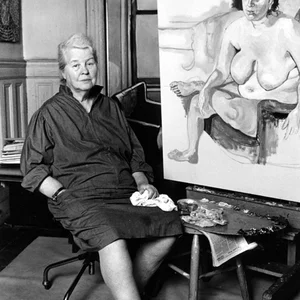
Alice Neel
1900 — 1984
Alice Neel (1900-1984) was an American painter known for her expressive, uncompromising portraits. A feminist and committed leftist, she spent decades painting the people of New York, from intellectuals to anonymous figures.
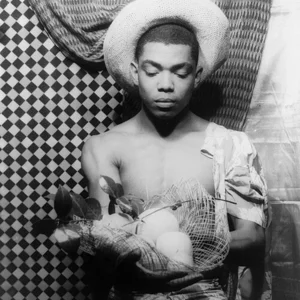
Alvin Ailey
1931 — 1989
Alvin Ailey (1931-1989) was an American dancer and choreographer, a major figure in modern dance. In 1958, he founded the Alvin Ailey American Dance Theater, a company that celebrates African American cultural heritage and brought modern dance to audiences around the world.
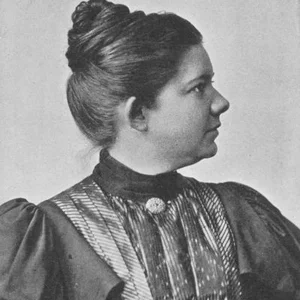
Amy Beach
1867 — 1944
Amy Beach (1867-1944) was the first American female composer to have a symphony performed by a major professional orchestra. A pioneering figure in American classical music, she composed more than 150 works, including the celebrated Gaelic Symphony (1896).
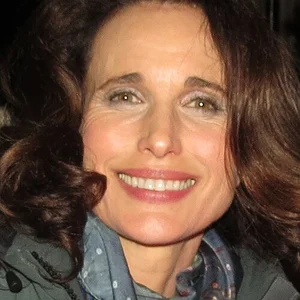
Andie MacDowell
1958 — ?
Andie MacDowell is an American actress and model born in 1958. First making her name as a model for major cosmetics brands, she became a film star in the 1990s with a string of hit romantic comedies.
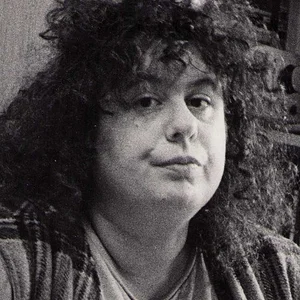
Andrea Dworkin
1946 — 2005
A radical American feminist (1946–2005), Andrea Dworkin is known for her theoretical work on pornography, violence against women, and patriarchy. A prolific activist and essayist, she profoundly shaped the feminist movement of the 1970s–1990s.
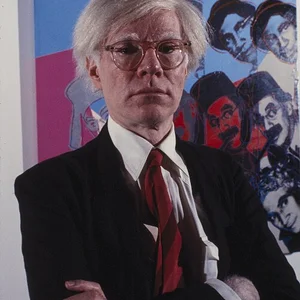
Andy Warhol
1928 — 1987
Andy Warhol (1928-1987) was the leading figure of the American Pop Art movement. He transformed images from mass culture into works of art, blurring the boundary between art and commerce.
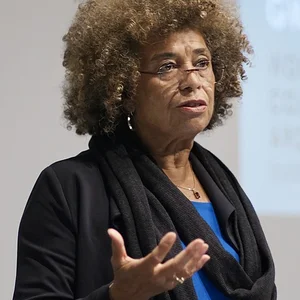
Angela Davis
1944 — ?
African-American civil rights activist, philosopher, and university professor born in 1944 in Birmingham, Alabama. An iconic figure of the Black Power movement and intersectional feminism, she was imprisoned in 1970 before being acquitted. She remains a leading voice against systemic racism and social inequality.

Anita Borg
1949 — 2003
American computer scientist (1949-2003), pioneer for the inclusion of women in computing. She founded the Institute for Women and Technology and co-founded the Grace Hopper Celebration, a global conference dedicated to women in computing.
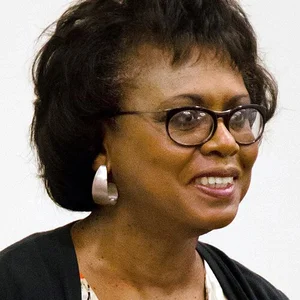
Anita Hill
1956 — ?
Anita Hill is an African American lawyer and law professor. In 1991, her testimony before the U.S. Senate, accusing Judge Clarence Thomas of sexual harassment during his nomination to the Supreme Court, marked a turning point in public awareness of workplace harassment.
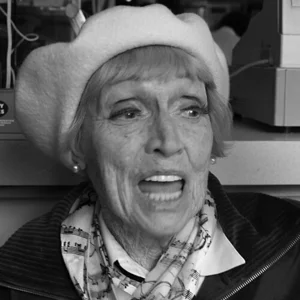
Anita O'Day
1919 — 2006
American jazz singer (1919-2006), a major figure of swing and later bebop vocals. She rose to fame as the vocalist of the big bands of Gene Krupa and Stan Kenton, distinguishing herself through her rhythmic, percussive phrasing and her mastery of scat singing.

Anna Kournikova
1981 — ?
Anna Kournikova is a Russian tennis player born in 1981 in Moscow. Turning professional at just 14, she reached the world top 10 and won two Grand Slam doubles titles at the French Open and Wimbledon alongside Martina Hingis. A media icon of the 1990s and 2000s, she came to embody the intersection of sport and popular culture.
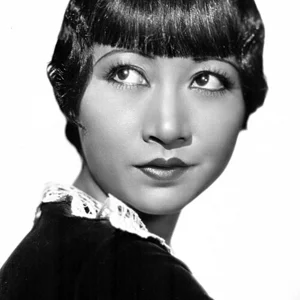
Anna May Wong
1904 — 1961
The first Chinese-American star of Hollywood, Anna May Wong (1905-1961) made her mark in both silent and sound cinema despite the industry's systemic racism. Throughout her career, she fought against stereotypes and anti-miscegenation laws that denied her leading roles.
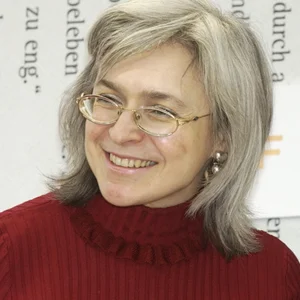
Anna Politkovskaya
1958 — 2006
Russian journalist and activist, Anna Politkovskaya distinguished herself through her courageous reporting on the Chechen wars and human rights abuses under Putin. Assassinated in Moscow in 2006, she became a symbol of press freedom and resistance against authoritarian regimes.
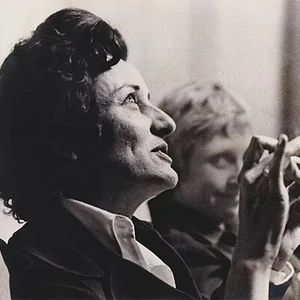
Anne Sexton
1928 — 1974
A leading American poet of the confessional movement, Anne Sexton explored depression, death, and the female condition in her work with a devastating autobiographical intensity. Winner of the Pulitzer Prize for Poetry in 1967 for *Live or Die*, she remains an essential figure in twentieth-century American literature.
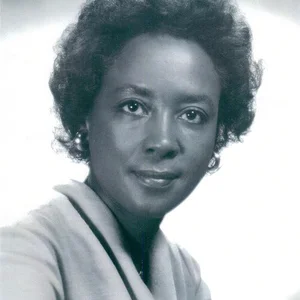
Annie Easley
1932 — 2011
An African American mathematician and computer scientist at NASA, Annie Easley contributed to the development of Centaur rockets and early solar energy technologies. A pioneer in a field dominated by white men, she also advocated for equal access to education.
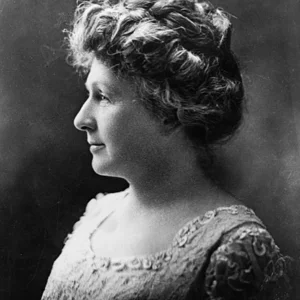
Annie Jump Cannon
1863 — 1941
A pioneering American astronomer, Annie Jump Cannon revolutionized astronomy by classifying the spectra of more than 350,000 stars. Her spectral classification system (OBAFGKM) is still in use today.
Annie Ross
1930 — 2020
British-American jazz singer and actress, a pioneer of vocalese. A member of the trio Lambert, Hendricks & Ross, she is famous for setting lyrics to instrumental solos, notably her standard “Twisted” (1952).
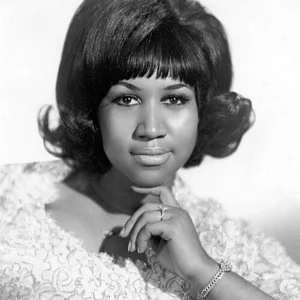
Aretha Franklin
1942 — 2018
American singer nicknamed the “Queen of Soul,” Aretha Franklin is one of the most powerful voices of the 20th century. A committed artist, she contributed to the civil rights movement and left her mark on world music with songs that became anthems.

Ariana Grande
1993 — ?
Ariana Grande is an American singer, songwriter, and actress born in 1993 in Florida. She rose to fame through the TV series Victorious before becoming one of the most influential pop artists of her generation. Her response to the 2017 Manchester bombing earned her international recognition.
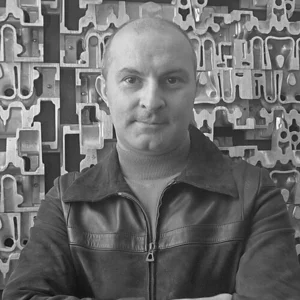
Arman
1928 — 2005
Arman (1928-2005) was a Franco-American artist and co-founder of Nouveau Réalisme alongside Yves Klein and Pierre Restany. He is celebrated for his "accumulations" of manufactured objects and his "destructions-reconstructions," which question consumer society.
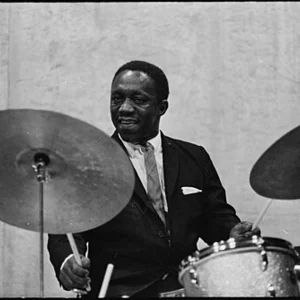
Art Blakey
1919 — 1990
American jazz drummer and a major figure of hard bop. For over thirty years he founded and led the Jazz Messengers, a band that launched many young musicians who went on to become some of the biggest names in jazz.
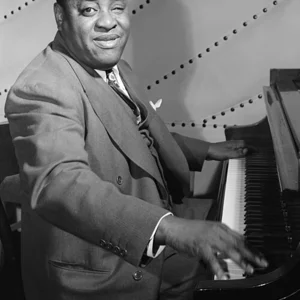
Art Tatum
1909 — 1956
Arthur "Art" Tatum (1909-1956) was an American jazz pianist, regarded as one of the greatest virtuosos in the history of the piano. Nearly blind from birth, he revolutionized piano technique through his velocity, his daring harmonies, and his reharmonizations.
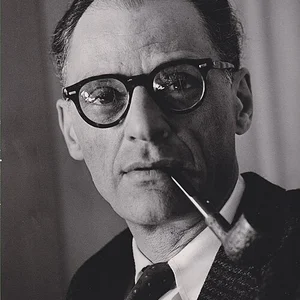
Arthur Miller
1915 — 2005
Arthur Miller (1915-2005) was a major American playwright of the 20th century. The author of *Death of a Salesman* and *The Crucible*, he turned theater into a critical mirror of American society and its excesses.
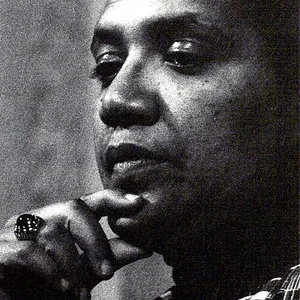
Audre Lorde
1934 — 1992
Audre Lorde (1934-1992) was an American poet, essayist, and activist, a leading figure in Black feminism and the civil rights struggle. She theorized intersectionality before the term existed, championing the rights of Black women, LGBT people, and the oppressed.
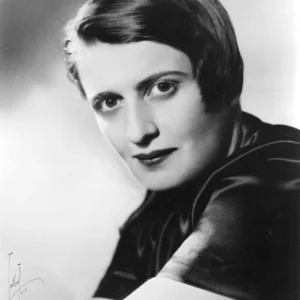
Ayn Rand
1905 — 1982
An American philosopher, novelist, and screenwriter of Russian origin, Ayn Rand is the founder of Objectivism, a philosophy championing reason, individualism, and capitalism. Her bestselling novels, including 'The Fountainhead' and 'Atlas Shrugged,' have had a lasting influence on American libertarian thought.
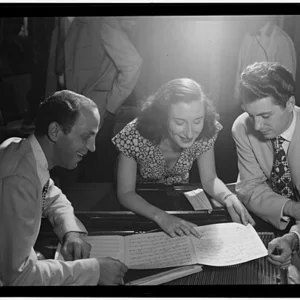
Barbara Carroll
1925 — 2017
Barbara Carroll (1925-2017) was an American jazz pianist and singer, regarded as one of the first women to play bebop on the piano. She enjoyed a long career in the clubs of New York.
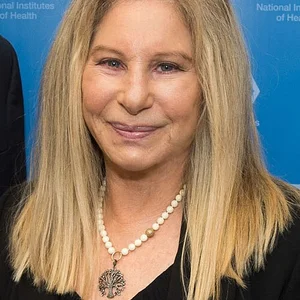
Barbra Streisand
1942 — ?
American singer and actress born in 1942 in New York, Barbra Streisand is one of the most awarded artists in entertainment history. She has shaped American pop music and cinema across more than six decades of career.
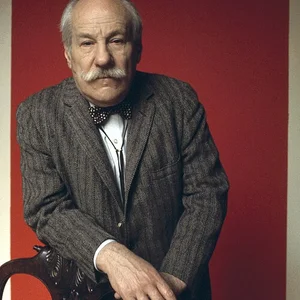
Barnett Newman
1905 — 1970
Barnett Newman (1905-1970) was an American painter, a major figure of Abstract Expressionism and Color Field painting. He is famous for his vast canvases of color crossed by vertical bands known as “zips.”
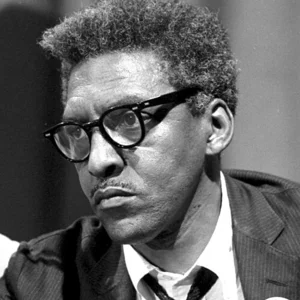
Bayard Rustin
1912 — 1987
African-American civil rights activist, advisor to Martin Luther King and chief organizer of the 1963 March on Washington. A pacifist and advocate of nonviolence, he was also a pioneering figure in the gay rights movement.
Beatrice Tinsley
1941 — 1981
Beatrice Tinsley is a New Zealand astronomer and cosmologist of British origin, a pioneer in the study of galaxy evolution. Her work transformed our understanding of how galaxies form and age over the course of the Universe's history.
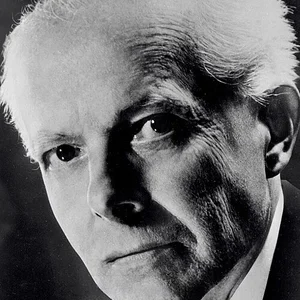
Béla Bartók
1881 — 1945
Béla Bartók was a Hungarian composer, pianist, and musicologist, one of the most important of the 20th century. A pioneer of ethnomusicology, he collected and studied the folk music of Central and Eastern Europe to incorporate it into a modern musical language.
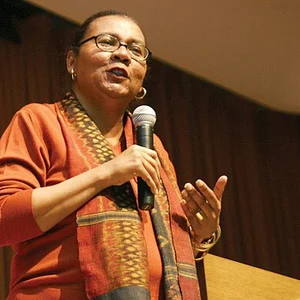
bell hooks
1952 — 2021
An American intellectual, writer, and feminist activist, bell hooks dedicated her life to analyzing the connections between race, gender, and class. The author of more than thirty books, she profoundly reshaped feminist thought by centering the experiences of Black women.
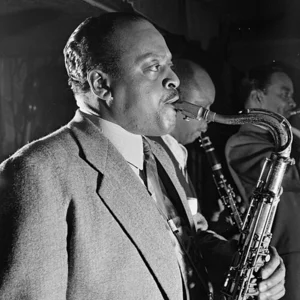
Ben Webster
1909 — 1973
Ben Webster (1909–1973) was an American tenor saxophonist and a towering figure in jazz. He rose to prominence as a member of Duke Ellington's orchestra in the 1940s, developing a warm and expressive style that established him as one of the greatest soloists in jazz history.
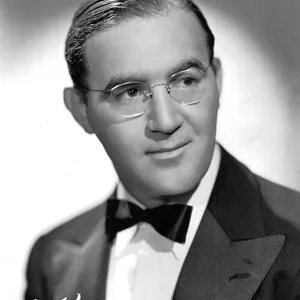
Benny Goodman
1909 — 1986
American clarinetist and bandleader (1909-1986), nicknamed “the King of Swing”. He helped bring jazz to mainstream white audiences and racially integrated his bands during the 1930s and 1940s.
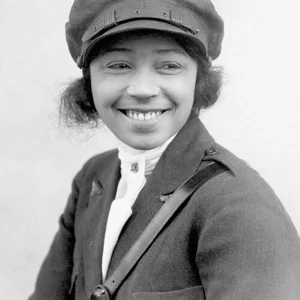
Bessie Coleman
1892 — 1926
Bessie Coleman (1892–1926) was the first African American woman to earn a pilot's license, obtaining it in France in 1921 because no American school would accept her due to her race and gender. She became a celebrated stunt aviator before dying in a plane crash.
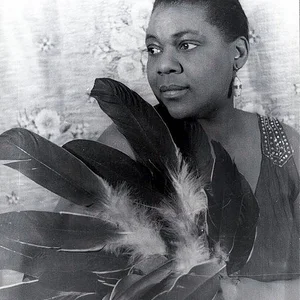
Bessie Smith
1894 — 1937
Bessie Smith (1894–1937) was an American singer nicknamed the “Empress of the Blues.” A towering figure of classic blues in the 1920s, she helped popularize the genre and paved the way for Black American artists.
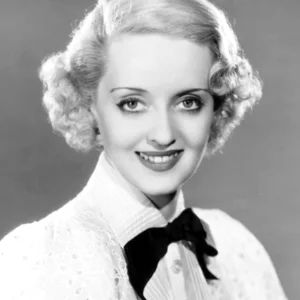
Bette Davis
1908 — 1989
American actress (1908–1989), a towering figure of Hollywood cinema from the 1930s through the 1960s. Known for her roles as strong, complex women, she won two Academy Awards and established herself as one of the greatest stars of the studio system.
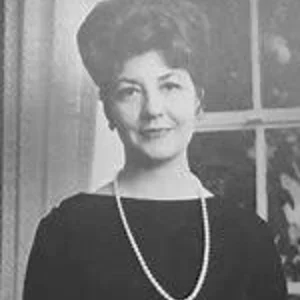
Bette Nesmith Graham
1924 — 1980
Bette Nesmith Graham (1924-1980) was an American secretary who became an inventor and entrepreneur. She developed the white correction fluid (Liquid Paper) to cover up typing mistakes, then built a thriving company around her invention.
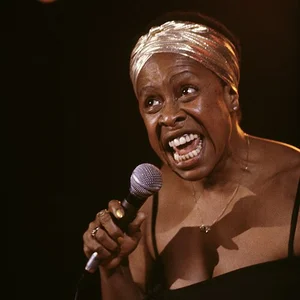
Betty Carter
1929 — 1998
Betty Carter was an American jazz singer, famous for her art of vocal improvisation and scat. A major figure of bebop, she left her mark on vocal jazz in the second half of the 20th century with her rhythmic and melodic freedom.
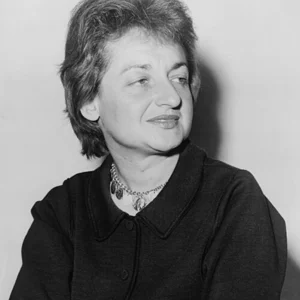
Betty Friedan
1921 — 2006
American essayist and feminist activist (1921–2006), Betty Friedan transformed society with her book The Feminine Mystique (1963), which ignited the second wave of feminism in the United States. Co-founder of the National Organization for Women (NOW), she fought for equal rights for women.
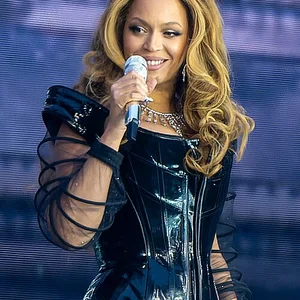
Beyoncé
1981 — ?
Beyoncé is an American singer, songwriter, and producer born in 1981 in Houston, Texas. A former member of Destiny's Child, she became one of the most influential solo artists of the 21st century, blending R&B, pop, and hip-hop.
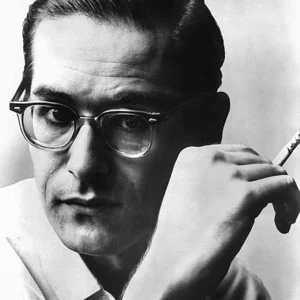
Bill Evans
1929 — 1980
Bill Evans (1929-1980) was an American jazz pianist, one of the most influential of the 20th century. His lyrical playing with its impressionistic harmonies and his approach to the trio make him a major figure in modern jazz, notably through his contribution to Miles Davis's album *Kind of Blue*.
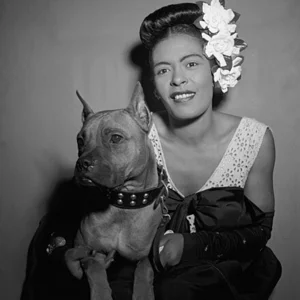
Billie Holiday
1915 — 1959
African-American jazz singer
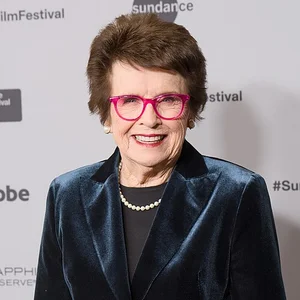
Billie Jean King
1943 — ?
Billie Jean King is an American tennis player, one of the greatest champions in the history of the sport. A pioneer of gender equality in sports, she won 39 Grand Slam titles and founded the first professional women players' association.
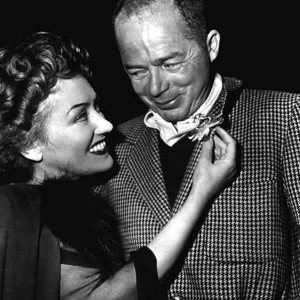
Billy Wilder
1906 — 2002
An American director, screenwriter, and producer of Austro-Hungarian origin, Billy Wilder is one of the major figures of classic Hollywood cinema. A master of both comedy and film noir, he directed masterpieces such as *Sunset Boulevard*, *Some Like It Hot*, and *The Apartment*.
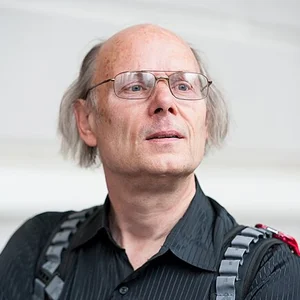
Bjarne Stroustrup
1950 — ?
Danish computer scientist born in 1950, Bjarne Stroustrup is the creator of the C++ programming language, developed in the 1980s at Bell Labs. He is also a professor and author of numerous reference works in computer science.
Blossom Dearie
1924 — 2009
Blossom Dearie (1924-2009) was an American jazz pianist and singer, recognizable by her light, delicate voice. A figure of intimate vocal jazz, she accompanied herself on piano in the clubs of New York and Paris.
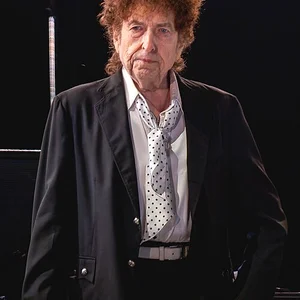
Bob Dylan
1941 — ?
American singer-songwriter born in 1941, a major figure in 20th-century folk and rock music. His socially engaged songs became anthems of the civil rights and anti-war movements. He received the Nobel Prize in Literature in 2016.
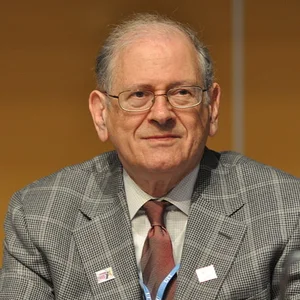
Bob Kahn
1938 — ?
American computer scientist who co-invented the TCP/IP protocol with Vint Cerf, the technical foundation of the Internet. His work made universal communication between computers possible on a global scale.
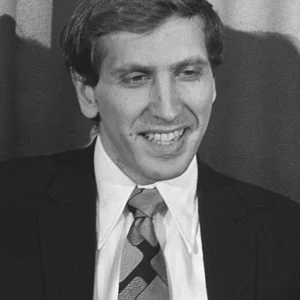
Bobby Fischer
1943 — 2008
Bobby Fischer was an American chess player, considered one of the greatest in history. In 1972, he became world champion by defeating the Soviet Boris Spassky, putting an end to decades of Soviet domination of the game.
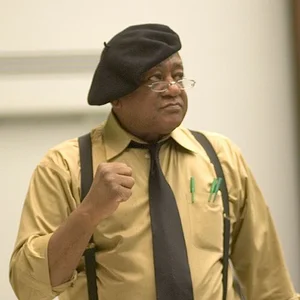
Bobby Seale
1936 — ?
Bobby Seale is an African American activist who, in 1966, co-founded the Black Panther Party with Huey P. Newton. A leading figure in the civil rights movement and the Black Power movement, he championed a revolutionary program to defend Black communities in the United States.
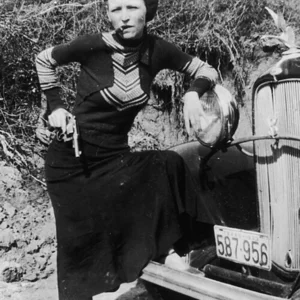
Bonnie Parker
1910 — 1934
American criminal, companion of Clyde Barrow, with whom she formed the Barrow gang during the Great Depression. The couple committed a series of robberies and murders before being shot dead by police in 1934.
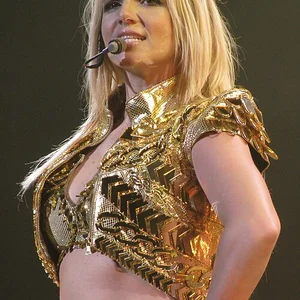
Britney Spears
1981 — ?
Britney Spears (born 1981) is an American singer, actress, and pop icon. Launched in the late 1990s, she became one of the best-selling artists in the world. Her career illustrates the excesses of the entertainment industry and the challenges of fame in the media age.
Bruno Bettelheim
1903 — 1990
Bruno Bettelheim (1903-1990) was an American psychoanalyst and educator of Austrian origin, specializing in childhood. A survivor of the Dachau and Buchenwald camps, he ran a school for troubled children in Chicago and left his mark on thinking about education and child psychology.
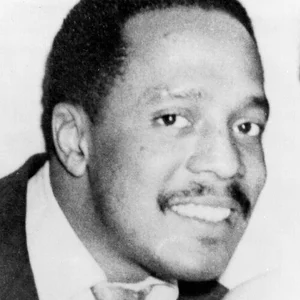
Bud Powell
1924 — 1966
Bud Powell was an American jazz pianist and composer, regarded as one of the greatest pianists of bebop. He transposed to the piano the harmonic and rhythmic language invented by Charlie Parker and Dizzy Gillespie, leaving a lasting influence on the piano playing of modern jazz.
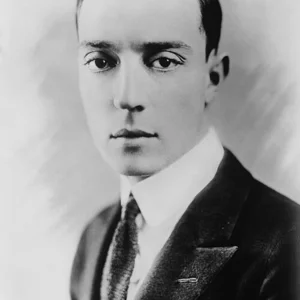
Buster Keaton
1895 — 1966
American actor, director, and stuntman, a major figure of silent slapstick cinema. Nicknamed “the man who never laughs,” he played a deadpan character confronting a mechanical and hostile world.
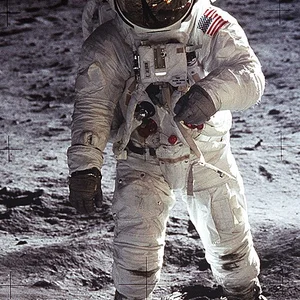
Buzz Aldrin
1930 — ?
An American astronaut, he was the second man to walk on the Moon during the Apollo 11 mission on July 20, 1969. A former combat pilot in Korea and holder of a doctorate in orbital mechanics, he contributed to the development of space rendezvous techniques.
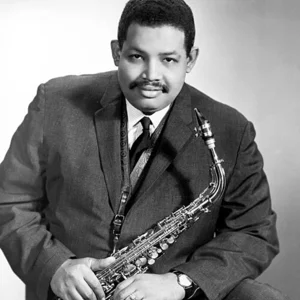
Cannonball Adderley
1928 — 1975
American jazz alto saxophonist, a major figure of hard bop and soul jazz. A member of the Miles Davis sextet on the album *Kind of Blue* (1959), he went on to lead his own quintet with his brother, cornetist Nat Adderley.
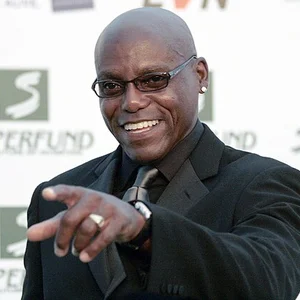
Carl Lewis
1961 — ?
Carl Lewis is an American athlete who specialized in sprinting and the long jump. Regarded as one of the greatest athletes in history, he won nine Olympic gold medals between 1984 and 1996.
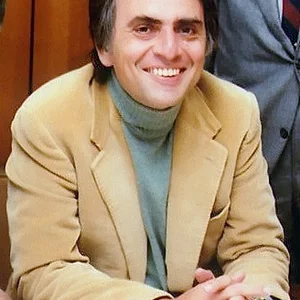
Carl Sagan
1934 — 1996
American astronomer and astrophysicist (1934–1996), Carl Sagan is celebrated for bringing science to the general public. His television series *Cosmos* (1980) reached hundreds of millions of viewers worldwide.
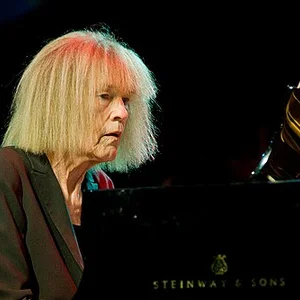
Carla Bley
1936 — 2023
Carla Bley (1936-2023) was an American jazz composer, pianist, and bandleader. A leading figure of the avant-garde, she left her mark on free jazz and large-ensemble composition, notably with her jazz opera *Escalator over the Hill*.
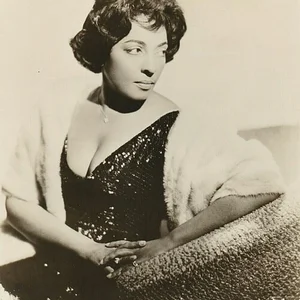
Carmen McRae
1920 — 1994
Carmen McRae (1922-1994) was an American jazz singer and pianist, regarded as one of the greatest vocal jazz voices of the 20th century. Known for her phrasing that lagged behind the beat and her subtle, ironic interpretation of lyrics, she stands in the lineage of Billie Holiday.
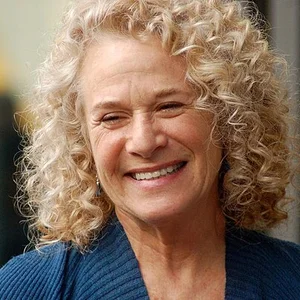
Carole King
1942 — ?
American singer-songwriter born in 1942, Carole King is one of the defining figures of rock and pop from the 1960s–1970s. Her album *Tapestry* (1971) remains one of the best-selling records in history.
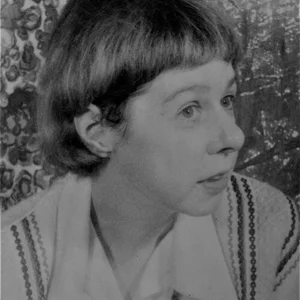
Carson McCullers
1917 — 1967
American novelist from the Deep South (1917–1967), Carson McCullers explores loneliness, marginality, and the longing to belong. Her first novel, *The Heart Is a Lonely Hunter* (1940), introduced her to the literary world at just 23.
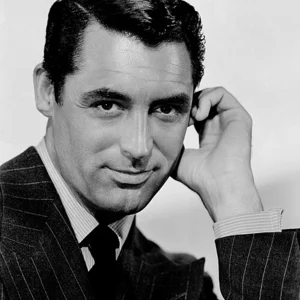
Cary Grant
1904 — 1986
Cary Grant was an Anglo-American actor and an iconic figure of Hollywood's golden age. The embodiment of elegance and charm, he excelled in sophisticated comedy as well as in thrillers, notably working alongside Alfred Hitchcock.
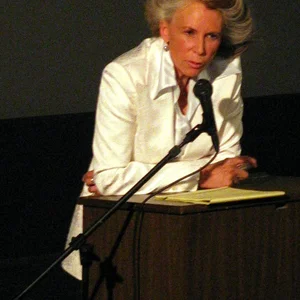
Catharine MacKinnon
1946 — ?
An American legal scholar and feminist theorist, Catharine MacKinnon is one of the most influential intellectuals of radical feminism. She theorized sexual harassment as a form of discrimination and helped establish its legal recognition in the United States.
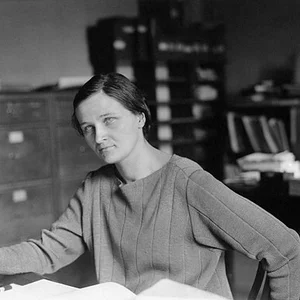
Cecilia Payne-Gaposchkin
1900 — 1979
British-born American astronomer (1900–1979), she discovered that stars are composed primarily of hydrogen and helium. Her 1925 doctoral thesis revolutionized astrophysics, even though her conclusions were initially rejected by her peers.
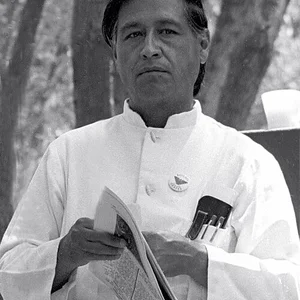
Cesar Chavez
1927 — 1993
César Chávez (1927-1993) was an American labor leader and activist of Mexican descent. He co-founded the United Farm Workers union and defended the rights of farm workers in the United States through nonviolent means.
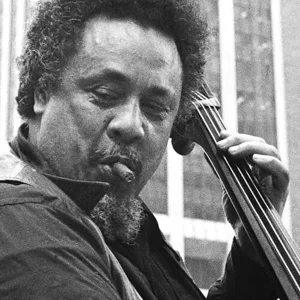
Charles Mingus
1922 — 1979
Charles Mingus (1922-1979) was an American jazz double bassist, composer, and bandleader. A major figure in modern jazz, he is renowned for his virtuoso playing and his ambitious compositions blending gospel, blues, and collective improvisation.

Charlie Chase
1952 — ?
An American radio and television host, Charlie Chase established himself as a key figure in the entertainment media landscape in the United States. He is best known for his role as a host in the world of country music on television.
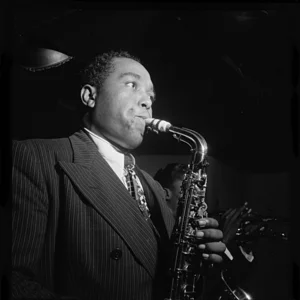
Charlie Parker
1920 — 1955
Charlie Parker, nicknamed “Bird,” was an American alto saxophonist and composer. With Dizzy Gillespie, he founded bebop in the late 1940s, revolutionizing jazz through his virtuosity and harmonic sense. His dazzling career was cut short by addiction.
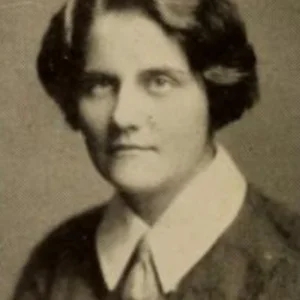
Cheryl Crawford
1902 — 1986
Cheryl Crawford was an American theatre producer and a major figure of the 20th-century New York stage. A co-founder of the Group Theatre and later the Actors Studio, she helped spread the acting “Method” across the United States.
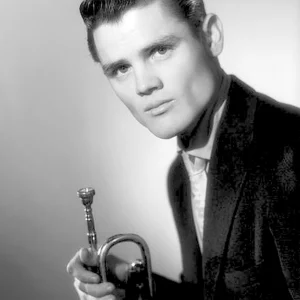
Chet Baker
1929 — 1988
Chet Baker (1929-1988) was an American jazz trumpeter and singer, a major figure of West Coast cool jazz. His soft, lyrical trumpet tone and his fragile voice made him an icon, despite a life marked by addiction.
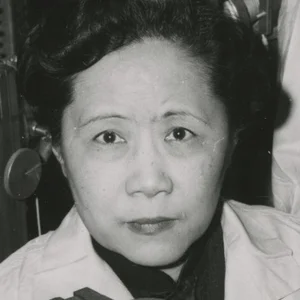
Chien-Shiung Wu
1912 — 1997
Chien-Shiung Wu was a Chinese-American experimental physicist, nicknamed "the First Lady of Physics." Her 1956 experiment disproved the law of conservation of parity, upending particle physics. Unjustly passed over for the Nobel Prize awarded to Lee and Yang for that discovery, she remains one of the most important figures in twentieth-century physics.
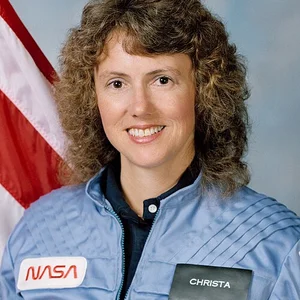
Christa McAuliffe
1948 — 1986
An American teacher selected for NASA's Teacher in Space program, she was set to become the first civilian in space. She perished in the Space Shuttle Challenger disaster on January 28, 1986.
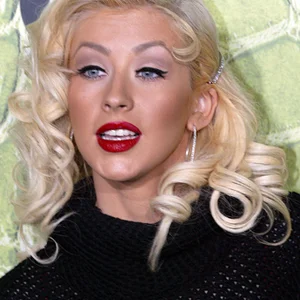
Christina Aguilera
1980 — ?
Christina Aguilera is an American singer, songwriter, and actress born in 1980. Breaking through in 1999, she established herself as one of the most powerful voices of her generation, blending pop, R&B, and soul. She became a symbol of female empowerment in the music industry at the turn of the 21st century.
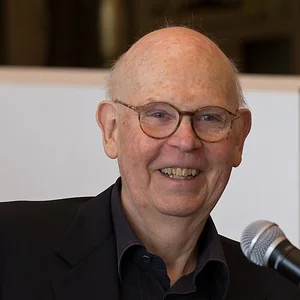
Claes Oldenburg
1929 — 2022
Swedish-American sculptor born in 1929, a major figure of Pop Art. He is celebrated for his monumental sculptures of everyday objects made from soft materials or at large scale, transforming the ordinary into works of art.
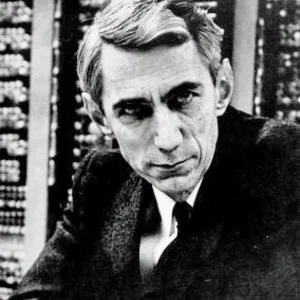
Claude Shannon
1916 — 2001
American mathematician and engineer (1916-2001), founder of information theory. His 1948 paper laid the mathematical foundations of digital communication and data encoding.
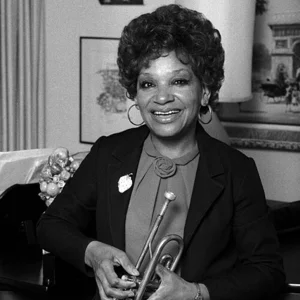
Clora Bryant
1927 — 2019
Clora Bryant (1927-2019) was an American jazz trumpeter, one of the very few women to establish herself as a soloist in bebop. A key figure on the Central Avenue scene in Los Angeles, she rubbed shoulders with the greatest musicians of her time.
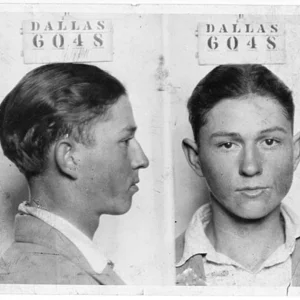
Clyde Barrow
1909 — 1934
Clyde Barrow is an American criminal from the Great Depression. With his companion Bonnie Parker, he forms the Barrow gang, which multiplies robberies and murders across the central United States before being killed in a police ambush in 1934.
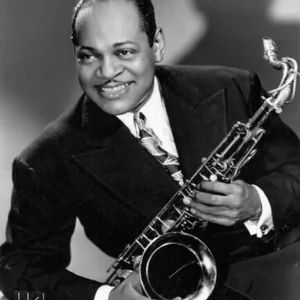
Coleman Hawkins
1904 — 1969
Coleman Hawkins (1904-1969) was an American tenor saxophonist widely regarded as the father of the jazz saxophone. He was one of the first to establish the saxophone as a jazz solo instrument and influenced generations of musicians.
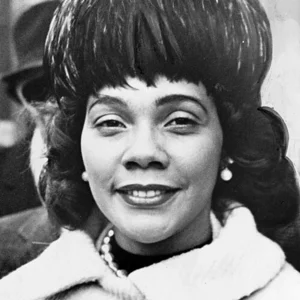
Coretta Scott King
1927 — 2006
American civil rights activist and wife of Martin Luther King Jr. After her husband's assassination in 1968, she continued his fight for racial equality and peace, founding the King Center in Atlanta.
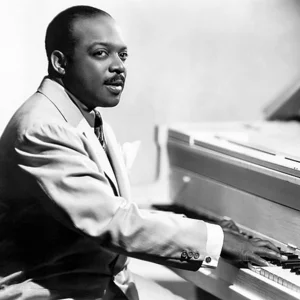
Count Basie
1904 — 1984
William James Basie, known as Count Basie (1904-1984), was an American pianist, organist, and bandleader. A major figure in jazz, he led one of the most famous big bands in history, contributing to the rise of swing in the 1930s–1940s.
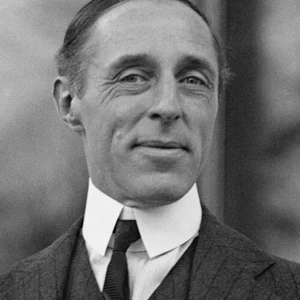
D. W. Griffith
1875 — 1948
D. W. Griffith (1875-1948) was an American director regarded as one of the fathers of narrative film language. He popularized editing, the close-up, and cross-cutting, but remains a controversial figure because of the racism of his film “The Birth of a Nation” (1915).
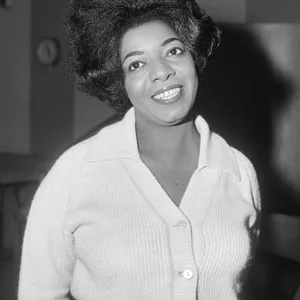
Dakota Staton
1930 — 2007
Dakota Staton (1930-2007) was an American jazz and blues singer. She rose to fame in the late 1950s and enjoyed huge success with her album The Late, Late Show in 1957.
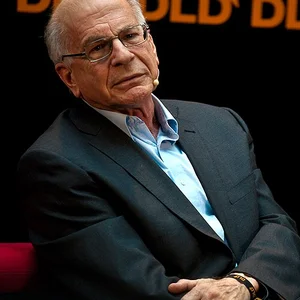
Daniel Kahneman
1934 — 2024
Daniel Kahneman was an Israeli-American psychologist and economist, a pioneer of behavioral economics. His work on cognitive biases and decision-making under uncertainty earned him the Nobel Prize in Economics in 2002.
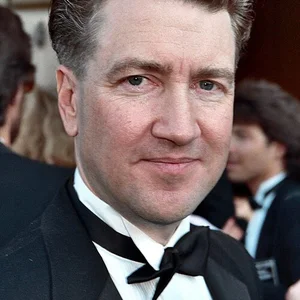
David Lynch
1946 — 2025
David Lynch (1946-2025) was an American filmmaker, photographer, painter, and musician. A major figure in independent cinema, he is famous for his dreamlike, surreal universe blending strangeness and unease.
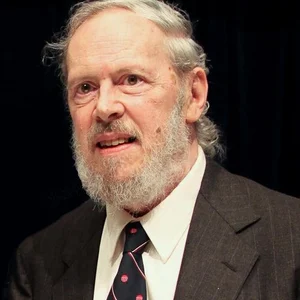
Dennis Ritchie
1941 — 2011
An American computer scientist, Dennis Ritchie is the creator of the C programming language and co-creator of the Unix operating system. His work at Bell Labs in the 1970s laid the foundations of modern computing.
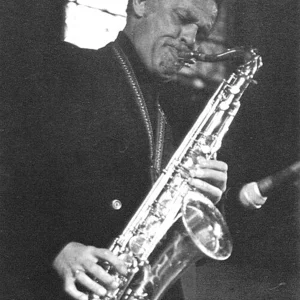
Dexter Gordon
1923 — 1990
Dexter Gordon (1923-1990) was an African American jazz tenor saxophonist and a major figure of bebop. A pioneer of his instrument in this style, he enjoyed a long career between the United States and Europe, and was nominated for the Academy Award for Best Actor in 1987.
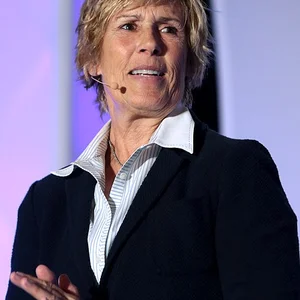
Diana Nyad
1949 — ?
Diana Nyad is an American long-distance swimmer and journalist, famous for her open-water crossings over very long distances. In 2013, at the age of 64, she became the first person to swim from Cuba to Florida without a shark cage.
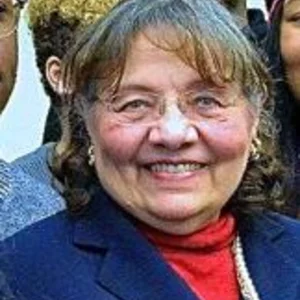
Diane Nash
1938 — ?
African-American civil rights activist, Diane Nash organized the Nashville sit-ins in 1960 and co-founded the Student Nonviolent Coordinating Committee (SNCC). A major figure of nonviolence, she contributed to the abolition of segregation in the American South.
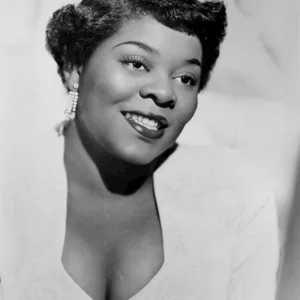
Dinah Washington
1924 — 1963
American singer (1924-1963), nicknamed the “Queen of the Blues.” A major figure in jazz, blues, and rhythm and blues during the 1940s and 1950s, she left her mark on African American music through her incisive phrasing and expressive voice.
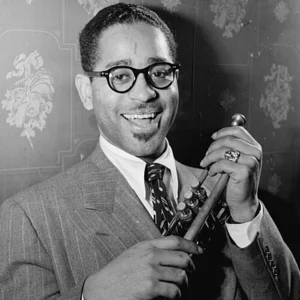
Dizzy Gillespie
1917 — 1993
An American jazz trumpeter, composer, and bandleader, Dizzy Gillespie was, alongside Charlie Parker, one of the principal founders of bebop in the 1940s. A trumpet virtuoso recognizable by his bent-bell horn and his puffed-out cheeks, he was also a pioneer of Afro-Cuban jazz.
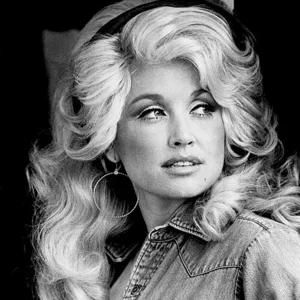
Dolly Parton
1946 — ?
American singer, songwriter, and actress born in 1946, icon of country music. Author of classics like "Jolene" and "I Will Always Love You", she is also a philanthropist, founder of a children's literacy program.
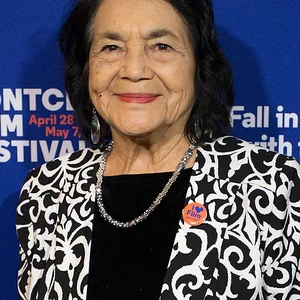
Dolores Huerta
1930 — ?
Dolores Huerta, born in 1930 in New Mexico, is an American labor and civil rights activist. Co-founder alongside César Chávez of the United Farm Workers (UFW), she championed the rights of migrant farmworkers, predominantly Latino. Her slogan “Sí, se puede!” has become a global symbol of the struggle for social justice.
Donald Judd
1928 — 1994
Donald Judd (1928–1994) was an American artist and major theorist of minimalism. He developed three-dimensional works in industrial materials, rejecting pictorial illusionism in favor of specific objects in real space.
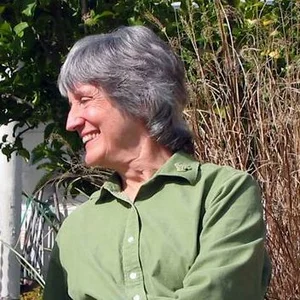
Donna Haraway
1944 — ?
Donna Haraway is an American academic, feminist theorist, and historian of science. Known for her “Cyborg Manifesto” (1985), she questions the boundaries between human, animal, and machine, and rethinks the relationships between nature, technology, and feminism.
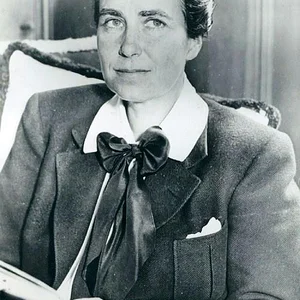
Dorothy Arzner
1897 — 1979
The only active female director working within the major Hollywood studios of the 1920s–1940s, Dorothy Arzner made around twenty films. A pioneer of women's cinema, she was the first woman admitted to the Directors Guild of America.
Dorothy Ashby
1932 — 1986
Dorothy Ashby was an American jazz harpist and composer, considered one of the pioneers who established the harp as a fully-fledged solo instrument in jazz. Active from the 1950s to the 1980s, she blended jazz, world music, and soul.
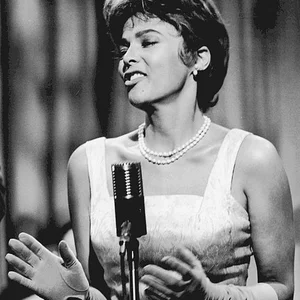
Dorothy Dandridge
1922 — 1965
An African-American actress, singer, and dancer, Dorothy Dandridge became in 1955 the first Black woman nominated for the Academy Award for Best Actress, for Carmen Jones. An icon of Golden Age Hollywood, she broke racial barriers in a deeply segregated industry.
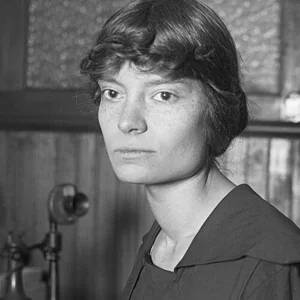
Dorothy Day
1897 — 1980
An American Catholic journalist and activist, in 1933 she co-founded the Catholic Worker Movement, which combines spiritual commitment, social justice, and pacifism. A major figure of charity and nonviolence, she devoted her life to the poor and the marginalized.
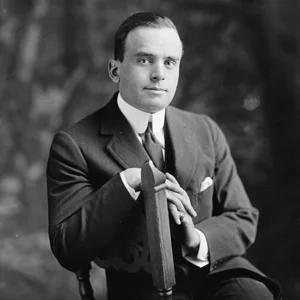
Douglas Fairbanks
1883 — 1939
An American silent film actor, Douglas Fairbanks was one of Hollywood's first great stars. Known for his acrobatic hero roles in adventure films such as *The Mark of Zorro* and *Robin Hood*, he was also a co-founder of United Artists studio.
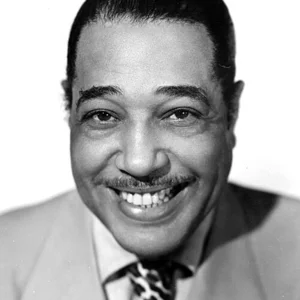
Duke Ellington
1899 — 1974
Duke Ellington (1899-1974) was an American pianist, composer, and bandleader, a central figure in jazz. For nearly half a century, he led his big band and composed thousands of works that elevated jazz to the status of a major art form.
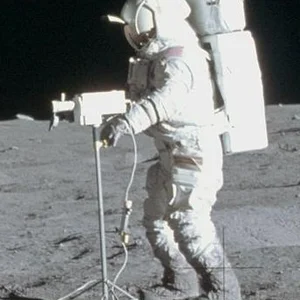
Edgar Mitchell
1930 — 2016
An American NASA astronaut, Edgar Mitchell was the sixth man to walk on the Moon during the Apollo 14 mission in February 1971. Holding a doctorate in aeronautics from MIT, he devoted his life after the space conquest to the study of human consciousness.
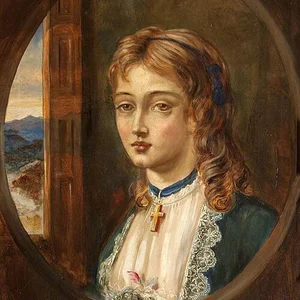
Edith Clarke
1883 — 1959
First woman to earn an electrical engineering degree from MIT (1919) and the first professionally employed female electrical engineer in the United States. She invented the Clarke graphical calculator, which greatly simplified electrical power transmission calculations.
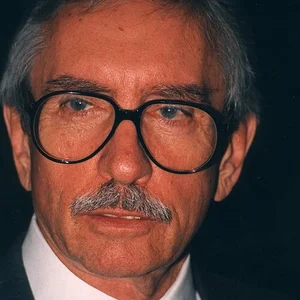
Edward Albee
1928 — 2016
Major American playwright of the 20th century, a leading figure of the theatre of the absurd in the United States. He made his mark in 1962 with *Who's Afraid of Virginia Woolf?* and won the Pulitzer Prize for Drama three times.
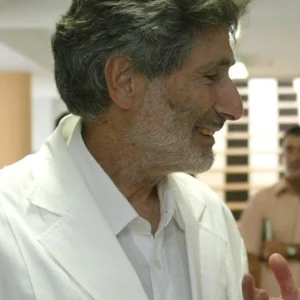
Edward Said
1935 — 2003
Edward Said (1935-2003) was a Palestinian-American academic, literary theorist, and critic. A professor at Columbia University, he was one of the founders of postcolonial studies with his major work *Orientalism* (1978). He was also an influential spokesman for the Palestinian cause.
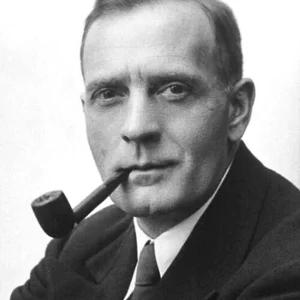
Edwin Hubble
1889 — 1953
American astronomer (1889–1953), Edwin Hubble demonstrated that spiral nebulae are galaxies beyond the Milky Way. He established that the Universe is expanding, revolutionizing our understanding of the cosmos.
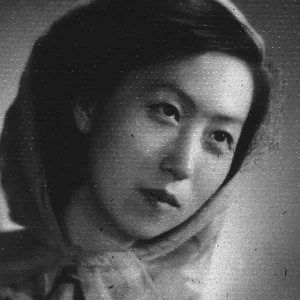
Eileen Chang
1920 — 1995
Chinese novelist born in Shanghai in 1920, Eileen Chang is considered one of the greatest voices in modern Chinese literature. Her works explore with remarkable subtlety the romantic relationships and Shanghainese society of the first half of the twentieth century.
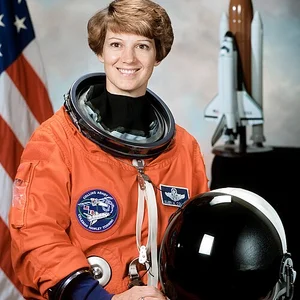
Eileen Collins
1956 — ?
An American astronaut and military pilot, Eileen Collins was the first woman to pilot and then command an American Space Shuttle. She completed four missions with NASA between 1995 and 2005.
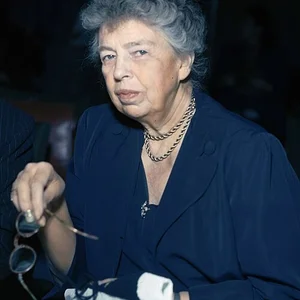
Eleanor Roosevelt
1884 — 1962
First Lady of the United States (1933–1945), Eleanor Roosevelt established herself as a tireless advocate for civil rights and social justice. She chaired the UN commission that drafted the Universal Declaration of Human Rights (1948).
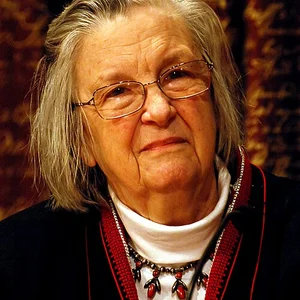
Elinor Ostrom
1933 — 2012
Elinor Ostrom (1933-2012) was an American economist and political scientist. The first woman to receive the Nobel Prize in Economics, in 2009, she showed how communities can sustainably manage shared resources (the “commons”) without resorting to either the state or the private market.
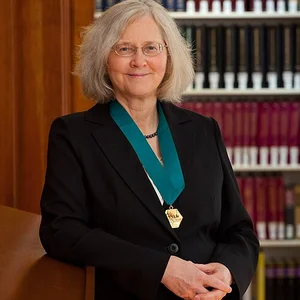
Elizabeth Blackburn
1948 — ?
Elizabeth Blackburn is an Australian-American molecular biologist born in 1948 in Tasmania. She discovered telomerase, the enzyme that protects the ends of chromosomes, which earned her the Nobel Prize in Physiology or Medicine in 2009.
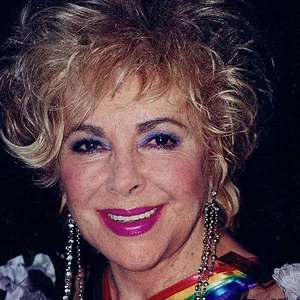
Elizabeth Taylor
1932 — 2011
Elizabeth Taylor (1932–2011) was a British-American actress widely regarded as one of Hollywood's greatest stars. A child prodigy who rose to fame early, she excelled in major roles of classic cinema and became a global symbol of glamour and the Hollywood star system. She was also a pioneering activist in the fight against AIDS from the 1980s onward.
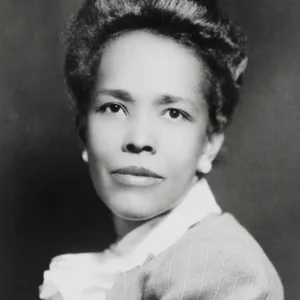
Ella Baker
1903 — 1986
An American civil rights activist, Ella Baker dedicated her life to community organizing and the fight against racial segregation. Co-founder of the SNCC, she shaped a generation of activists by championing collective leadership over individual charisma.
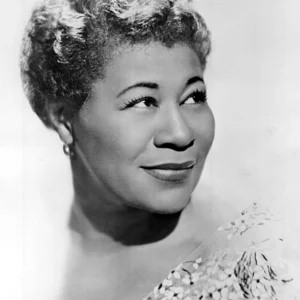
Ella Fitzgerald
1917 — 1996
Ella Fitzgerald (1917–1996) is considered one of the greatest jazz singers of all time. Nicknamed the “First Lady of Song,” she revolutionized jazz singing through her mastery of scat and the exceptional range of her voice.
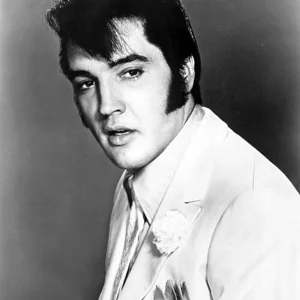
Elvis Presley
1935 — 1977
American singer and actor born in 1935, Elvis Presley is considered the “King of Rock and Roll.” He revolutionized popular music by blending country, gospel, and rhythm and blues, becoming a global icon of pop culture.
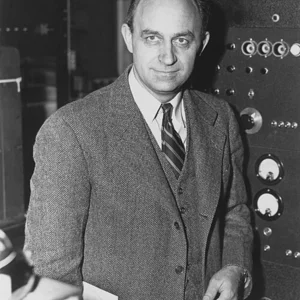
Enrico Fermi
1901 — 1954
Italian physicist (1901–1954), Nobel Prize in Physics in 1938. He achieved the first controlled nuclear chain reaction in 1942 and was one of the fathers of the atomic bomb as part of the Manhattan Project.
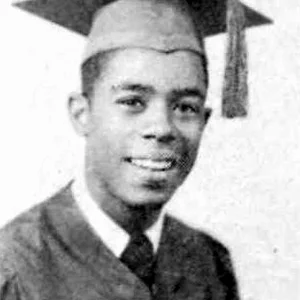
Eric Dolphy
1928 — 1964
Eric Dolphy (1928-1964) was an American jazz multi-instrumentalist, a virtuoso of the alto saxophone, the flute, and the bass clarinet. A major figure of avant-garde jazz and free jazz, he collaborated with Charles Mingus, John Coltrane, and Ornette Coleman before dying prematurely at the age of 36.

Erna Schneider Hoover
1926 — ?
Erna Schneider Hoover (1926-2025) was an American mathematician and computer scientist. In the 1960s she invented a computerized stored-program-controlled telephone switching system, revolutionizing the way calls were handled in telephone exchanges.
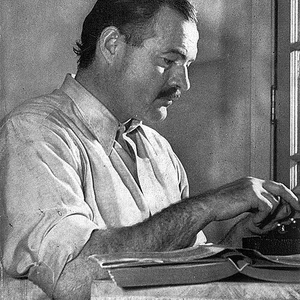
Ernest Hemingway
1899 — 1961
American writer and journalist, a major figure of 20th-century literature. A master of a spare, stripped-down style, he left his mark on the modern novel and received the Nobel Prize in Literature in 1954.
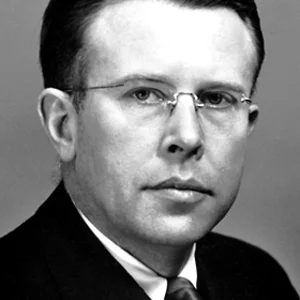
Ernest Lawrence
1901 — 1958
American physicist (1901–1958), inventor of the cyclotron, the first circular particle accelerator. Winner of the 1939 Nobel Prize in Physics, he paved the way for modern nuclear physics and contributed to the Manhattan Project.

Erwin Chargaff
1905 — 2002
An Austrian-American biochemist of Jewish origin, in the 1950s he established the rules governing the composition of DNA bases. His work provided a decisive clue for the discovery of the double helix structure by Watson and Crick.
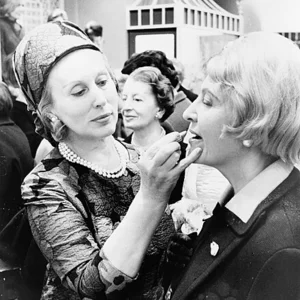
Estée Lauder
1908 — 2004
American businesswoman (1906–2004)
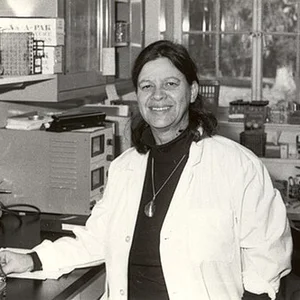
Esther Lederberg
1922 — 2006
Esther Lederberg (1922-2006) was an American microbiologist who pioneered bacterial genetics. She discovered the lambda bacteriophage and developed the replica plating technique, long overshadowed by her husband Joshua Lederberg.
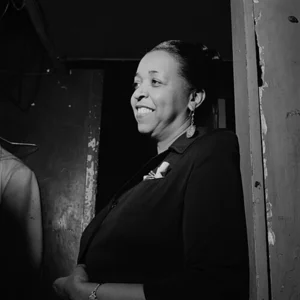
Ethel Waters
1896 — 1977
Ethel Waters (1896-1977) was an African American singer and actress. A pioneer of jazz and vocal blues, she broke racial barriers on Broadway, in film, and on American television, becoming one of the most famous Black artists of the first half of the 20th century.
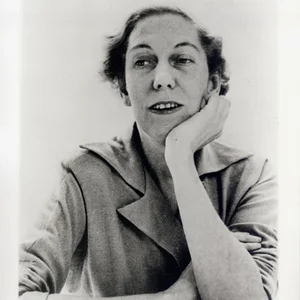
Eudora Welty
1909 — 2001
Eudora Welty (1909-2001) was an American novelist and short story writer, a major figure in the literature of the American South. Her work depicts daily life in Mississippi with great subtlety. She received the Pulitzer Prize in 1973.
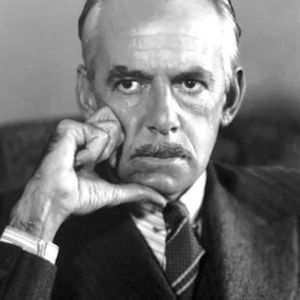
Eugene O'Neill
1888 — 1953
American playwright considered the father of modern theater in the United States. The first American dramatist to receive the Nobel Prize in Literature, in 1936, he brought realism and psychological tragedy to the American stage.
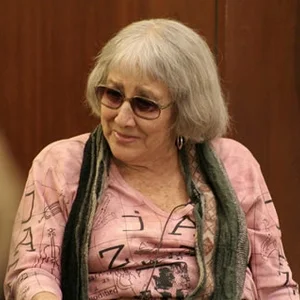
Eugenie Clark
1922 — 2015
Eugenie Clark (1922-2015) was an American ichthyologist, a pioneer of scientific diving and a world-renowned shark expert. Nicknamed “the Shark Lady,” she transformed the image of these predators and advanced the study of fishes.
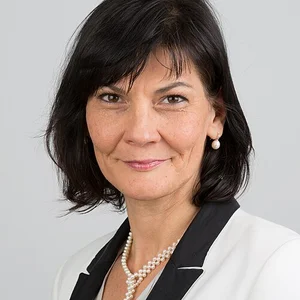
Eva Hesse
1936 — 1970
Eva Hesse (1936-1970) was a German-born American sculptor and a major figure of post-minimalism. She revolutionized sculpture by using soft industrial materials such as latex and fiberglass, creating organic and repetitive forms of great emotional power.

Evelyn Berezin
1925 — 2018
Evelyn Berezin (1925-2018) was an American engineer and computer scientist, a pioneer of computing. In 1971 she designed the first computerized word processor, the Data Secretary, and founded the company Redactron to bring it to market.
Evelyn Boyd Granville
1924 — 2023
Evelyn Boyd Granville was an American mathematician, one of the first African American women to earn a doctorate in mathematics in the United States (Yale, 1949). She contributed to the American space programs by developing trajectory analyses for the Vanguard, Mercury, and Apollo missions.
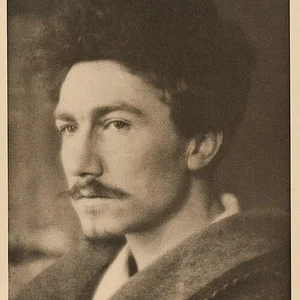
Ezra Pound
1885 — 1972
Ezra Pound (1885-1972) was an American poet and critic, a major figure of English-language literary modernism. A driving force behind Imagism, he influenced an entire generation of writers and left behind a monumental, unfinished work, the Cantos.
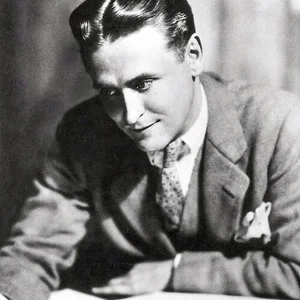
F. Scott Fitzgerald
1896 — 1940
American writer (1896-1940), a major figure of 20th-century literature. A chronicler of the Roaring Twenties, he embodies and critiques the American Dream in novels such as The Great Gatsby.
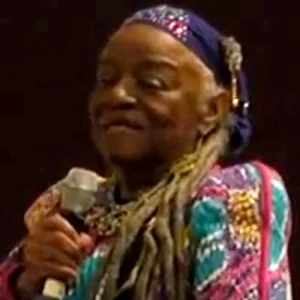
Faith Ringgold
1930 — 2024
Faith Ringgold (1930-2024) was an African American artist, painter, and mixed-media artist, famous for her “story quilts”—narrative quilts blending painting, fabric, and text. Committed to the civil rights and feminist movements, she was also an author of children's books.
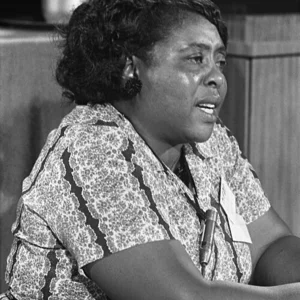
Fannie Lou Hamer
1917 — 1977
An American civil rights activist, Fannie Lou Hamer was a leading figure in the movement for Black voting rights in Mississippi. Co-founder of the Mississippi Freedom Democratic Party, she challenged American apartheid through her courage and her voice.
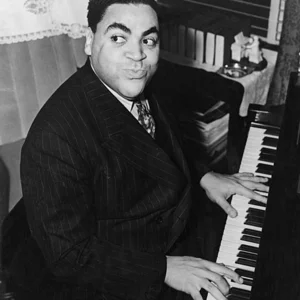
Fats Waller
1904 — 1943
African-American jazz pianist, organist, composer and singer, major figure of stride piano. A virtuoso showman, he marked jazz in the 1920s-1930s with standards like "Ain't Misbehavin'" and "Honeysuckle Rose."
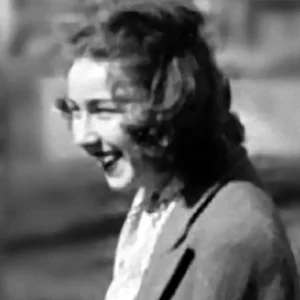
Flannery O'Connor
1925 — 1964
American novelist and short story writer (1925–1964), a major figure of Southern Gothic literature. Her work blends the grotesque, violence, and divine grace in the American Deep South.
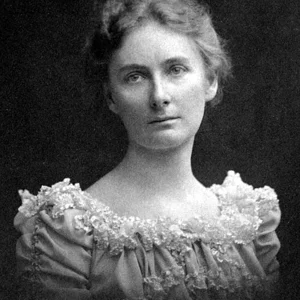
Florence Bascom
1862 — 1945
Florence Bascom (1862-1945) was an American geologist and a pioneer of the Earth sciences. The first woman to earn a doctorate from Johns Hopkins University (1893) and the first woman hired by the US Geological Survey, she was a recognized specialist in mineralogy and petrography.
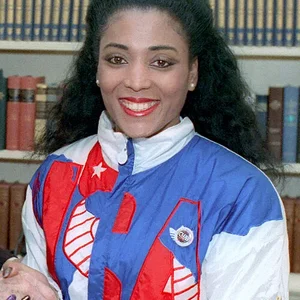
Florence Griffith-Joyner
1959 — 1998
American athlete specializing in sprinting, nicknamed “Flo-Jo.” She still holds the world records in the 100 m and 200 m set in 1988, and was one of the fastest and most high-profile sprinters in history.
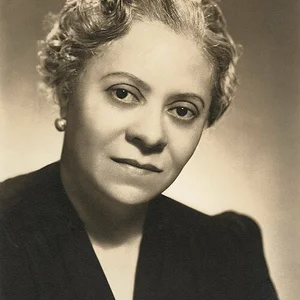
Florence Price
1887 — 1953
Florence Price (1887-1953) was an American composer and pianist, the first African American woman to have a symphony performed by a major American orchestra. Her work blends European classical influences with African American spirituals.
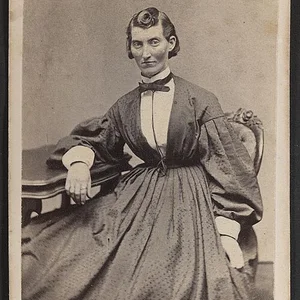
Frances Clayton
1830 — 1863
American psychologist and partner of the African American poet and activist Audre Lorde for nearly twenty years. The couple raised Lorde's two children together on Staten Island, a figure in 20th-century lesbian and feminist history.
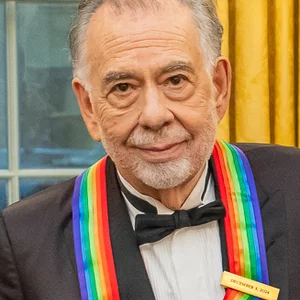
Francis Ford Coppola
1939 — ?
Francis Ford Coppola is an American director, screenwriter, and producer born in 1939, a major figure of New Hollywood. He is world-renowned for the Godfather trilogy and for Apocalypse Now, both of which have become cinema classics.
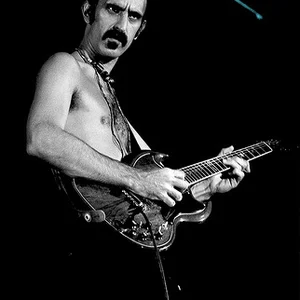
Frank Zappa
1940 — 1993
An American avant-garde composer and guitarist, Frank Zappa is one of the most original figures in rock and experimental music of the 20th century. Founder of the band The Mothers of Invention, he blended rock, jazz, contemporary classical music, and satirical humor.
Franklin Stahl
1929 — 2025
Franklin Stahl is an American molecular biologist and geneticist. With Matthew Meselson, in 1958 he carried out a decisive experiment demonstrating that DNA replication is semiconservative, confirming the model proposed by Watson and Crick.
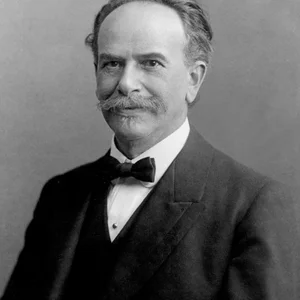
Franz Boas
1858 — 1942
Franz Boas (1858-1942) was a German-born American anthropologist, considered the father of modern cultural anthropology. He fought scientific racism by demonstrating that the differences between peoples stem from culture and not from biology.
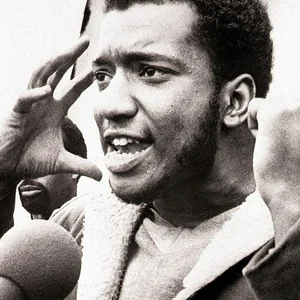
Fred Hampton
1948 — 1969
Fred Hampton (1948-1969) was an African American activist and chairman of the Illinois chapter of the Black Panther Party. A charismatic organizer, he founded the “Rainbow Coalition,” uniting several movements. He was killed at the age of 21 during a police raid, becoming a symbol of the repression of the civil rights movement.
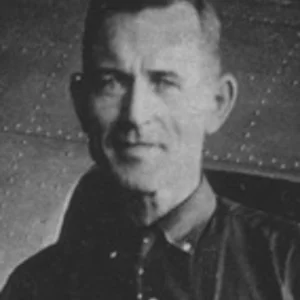
Fred Noonan
1893 — 1938
An American navigator and aviator, Fred Noonan served as navigator for Amelia Earhart during their attempted around-the-world flight in 1937. He disappeared with her over the Pacific, leaving behind one of aviation's greatest mysteries.
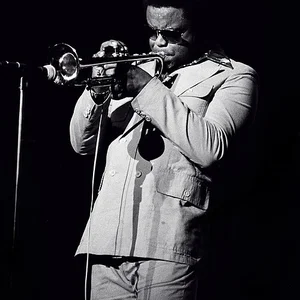
Freddie Hubbard
1938 — 2008
Freddie Hubbard (1938-2008) was an American jazz trumpeter, one of the major figures of hard bop. Blessed with a brilliant technique and a dazzling sound, he left his mark on the 1960s and 1970s before broadening his style toward jazz fusion.

Fritz Lang
1890 — 1976
Fritz Lang (1890-1976) was an Austrian-born American filmmaker, pioneer of German Expressionist cinema and later of Hollywood film noir. His major works such as Metropolis and M left a profound mark on the history of cinema.
Garrett Morgan
1877 — 1963
A self-taught American inventor, Garrett Morgan designed the gas mask (1914) and the three-position traffic signal (1923). His inventions saved lives and revolutionized public safety.
Gary Cooper
1901 — 1961
Gary Cooper (1901-1961) was one of the leading actors of classical Hollywood cinema. The embodiment of the upright, taciturn American hero, he left his mark on the western and the melodrama before winning two Academy Awards for Best Actor.
George Balanchine
1904 — 1983
George Balanchine (1904-1983) was a Georgian-born dancer and choreographer, trained in Saint Petersburg before emigrating to the United States. A co-founder of the New York City Ballet, he is considered the father of American neoclassical ballet.
George Gershwin
1898 — 1937
American composer and pianist (1898–1937), George Gershwin revolutionized music by blending jazz, blues, and classical music. The creator of Rhapsody in Blue and the opera Porgy and Bess, he is one of the defining symbols of twentieth-century American culture.
George Sudarshan
1931 — 2018
Indian-American theoretical physicist, a major figure in 20th-century physics. He contributed to the theory of the weak interaction and to quantum optics, but never received the Nobel Prize despite several nominations.
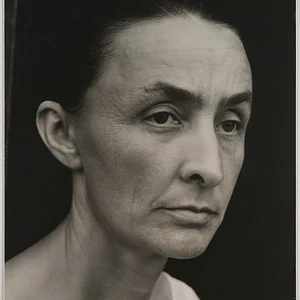
Georgia O'Keeffe
1887 — 1986
Georgia O'Keeffe was a pioneering American painter of modern art, celebrated for her abstract close-up depictions of flowers and her landscapes of New Mexico. Regarded as the "Mother of American Modernism," she asserted a singular style — balancing figuration and abstraction — over a career spanning more than seven decades.
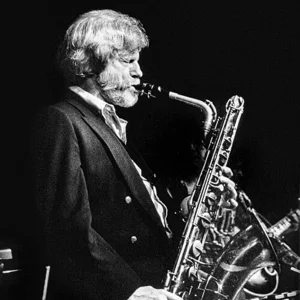
Gerry Mulligan
1927 — 1996
Gerry Mulligan (1927-1996) was an American baritone saxophonist, composer, and arranger, a major figure of cool jazz. He made his mark with his pianoless quartet formed with trumpeter Chet Baker and with his participation in the founding sessions of “cool” jazz.
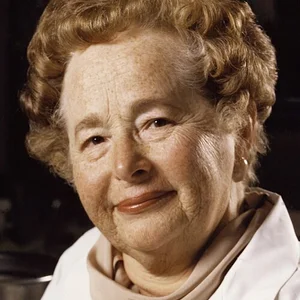
Gertrude B. Elion
1918 — 1999
Gertrude B. Elion (1918-1999) was an American biochemist and pharmacologist, a pioneer of rational drug design. Her research led to the development of treatments for leukemia, gout, transplant rejection, and viral infections. She received the Nobel Prize in Medicine in 1988.
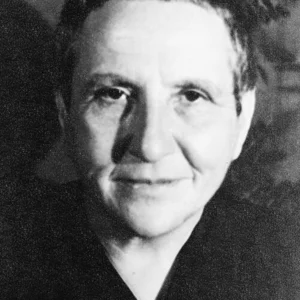
Gertrude Stein
1874 — 1946
An American writer and art critic living as an expatriate in Paris, Gertrude Stein was a central figure of the literary and artistic avant-gardes of the early 20th century. Her salon on the rue de Fleurus brought together Picasso, Matisse, Hemingway, and Fitzgerald.
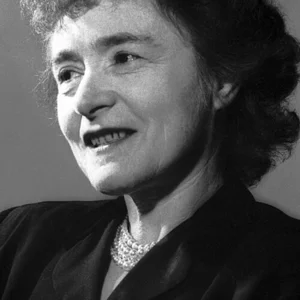
Gerty Cori
1896 — 1957
An American biochemist of Czech origin, Gerty Cori was the first woman to receive the Nobel Prize in Physiology or Medicine in 1947, which she shared with her husband Carl Cori. Her work on glycogen metabolism laid the foundations of modern biochemistry.
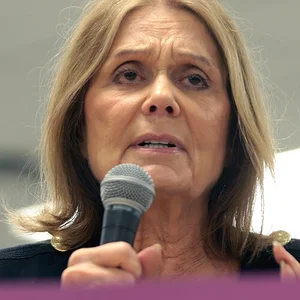
Gloria Steinem
1934 — ?
An American journalist and feminist activist, Gloria Steinem is one of the iconic figures of the women's movement of the 1960s and 1970s. Co-founder of Ms. magazine in 1972, she dedicated her life to defending gender equality and civil rights.
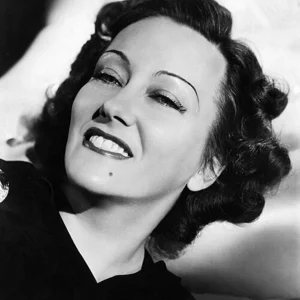
Gloria Swanson
1899 — 1983
An iconic American actress of the silent cinema era in the 1920s, Gloria Swanson was one of Hollywood's greatest stars. Her role as Norma Desmond in *Sunset Boulevard* (1950) remains one of the most memorable performances in cinema history.
Grace Hopper
1906 — 1992
Grace Hopper, American mathematician and rear admiral, is one of the pioneers of computer science. She developed one of the first compilers and contributed to the creation of the COBOL programming language, revolutionizing programming. She popularized the term "bug" in computing after finding a real insect inside a computer.
Grace Kelly
1929 — 1982
An Oscar-winning American actress of the 1950s, Grace Kelly left Hollywood at the height of her fame to marry Prince Rainier III of Monaco in 1956. As princess consort, she embodied elegance and cultural prestige until her accidental death in 1982.
Greta Garbo
1905 — 1990
Swedish actress who became one of Hollywood's greatest stars of the 1920s–1930s. Famous for her air of mystery and restrained acting style, she voluntarily stepped away from the screen in 1941 at the age of 36.
Groucho Marx
1890 — 1977
American comedian born in 1890, iconic figure of the Marx Brothers. Star of vaudeville, film, and television, he is famous for his absurdist humor, sharp one-liners, and his iconic painted mustache character.
Hannah Arendt
1906 — 1975
German-born American philosopher (1906–1975), Hannah Arendt is one of the most influential thinkers of the 20th century. A refugee in the United States after fleeing Nazism, she developed a critical analysis of totalitarianism, political violence, and the human condition in the modern world.
Harold Lloyd
1893 — 1971
Harold Lloyd (1893-1971) was one of the greatest comedians of American silent cinema, a rival to Chaplin and Keaton. His round-glasses character embodied the naive optimism of the ordinary American. He is famous for his breathtaking stunts, most notably the clock-hanging scene in *Safety Last!* (1923).
Harriet Creighton
1909 — 2004
American geneticist and botanist, Harriet Creighton is celebrated for her landmark experiment conducted with Barbara McClintock in 1931, proving that genetic crossing-over corresponds to a physical exchange between chromosomes. She taught botany at Wellesley College for decades.
Harry Hess
1906 — 1969
American geologist and geophysicist, and a naval officer during World War II. He is one of the founders of the theory of seafloor spreading, a decisive step toward plate tectonics.
Harvey Milk
1930 — 1978
Harvey Milk was an American politician, the first openly gay person elected to a major public office in California. As a San Francisco city supervisor, he became a leading figure in the fight for LGBT rights before being assassinated in 1978.
Hattie McDaniel
1893 — 1952
American actress (1893-1952), Hattie McDaniel was the first African American woman to win an Academy Award, for her role as Mammy in Gone with the Wind (1939). Her career illustrates the tensions between artistic success and racial segregation in the United States.
Hazel Scott
1920 — 1981
Jazz pianist and singer of Trinidadian and American descent, a virtuoso known for her arrangements blending classical music and swing. A star of nightclubs and the silver screen, she was also a civil rights activist who refused to perform for segregated audiences.
Hedy Lamarr
1914 — 2000
Austrian-born American actress, producer, and scientist
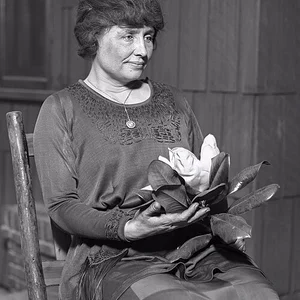
Helen Keller
1880 — 1968
Deaf-blind since the age of 19 months, Helen Keller learned to communicate thanks to her teacher Anne Sullivan and became a writer and activist. She devoted her life to defending the rights of people with disabilities and women.
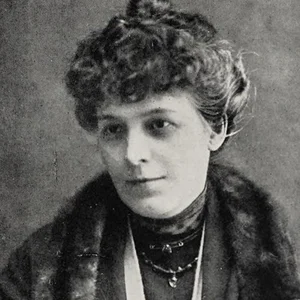
Helen Merrill
1930 — ?
Helen Merrill (born Jelena Ana Milčetić, 1929-2025) was an American jazz singer of Croatian descent. Known for her intimate, hushed voice, she established herself from the 1950s onward as a leading interpreter of standards and vocal jazz.
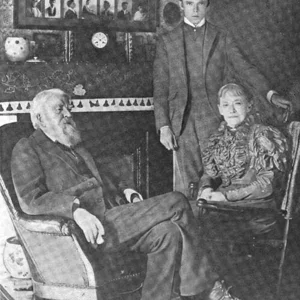
Henry Drewal
1943 — ?
Henry John Drewal is an American art historian, a recognized specialist in the arts of Africa and the African diaspora, particularly Yoruba art. A professor at the University of Wisconsin-Madison, he profoundly renewed the study of African visual cultures.
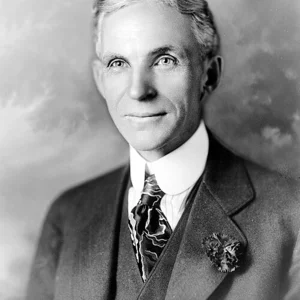
Henry Ford
1863 — 1947
American industrialist (1863–1947), Henry Ford revolutionized automobile manufacturing by introducing the assembly line and the Model T. He is the founder of the Ford Motor Company and one of the founding fathers of modern industrial capitalism.
Herbie Hancock
1940 — ?
American jazz pianist, keyboardist, and composer born in 1940. He rose to prominence in Miles Davis's quintet during the 1960s, becoming one of the leading figures of modal jazz and later of jazz-funk fusion, while never ceasing to explore new electronic sounds.
Hermann Broch
1886 — 1951
Hermann Broch (1886–1951) was an Austrian writer and essayist, a major figure of German-language literary modernism. Forced into exile by Nazism, he wrote novels that examine the disintegration of European civilization's values.
Hermann Weyl
1885 — 1955
German mathematician and theoretical physicist (1885–1955), Hermann Weyl profoundly transformed geometry, topology, and mathematical physics. He made major contributions to group theory, general relativity, and quantum mechanics.
Hilary Putnam
1926 — 2016
Hilary Putnam (1926-2016) was a major American philosopher in analytic philosophy. He profoundly influenced the philosophy of mind, language, science, and mathematics, distinguished by his ability to revise his own positions throughout his career.
Hiram Bingham
1875 — 1956
American explorer and politician (1875–1956), he rediscovered the Inca site of Machu Picchu in 1911, perched in the Peruvian Andes. A professor at Yale, he helped bring this lost city to the attention of the entire world.
Howard Hawks
1896 — 1977
Howard Hawks was an American director, producer, and screenwriter, a major figure of Hollywood's Golden Age. A jack-of-all-trades across genres (western, film noir, comedy, war film), he is regarded as one of the great auteurs of classic cinema.
Howard Thurman
1899 — 1981
Howard Thurman (1899-1981) was an African American theologian, pastor, and author. A thinker of the Black Church and of nonviolence, he profoundly influenced the leaders of the American civil rights movement, including Martin Luther King Jr.
Huey P. Newton
1942 — 1989
African-American activist, co-founder of the Black Panther Party in 1966 with Bobby Seale. A theorist of black nationalism and armed self-defense, he became a major figure in the struggle for civil rights and against police violence in the United States.
Humphrey Bogart
1899 — 1957
Humphrey Bogart was an American actor and a major figure of Hollywood's Golden Age. He embodied the tough hero—cynical yet upright—in film noir and classics such as Casablanca. He is regarded as one of the greatest legends of American cinema.
Hyman Minsky
1919 — 1996
Hyman Minsky (1919-1996) was an American economist famous for his theory of financial instability. He showed how periods of stability and growth push players to take on increasing risks, leading to financial crises.
Igor Stravinsky
1882 — 1971
Igor Stravinsky is one of the most influential composers of the 20th century. With his ballets for the Ballets Russes — *The Firebird*, *Petrushka*, and above all *The Rite of Spring* — he revolutionized musical language through bold rhythms and dissonances. Naturalized as a French then American citizen, he traversed all the major aesthetic movements of his time.
Ina Ray Hutton
1916 — 1984
Ina Ray Hutton (1916-1984) was an American bandleader, singer, and dancer of the swing era. Nicknamed “The Blonde Bombshell of Rhythm,” she led the Melodears in the 1930s, one of the first all-female big bands, before hosting her own musical television show in the 1950s.
Ingrid Daubechies
1954 — ?
Belgian-born physicist and mathematician, naturalized American, born in 1954. A pioneer of wavelet theory, her work revolutionized signal processing and image compression. First female president of the International Mathematical Union.
Isadora Duncan
1877 — 1927
American dancer (1877-1927)
J. Edgar Hoover
1895 — 1972
J. Edgar Hoover was the first director of the Federal Bureau of Investigation (FBI), which he led from 1924 until his death in 1972. A powerful and controversial figure, he modernized the American federal police while conducting intrusive political surveillance of numerous citizens and activists.
Jack Nicholson
1937 — ?
Jack Nicholson is an American actor, director, and screenwriter born in 1937. A major figure of New Hollywood, he is one of the most awarded actors in American cinema, with three Oscars.
Jackson Pollock
1912 — 1956
American painter (1912-1956), a major figure of Abstract Expressionism. The inventor of “dripping,” he revolutionized painting by flinging color onto canvases laid on the floor.
Jaco Pastorius
1951 — 1987
Jaco Pastorius was an American bassist regarded as one of the greatest electric bass virtuosos in history. A member of the jazz fusion band Weather Report, he revolutionized fretless bass playing and the instrument's melodic role within jazz.
James Brown
1933 — 2006
James Brown (1933-2006) was an American singer, songwriter, and producer, nicknamed the "Godfather of Funk." A pioneer of soul and then funk, he profoundly shaped African American popular music and influenced hip-hop, disco, and pop worldwide.
James Dean
1931 — 1955
Iconic American actor of the 1950s, James Dean embodied youth rebellion in three cult films. Dying at 24 in a car crash, he became an immortal cultural icon.
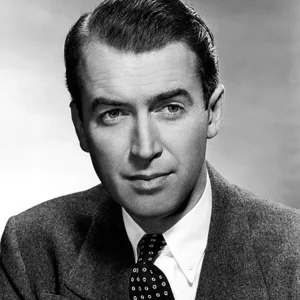
James Stewart
1908 — 1997
James Stewart was one of the most popular actors of classic Hollywood cinema. An embodiment of the ordinary, upright American, he worked under the direction of Frank Capra and Alfred Hitchcock from the 1930s to the 1970s.

James Watson & Francis Crick
1928 — 2004 / 1916 — 2004
British and American biologists who discovered the structure of DNA in 1953. Their work revolutionized the understanding of heredity and laid the foundations of modern molecular biology.

Jean Bartik
1924 — 2011
Jean Bartik (1924-2011) was an American mathematician and computer scientist, one of the first six programmers of the ENIAC, the first fully programmable electronic computer. She helped transform automatic computation into a new discipline: programming.
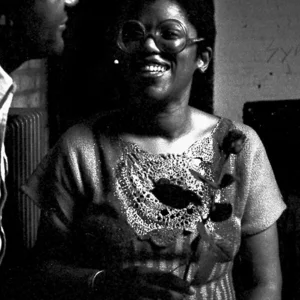
Jeanne Lee
1939 — 2000
Jeanne Lee (1939-2000) was an American avant-garde jazz singer, poet, and composer. A pioneer of free vocal improvisation, she explored extended vocal techniques and the fusion of voice, poetry, and free jazz.
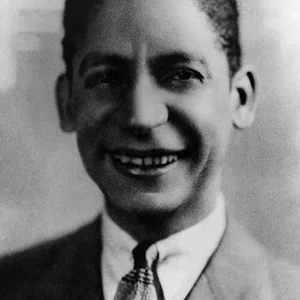
Jelly Roll Morton
1890 — 1941
American pianist, composer, and bandleader, a major figure in the early days of jazz in New Orleans. He proclaimed himself “the inventor of jazz” and was one of the first to set his compositions down in writing, bridging ragtime and orchestrated jazz.
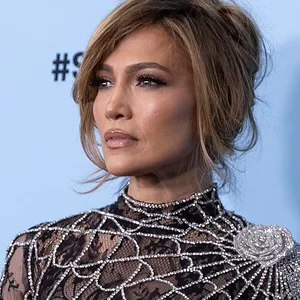
Jennifer Lopez
1969 — ?
Jennifer Lopez, born in 1969 in the Bronx, New York, is an American singer, actress, and dancer of Puerto Rican descent. She established herself in the 1990s as one of the most influential Latin artists in the world.
Jerry Lewis
1926 — 2017
An American actor, filmmaker, and comedian born in 1926, Jerry Lewis is an icon of world comedy cinema. Famous for his duo with Dean Martin, he was particularly revered in France, where he was elevated to the rank of Commander of the Order of Arts and Letters.
Jesse Owens
1913 — 1980
Jesse Owens was an American athlete who specialized in sprinting and the long jump. He became a legend of track and field by winning four gold medals at the 1936 Berlin Olympic Games, publicly defying the racist Nazi ideology.
Jessye Norman
1945 — 2019
African-American soprano considered one of the greatest operatic voices of the 20th century. Born in 1945 in Georgia, she rose to prominence on the world's most prestigious stages (the Met Opera, Bayreuth, Covent Garden). A figure in the civil rights movement, she performed *La Marseillaise* on the Champs-Élysées during the bicentennial of the French Revolution in 1989.
Jim Thorpe
Native American athlete from the United States (Sac and Fox Nation), regarded as one of the most versatile sportsmen in history. A double Olympic champion in 1912, he was also a professional American football and baseball player.
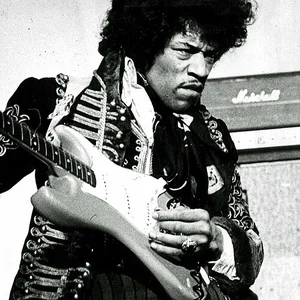
Jimi Hendrix
1942 — 1970
American guitarist, singer-songwriter, and singer, regarded as one of the most influential in the history of rock. Over just a few years of his career, he revolutionized electric guitar playing before his untimely death at the age of 27.
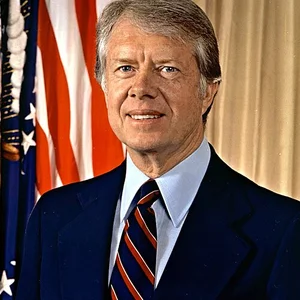
Jimmy Carter
1924 — 2024
American statesman, 39th President of the United States from 1977 to 1981. A Democrat from Georgia, he remained famous for his diplomatic work and humanitarian commitment after his presidency, crowned by the Nobel Peace Prize in 2002.
Joan Didion
1934 — 2021
American writer and journalist (1934-2021), a leading figure of New Journalism. Author of incisive essays on Californian and American society, and of the memoir *The Year of Magical Thinking* on grief.
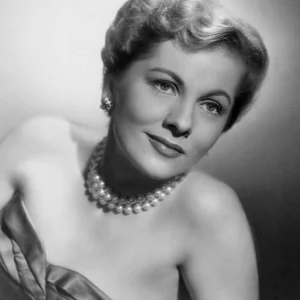
Joan Fontaine
1917 — 2013
A British actress born in 1917 in Japan and died in 2013, Joan Fontaine became a major Hollywood star in the 1940s. She won the Academy Award for Best Actress in 1942 for Alfred Hitchcock's Suspicion, cementing her place among the great stars of classic American cinema.
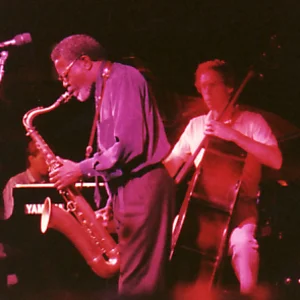
Joe Henderson
1937 — 2001
Joe Henderson (1937-2001) was an American jazz tenor saxophonist and composer. A major figure of hard bop and post-bop, he made his name in the 1960s at Blue Note before achieving belated recognition and numerous awards in the 1990s.
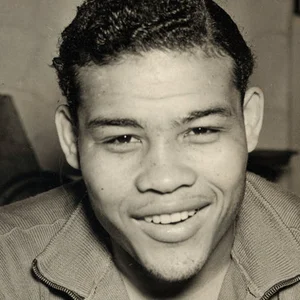
Joe Louis
1914 — 1981
Joe Louis was an American boxer, world heavyweight champion from 1937 to 1949. Nicknamed the “Brown Bomber,” he defended his title a record number of times and became a major figure in African American emancipation.
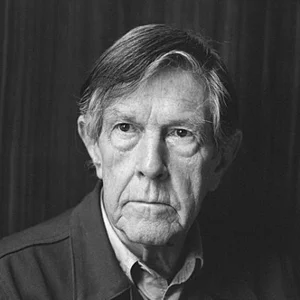
John Cage
1912 — 1992
John Cage (1912-1992) was an American composer, theorist, and visual artist, a major figure of the 20th-century musical avant-garde. A pioneer of chance music and of silence as sonic material, he profoundly reshaped the very conception of the musical work.
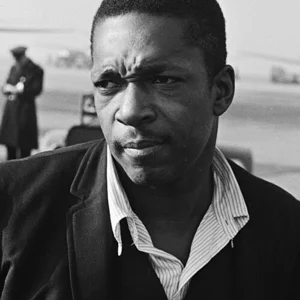
John Coltrane
1926 — 1967
John Coltrane (1926-1967) was an American jazz tenor saxophonist and composer. A major figure of modal jazz and free jazz, he profoundly renewed the language of improvisation and gave his music a spiritual dimension.
John F. Kennedy
1917 — 1963
President of the United States from 1961 to 1963, John F. Kennedy embodies the political modernity of the 20th century. His term was marked by critical moments of the Cold War, notably the Cuban Missile Crisis, and by his commitment to civil rights before his assassination in Dallas.
John Ford
1894 — 1973
John Ford (1894-1973) was an American director and producer, considered one of the masters of Hollywood cinema. An iconic figure of the western, he profoundly shaped the history of the seventh art and holds the record of four Academy Awards for Best Director.
John Glenn
1921 — 2016
John Glenn was the first American to orbit the Earth on February 20, 1962, aboard the Friendship 7 capsule. A military pilot and Korean War hero, he later became a senator from Ohio and returned to space in 1998 at age 77.
John Kenneth Galbraith
1908 — 2006
John Kenneth Galbraith was an American-Canadian economist, a major figure of twentieth-century institutionalism and Keynesianism. A critic of consumer society, he shaped public debate through his books written for a general audience.
John Rawls
1921 — 2002
John Rawls was an American philosopher, one of the most influential of the 20th century in political and moral philosophy. His Theory of Justice (1971) profoundly renewed thinking about social justice and political liberalism.
John Steinbeck
1902 — 1968
American novelist born in 1902 in California, a major figure of 20th-century social literature. He depicted the outcasts of the Great Depression and received the Nobel Prize in Literature in 1962.
John von Neumann
1903 — 1957
Hungarian-American mathematician and physicist (1903–1957), pioneer of modern computing and game theory. He is the founding architect of the programmable digital computer and contributed to the development of nuclear energy.
John Wayne
1907 — 1979
John Wayne was an American actor, director and producer, an iconic figure of the Hollywood western. Nicknamed “Duke,” he embodied the ideal of the cowboy and the rugged American hero in more than 150 films over a five-decade career.
Joni Mitchell
1943 — ?
Canadian singer-songwriter and painter born in 1943, Joni Mitchell is one of the central figures of folk-rock and jazz fusion. Her album *Blue* (1971) is considered one of the greatest albums in the history of popular music.
Joseph Schumpeter
1883 — 1950
Austrian economist and political scientist, naturalized American, Joseph Schumpeter is one of the major thinkers of 20th-century economics. He is famous for his analyses of innovation, the entrepreneur, and business cycles.
Joséphine Baker
1906 — 1975
French singer, dancer, and revue performer of American origin
Judy Garland
1922 — 1969
Judy Garland (1922-1969) was an American actress and singer, and one of Hollywood's most iconic figures. She rose to fame at 17 in The Wizard of Oz (1939), becoming the defining star of Hollywood's golden age of musical cinema. Her extraordinary voice and tragic life story made her a symbol of 20th-century popular culture.
Julia Child
1912 — 2004
American chef and television host
Julia Robinson
1919 — 1985
Julia Robinson (1919-1985) was an American mathematician famous for her work in number theory and mathematical logic. She made a decisive contribution to solving Hilbert's tenth problem.
Julie Dash
1952 — ?
A pioneering American filmmaker, Julie Dash is best known for *Daughters of the Dust* (1991), the first feature film by an African American woman director to receive a national theatrical release in the United States. Her work explores memory, identity, and the cultural heritage of the African American diaspora.
June Christy
1925 — 1990
June Christy (1925-1990) was an American jazz singer and a major figure of the cool jazz movement. After rising to fame within Stan Kenton's big band in the 1940s, she went on to establish a successful solo career with her soft, velvety voice.
Karen Uhlenbeck
1942 — ?
American mathematician born in 1942, pioneer of geometric analysis and gauge theory. First woman to receive the Abel Prize in 2019, the highest distinction in mathematics. Her work has profoundly influenced theoretical physics and modern geometry.
Kate Gleason
1865 — 1933
Kate Gleason (1865-1933) was an American engineer and businesswoman, a pioneer of the machine-tool industry. The first woman admitted to Cornell University's engineering program, she also made her mark in the construction of prefabricated concrete housing.
Kate Millett
1934 — 2017
Kate Millett (1934-2017) was an American writer, theorist, and artist, a major figure of second-wave feminism. Her essay “Sexual Politics” (1970), drawn from her doctoral thesis, became a founding text of feminist studies.
Katharine Burr Blodgett
1898 — 1979
American physicist and inventor (1898-1979), the first woman to earn a doctorate in physics from the University of Cambridge and the first female scientist hired by General Electric. She is known for inventing non-reflective glass (“invisible” glass).
Katharine Hepburn
1907 — 2003
An American film and stage actress, Katharine Hepburn (1907–2003) is considered one of the greatest stars of Hollywood's Golden Age. She won four Academy Awards for Best Actress, an absolute record.
Katherine Johnson
1918 — 2020
African-American physicist, mathematician, and space engineer
Katy Perry
1984 — ?
Katy Perry is an American singer-songwriter born in 1984 in Santa Barbara. She rose to prominence in the 2000s–2010s as one of the best-selling pop artists in the world, with global hits such as 'Roar' and 'Firework'.
Keith Jarrett
1945 — ?
Keith Jarrett is an American jazz pianist and composer born in 1945. Famous for his fully improvised solo concerts, he created the Köln Concert (1975), one of the best-selling solo piano albums in history.
Kenneth Arrow
1921 — 2017
American economist, a major figure of 20th-century economics. The youngest-ever winner of the Nobel Prize in Economics (1972), he revolutionized social choice theory, welfare economics, and general equilibrium analysis.
Kim Novak
1933 — ?
Kim Novak is an American actress born in 1933, a major figure of 1950s Hollywood cinema. She is world-famous for her dual role in Alfred Hitchcock's 'Vertigo' in 1958.
Kimberlé Crenshaw
1959 — ?
American legal scholar and theorist born in 1959, she coined the concept of intersectionality in 1989, showing how racial, gender, and class discrimination intersect and mutually reinforce one another. A professor at UCLA and Columbia, she is one of the founders of Critical Race Theory.

Kurt Cobain
1967 — 1994
Kurt Cobain (1967-1994) was an American musician, singer, guitarist, and songwriter for the band Nirvana. A major figure of the grunge movement, he became one of the icons of the 1990s alternative rock scene before his untimely death at the age of 27.
Kurt Gödel
1906 — 1978
Austrian-American mathematician (1906–1978), Kurt Gödel revolutionized mathematical logic with his incompleteness theorems (1931). He proved that no sufficiently powerful formal system can be both complete and consistent.
Lady Gaga
1986 — ?
Born Stefani Joanne Angelina Germanotta in 1986 in New York, Lady Gaga is an American singer-songwriter and actress. A multi-faceted artist, she has established herself as one of the defining figures of global pop music in the 21st century.
Lana Del Rey
1985 — ?
Lana Del Rey, born Elizabeth Woolridge Grant, is an American singer-songwriter born in 1985. Known for her melancholic lyrics and retro aesthetic, she blends pop, indie, and cinematic elements across acclaimed albums such as 'Born to Die' (2012).
Larry Bird
1956 — ?
Larry Bird is an American basketball player considered one of the greatest in NBA history. A star of the Boston Celtics in the 1980s, his rivalry with Magic Johnson defined the league's golden age.
Larry Kramer
1935 — 2020
An American writer, playwright, and activist, Larry Kramer was a major figure in the fight against AIDS. He co-founded the organizations Gay Men's Health Crisis (1982) and then ACT UP (1987), pioneers in mobilizing against the epidemic and advocating for the rights of the sick.
Leonard Bernstein
1918 — 1990
American composer and conductor (1918–1990), Leonard Bernstein led the New York Philharmonic and composed major works blending classical music and jazz. He is world-renowned for the musical West Side Story (1957).
Leontyne Price
1927 — ?
An African-American lyric soprano born in 1927, Leontyne Price was the first Black woman to achieve the rank of prima donna at the Metropolitan Opera in New York. Celebrated for her interpretations of Verdi, she embodied both artistic excellence and triumph over racial segregation.
Lester Young
1909 — 1959
Lester Young (1909-1959) was an American tenor saxophonist considered one of the fathers of cool jazz. His lyrical, airy style influenced generations of musicians, most notably Charlie Parker.
Lil Hardin Armstrong
1898 — 1971
American pianist, composer, and bandleader, one of the first major female figures in jazz. A member of King Oliver's Creole Jazz Band and then a mainstay of Louis Armstrong's Hot Five and Hot Seven, she was also his wife.
Lillian Gish
1893 — 1993
Lillian Gish (1893–1993) was a pioneering American actress of the silent film era, nicknamed "the First Lady of American Cinema." She worked closely with D.W. Griffith and brought to life iconic female roles in films that shaped the art of cinema.
Lillian Hellman
1905 — 1984
American playwright and screenwriter (1905–1984), Lillian Hellman made her mark on Broadway with politically engaged plays denouncing social injustice and fascism. She became an iconic figure of resistance to McCarthyism by refusing to name her colleagues before the HUAC committee.
Linda Schele
1942 — 1998
American epigrapher and archaeologist (1942–1998), pioneer in the decipherment of Maya writing. Her work revolutionized our understanding of Maya history, cosmology, and dynasties.
Linus Pauling
1901 — 1994
American chemist (1901–1994), Linus Pauling is one of the founders of modern molecular chemistry. He is one of the very few individuals to have received two Nobel Prizes: Chemistry in 1954 and Peace in 1962.
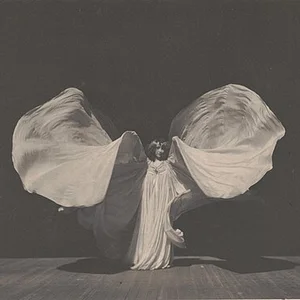
Loïe Fuller
1862 — 1928
American dancer (1862–1928), pioneer of modern dance and stage lighting design. Her serpentine dance with silk veils lit by colored electric lights made her famous at the Folies Bergère in Paris from 1892 onward, turning her into an icon of the Belle Époque and Art Nouveau.
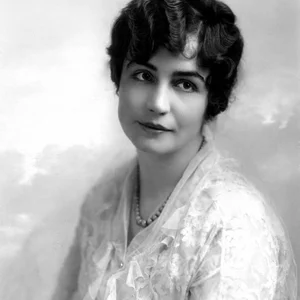
Lois Weber
1879 — 1939
Lois Weber (1879-1939) was one of the first great female directors in the history of American cinema. A Hollywood pioneer, she was one of the most influential and highest-paid filmmakers of the silent film era, tackling controversial social issues.
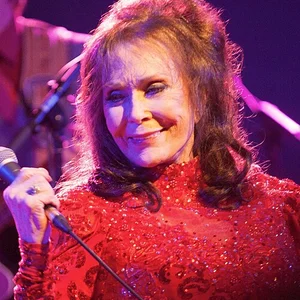
Loretta Lynn
1932 — 2022
American singer-songwriter, Loretta Lynn is one of the founding figures of country music. Born into a poor family in the Appalachians, she authentically sang about the lives of rural American women, their joys and struggles.
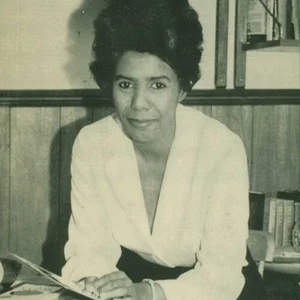
Lorraine Hansberry
1930 — 1965
American playwright and author (1930–1965), Lorraine Hansberry was the first Black woman to have a play produced on Broadway with *A Raisin in the Sun* (1959). A civil rights activist, she wove art and political commitment together in her fight against racial segregation.
Louis Armstrong
1901 — 1971
American jazz trumpeter and singer born in New Orleans, nicknamed “Satchmo.” A founding figure of jazz, he revolutionized the art form with his virtuoso trumpet playing and his “scat” singing. He became one of the most famous musicians of the 20th century.
Louise Bourgeois
1911 — 2010
Franco-American sculptor
Louise Brooks
1906 — 1985
An American actress of the 1920s and 1930s, Louise Brooks is celebrated for her role in Pandora's Box (1929) by G.W. Pabst. An icon of silent cinema, she is recognized for her bob haircut and her naturalistic acting style that was ahead of its time.
Lucille Ball
1911 — 1989
An American comedic actress, producer, and businesswoman, she became a television icon thanks to the sitcom “I Love Lucy” (1951-1957). A pioneer, she was the first woman to head a major Hollywood production studio, Desilu.
Lyndon B. Johnson
1908 — 1973
American statesman, 36th President of the United States (1963-1969) following the assassination of John F. Kennedy. He pushed through major laws against racial segregation but became bogged down in the Vietnam War.
Lynn Conway
1938 — 2024
An American computer scientist and engineer, Lynn Conway revolutionized integrated circuit design by co-developing VLSI design rules with Carver Mead. A pioneer of superscalar processor architecture, she also made history as a transgender woman who rebuilt a brilliant career after being fired from IBM.
Ma Rainey
1886 — 1939
American blues singer, known as the "Mother of the Blues." A pioneer of classic blues, she was one of the first African American artists to record records in the 1920s and influenced an entire generation of female singers.
Maclyn McCarty
1911 — 2005
Maclyn McCarty was an American physician and geneticist. Together with Oswald Avery and Colin MacLeod, he demonstrated in 1944 that DNA is the carrier of genetic information, a founding discovery of molecular biology.
Madonna
1958 — ?
American singer, dancer, and businesswoman born in 1958, Madonna emerged in the 1980s as one of the most influential artists of the 20th century. Nicknamed the "Queen of Pop," she constantly pushes the boundaries of artistic creation and asserts her independence in a music industry dominated by men.
Mae Jemison
1956 —
American physician and astronaut
Magic Johnson
1959 — ?
Earvin "Magic" Johnson is an American basketball player, the iconic point guard of the Los Angeles Lakers in the 1980s. Considered one of the greatest players in history, he left his mark on the sport through his court vision and his rivalry with Larry Bird.
Mahalia Jackson
1911 — 1972
Mahalia Jackson (1911-1972) was the greatest American gospel singer of all time. A powerful voice of Black Christian faith, she was also a major figure in the civil rights movement alongside Martin Luther King.
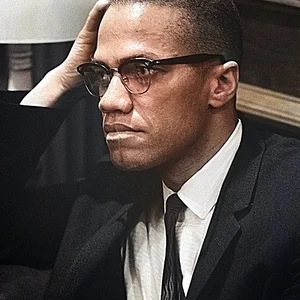
Malcolm X
1925 — 1965
Malcolm X (1925-1965), born Malcolm Little, was an African American civil rights activist and a spokesman for the Nation of Islam. An advocate of Black nationalism, he championed the pride and emancipation of Black Americans before evolving toward a more universalist Sunni Islam.
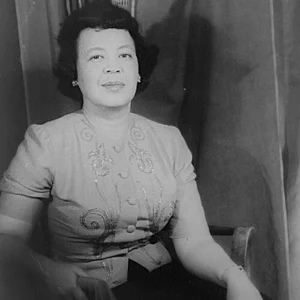
Margaret Bonds
1913 — 1972
African American pianist and composer (1913–1972), Margaret Bonds was one of the first Black women to make her mark in American classical music. She blended gospel, blues, and European classical influences, and collaborated closely with Langston Hughes.
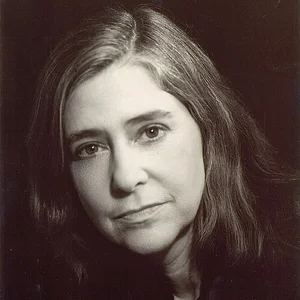
Margaret Hamilton
1936 — ?
Margaret Hamilton is a pioneering American computer scientist and engineer in the field of software engineering. She led the team that developed the onboard navigation software for the Apollo missions, directly contributing to the 1969 Moon landing. She is considered one of the founders of software engineering as a discipline.
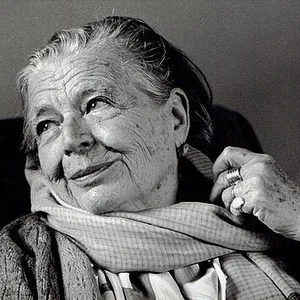
Marguerite Yourcenar
1903 — 1987
French writer (1903–1987), Marguerite Yourcenar is the author of Memoirs of Hadrian, a masterpiece of 20th-century literature. The first woman elected to the Académie française in 1980, she left a lasting mark on literature through her reflections on history and humanity.
Maria Callas
1923 — 1977
La Divina, the most celebrated opera soprano of the 20th century
Maria Goeppert Mayer
1906 — 1972
An American theoretical physicist of German origin, she developed the nuclear shell model of the atomic nucleus. In 1963, she became the second woman in history to receive the Nobel Prize in Physics, after Marie Curie.
Mária Telkes
1900 — 1995
Hungarian-American biophysicist and inventor (1900-1995), nicknamed the “Queen of the Sun.” A pioneer of solar energy, she designed the first solar heating system for a home and a solar distiller used by the US Navy.
Marian Anderson
1897 — 1993
An African-American contralto (1897–1993), Marian Anderson was one of the greatest operatic voices of her era. In 1939, barred from Constitution Hall because of her race, she sang before 75,000 people at the Lincoln Memorial. In 1955, she became the first African-American woman to perform at the Metropolitan Opera in New York.
Marian McPartland
1918 — 2013
British-American jazz pianist Marian McPartland made her mark on the New York scene from the 1950s onward. She is best known for hosting the radio show “Piano Jazz” for more than thirty years on the American public radio network NPR.
Marie Maynard Daly
1921 — 2003
Marie Maynard Daly (1921-2003) was an American biochemist, the first African American woman to earn a doctorate in chemistry in the United States. Her work focused on cholesterol, proteins, and the structure of the cell nucleus.
Marie Tharp
1920 — 2006
Marie Tharp was an American geologist and cartographer who produced the first scientific maps of the ocean floor. By mapping the Mid-Atlantic Ridge, she provided decisive visual proof of the theory of continental drift — long overlooked because of her status as a woman.
Marilyn Monroe
1926 — 1962
An American actress, model, and singer, Marilyn Monroe became one of the major cultural icons of the 20th century. A symbol of Hollywood glamour and American consumer society in the 1950s–1960s, her tragic life continues to fuel conversations about the treatment of women in the entertainment industry.
Marion Donovan
1917 — 1998
Marion Donovan (1917-1998) was an American inventor. In 1946 she designed the “Boater,” the first reusable waterproof diaper cover, and later laid the groundwork for the modern disposable diaper, filing some twenty patents over the course of her life.
Mark Rothko
1903 — 1970
Mark Rothko was an American painter of Latvian origin and a major figure of Abstract Expressionism. He is famous for his vast canvases composed of floating rectangles of color, intended to evoke an emotional and spiritual experience in the viewer.
Mark Spitz
1950 — ?
American swimmer born in 1950, considered one of the greatest in the history of swimming. At the 1972 Munich Olympic Games, he won seven gold medals, each accompanied by a world record, a feat that remained unmatched until Michael Phelps.
Marlene Dietrich
1901 — 1992
A German-American actress and singer, Marlene Dietrich established herself as an icon of Hollywood cinema in the 1930s. Refusing to collaborate with the Nazi regime, she committed herself to the Allied cause during the Second World War.
Marlon Brando
1924 — 2004
Marlon Brando (1924-2004) was an American actor and director regarded as one of the most influential figures in twentieth-century cinema. A leading exponent of the Actors Studio's “Method,” he revolutionized acting through his naturalism and intensity.
Marsha P. Johnson
1945 — 1992
A transgender African American activist, Marsha P. Johnson was one of the iconic figures of the Stonewall uprising in 1969. Co-founder of STAR, she spent her entire life fighting for the rights of LGBT+ people and the homeless.
Martha Graham
1894 — 1991
Martha Graham (1894-1991) was an American dancer and choreographer, founder of modern dance. She revolutionized the art of choreography by breaking away from classical ballet, developing a technique based on contraction and release of the body.
Martin Luther King
1929 — 1968
African-American Baptist pastor (1929–1968) and major leader of the civil rights movement in the United States. He championed nonviolence and racial equality, becoming one of the most influential figures of the 20th century before his assassination.
Martin Scorsese
1942 — ?
Martin Scorsese is an American filmmaker, screenwriter, and producer born in 1942 in New York. A major figure of the New Hollywood movement, he is one of the most influential directors in contemporary cinema.
Martina Navratilova
1956 — ?
Czechoslovak then American tennis player, considered one of the greatest players in history. She dominated the women's circuit in the 1970s and 1980s, winning a record number of singles and doubles titles.
Marvin Gaye
1939 — 1984
Marvin Gaye (1939-1984) was an American singer, songwriter, and producer, a major figure in soul music and Motown. With the album *What's Going On* (1971), he transformed soul into a vehicle for social and political engagement.
Mary Anderson
1866 — 1953
Mary Anderson (1866-1953) was an American inventor. In 1903, she designed and patented the first manual windshield wiper for vehicles, a lever-operated device controlled from inside the cabin.
Mary Engle Pennington
1872 — 1952
Mary Engle Pennington (1872-1952) was an American chemist, bacteriologist, and engineer, a pioneer of food preservation through refrigeration. She established the scientific standards of the cold chain for milk, eggs, and poultry in the United States.
Mary Golda Ross
1908 — 2008
Mary Golda Ross (1908-2008) was an American aerospace engineer, the first female engineer of the Cherokee Nation. A pioneer of astronautics, she took part in the founding work of the American space and defense programs at Lockheed.
Mary Jackson
1910 — 2005
American mathematician and aerospace engineer, Mary Jackson was the first Black female engineer at NASA. A member of the “Hidden Figures,” she contributed to the calculations for the first American space missions and fought for equal rights within the agency.
Mary Kenneth Keller
1913 — 1985
Mary Kenneth Keller was an American Catholic nun and a computing pioneer. She was one of the first people to earn a doctorate in computer science in the United States (1965) and contributed to the development of the BASIC programming language.
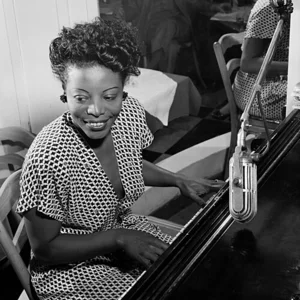
Mary Lou Williams
1910 — 1981
Mary Lou Williams (1910-1981) was an American jazz pianist, composer, and arranger. A major and influential figure across several decades, she moved through all the great jazz styles, from swing to bebop, and was a mentor to many musicians.
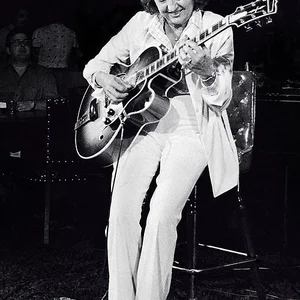
Mary Osborne
1921 — 1992
Mary Osborne (1921-1992) was an American jazz guitarist, one of the few women instrumentalists to make a name for herself in the swing and bebop eras. Inspired after hearing Charlie Christian, she became a much-sought-after studio musician in New York.

Maryam Mirzakhani
1977 — 2017
Maryam Mirzakhani is the first woman to win the Fields Medal in 2014, the highest honor in mathematics. Born in Iran, she revolutionized the understanding of Riemann surfaces and hyperbolic geometry. A professor at Stanford, she passed away from cancer at just 40 years old, leaving behind a landmark body of mathematical work.
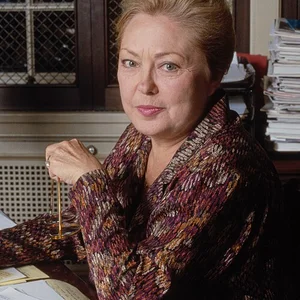
Mathilde Krim
1926 — 2018
Mathilde Krim was a medical biology researcher specializing in virology and cancer. She is best known for her pioneering fight against AIDS, having founded a research foundation that became amfAR in the 1980s.
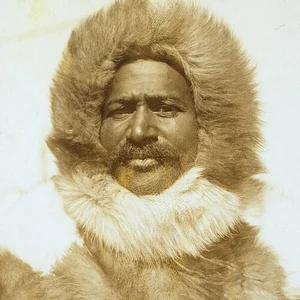
Matthew Henson
1866 — 1955
African-American explorer and companion of Robert Peary on the 1909 North Pole expedition. He was most likely the first man to reach the geographic North Pole, arriving a few minutes ahead of Peary.
Matthew Meselson
1930 — ?
Matthew Meselson is an American geneticist and molecular biologist born in 1930. Together with Franklin Stahl, he demonstrated in 1958 the semi-conservative replication mechanism of DNA. He also became an advocate against chemical and biological weapons.
Maurice Ewing
1906 — 1974
Maurice Ewing was an American geophysicist and a pioneer of oceanography. His research on the seafloor and oceanic crust provided decisive evidence in support of the theory of plate tectonics.
Max Horkheimer
1895 — 1973
German philosopher and sociologist, a major figure of the Frankfurt School, whose Institute for Social Research he directed. Together with Adorno, he founded Critical Theory, a Marxist and Freudian analysis of modern societies.
Max Roach
1924 — 2007
Maxwell Lemuel Roach (1924-2007) was an American jazz drummer, percussionist, and composer. A pioneer of bebop alongside Charlie Parker and Dizzy Gillespie, he was also a committed activist for civil rights.
Maya Angelou
1928 — 2014
African-American poet, memoirist, and activist (1928–2014), Maya Angelou is best known for her autobiography I Know Why the Caged Bird Sings. A committed figure in the civil rights movement alongside Martin Luther King Jr., she became one of the most important voices in 20th-century American literature.
McCoy Tyner
1938 — 2020
American jazz pianist, one of the most influential of the post-war era. A member of John Coltrane's historic quartet, he developed a recognizable piano style built on quartal chords and a powerful left-hand technique.
Melba Liston
1926 — 1999
Melba Liston (1926-1999) was an American jazz trombonist, composer, and arranger. A pioneer as a woman instrumentalist in the big bands of the bebop era, she collaborated with Dizzy Gillespie, Count Basie, and above all the pianist Randy Weston.
Merce Cunningham
1919 — 2009
Merce Cunningham (1919-2009) was an American dancer and choreographer, a major figure in modern and contemporary dance. A pioneer of abstract dance, he revolutionized choreography by detaching it from music and narrative.
Meryl Streep
1949 — ?
Meryl Streep is an American actress born in 1949, considered one of the greatest performers in the history of cinema. The recipient of three Academy Awards, she has distinguished herself in roles of exceptional diversity, from historical drama to musical comedy.
Mia Hamm
1972 — ?
Mia Hamm is an American soccer player, one of the greatest players in the history of women's soccer. A forward for the United States national team, she won two World Cups and two Olympic titles before retiring in 2004.
Michael Jordan
1963 — ?
Michael Jordan is an American basketball player regarded as one of the greatest athletes of all time. As the leader of the Chicago Bulls, he won six NBA titles in the 1990s and left a lasting mark on global sports culture.
Mikhail Baryshnikov
1948 — ?
Dancer and choreographer of Latvian origin, considered one of the greatest classical dancers of the 20th century. Trained at the Vaganova school in Leningrad, he defected to the West in 1974 and became a major figure in American ballet, before turning to contemporary dance, theater, and film.
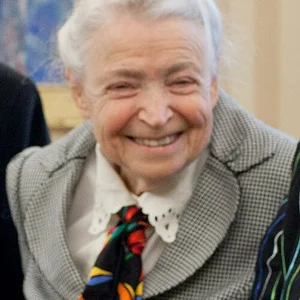
Mildred Dresselhaus
1930 — 2017
American physicist nicknamed the “queen of carbon” for her pioneering work on the electronic structure of graphite and carbon-based materials. Her research paved the way for carbon nanotubes and graphene.
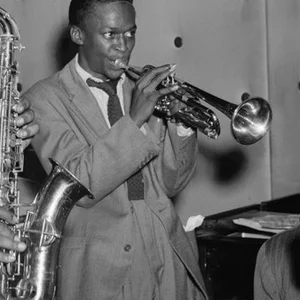
Miles Davis
1926 — 1991
Miles Davis (1926-1991) was an American jazz trumpeter, composer, and bandleader. A major figure of the musical 20th century, he relentlessly reinvented jazz, from cool jazz to modal jazz and on to electric fusion.
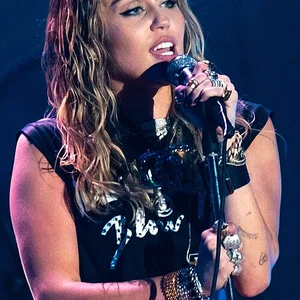
Miley Cyrus
1992 — ?
Born in 1992 in the United States, Miley Cyrus is a versatile artist who has established herself as a singer-songwriter and actress. She first rose to fame through the Hannah Montana series (Disney Channel), before successfully transitioning to an independent and outspoken musical career.
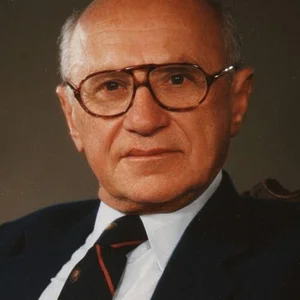
Milton Friedman
1912 — 2006
American economist, leader of the Chicago School and a major figure of monetarism. A champion of economic liberalism and free markets, he received the Nobel Prize in Economics in 1976. His influence shaped the economic policies of the late 20th century.
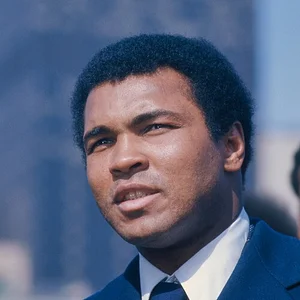
Muhammad Ali
1942 — 2016
American boxer, three-time world heavyweight champion, considered one of the greatest athletes of the 20th century. A leading figure in the struggle for civil rights, he refused to be drafted for the Vietnam War on the grounds of his convictions.
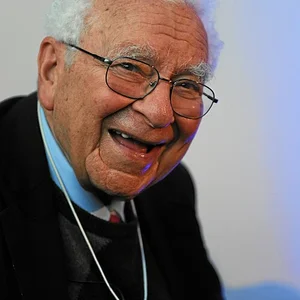
Murray Gell-Mann
1929 — 2019
Murray Gell-Mann was an American physicist, a theorist of particle physics. He proposed the existence of quarks, the elementary building blocks of matter, and received the Nobel Prize in Physics in 1969.
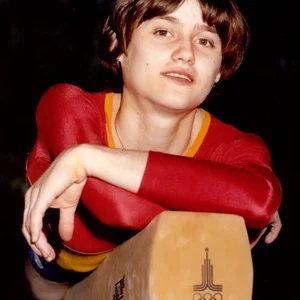
Nadia Comăneci
1961 — ?
A Romanian gymnast, at age 14 she became the first athlete in history to score a perfect 10 at the Olympic Games, in Montreal in 1976. A multiple Olympic champion, she revolutionized artistic gymnastics worldwide.
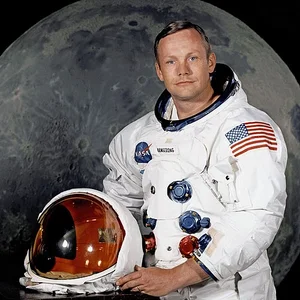
Neil Armstrong
1930 — 2012
American astronaut (1930-2012), Neil Armstrong was the first person to walk on the Moon on July 20, 1969. Commander of the Apollo 11 mission, he marked a major turning point in space exploration and the Cold War.
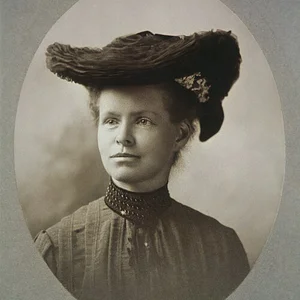
Nettie Stevens
1861 — 1912
American geneticist and pioneer of cytogenetics. In 1905, she demonstrated that an organism's sex is determined by its chromosomes, identifying the role of the Y chromosome in the mealworm beetle (Tenebrio molitor).
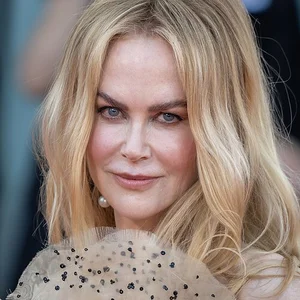
Nicole Kidman
1967 — ?
An Australian-American actress born in 1967, Nicole Kidman is one of Hollywood's greatest stars. She won the Academy Award in 2003 for The Hours, and has left her mark on world cinema through the range of her roles and her artistic commitment.
Niki de Saint Phalle
1930 — 2002
French artist, painter, and sculptor
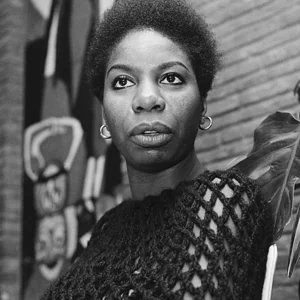
Nina Simone
1933 — 2003
American jazz singer, pianist, composer, and civil rights activist for Black people
Nora Ephron
1941 — 2012
Nora Ephron (1941-2012) was an American journalist, screenwriter, director, and novelist. A major figure in Hollywood romantic comedy, she wrote and directed films that became cult classics, such as When Harry Met Sally and Sleepless in Seattle.
Octavia Butler
1947 — 2006
Octavia E. Butler (1947-2006) was a pioneering American novelist of Afro-feminist science fiction. The first Black woman to establish herself in this genre, she explored race, gender, power, and identity through committed speculative narratives.
Olga Korbut
1955 — ?
Olga Korbut is a Soviet gymnast, born in 1955 in Belarus. Nicknamed “the Sparrow of Minsk,” she revolutionized artistic gymnastics at the 1972 Munich Olympic Games, where she won three gold medals and captivated audiences worldwide with her daring and her freshness.

Oliver Hardy
1892 — 1957
An American actor born in 1892, Oliver Hardy is one of the greatest stars of both silent and sound comedy cinema. Together with Stan Laurel, he formed the Laurel and Hardy duo, celebrated for its visual gags and universally beloved humor.
Olivia de Havilland
1916 — 2020
A British actress born in 1916 in Tokyo, Olivia de Havilland was one of Hollywood's greatest stars of the 1930s and 1940s. She won two Academy Awards for Best Actress and successfully fought against the Hollywood studio system, paving the way for actors' contractual freedom.
Omar Bradley
1893 — 1981
American general of World War II, he commanded U.S. ground forces during the Normandy landings in June 1944. Nicknamed "the G.I.'s general," he later became the first Chairman of the Joint Chiefs of Staff and the last five-star general in the United States.
Ornette Coleman
1930 — 2015
Ornette Coleman (1930-2015) was an American saxophonist, composer, and theorist. A major figure of avant-garde jazz, he was the leading pioneer of free jazz, a movement that freed improvisation from traditional harmonic frameworks.
Orson Welles
1915 — 1985
American director, actor, and screenwriter (1915–1985), Orson Welles revolutionized cinema with Citizen Kane (1941), widely regarded as one of the greatest films ever made. A towering figure in filmmaking, he also left a lasting mark on radio and theater.
Oswald Avery
1877 — 1955
American-Canadian physician and researcher in microbiology and immunology. In 1944, together with Colin MacLeod and Maclyn McCarty, he demonstrated that DNA is the carrier of heredity, laying one of the foundations of molecular genetics.
Otis Redding
1941 — 1967
Otis Redding (1941-1967) was an American singer and songwriter, a major figure in 1960s soul music. An iconic voice on the Stax label in Memphis, he died prematurely in a plane crash at age 26, shortly after recording his greatest hit.
Patricia Bath
1942 — 2019
An American ophthalmologist and inventor, Patricia Bath revolutionized cataract treatment by developing the Laserphaco Probe, a laser device patented in 1988. The first African American woman to receive a medical patent in the United States, she also co-founded the American Institute for the Prevention of Blindness.
Patsy Cline
1932 — 1963
Patsy Cline (1932–1963) was a pioneering American country singer celebrated for her powerful, expressive voice. She was one of the first country artists to cross over to mainstream pop audiences with songs like 'Crazy' and 'I Fall to Pieces'. Her career was abruptly cut short when she died in a plane crash at the age of 30.
Patti Smith
1946 — ?
American singer, poet, and artist born in 1946, a pioneer of New York's punk rock movement in the 1970s. Her album *Horses* (1975) blends beat poetry with raw rock, making her an icon of the counterculture.
Paul Feyerabend
1924 — 1994
Austrian philosopher of science, a major figure in twentieth-century epistemology. Known for his radical critique of a single scientific method and for the “epistemological anarchism” he defended in *Against Method* (1975).
Paul Newman
1925 — 2008
Paul Newman was an American actor and a major figure of Hollywood cinema in the second half of the 20th century. Renowned for his charisma and the exceptional longevity of his career, he was also a racing driver and a committed philanthropist.
Paul Samuelson
1915 — 2009
American economist, a major figure of the 20th century. The first American to receive the Nobel Prize in Economics in 1970, he helped found modern economics by introducing mathematical formalization into it, and was the author of a world-renowned economics textbook.
Pauli Murray
1910 — 1985
Lawyer, civil rights activist, and African American feminist, Pauli Murray fought simultaneously against racial segregation and gender discrimination. In 1977, she became the first Black woman ordained as a priest in the American Episcopal Church.
Peggy Lee
1920 — 2002
Peggy Lee (1920-2002) was an American jazz and pop singer, songwriter, and actress. Discovered with Benny Goodman's orchestra, she established herself as a soloist with hits like "Fever" and "Is That All There Is?".
Pema Chödrön
1936 — ?
Pema Chödrön is an American Buddhist nun of the Tibetan tradition and a disciple of Chögyam Trungpa. A bestselling author, she is one of the leading figures in the spread of Tibetan Buddhism in the West.
Pharoah Sanders
1940 — 2022
American jazz saxophonist (1940-2022), a major figure of free jazz and spiritual jazz. A collaborator of John Coltrane in the 1960s, he developed an intense style blending powerful breath, ecstatic sonorities, and African and Eastern inspirations.
Philip Glass
1937 — ?
Philip Glass is an American composer born in 1937, a major figure of minimalist music. He made his name with operas and film scores built on repetitive, hypnotic structures.
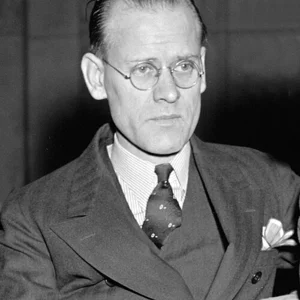
Philo Farnsworth
1906 — 1971
American inventor and pioneer of electronic television. As a teenager he conceived the principle of the image dissector tube and, in 1927, achieved the first transmission of a fully electronic image.
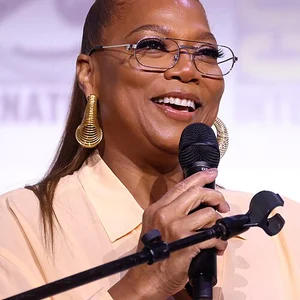
Queen Latifah
1970 — ?
A pioneer of American female hip-hop, Queen Latifah made her mark from the late 1980s with politically engaged and feminist rap. She went on to build a dual career as a singer and actress, becoming one of the most influential women in the entertainment industry.
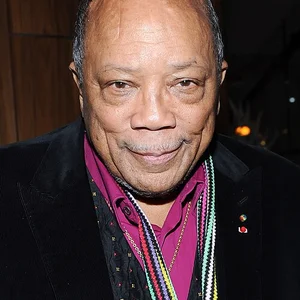
Quincy Jones
1933 — 2024
Quincy Jones (1933-2024) is one of the most influential musicians and producers of the 20th century. A jazz composer, arranger, and bandleader, he is also the producer of Michael Jackson's best-selling albums, including Thriller.
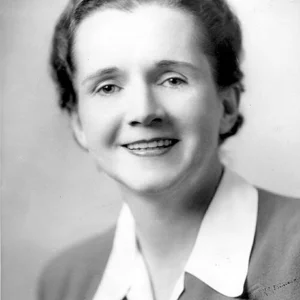
Rachel Carson
1907 — 1964
Marine biologist and American writer, Rachel Carson is the pioneer of the modern environmental movement. Her book *Silent Spring* (1962) exposed the massive use of pesticides and their devastating impact on ecosystems, sparking a global awakening on environmental protection.
Radia Perlman
1951 — ?
Radia Perlman is an American engineer and computer scientist born in 1951, nicknamed the "Mother of the Internet." In 1985, she invented the Spanning Tree Protocol (STP), which makes computer networks stable and reliable. Her work on network security and routing protocols remains foundational to the architecture of the Internet.
Ralph Nader
1934 — ?
Ralph Nader is an American lawyer and activist born in 1934, a pioneer of consumer advocacy. His fight for automobile safety transformed industrial regulation in the United States. He also ran for president several times.
Ray Charles
1930 — 2004
Ray Charles was an American singer, pianist, and composer, blind since childhood. A pioneer of soul, he blended gospel, blues, jazz, and rhythm and blues, becoming one of the major figures of 20th-century popular music.
Richard Bass
1929 — 2015
American mountaineer and businessman (1929–2015), Richard Bass was the first person to climb the Seven Summits — the highest peak on each continent. He reached the summit of Everest on April 30, 1985, at the age of 55, becoming the oldest climber to have done so at the time.
Richard Feynman
1918 — 1988
American physicist (1918–1988), Nobel Prize in Physics 1965 for his work on quantum electrodynamics. Pioneer of Feynman diagrams and a legendary figure in science communication.
Richard Nixon
1913 — 1994
American statesman, 37th President of the United States from 1969 to 1974. He ended the Vietnam War and reopened relations with China, but resigned in the wake of the Watergate scandal.
Rita Hayworth
1918 — 1987
Rita Hayworth (1918-1987) was an American actress and dancer, considered one of the greatest Hollywood stars of the 1940s. A glamour icon, she is best known for her role in Gilda (1946).
Rita Levi-Montalcini
1909 — 2012
An Italian-American neurologist, Rita Levi-Montalcini discovered nerve growth factor (NGF), revolutionizing neurobiology. She won the Nobel Prize in Medicine in 1986, and continued her research despite fascist racial laws that forced her to work in secret. She remained active in science past the age of 100.
Robert De Niro
1943 — ?
American actor considered one of the greatest of his generation and a major figure of New Hollywood. Renowned for his total immersion in his roles, he left his mark on film history through his collaboration with Martin Scorsese. He is also a producer and co-founder of the Tribeca Film Festival.
Robert Goddard
1882 — 1945
American engineer and physicist (1882–1945), pioneer of astronautics. He designed and launched the first liquid-fueled rocket in 1926, laying the foundations of modern space exploration.
Robert Marshak
1916 — 1992
Robert Marshak was an American theoretical physicist specializing in particle physics. He is known for his theory explaining the energy of stars and for his contribution to the theory of the weak interaction.
Robert Nozick
1938 — 2002
American philosopher, a major figure in 20th-century political philosophy. A professor at Harvard, he was the great theorist of libertarianism and the chief opponent of John Rawls.
Robert Peary
1856 — 1920
An American Arctic explorer, Robert Peary is famous for claiming the first expedition to reach the geographic North Pole in April 1909. A United States Navy officer, he devoted two decades to exploring polar regions.
Robert Redford
1936 — 2025
Robert Redford was an American actor, director, and producer, a major figure in 1960s–1970s Hollywood cinema. In 1981 he founded the Sundance Film Festival, which became the world's leading showcase for independent film.
Roman Jakobson
1896 — 1982
Russian-American linguist and theorist, a major figure of structuralism. Founder of the Prague Linguistic Circle, he revolutionized phonology and proposed a model of the functions of language that left its mark on the linguistics, poetics, and humanities of the 20th century.
Ronald Reagan
1911 — 2004
Ronald Reagan was the 40th President of the United States (1981-1989). A former Hollywood actor who became Governor of California, he embodied American conservatism and played a major role in the final years of the Cold War.
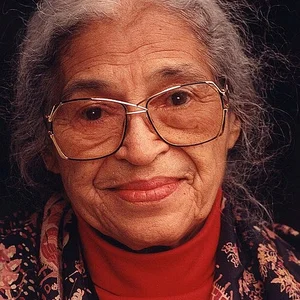
Rosa Parks
1913 — 2005
Rosa Parks was an African American civil rights activist, born in 1913 in Alabama. She became famous in 1955 for refusing to give up her seat to a white passenger on a bus in Montgomery — an act of civil disobedience that sparked the Montgomery Bus Boycott and helped accelerate the end of racial segregation in the United States.
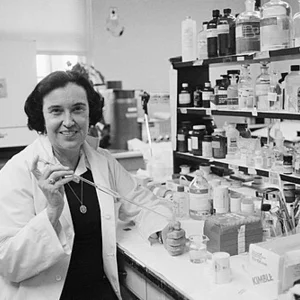
Rosalyn Yalow
1921 — 2011
Rosalyn Yalow was an American medical physicist and a pioneer of nuclear medicine. With Solomon Berson, she developed the radioimmunoassay (RIA), a technique that revolutionized biological diagnostics. She received the Nobel Prize in Medicine in 1977.

Roscoe Arbuckle
1887 — 1933
An American actor, director, and screenwriter of the silent film era, Roscoe 'Fatty' Arbuckle was one of Hollywood's biggest comedy stars of the 1910s. His career was destroyed by a legal scandal in 1921, despite his acquittal.
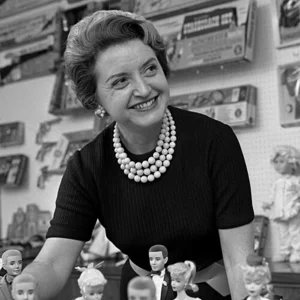
Ruth Handler
1916 — 2002
American businesswoman, co-founder of the toy company Mattel. In 1959 she designed the Barbie doll, which became one of the best-selling toys in the world.
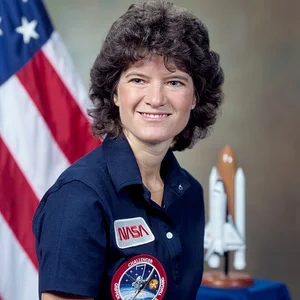
Sally Ride
1951 — 2012
American physicist and astronaut, Sally Ride became in 1983 the first American woman to travel in space aboard the Space Shuttle Challenger. She took part in two space missions and later dedicated herself to promoting science education for young people.
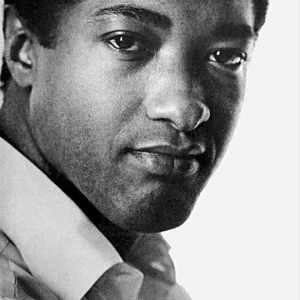
Sam Cooke
1931 — 1964
Sam Cooke (1931-1964) was an American singer, songwriter, and entrepreneur, considered one of the founding fathers of soul music. Coming from gospel, he managed to unite spirituality and popular music and became a figure in the fight for civil rights.
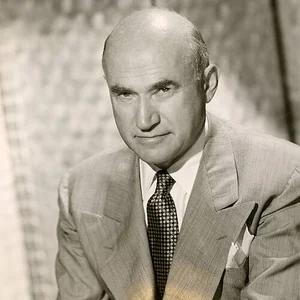
Samuel Goldwyn
1879 — 1974
A Polish-born Hollywood producer, Samuel Goldwyn was one of the founders of the American film industry. He co-founded several major studios and produced hundreds of films that shaped the golden age of Hollywood.
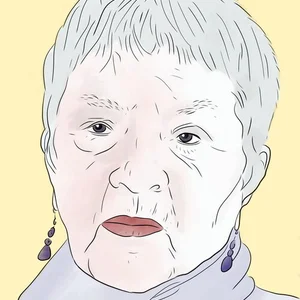
Sandra Harding
1935 — 2025
Sandra Harding is an American philosopher born in 1935, a leading figure in feminist epistemology and the philosophy of science. She theorized the notion of the “situated standpoint” (standpoint theory) and criticized the claim to neutral objectivity in scientific knowledge.
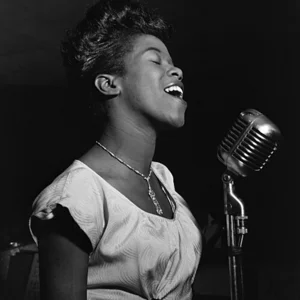
Sarah Vaughan
1924 — 1990
American jazz singer (1924–1990), nicknamed “The Divine One” or “Sassy,” Sarah Vaughan is considered one of the greatest voices of the 20th century. Her exceptional timbre, vibrato, and technical mastery earned her international recognition.
Saul Alinsky
1909 — 1972
Saul Alinsky was an American sociologist and community activist, considered the founder of modern community organizing. He developed methods of collective action to empower disadvantaged populations in urban neighborhoods.
Saul Kripke
1940 — 2022
Saul Kripke (1940-2022) was an American philosopher and logician, considered one of the most influential thinkers in 20th-century analytic philosophy. A child prodigy, he revolutionized modal logic and the philosophy of language.
Scarlett Johansson
1984 — ?
An American-Danish actress and singer born in 1984 in New York, Scarlett Johansson established herself in the 2000s as one of Hollywood's most influential actresses. She is also a producer and an advocate for feminist causes.
Selena Gomez
1992 — ?
Selena Gomez is an American singer and actress born on July 22, 1992, in Grand Prairie, Texas. Rising to fame through a Disney Channel series, she became a global pop icon and influential entrepreneur. She is also an advocate for mental health awareness and Latino representation in the media.
Sergei Rachmaninoff
1873 — 1943
Russian composer, virtuoso pianist, and conductor, one of the last great representatives of late Romanticism. After emigrating in the wake of the 1917 revolution, he continued his career in the United States, where he became one of the most famous pianists of his time.
Sheila Jordan
1928 — 2025
Sheila Jordan, born in 1928 in Detroit, is an American jazz singer. Shaped by bebop and the music of Charlie Parker, she is celebrated for her inventive phrasing and for having popularized the voice-and-double-bass duo.
Shirley Horn
1934 — 2005
Shirley Horn (1934-2005) was an American jazz pianist and singer. Famous for her intimate phrasing and very slow tempos, she accompanied herself on the piano and achieved late but dazzling recognition in the 1990s.
Sidney Bechet
1897 — 1959
Sidney Bechet was an American clarinetist and soprano saxophonist, one of the first great jazz soloists. Born in New Orleans, he was a major figure of traditional jazz and ended his life famous in France.
Sonja Henie
1912 — 1969
Norwegian figure skater, three-time consecutive Olympic champion (1928, 1932, 1936) and ten-time world champion. Reinventing herself as a Hollywood movie star, she revolutionized figure skating by bringing dance and showmanship into the sport.
Sonny Rollins
1930 — 2026
Sonny Rollins, born Theodore Walter Rollins, was one of the most influential tenor saxophonists in jazz history. A major figure of the post-bebop era, he left his mark on the genre with albums like *Saxophone Colossus* (1956) and composed standards played worldwide, such as "Oleo" and "St. Thomas." He passed away on May 25, 2026, in Woodstock at the age of 95.
Spencer Tracy
1900 — 1967
Spencer Tracy (1900-1967) was one of the most respected actors of Hollywood's golden age. Known for his natural, understated acting, he was the first performer to win two consecutive Academy Awards for Best Actor and formed a famous duo, both on screen and in real life, with Katharine Hepburn.
Stan Getz
1927 — 1991
American tenor saxophonist and a leading figure of 1950s “cool” jazz. Nicknamed “The Sound” for the warm, lyrical tone of his instrument, he popularized bossa nova in the United States in the early 1960s.
Stanley Cohen
1922 — 2020
Stanley Cohen (1922-2020) was an American biochemist. Together with Rita Levi-Montalcini, he discovered growth factors, notably epidermal growth factor (EGF), proteins essential to the development and repair of cells. This work earned him the Nobel Prize in Physiology or Medicine in 1986.
Stanley Kubrick
1928 — 1999
Stanley Kubrick (1928-1999) was an American director, screenwriter and producer. A former photographer, he became one of the most influential filmmakers of the 20th century, renowned for his perfectionism and the diversity of his genres, from war films to science fiction.
Stephanie Kwolek
1923 — 2014
American chemist (1923-2014), Stephanie Kwolek invented Kevlar in 1965, a synthetic fiber five times stronger than steel. Her discovery revolutionized protective equipment and earned her numerous scientific distinctions.
Steve Reich
1936 — ?
Steve Reich is an American composer born in 1936, a major figure of minimalist music. With his techniques of phasing and repetition, he profoundly renewed Western art music in the second half of the 20th century.
Steve Wozniak
1950 — ?
Engineer and co-founder of Apple, Steve Wozniak designed the Apple I and Apple II in the 1970s, laying the foundations of personal computing. Nicknamed “The Woz,” he is considered one of the pioneers of the digital revolution.
Steven Spielberg
1946 — ?
Steven Spielberg is an American film director, screenwriter, and producer born in 1946. A major figure of the New Hollywood movement, he invented the modern blockbuster while also directing critically acclaimed historical films. He ranks among the most influential and popular filmmakers of the late twentieth century.
Stevie Wonder
1950 — ?
Stevie Wonder is an American singer-songwriter and multi-instrumentalist, a major figure of soul music and Motown. Blind since birth, he became one of the most influential and award-winning artists in twentieth-century popular music.
Stokely Carmichael
1941 — 1998
Stokely Carmichael was an African American civil rights activist and a major figure of the Black Power movement in the 1960s. A leader of the SNCC and later close to the Black Panthers, he popularized the slogan “Black Power” and radicalized the struggle for racial equality in the United States.
Sugar Ray Robinson
1921 — 1989
Sugar Ray Robinson (1921-1989) was an American boxer regarded as one of the greatest boxers of all time, pound for pound. World welterweight then middleweight champion, he dominated boxing in the 1940s and 1950s.
Sun Ra
1914 — 1993
Sun Ra (1914-1993) was an American jazz pianist, composer, and bandleader. A pioneer of the avant-garde, he founded the Sun Ra Arkestra and developed a “cosmic” aesthetic blending free jazz, Egyptian mysticism, and the imagery of outer space.
Susan Sontag
1933 — 2004
Susan Sontag (1933-2004) was a major American intellectual of the 20th century — essayist, novelist, and activist. Known for her reflections on photography, illness, and war, she profoundly shaped contemporary critical thought.
Susanne Langer
1895 — 1985
American philosopher, a major figure in the philosophy of art and symbolism in the 20th century. She developed a theory of the symbol encompassing language, art, and myth, making feeling and symbolic form the heart of human experience.
Sylvia Earle
1935 — ?
American oceanographer and explorer, Sylvia Earle set a solo dive record in 1979 at a depth of 381 meters. A pioneer of deep-sea exploration, she has led numerous expeditions and advocates tirelessly for ocean protection.
Sylvia Plath
1932 — 1963
American poet and novelist (1932–1963), a major figure in confessional poetry. Author of The Bell Jar and the collection Ariel, she explores with striking intensity the themes of female identity, psychological suffering, and literary creation.
Sylvia Rivera
1951 — 2002
An American Latina trans activist, Sylvia Rivera took part in the Stonewall riots of 1969. She co-founded STAR (Street Transvestite Action Revolutionaries) to help homeless trans youth and LGBTQ+ people.
T. S. Eliot
1888 — 1965
American-born poet, playwright and literary critic who became a British citizen, a major figure of modernism. His poem *The Waste Land* (1922) transformed Western poetry; he received the Nobel Prize in Literature in 1948.
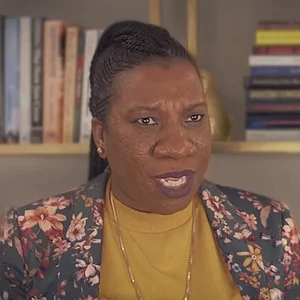
Tarana Burke
1973 — ?
Tarana Burke is an American civil rights activist and founder of the #MeToo movement in 2006. She has dedicated her life to supporting survivors of sexual violence, particularly in underprivileged Black communities.
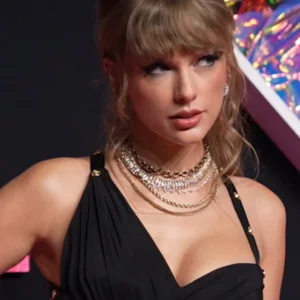
Taylor Swift
1989 — ?
Taylor Swift is an American singer-songwriter born in 1989 in Pennsylvania. She began her career in country music before becoming one of the most influential pop artists of her generation. Her work explores universal themes such as love, identity, and female empowerment.
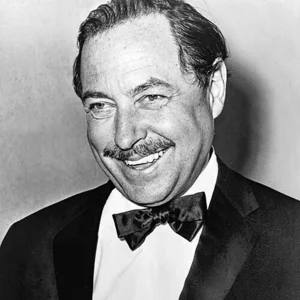
Tennessee Williams
1911 — 1983
Tennessee Williams (1911-1983) was one of the greatest American playwrights of the 20th century. His plays, marked by psychological tension and the decline of the American South, profoundly reshaped modern theatre.
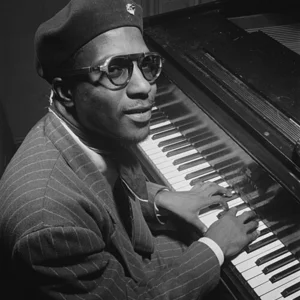
Thelonious Monk
1917 — 1982
Thelonious Monk (1917-1982) was an American jazz pianist and composer, a major figure of bebop. His distinctive harmonic and rhythmic style, built on dissonance and silence, profoundly renewed the language of modern jazz.
Theodor Adorno
1903 — 1969
German philosopher, sociologist, and musicologist, a major figure of the Frankfurt School and of Critical Theory. Together with Max Horkheimer, he analyzed the mechanisms of domination in modern societies and put forward a radical critique of mass culture.
Theodore Roosevelt
1858 — 1919
American statesman, 26th President of the United States (1901-1909). A leading figure of progressivism, he championed the regulation of the great industrial trusts and was a pioneer of nature conservation in the United States.
Thomas Kuhn
1922 — 1996
Thomas Kuhn was an American physicist, historian, and philosopher of science. His work *The Structure of Scientific Revolutions* (1962) profoundly transformed our understanding of how science evolves by introducing the notion of the “paradigm”.
Thomas Mann
1875 — 1955
Thomas Mann (1875-1955) was a German novelist and essayist, a major figure of twentieth-century European literature. Winner of the Nobel Prize in Literature in 1929, he was forced into exile after the Nazis came to power and became a great voice of humanism in the face of totalitarianism.
Tina Turner
1939 — 2023
Born Anna Mae Bullock in 1939 in Tennessee, Tina Turner is one of the greatest rock and soul singers of the 20th century. After surviving an abusive marriage to Ike Turner, she made a triumphant solo comeback in the 1980s.
Toni Morrison
1931 — 2019
A towering figure of 20th-century African American literature, Toni Morrison wrote landmark novels exploring the Black American experience, particularly slavery and its lasting trauma. She received the Nobel Prize in Literature in 1993, becoming the first Black woman to be awarded that honor.
Toshiko Akiyoshi
1929 — ?
Toshiko Akiyoshi is a Japanese American jazz pianist, composer, and bandleader born in 1929. The first Japanese student at the Berklee College of Music, she has led a celebrated big band since 1973, blending American jazz with elements of traditional Japanese music.
Tsung-Dao Lee
1926 — 2024
American theoretical physicist of Chinese origin. With Chen Ning Yang, he demonstrated in 1956 the non-conservation of parity in weak interactions, which earned them the Nobel Prize in Physics in 1957.
Tupac Shakur
1971 — 1996
An American rapper, songwriter, and actor, Tupac Shakur is one of the major figures of West Coast hip-hop. His socially conscious lyrics about racial inequality and urban violence left a lasting mark on popular culture. He was shot and killed in Las Vegas in 1996, at the age of 25.
Ursula K. Le Guin
1929 — 2018
Ursula K. Le Guin (1929–2018) was an American science fiction and fantasy author, known for her philosophical and feminist works. Her novel *The Left Hand of Darkness* (1969) explores questions of gender and otherness. She is one of the major figures of imaginative literature in the 20th century.
Valaida Snow
1904 — 1956
Valaida Snow (1904-1956) was an African American jazz trumpeter, singer, and bandleader. Nicknamed “the Queen of the Trumpet,” she enjoyed an international career between the two World Wars before the Second World War shattered her trajectory.
Valerie Solanas
1936 — 1988
Valerie Solanas (1936-1988) was an American writer and radical feminist activist. The author of the provocative pamphlet SCUM Manifesto (1967), she remains famous for attempting to assassinate the artist Andy Warhol in 1968.
Vera Rubin
1928 — 2016
American astronomer (1928–2016), Vera Rubin demonstrated the existence of dark matter through her study of galaxy rotation curves. Her work revolutionized our understanding of the composition of the universe.
Vi Redd
1928 — 2022
Vi Redd (1928-2022) was an American jazz alto saxophonist and singer, one of the few recognized women instrumentalists on the postwar jazz scene. An heir to Charlie Parker's bebop style, she pursued a dual career as a musician and a teacher.

Viktor Hamburger
1900 — 2001
Viktor Hamburger was a German-American developmental biologist. His work on the development of the nervous system in the chicken embryo contributed decisively to the discovery of nerve growth factor (NGF), which earned a Nobel Prize awarded to his collaborators.
Vint Cerf
1943 — ?
American computer scientist, co-creator with Bob Kahn of the TCP/IP protocol that forms the technical foundation of the Internet. Nicknamed one of the “fathers of the Internet,” he helped transform a military network into a global communication infrastructure.
W.E.B. Du Bois
1868 — 1963
William Edward Burghardt Du Bois (1868-1963) was an African American sociologist, historian, and civil rights activist. The first African American to earn a doctorate from Harvard, he was a leading theorist in the fight against racial segregation and a co-founder of the NAACP in 1909.
Wallis Simpson
1896 — 1986
American socialite who became Duchess of Windsor. Her union with King Edward VIII triggered a major constitutional crisis in 1936, with the monarch abdicating in order to marry her.
Wayne Shorter
1933 — 2023
American jazz saxophonist (tenor and soprano) and composer, a major figure of modern jazz. He made his name with the Jazz Messengers, Miles Davis's second great quintet, and then the jazz-fusion band Weather Report, which he co-founded.
Wernher von Braun
1912 — 1977
A German-American aerospace engineer, he designed the V-2 rocket for Nazi Germany before being recruited by the United States. He then led NASA's Saturn V program, which carried Apollo 11 to the Moon in 1969.
Wes Montgomery
1923 — 1968
Wes Montgomery (1923-1968) was an American jazz guitarist, one of the most influential in the instrument's history. Recognizable by his thumb-picking technique and his melodies played in octaves, he left his mark on hard bop before achieving great popular success in the 1960s.
Whitney Houston
1963 — 2012
Whitney Houston (1963-2012) is one of the greatest American singers of all time, celebrated for her exceptional voice. She dominated global charts throughout the 1980s and 1990s and starred in the blockbuster film The Bodyguard (1992).
Willard Van Orman Quine
1908 — 2000
American philosopher and logician, a major figure in 20th-century analytic philosophy. He challenged the distinction between analytic and synthetic truths and defended a holistic, empiricist view of knowledge.
William Faulkner
1897 — 1962
American writer, a major figure of the literature of the American South. A master of stream of consciousness, in a dense body of work he depicted the decline of Southern families after the Civil War. Nobel Prize in Literature 1949.
Wilma Rudolph
1940 — 1994
American athlete specializing in sprinting. Struck by polio in her childhood, she became the first American woman to win three gold medals in track and field at a single edition of the Olympic Games, in Rome in 1960.
Woodrow Wilson
1856 — 1924
Woodrow Wilson (1856-1924) was the 28th President of the United States, in office from 1913 to 1921. An academic turned statesman, he led his country into the First World War and championed a vision of international order founded on cooperation between nations.
Ynes Mexia
1870 — 1938
Ynes Mexia was a Mexican-American botanist and explorer. Beginning her scientific career at over 50 years old, she led botanical collecting expeditions across North and South America, gathering tens of thousands of plant specimens, including hundreds of species new to science.
Yoko Ono
1933 — ?
Yoko Ono is a Japanese artist born in 1933 in Tokyo, a major figure in conceptual art and the Fluxus movement. A peace activist, she is also known for her artistic and political commitment alongside John Lennon. Her work explores audience participation, peace, and memory.
Yvonne Brill
1924 — 2013
Canadian-American aerospace engineer (1924-2013), a pioneer of spacecraft propulsion. She invented a hydrazine propulsion system that kept satellites in orbit, a technology that became an industry standard.
Akon
1973 — ?
An American-Senegalese singer, songwriter, and producer, Akon rose to global fame in the 2000s with worldwide hits blending R&B, pop, and African influences. He is also an entrepreneur, most notably through his project to bring electricity to Africa.
Alex Eskin
1965 — ?
Alex Eskin is an American mathematician born in 1965, a specialist in dynamical systems and geometry. He is famous for the “Magic Wand Theorem” proved with Maryam Mirzakhani.
Alyssa Milano
1972 — ?
Alyssa Milano is an American actress who rose to fame on television in the 1980s and 1990s. In October 2017, she revived the #MeToo hashtag on social media, helping to turn it into a global movement against sexual violence.
Andrea Ghez
1965 — ?
Andrea Ghez is an American astrophysicist born in 1965 who specializes in observing the galactic center. Her work provided proof of the existence of a supermassive black hole at the heart of the Milky Way. She received the Nobel Prize in Physics in 2020.
Anne Hathaway
1982 — ?
American actress born in 1982, Anne Hathaway has established herself as one of Hollywood's biggest stars. She won the Academy Award for Best Supporting Actress in 2013 for her portrayal of Fantine in Les Misérables.
Anousheh Ansari
1966 — ?
First Iranian woman and first private space tourist to travel to space in 2006. An Iranian-American businesswoman, she funded the Ansari X Prize to encourage space tourism.
Ava DuVernay
1972 — ?
American director, producer, and screenwriter, Ava DuVernay has established herself as a major voice in socially engaged cinema. With Selma (2014) and the documentary 13th (2016), she explores the struggle for civil rights and racial inequality in the United States.
Barack Obama
1961 — ?
American statesman, 44th President of the United States from 2009 to 2017. The first African American elected to the presidency, he left a lasting mark on the political history of the United States and received the Nobel Peace Prize in 2009.
Benjamin Radford
1970 — ?
Benjamin Radford is an American writer, investigator, and skeptic who specializes in the rational analysis of paranormal phenomena and urban legends. He notably investigated the chupacabra myth and cryptozoology by applying the scientific method.
Bill Gates
1955 — ?
Co-founder of Microsoft, Bill Gates revolutionized personal computing with the Windows operating system. Having become one of the wealthiest people in the world, he went on to dedicate himself to philanthropy through the Bill & Melinda Gates Foundation.
Carol Greider
1961 — ?
Carol Greider is an American molecular biologist born in 1961. In 1984 she discovered telomerase, the enzyme that protects the ends of chromosomes, which earned her the Nobel Prize in Physiology or Medicine in 2009.
Carolyn Bertozzi
1966 — ?
American chemist born in 1966, a pioneer of bioorthogonal chemistry. She developed chemical reactions capable of taking place inside living organisms without disrupting their functioning. She received the Nobel Prize in Chemistry in 2022.
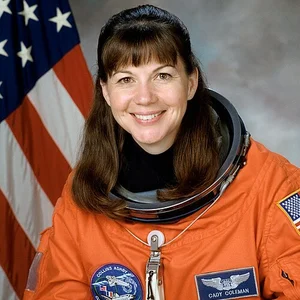
Catherine Coleman
1960 — ?
An American astronaut and chemist, Catherine Coleman completed three spaceflights, including a 159-day stay aboard the International Space Station in 2010–2011. A US Air Force officer, she contributed to scientific experiments in microgravity.
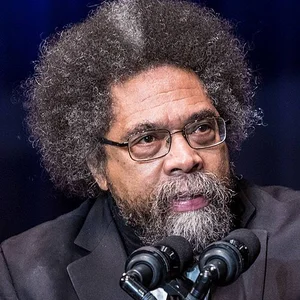
Cornel West
1953 — ?
American philosopher, theologian, and public intellectual, a major figure of African-American pragmatism. A professor at Harvard and Princeton, he brings together philosophical thought, social critique, and a commitment to racial justice.
Curtis McMullen
1958 — ?
Curtis McMullen is an American mathematician born in 1958, a professor at Harvard University. A specialist in dynamical systems, hyperbolic geometry, and complex analysis, he was awarded the Fields Medal in 1998.
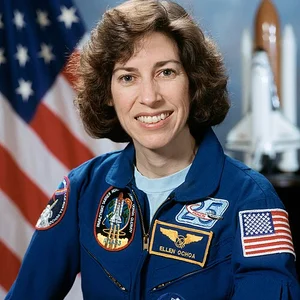
Ellen Ochoa
1958 — ?
Ellen Ochoa is an American engineer and astronaut, the first woman of Hispanic origin to travel into space in 1993. A specialist in optical systems, she flew four missions aboard the space shuttle and later directed NASA's Johnson Space Center.
Elon Musk
1971 — ?
American-South African entrepreneur and businessman, Elon Musk is co-founder of Tesla and founder of SpaceX. He embodies the archetype of the 21st-century tech entrepreneur, with a sweeping influence on the automotive industry, private space exploration, and social media.
Esther Duflo
1972 — ?
French-American economist born in 1972, a specialist in development economics. She reshaped the fight against poverty by relying on rigorous field experiments. In 2019, she became the youngest person ever to win the Nobel Prize in Economics.
Fei-Fei Li
1976 — ?
American computer scientist of Chinese origin, pioneer in artificial intelligence and computer vision. She created ImageNet, an image database that revolutionized deep learning. A professor at Stanford, she advocates for ethical and inclusive AI.
Frances Arnold
1956 — ?
American chemist and pioneer of directed protein evolution. She received the Nobel Prize in Chemistry in 2018 for applying the principles of natural evolution to enzyme design. Her work is revolutionizing biochemistry and the pharmaceutical industry.
Francia Raisa
1988 — ?
Francia Raisa is an American actress of Honduran and Mexican descent, known for her roles in television series such as “The Secret Life of the American Teenager.” She became widely known to the public after donating a kidney to her friend, the singer Selena Gomez, in 2017.
Gita Gopinath
1971 — ?
Gita Gopinath is an American economist of Indian origin, specializing in international macroeconomics, exchange rates, and trade. She became the First Deputy Managing Director of the International Monetary Fund (IMF) in 2022, having previously served as its chief economist.
Isabel Allende
1942 — ?
Isabel Allende is a Chilean novelist born in 1942, considered one of the most widely read Hispanic authors in the world. Her work blends magical realism, political history, and women's destinies. Her first novel, The House of the Spirits (1982), brought her international fame.
Janet Yellen
1946 — ?
Janet Yellen is an American economist specializing in the labor market and monetary policy. She chaired the Federal Reserve of the United States from 2014 to 2018, becoming the first woman to hold this position, and later served as Secretary of the Treasury from 2021 to 2025 — again the first woman appointed to this office.
Jeff Bezos
1964 — ?
Founder of Amazon in 1994, Jeff Bezos transformed global commerce through e-commerce and cloud computing. He is one of the wealthiest people in the world and founded Blue Origin for private space exploration.
Jennifer Doudna
1964 — ?
American biochemist and pioneer of CRISPR-Cas9 technology. Her work revolutionized genome editing, opening up enormous possibilities in medicine and biotechnology. She received the Nobel Prize in Chemistry in 2020 alongside Emmanuelle Charpentier.
Joseph Stiglitz
1943 — ?
American economist born in 1943, winner of the 2001 Nobel Prize in Economics for his work on information asymmetries. A former chief economist of the World Bank, he has become a leading critic of neoliberal globalization.
Kamala Harris
1964 — ?
Kamala Harris is an American politician, the first woman, first Black person, and first American of South Asian descent to become Vice President of the United States in 2021. A former Attorney General of California and U.S. Senator, she represents a historic turning point in American political representation.
Katalin Karikó
1955 — ?
Hungarian biochemist and pioneer of messenger RNA technology. Her research, long overlooked, made mRNA vaccines against COVID-19 possible. She received the Nobel Prize in Physiology or Medicine in 2023.
Kathryn Bigelow
1951 — ?
American director born in 1951, Kathryn Bigelow became in 2010 the first woman to win the Academy Award for Best Director for The Hurt Locker. A pioneer of action cinema, she explores war and violence with striking documentary-style realism.
Kelly Rowland
1981 — ?
Kelly Rowland is an American singer, songwriter, and actress. She rose to fame as a member of Destiny's Child, one of the best-selling girl groups of all time, and later pursued a solo career and television personality work.
Kerry James Marshall
1955 — ?
Kerry James Marshall is an American painter born in 1955, famous for his large canvases depicting figures with deep black skin. His work reinserts Black figures into the great tradition of Western painting, from which they had historically been absent.
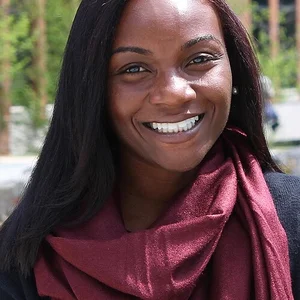
Kizzmekia Corbett
1986 — ?
An American immunologist, Kizzmekia Corbett played a central role in developing the mRNA vaccine against COVID-19 at the NIH. Her work ushered in a new era in vaccination.
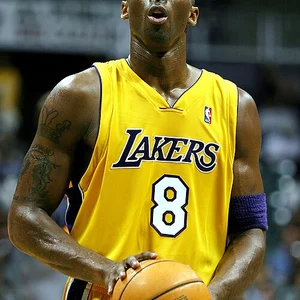
Kobe Bryant
1978 — 2020
Kobe Bryant was an American basketball player, considered one of the greatest in NBA history. He spent his entire professional career (1996-2016) with the Los Angeles Lakers, winning five championship titles. He died in a helicopter crash in 2020.
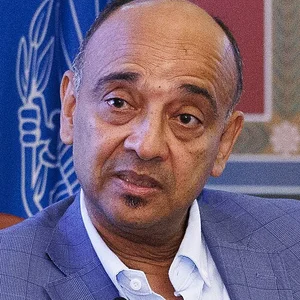
Kwame Anthony Appiah
1954 — ?
Anglo-Ghanaian philosopher born in 1954, professor at New York University, specializing in ethics, identity, and cosmopolitanism. He advocates an ethics of obligations toward all human beings, beyond national and cultural borders.
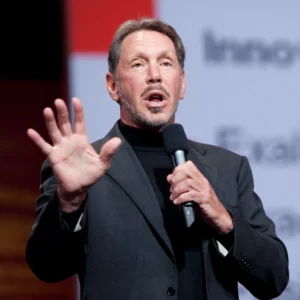
Larry Ellison
1944 — ?
Co-founder and CEO of Oracle Corporation, Larry Ellison built one of the largest enterprise software empires in the world. A pioneer of relational databases, he is one of the wealthiest people on the planet.
Larry Page
1973 — ?
Co-founder of Google with Sergey Brin in 1998, Larry Page revolutionized access to information on the Internet through the PageRank algorithm. He led Google then Alphabet, one of the most highly valued companies in the world.
Lauryn Hill
1975 — ?
American singer, rapper, and producer, Lauryn Hill is one of the defining figures of neo-soul and hip-hop from the 1990s–2000s. Her debut solo album 'The Miseducation of Lauryn Hill' (1998) won five Grammy Awards and remains a landmark record worldwide.
LeBron James
1984 — ?
LeBron James is an American professional basketball player, considered one of the greatest of all time. Playing in the NBA since 2003, he became the league's all-time leading scorer in 2023.
Linda B. Buck
1947 — ?
Linda Brown Buck is an American biologist born in 1947. She unraveled how the olfactory system works by discovering the large family of genes that encode odor receptors. Her work earned her the Nobel Prize in Physiology or Medicine in 2004, shared with Richard Axel.
Linus Torvalds
1969 — ?
Finnish computer engineer born in 1969, Linus Torvalds is the creator of the Linux kernel in 1991, which became the most widely used open source operating system in the world. He also developed Git, a version control tool used by millions of developers.
Lynne Cox
1957 — ?
An American long-distance swimmer, Lynne Cox set world records by crossing some of the coldest and most dangerous waters on Earth. She is best known for her 1987 crossing of the Bering Sea, swimming from Alaska to the USSR at the height of the Cold War.
Marc Andreessen
1971 — ?
Co-creator of Mosaic (1993), the first mainstream web browser, and then co-founder of Netscape, Marc Andreessen revolutionized access to the Internet. He went on to become one of Silicon Valley's most influential investors, co-founding the venture capital firm Andreessen Horowitz.

Mariah Carey
1969 — ?
American singer and songwriter born in 1969, Mariah Carey is one of the best-selling artists in history with over 200 million albums sold. Known for her exceptional five-octave vocal range and whistle register, she dominated the American charts throughout the 1990s and 2000s.
Mariana Mazzucato
1968 — ?
Mariana Mazzucato is an Italian-American economist born in 1968, a professor at University College London. She is known for her work on the driving role of the state in innovation and on value creation in the economy.

Mark Zuckerberg
1984 — ?
American computer scientist and entrepreneur born in 1984, co-founder of Facebook in 2004. He transformed global communication by creating the first mass social network, and now leads Meta Platforms.
Martha Nussbaum
1947 — ?
American philosopher born in 1947, professor of law and ethics at the University of Chicago. Together with the economist Amartya Sen, she developed the capabilities approach, which measures human development by the real freedoms available to individuals. She is one of the leading voices in contemporary moral and political philosophy.

Megan Rapinoe
1985 — ?
American international footballer, two-time world champion and Olympic champion. A major figure in the fight for gender equality and LGBTQ+ rights, she left her mark on women's football through her activism as much as through her performances.
Melanie Sloan
1965 — ?
American producer, mother of actress Scarlett Johansson. From very early on she accompanied her daughter to auditions and acted as an informal manager, and later as a producer, in her film career.
Michael Phelps
1985 — ?
Michael Phelps is an American swimmer regarded as the greatest Olympian of all time. With 23 Olympic gold medals, he holds the all-time record for the most titles at the Olympic Games.

Missy Elliott
1971 — ?
An American rapper, singer-songwriter, and record producer, Missy Elliott is a pioneer of hip-hop and R&B. She revolutionized the 1990s–2000s with avant-garde music videos and a unique musical style blending rap, funk, and electronica.
Patricia Hill Collins
1948 — ?
An American sociologist and feminist, Patricia Hill Collins is one of the leading theorists of Black feminist thought. She developed the concept of intersectionality as applied to the relationships between race, gender, and social class.
Paul Krugman
1953 — ?
Paul Krugman is an American economist born in 1953, a specialist in international trade and economic geography. Winner of the Nobel Prize in Economics in 2008, he is also an influential columnist at the New York Times.
Peggy Whitson
1960 — ?
An American NASA astronaut, Peggy Whitson is the woman who has spent the most time in space (665 cumulative days). She commanded the International Space Station on two separate occasions.
Quentin Tarantino
1963 — ?
Quentin Tarantino is an American director, screenwriter, producer, and actor born in 1963. A major figure in American independent cinema, he is famous for his highly personal style blending sharp dialogue, stylized violence, fractured storytelling, and tributes to popular genres.
Reshma Saujani
1975 — ?
American lawyer and activist, founder of Girls Who Code in 2012, an organization aimed at closing the gender gap in technology careers. She also ran for the U.S. Congress and advocates for women's inclusion in tech.
Richard Thaler
1945 — ?
Richard Thaler is an American economist and a leading figure in behavioral economics. He showed how psychological biases influence economic decisions, challenging the assumption of perfect rationality. He received the Nobel Prize in Economics in 2017.
Salman Rushdie
1947 — ?
British-American writer of Indian origin born in 1947, a major figure in English-language postcolonial literature. Known worldwide for his novels blending magical realism with the history of India, as well as for the fatwa issued against him after the publication of The Satanic Verses.
Serena Williams
1981 — ?
American tennis player considered one of the greatest in the history of sport. She dominated the professional circuit for more than two decades, winning 23 Grand Slam singles titles, a record in the Open Era.
Sergey Brin
1973 — ?
Sergey Brin is an American entrepreneur of Russian origin, co-founder of Google with Larry Page in 1998. He revolutionized Internet search through the PageRank algorithm. He also led the experimental projects of Google X.
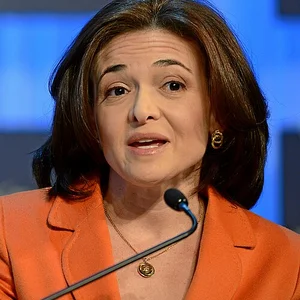
Sheryl Sandberg
1969 — ?
Chief Operating Officer of Facebook (Meta) from 2008 to 2022, Sheryl Sandberg is one of the most influential women in Silicon Valley. Author of *Lean In* (2013), she is a prominent advocate for women's leadership in the corporate world.
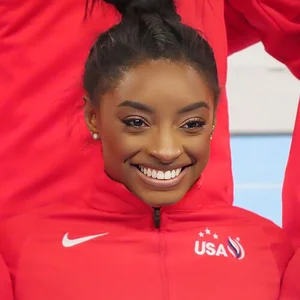
Simone Biles
1997 — ?
Simone Biles is an American artistic gymnast, considered the greatest in the history of her discipline. A multiple Olympic and world champion, she left her mark on the sport with never-before-seen skills and by speaking out about the mental health of elite athletes.

Solange Knowles
1986 — ?
Solange Knowles is an American singer, songwriter, and producer, a leading figure in alternative R&B and contemporary soul music. The younger sister of Beyoncé, she has established herself as a avant-garde artist celebrated for her album A Seat at the Table (2016).
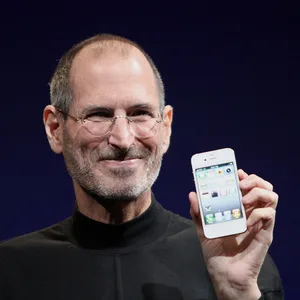
Steve Jobs
1955 — 2011
Co-founder of Apple Inc., Steve Jobs revolutionized personal computing, digital music, and mobile telephony. A visionary entrepreneur like no other, he transformed entire sectors of the global economy.
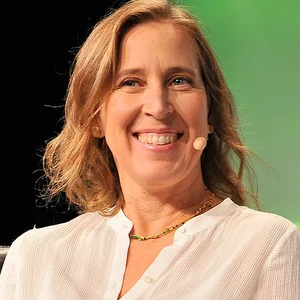
Susan Wojcicki
1968 — 2024
CEO of YouTube from 2014 to 2023, Susan Wojcicki is one of Silicon Valley's pioneers. She was Google's 16th employee, and in 1998 she rented her garage to Larry Page and Sergey Brin to house the company's first servers. Her leadership turned YouTube into the world's leading online video platform.
Suzan-Lori Parks
1963 — ?
A pioneering American playwright, Suzan-Lori Parks was the first Black woman to win the Pulitzer Prize for Drama, for *Topdog/Underdog* in 2002. Her work explores African-American identity, collective memory, and history through experimental and poetic language.
Terence Tao
1975 — ?
Terence Tao is an Australian-American mathematician born in 1975, considered one of the greatest living mathematicians. A Fields Medal recipient in 2006, he has made major contributions to harmonic analysis, number theory, and partial differential equations.
Tiger Woods
1975 — ?
American golfer born in 1975, considered one of the greatest players in the history of golf. Winner of 15 major tournaments, he profoundly revived the popularity and worldwide audience of the sport.
Tracy Chevalier
1962 — ?
Tracy Chevalier is an American novelist born in 1962 and based in London. She is known worldwide for her historical novel *Girl with a Pearl Earring* (1999), inspired by Vermeer's painting and adapted for film in 2003.
Wes Anderson
1969 — ?
Wes Anderson is an American filmmaker, screenwriter, and producer born in 1969 in Texas. Recognizable by his highly codified visual style — symmetry, pastel palettes, and meticulous framing — he is the author of bittersweet comedies that have become cult classics.