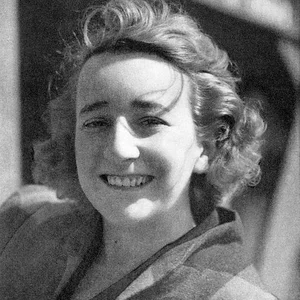

American playwright and screenwriter (1905–1984), Lillian Hellman made her mark on Broadway with politically engaged plays denouncing social injustice and fascism. She became an iconic figure of resistance to McCarthyism by refusing to name her colleagues before the HUAC committee.
Lillian Hellman(1905 — 1984)
Lillian Hellman
États-Unis
9 min read
Frequently asked questions
Famous Quotes
« I cannot and will not cut my conscience to fit this year's fashions.»
« Cynicism is an unpleasant way of saying the truth.»
Key Facts
- 1905: Born in New Orleans, Louisiana
- 1934: Success of her first major play, The Children's Hour, about slanderous accusations
- 1939: The Little Foxes, a scathing portrait of a greedy Southern bourgeois family, becomes a classic
- 1952: Summoned before the HUAC committee, she refuses to name her colleagues and is blacklisted in Hollywood
- 1969–1976: Publishes her memoirs (An Unfinished Woman, Pentimento, Scoundrel Time), acclaimed by critics
Works & Achievements
Hellman's first play, it explores the destruction of a reputation by a false accusation of lesbianism. An immediate and scandalous Broadway success, banned in several cities, it established Hellman as a major dramatic voice.
Hellman's masterpiece, this play portrays a wealthy Southern family consumed by greed. Adapted for the screen by William Wyler in 1941 with Bette Davis, it remains one of the most frequently performed works in the American repertoire.
An antifascist play centering on a German resistance fighter who has taken refuge in the United States. Winner of the New York Drama Critics' Circle Award, it was adapted for the screen in 1943 and helped rally American public opinion against Nazism.
A prequel to The Little Foxes tracing the origins of the Hubbard family, it explores the mechanics of economic domination and moral corruption in the post-Civil War South.
Hellman's last major theatrical triumph, examining family illusions and emotional dependency in New Orleans, crowned with the New York Drama Critics' Circle Award.
The first volume of her memoirs, awarded the National Book Award. Hellman recounts her Southern childhood, her travels through Europe and the USSR, and her long relationship with Dashiell Hammett.
A personal account of her confrontation with HUAC and McCarthyism, this polemical work reignited debate over the responsibility of intellectuals in the face of political persecution.
Anecdotes
In May 1952, summoned before the HUAC committee that was hunting suspected communists in artistic circles, Lillian Hellman refused to name her friends and colleagues. In a now-famous letter, she wrote: “I cannot and will not cut my conscience to fit this year’s fashions.” This phrase became one of the most powerful symbols of intellectual resistance to McCarthyism.
Her first play, The Children’s Hour (1934), depicted an accusation of lesbianism made against two school principals by a lying student. The subject was so taboo that the play was banned in Boston and London, yet it ran for nearly 691 consecutive performances on Broadway. It was adapted for the screen twice, in 1936 and 1962.
Since 1930, Lillian Hellman had maintained a lasting romantic relationship with the writer Dashiell Hammett, creator of the detective Sam Spade. When Hammett was imprisoned in 1951 for refusing to provide names to HUAC, Hellman continued to support him financially until his death in 1961, even as she herself was blacklisted in Hollywood and forced to sell her farm to pay her legal fees.
Her play Watch on the Rhine (1941) centered on a German resistance fighter who had taken refuge in the United States to escape Nazism. Premiering just months before the United States entered the war, it helped raise American public awareness of the dangers of fascism and won the New York Drama Critics’ Circle Award.
In 1980, novelist Mary McCarthy stated on American television that every word Hellman had written was a lie, “including ‘and’ and ‘the’.” Hellman immediately sued her for defamation, seeking $2.25 million in damages. The case never came to trial — Hellman died in 1984, McCarthy in 1989 — but the affair sparked a lasting debate about memory, truth, and freedom of expression in the American literary world.
Primary Sources
I cannot and will not cut my conscience to fit this year's fashions, even though I long ago came to the conclusion that I was not a political person and could have no comfortable place in any political group.
I have no memory of ever being alone in the world before that year. There were always people who thought as I did, or at least people who didn't harm those who thought differently from themselves.
I am not sure what I think about memory. I am not even sure I think at all about the past unless something forces the issue.
We have been in a bad century, and we must not make it worse. We who believe in decency must hold to it even in the face of those who have abandoned it.
Key Places
Hellman's birthplace, born on June 20, 1905. The atmosphere of the American South — its racial tensions and social hierarchies — deeply permeates her work, particularly *The Little Foxes* and *Another Part of the Forest*.
The stage for all her major theatrical successes, from *The Children's Hour* (1934) to *Toys in the Attic* (1960). Broadway is where Hellman established herself as one of the most important playwrights of twentieth-century America.
The site of the HUAC hearings where Hellman appeared in May 1952. Her refusal to cooperate with the committee played out in the halls of Congress, before cameras and journalists from around the world.
Hellman worked here as a screenwriter during the 1930s and 1940s for producer Samuel Goldwyn; she was blacklisted after 1951, which abruptly ended her career in film.
A rural property Hellman owned in upstate New York, where she loved to garden, cook, and write. She was forced to sell it to cover her legal fees fighting the HUAC — a loss she experienced as outright dispossession.
The island where Hellman spent her final years and died on June 30, 1984. She is buried at Abel's Hill Cemetery in Chilmark, alongside other major figures of American culture.
Typical Objects

Hellman wrote her plays and screenplays on a typewriter, often late at night, after long hours of reflection and discussion with Dashiell Hammett, who would read and critique her pages.

A lifelong smoker, Hellman was rarely photographed without a cigarette in hand; the object became inseparable from her public image on Broadway and in New York's literary circles.
📷 Domaine public · Wikimedia Commons ↗
The letter she sent to the committee on May 19, 1952 — refusing to name her friends while stating her willingness to speak about herself — is preserved in the archives of the U.S. Congress and stands as a landmark document of civic resistance.

A devoted bourbon drinker, Hellman made it a convivial ritual at literary gatherings and working sessions with actors and directors in Manhattan.

Her manuscripts, partly held at the Harry Ransom Library at the University of Texas, bear witness to her relentless process of revision — sometimes spanning dozens of successive drafts.

The subpoena she received in 1952 is an official U.S. Congressional document symbolizing the pressure brought to bear on artists during the McCarthy era.

Hellman followed reviews in the *New York Times* and major newspapers with meticulous attention, viewing the press as an essential barometer of how her work was being received.
School Curriculum
Vocabulary & Tags
Key Vocabulary
Tags
Daily Life
Morning
Hellman rose late, rarely before ten o'clock. She would begin her day with a strong coffee and a careful read of the newspapers — the *New York Times* in particular — to keep up with the political news that fed her committed writing.
Afternoon
Her afternoons were devoted to writing, either in her New York City apartment or at her farm in Pleasantville. She would rework her dialogue tirelessly and send her pages to Dashiell Hammett, whose stern literary judgment she trusted.
Evening
Hellman's evenings were highly social: dinners with actors, writers, and journalists, lively political discussions, and outings to the theater or Manhattan's jazz clubs. She had a reputation as a skilled cook and loved to entertain.
Food
A self-taught cook of real ability, Hellman prepared dishes from the American South — gumbo, Creole cuisine — and enjoyed long, convivial meals. She consumed bourbon and wine in notable quantities, a characteristic habit of the New York literary circles she moved in.
Clothing
Hellman cultivated a sober, relaxed elegance, favoring classic tailored suits for her public appearances on Broadway and during her Congressional testimony. In her everyday life on the farm, she opted for practical clothing.
Housing
She lived mainly in an Upper East Side apartment in Manhattan, at the heart of New York intellectual life. She also owned the Hardscrabble Farm in Pleasantville until she was forced to sell it to fund her legal defense — a loss she felt as a profound injustice.
Historical Timeline
Period Vocabulary
Liens externes & ressources
Références
Œuvres
The Children's Hour (La Rumeur)
1934
Another Part of the Forest
1946
Toys in the Attic
1960
An Unfinished Woman (Une femme inachevée)
1969
Scoundrel Time (Le Temps des canailles)
1976