
Luke Yuan is a 21st-century scientist whose contributions fall within the field of contemporary science. His career path illustrates the internationalization of global scientific research.
Luke Yuan
Luke Yuan
République populaire de Chine
6 min read
Frequently asked questions
Key Facts
- Scientist active in the 21st century in the field of science
- Represents the generation of researchers shaped by the digital age and globalization
- Involvement in international scientific research networks
Works & Achievements
Foundational experimental work on the interaction between pions and nucleons at Brookhaven, which helped establish the groundwork for the quark model and the Standard Model of particle physics.
Use of Brookhaven's Alternating Gradient Synchrotron to study high-energy particle collisions, contributing to the understanding of the strong nuclear force and the mapping of hadronic resonances.
A series of papers published in Physical Review providing precise experimental data on meson production and decay — data essential for theorists developing the quark model.
Anecdotes
Luke Yuan (袁家騮) is the grandson of Yuan Shikai, the first president of the Republic of China. This lineage reflects a remarkable destiny: born into a family at the heart of Chinese political power, he chose the path of science and international research, symbolizing the intellectual turn taken by Asia in the 20th century.
In 1942, Luke Yuan married the physicist Chien-Shiung Wu, nicknamed the 'Chinese Marie Curie'. Together, they formed one of the most remarkable scientific couples of the era, both working in the field of nuclear and particle physics in the United States.
Luke Yuan devoted most of his career to Brookhaven National Laboratory in New York, one of the world's leading centers for particle physics. There he made active contributions to the development of particle accelerators — essential instruments for exploring the structure of matter.
In 1956, his wife Chien-Shiung Wu conducted the landmark experiment that confirmed the violation of parity conservation, a fundamental discovery in physics. Although she did not receive the Nobel Prize — unlike Lee and Yang, who had formulated the theory — Luke Yuan was an active supporter of the work that revolutionized modern physics.
Born in Beijing in 1912 and died in New York in 2003, Luke Yuan embodies the trajectory of a generation of Asian scientists who built their careers in the great Western laboratories while maintaining strong ties to their culture of origin, foreshadowing the scientific globalization of the 21st century.
Primary Sources
Luke Chia-Liu Yuan, a physicist who contributed to particle physics research at Brookhaven National Laboratory for decades, passed away on February 11, 2003, in New York. His work on pion-nucleon scattering provided essential experimental data for the field.
Yuan et al. report systematic measurements of pion-nucleon scattering cross sections at various energies using the Brookhaven Cosmotron, providing new constraints on nuclear interaction models.
Luke Yuan's group completed a comprehensive series of experiments on meson production and scattering using the Alternating Gradient Synchrotron, yielding results of broad significance for the emerging quark model.
Key Places
Luke Yuan's birthplace in 1912, born into a family connected to Yuan Shikai, founder of the Republic of China. His earliest years were shaped here amid sweeping political and cultural transformation.
Luke Yuan's primary workplace for much of his career. This major U.S. federal research facility is one of the world's leading centers for particle physics and nuclear science, home to both the Cosmotron and the AGS accelerators.
Where Luke Yuan completed part of his training and early research, in one of the most stimulating scientific environments in the United States, particularly in the field of nuclear physics.
The city where Luke Yuan lived and worked throughout his long American career, and where he passed away on February 11, 2003. New York was at the time a crossroads of international scientific and cultural research.
Typical Objects
Luke Yuan's primary research tool at Brookhaven. These massive machines propel particles to speeds close to that of light in order to study the structure of matter.
📷 Domaine public · Wikimedia Commons ↗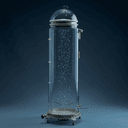
A detector used in the 1950s–1960s to visualize the trajectories of subatomic particles. Luke Yuan and his colleagues used it to analyze the products of particle collisions.
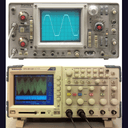
An essential electronic measuring instrument in nuclear physics laboratories of the 1950s–1970s, used to analyze signals emitted by detectors during Luke Yuan's experiments.
📷 CC BY-SA 3.0 · Wikimedia Commons ↗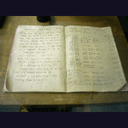
A fundamental tool for the experimental physicist, in which Luke Yuan meticulously recorded his measurements, protocols, and observations. These notebooks serve as a valuable archive of particle physics research.
📷 CC BY-SA 2.0 · Wikimedia Commons ↗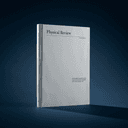
The leading scientific publication where Luke Yuan published his work on pion physics and hadronic interactions, making his results accessible to the international research community.
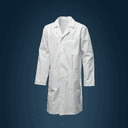
The iconic garment of the experimental scientist, worn daily by Luke Yuan in the Brookhaven laboratories — a symbol of the rigor and objectivity at the heart of the scientific method.
School Curriculum
Vocabulary & Tags
Key Vocabulary
Tags
Daily Life
Morning
Luke Yuan arrives early at the Brookhaven laboratory, where he begins by reviewing the data collected the previous day by the detectors. He holds morning meetings with his team to plan the day's experiments and discuss preliminary results from particle collisions.
Afternoon
Afternoons are devoted to the experiments themselves: calibrating the accelerators, monitoring the detectors, and analyzing particle tracks in bubble chambers. Luke Yuan oversees the engineers and physicists in his group, and regularly exchanges ideas with colleagues from around the world visiting Brookhaven.
Evening
In the evenings, Luke Yuan writes scientific papers or studies recent publications in physics journals. He takes part in international seminars and conferences, maintaining close ties with the scientific community across Asia, Europe, and America.
Food
Shaped by the confluence of Chinese and American cultures, Luke Yuan enjoys both traditional Chinese cuisine prepared at home and meals taken in the laboratory cafeteria with his colleagues. Working lunches offer a valuable opportunity for informal scientific exchange.
Clothing
The classic professional attire of an American researcher in the 1950s–1970s: a dark suit or gray jacket, white shirt, and tie. A white lab coat is standard during laboratory experiments, marking his membership in the institutional scientific community.
Housing
Luke Yuan lives in a suburban house near Brookhaven, typical of postwar America. His home, shared with his wife Chien-Shiung Wu and their son Vincent, also serves as an informal gathering place for fellow physicists and international scientific visitors.
Historical Timeline
Period Vocabulary
Visual Style
L'esthétique des grands laboratoires de physique américains des années 1950-1980 : équipements massifs en acier, blouses blanches, photographies noir et blanc de traces de particules dans des chambres à bulles et écrans d'oscilloscopes aux lignes précises.
Sound Ambience
L'ambiance sonore des grands laboratoires de physique des particules américains des années 1950-1980 : le bourdonnement des accélérateurs, les bips des instruments de mesure et les conversations feutrées des chercheurs concentrés sur leurs données.
Liens externes & ressources
Références
Œuvres
Études sur la diffusion pion-nucléon au Cosmotron
1952-1966
Recherches sur les interactions hadroniques à l'AGS
1960-1980
Publications sur la production de mésons
1955-1975