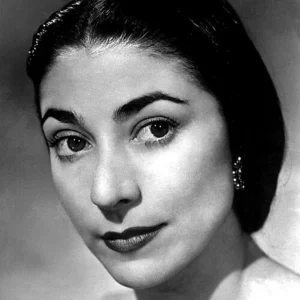

Margot Fonteyn (1919–1991) is considered one of the greatest ballerinas of the 20th century. Prima ballerina assoluta of the Royal Ballet in London, she formed with Rudolf Nureyev one of the most celebrated partnerships in the history of classical dance.
Margot Fonteyn(1919 — 1991)
Margot Fonteyn
Royaume-Uni, Royaume-Uni de Grande-Bretagne et d'Irlande
9 min read
Frequently asked questions
Key Facts
- Born Margaret Evelyn Hookham on 18 May 1919 in Reigate, England
- Named prima ballerina assoluta of the Royal Ballet in 1955, an exceptional title rarely bestowed
- From 1962, formed with Rudolf Nureyev one of the most legendary partnerships in the history of ballet
- The definitive interpreter of the great classical roles: Aurora in The Sleeping Beauty, Giselle, Odette/Odile in Swan Lake
- Died on 21 February 1991 in Panama
Works & Achievements
A revival of the 19th-century Romantic ballet by Jean Coralli and Jules Perrot, this version with Nureyev remains one of the most celebrated interpretations in dance history. The contrast between Fonteyn's restraint and Nureyev's fire made it a global artistic event.
A one-act neoclassical ballet choreographed by Frederick Ashton to music by César Franck, created specifically for Fonteyn. Considered a masterpiece of British post-war classical aesthetics, it has remained in the Royal Ballet's repertoire.
A three-act ballet by Ashton to music by Hans Werner Henze, conceived entirely around Fonteyn's artistic gifts. The role of the water sprite — a being halfway between the human world and the unseen — is often described as her most personal performance.
The Royal Ballet's staging of Tchaikovsky's great classic, in which Fonteyn danced both opposing roles with a technical and dramatic mastery that set the international standard for several decades.
The world premiere of Kenneth MacMillan's version at the Royal Opera House, with Nureyev as Romeo. Filmed and broadcast internationally, this portrayal of Juliet at the age of 46 demonstrated Fonteyn's exceptional ability to inhabit a role beyond the conventions of age.
A six-episode series presented and co-written by Fonteyn, tracing the history of ballet from the 17th to the 20th century. Broadcast in more than thirty countries, it remains to this day a landmark educational resource on the evolution of Western classical dance.
Anecdotes
When Rudolf Nureyev defected from the Soviet Union in 1961, Margot Fonteyn was not immediately keen to dance with this unknown 24-year-old, being 42 herself. It was ultimately at the insistence of the Royal Ballet's director that she agreed. On the evening of their debut together, in Giselle in 1962, the London audience gave them more than 40 curtain calls — some reviewers even mention 89 curtain calls at a performance in Vienna.
Margot Fonteyn began ballet at the age of four, in Ealing, England. When her father, an engineer for a tobacco company, was transferred to Shanghai in the early 1930s, young Margaret Hookham continued her classes in the city's international settlement with a Russian teacher, Vera Volkova, who gave her an exceptionally rigorous technical foundation.
In 1955, Margot Fonteyn married Roberto de Arias, a Panamanian politician and future ambassador. Nine years later, in 1964, Arias was the victim of an assassination attempt that left him quadriplegic. Fonteyn, then at the height of her international fame, undertook countless tours and galas to fund his care for more than twenty years, until her own death in 1991.
Queen Elizabeth II awarded her the title of Dame Commander of the Order of the British Empire (DBE) in 1956, making her one of the first dance artists to receive this honor in Great Britain. Fonteyn was then 37 years old, an age at which most classical dancers have already retired; yet she continued to perform on stage until the age of 60.
In 1979, the BBC dedicated a documentary series to Margot Fonteyn entitled The Magic of Dance, which she presented herself. This project, blending archival footage and educational reconstructions, allowed her to share her passion for the history of ballet with a very wide audience, well beyond the circle of aficionados. The series was broadcast in several dozen countries.
Primary Sources
I have never thought of dancing as something separate from living. Every experience in my life has gone into my dancing, and every role I have danced has taught me something about life.
Ballet is the art of transformation: the dancer transforms herself, her partner, and the audience, transporting them to a world that exists only for the duration of the music.
You are the reason I choreographed Ondine. Without you, the work would not exist — you are its soul, its voice, its substance.
Miss Fonteyn, far from being eclipsed by Nureyev's fire, proved his perfect equal: where he burns, she illuminates; where he leaps, she soars.
Key Places
Birthplace of Margaret Evelyn Hookham, on 18 May 1919, the future Margot Fonteyn. She took her first dance lessons here at the age of four.
The Royal Ballet's main stage, where Fonteyn built the heart of her career and achieved her greatest triumphs, including the legendary 1962 debut alongside Nureyev.
The city where her father was posted in the 1930s, and where the young Margaret Hookham refined her technique under the pedagogue Vera Volkova — a formative experience in her classical training.
Fonteyn performed here several times on tour, and it was in this city that Nureyev defected in 1961 — an event that would transform the British dancer's career.
A ranch in Panama where Fonteyn settled with her husband Roberto de Arias after his paralysis in 1964, devoting her final years to his care and to cattle farming. She died there on 21 February 1991.
Typical Objects

The ballerina's daily working tool, Fonteyn wore through several pairs a week and customised them meticulously (hand-sewn, with darning at the tip). She is one of the first dancers whose shoes have been preserved in the collections of the Victoria & Albert Museum in London.

The long so-called 'romantic' tutu, inherited from the nineteenth century, was Fonteyn's signature costume in Giselle. Her costumiers would routinely adjust it to visually elongate her silhouette and amplify the fluidity of her arms.

Even at the height of her fame, Fonteyn without exception took her daily hour-and-a-half barre class every morning — the foundational ritual of the professional classical dancer's discipline.

The powder applied to pointe shoes to prevent slipping on stage, the rosin box is an indispensable backstage accessory. Fonteyn insisted that the amount be measured precisely — too little risked a fall, too much slowed her in her glissés.

Fonteyn worked closely with conductors and annotated scores to synchronise the nuances of her interpretation with the music. Her rehearsal notebooks reveal an analytical musicality that was rare among dancers of her era.

The large mirror in the rehearsal rooms of the Royal Opera House at Covent Garden was where Fonteyn daily honed her lines and expressions. She once described the mirror as "the most ruthless and honest judge."
School Curriculum
Vocabulary & Tags
Key Vocabulary
Tags
Daily Life
Morning
Every morning without exception, regardless of fatigue or joint pain, Fonteyn arrived at the Royal Opera House before 9:30 a.m. for her daily hour-and-a-half class. This discipline — inherited from her rigorous training — was, in her own words, "the only way to keep the body in a state of truth." She would then have a light breakfast, often tea and toast, before the first rehearsals.
Afternoon
Afternoons were devoted to production rehearsals, sometimes four to five hours at a stretch under the direction of the choreographer or ballet master. Fonteyn was known for her absolute punctuality and her habit of taking detailed notes in a notebook she always kept with her during rehearsals. She regularly consulted with musicians to fine-tune her synchronization with the score.
Evening
On performance evenings, Fonteyn arrived in the dressing rooms two hours early to prepare: elaborate stage make-up, hair pinned precisely in place, pointe shoes carefully fitted. She described the moments before her entrance as "a state of suspended grace between the real and the imaginary." After the show, she often attended the diplomatic or artistic receptions that were part of Royal Ballet social life.
Food
Fonteyn followed a low-calorie but balanced diet typical of elite classical dancers of her era: vegetables, fish, fruit, and little red meat. She avoided alcohol during intense performance periods but enjoyed a glass of wine at society dinners. Her naturally slender build spared her the drastic dieting that other dancers imposed on themselves.
Clothing
Off stage, Fonteyn was recognized for her understated, refined elegance, frequently dressed by British and French couturiers. She favored fitted dresses that highlighted her dancer's posture, paired with moderately heeled shoes. On stage, her costumes — most notably her Romantic tutus — were consistently tailored to optimize her lines.
Housing
During her active London years, Fonteyn lived in an elegant West End apartment, a short distance from Covent Garden. After her marriage to Roberto de Arias in 1955, she divided her time between London, New York, and Panama. In her later years, she lived on the family ranch in Panama, in a simple rural setting far from the spotlight.
Historical Timeline
Period Vocabulary
Liens externes & ressources
Références
Œuvres
Giselle (avec Rudolf Noureev)
1962
Symphonic Variations
1946
Le Lac des cygnes (Odette/Odile)
1952
The Magic of Dance (série documentaire BBC)
1979