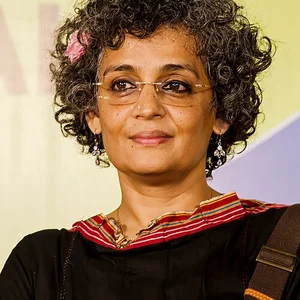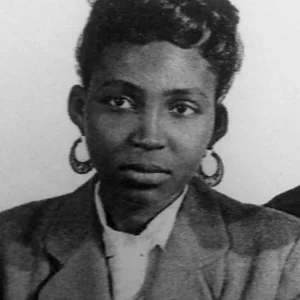

Senegalese writer (1929-1981), author of *So Long a Letter* (1979), the first African novel to win the Noma Award. Her work explores the condition of women in Africa and denounces the inequalities inherent in polygamous marriage.
Mariama Bâ(1929 — 1981)
Mariama Bâ
Sénégal
8 min read
Frequently asked questions
Famous Quotes
« Books are nourishment for the soul.»
« Women have the right to happiness.»
Key Facts
- Born in 1929 in Dakar, Senegal, into a prosperous Muslim family.
- Published *So Long a Letter* in 1979, an epistolary novel translated into more than 15 languages.
- Received the Noma Award in 1980, the first international recognition ever awarded to an African woman writer.
- Published *Scarlet Song* in 1981, the year of her death, a novel about intercultural marriages.
- Advocated throughout her life for girls' education and women's rights in Senegal.
Works & Achievements
Mariama Bâ's first novel, written in epistolary form. Ramatoulaye, recently widowed, writes to her friend Aissatou and reflects on her life, her broken marriage, and polygamy. Winner of the inaugural Noma Award in 1980 and translated into more than thirty languages, it is one of the founding texts of contemporary African literature.
Mariama Bâ's second and final novel, published posthumously. It explores the tensions between a Senegalese man and his French wife under the pressures of family and culture, and the clash of identities in post-independence Senegal. A bitter meditation on the limits of love in the face of social determinism.
Alongside her work as a teacher and writer, Mariama Bâ was an active campaigner in several women's associations in Senegal, fighting for equal rights, girls' access to education, and reform of the family code. This activism directly inspired her novels.
Anecdotes
Mariama Bâ studied at the École Normale de Jeunes Filles de Rufisque, one of the few institutions that allowed young African women to access higher education under French colonial rule. There she developed a deep love of literature while becoming aware of the contradictions between the universal values she was being taught and the reality of African women's lives. This tension between two worlds would fuel her entire body of work.
Mariama Bâ was married to Obèye Diop, a Senegalese politician and member of parliament, with whom she had nine children. After their divorce, she raised her children alone under difficult financial circumstances. Her personal experience as a divorced woman in a society where divorce was frowned upon gave her a unique perspective on the condition of African women, and directly inspired her novels.
*So Long a Letter* was written in epistolary form — a long letter that the heroine Ramatoulaye writes to her friend Aissatou from her mourning chamber. This formal choice was deliberate: Mariama Bâ wanted to give an intimate voice to African women who were so often condemned to silence. The letter, a private and quintessentially feminine genre, thus became a political and literary act.
In 1980, *So Long a Letter* won the very first Noma Award, a prize created to promote African literature. Mariama Bâ was the first woman to receive this international distinction, launching her novel onto the world stage and sparking a lasting debate about African feminism and polygamy.
Mariama Bâ died in August 1981, just a few weeks before the official publication of her second novel *Scarlet Song*. She never had the chance to witness the international reception of that work, nor the lasting impact of her contribution to African literature. Her publisher described her death as an irreparable loss for the continent's literary world.
Primary Sources
Aissatou, I have received your letter. In reply to your gesture of friendship, in testimony to my faith in you, I am offering you these confidences. You must know, you must understand, why I cannot join you immediately.
The polygamous man, once supported by a society that accommodated him, now finds himself at odds with a new woman who refuses to be humiliated. Women of my generation are at the heart of this conflict.
Mireille looked without understanding at the world surrounding her. She had believed that love could cross all borders and defy all traditions. She was discovering the full extent of her error.
The African woman must arm herself with patience and intelligence to claim her rights. Writing is for me an act of resistance as much as an act of faith in the future of our societies.
Key Places
Mariama Bâ's birthplace, where she taught, campaigned, and wrote her two novels. Dakar, Senegal's vibrant capital, is the main setting of "So Long a Letter" and the backdrop for the tensions between tradition and modernity she portrays.
The institution where Mariama Bâ trained as a primary school teacher in the 1940s. Founded by the French to educate African women for leadership roles, this school opened her world to literature while exposing her to the contradictions of the colonial system.
The former colonial capital of Senegal, a symbol of the encounter between African and French cultures. In Senegalese literature, Saint-Louis stands as a site of memory for an ambiguous colonial past that Mariama Bâ interrogates throughout her work.
The hub through which Mariama Bâ's work reached international audiences. Her novel was distributed in France and received critical acclaim there that was decisive in establishing her global reputation, confirming the place of Francophone African literature on the world literary stage.
Typical Objects

Mariama Bâ wrote her drafts by hand, often in the evening after putting her children to bed. Handwritten text symbolizes in her work intimate speech and personal testimony, two pillars of her epistolary novel.

The letter is the central object of *So Long a Letter* and the medium Bâ chose to give voice to women's expression. In Senegalese society in the 1970s, women exchanged letters to express what they could not say in public.

A loose, colorful garment worn daily by Senegalese women, the boubou symbolizes both cultural identity and social status. Mariama Bâ habitually wore it, refusing to sacrifice her African identity to Western fashion.

Educated within the colonial system, Mariama Bâ was shaped by classical French literature. These books represent the founding tension of her work: emancipation through the colonizer's culture and the necessity of forging an autonomous African literature.

A devotional Islamic object ubiquitous in Senegalese households, prayer beads mark the daily rhythm of Bâ's heroines' lives. They symbolize both the faith that sustains them through adversity and the religious constraints they must confront.

African wax fabrics are a powerful identity marker in Senegalese life. In her novels, Mariama Bâ describes her female characters' outfits with precision, revealing their status, their emotions, and their quiet resistance.
School Curriculum
Vocabulary & Tags
Key Vocabulary
Daily Life
Morning
Mariama Bâ woke up early to get her nine children ready before going to teach in Dakar's primary schools. Like many Senegalese women, she began the day with prayer and preparing the family breakfast — bread, café au lait, or millet porridge depending on the season.
Afternoon
After class, she corrected her students' work and managed the household. During the 1970s, after gradually reducing her teaching duties, she devoted her afternoons to writing, regularly interrupted by domestic obligations and her children's needs.
Evening
Evening was the privileged time for writing: once the children were in bed, Mariama Bâ could be alone with her notebooks. She also attended women's association meetings, where women debated the family law reforms they were collectively calling for.
Food
Her daily diet was that of the Dakar bourgeoisie: rice with fish (thiéboudienne), the Senegalese national dish, as well as chicken yassa or mafé with peanut butter. Mint tea (ataya), prepared in three rounds according to Wolof tradition, punctuated conversations and moments of rest.
Clothing
Mariama Bâ typically wore the Senegalese boubou — loose-fitting and colorful — paired with a matching headscarf tied around her head. In the professional setting of the school, she sometimes opted for more understated outfits. She never abandoned traditional African dress, even in intellectual circles where Western fashion prevailed.
Housing
After her divorce, Mariama Bâ lived in a modest apartment in Dakar with her nine children. The housing situation of a divorced woman in Senegal was often precarious, partly dependent on the extended family. This personal experience of material hardship directly informed the portraits of her heroines.
Historical Timeline
Period Vocabulary
Liens externes & ressources
Références
Œuvres
Une si longue lettre
1979
Un chant écarlate
1981
Militantisme féministe associatif
Années 1960-1970