 flip
flipBraided Syrup Koeksisters
Braided Syrup Koeksisters
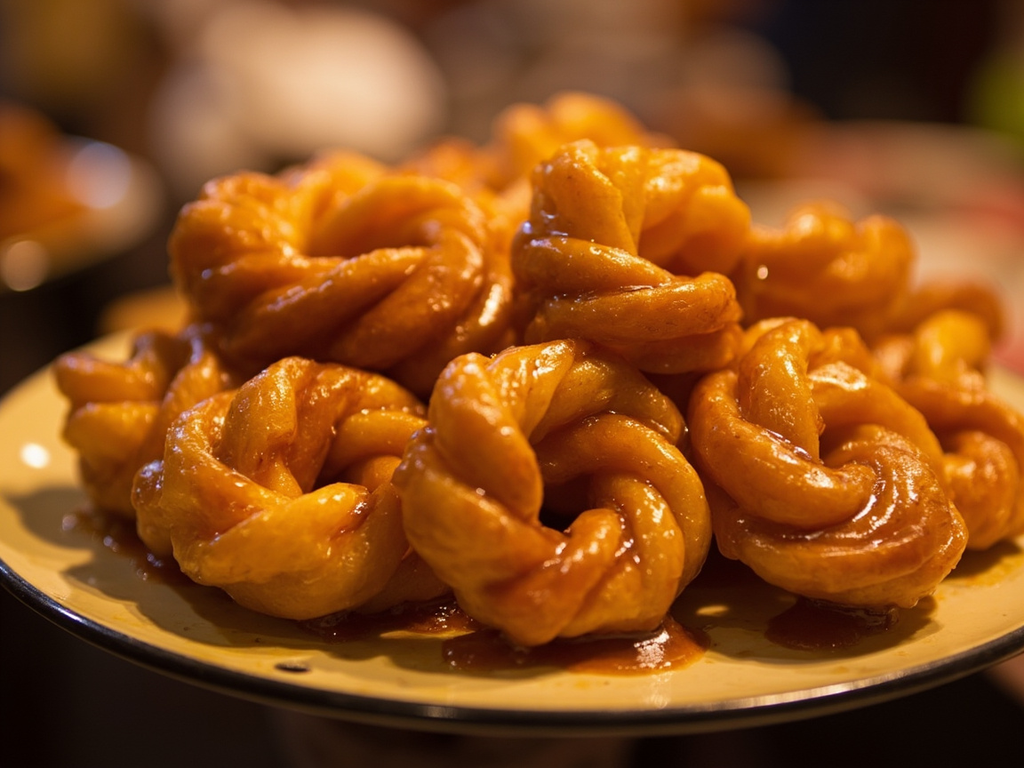
Why this dish? Koeksisters, braided doughnuts soaked in an ice-cold syrup, were sold at charity bazaar stalls and markets, and featured on weekend tables across the country. They are the iconic shared treat—across communities—of the South African daily life of Gordimer's era.
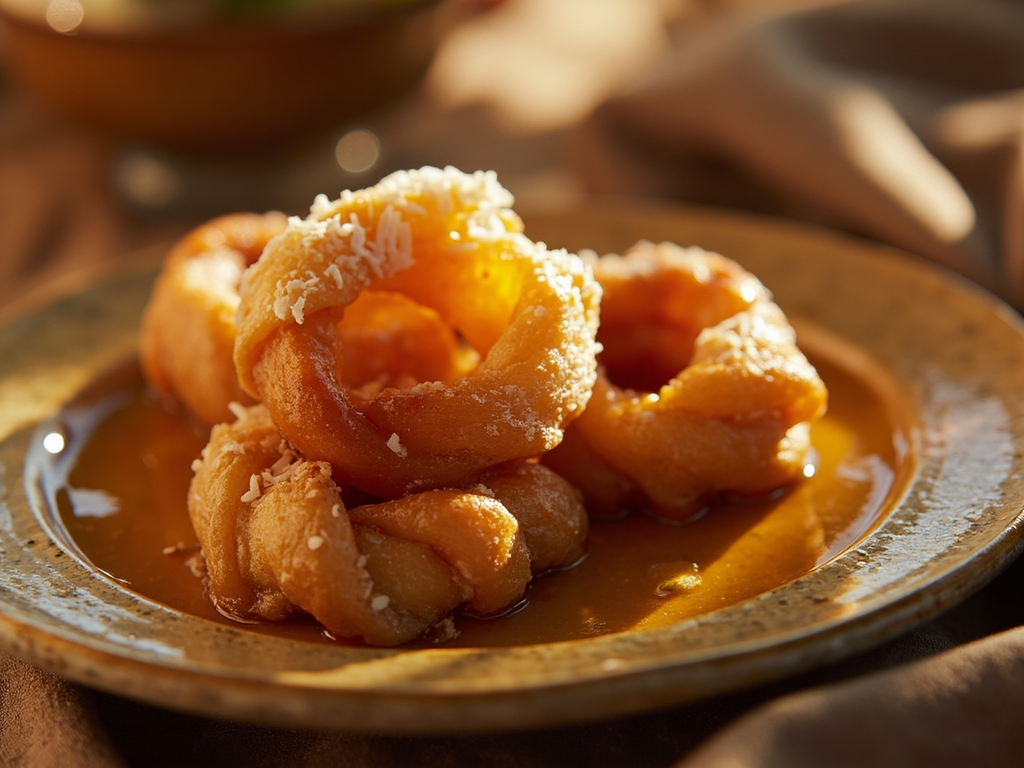
Small braids of fried dough, crispy on the outside, plunged hot into a ginger-and-lemon syrup: the thermal shock makes them crunchy outside and syrupy inside. Sticky, sweet, irresistible.
Careful, the gesture is everything: the dough must come boiling out of the oil and fall straight into an ice-cold syrup—it's this contrast, hot against cold, that makes the crust crackle and the heart drip. You found them at every fête, every charity sale, braided by hands more patient than mine, I admit. The syrup is flavored with ginger, cinnamon, and a squeeze of lemon, and you prepare it the day before so it's well chilled. Eat them the same day, with your fingers: this is not a sweet that keeps, it's a sweet that is shared on the spot.
- •Flour — several cups (dough)
- •Butter and yeast — according to dough (texture)
- •Sugar — abundantly (syrup)
- •Ginger, cinnamon, lemon — to taste (syrup flavoring)
- •Oil for frying — a bath (cooking)
Braided Syrup Koeksisters
Small braids of fried dough, crispy on the outside, plunged hot into a ginger-and-lemon syrup: the thermal shock makes them crunchy outside and syrupy inside. Sticky, sweet, irresistible.
Why this dish? Koeksisters, braided doughnuts soaked in an ice-cold syrup, were sold at charity bazaar stalls and markets, and featured on weekend tables across the country. They are the iconic shared treat—across communities—of the South African daily life of Gordimer's era.
Careful, the gesture is everything: the dough must come boiling out of the oil and fall straight into an ice-cold syrup—it's this contrast, hot against cold, that makes the crust crackle and the heart drip. You found them at every fête, every charity sale, braided by hands more patient than mine, I admit. The syrup is flavored with ginger, cinnamon, and a squeeze of lemon, and you prepare it the day before so it's well chilled. Eat them the same day, with your fingers: this is not a sweet that keeps, it's a sweet that is shared on the spot.
Ingredients (period version)
- Flour — several cups (dough)
- Butter and yeast — according to dough (texture)
- Sugar — abundantly (syrup)
- Ginger, cinnamon, lemon — to taste (syrup flavoring)
- Oil for frying — a bath (cooking)
Ingredients
- Flour — 300 g (dough)
- Baking powder — 2 tsp (texture)
- Cold butter — 40 g (flakiness)
- Milk — 120 ml (binder)
- Egg — 1 (binder)
- Sugar — 500 g (syrup)
- Water — 250 ml (syrup)
- Fresh grated ginger + cinnamon stick — 1 piece + 1 (flavoring)
- Lemon juice — 1 tbsp (syrup balance)
- Frying oil — 1 bath (cooking)
Method
- Prepare the syrup: dissolve sugar, water, ginger, cinnamon, and lemon, boil for 5 minutes, then cool completely (ideally in the fridge, overnight).
- Knead a soft dough with flour, baking powder, butter, milk, and egg; let rest 30 minutes.
- Roll out, cut strips, and braid three together, pinching the ends.
- Fry in oil at 180°C until deep golden.
- Immediately plunge the hot koeksisters into the ice-cold syrup for 1 minute, then drain on a rack.
- Enjoy the same day, at room temperature.
How it was made : Two traditions coexist: the Cape Malay koesister, spiced and rolled in coconut, and the Afrikaner koeksister, braided and coated in syrup. Both inherit from Dutch and Asian syrup doughnuts, becoming staples of markets, fêtes, and Sunday tables.
The contemporary twist : Roll the still-warm braids in shredded coconut, Cape Malay style, for a double tribute to both traditions.
Sources : Renata Coetzee, The South African Culinary Tradition, 1977 · Cass Abrahams, Cape Malay Cooking, 1995
Nadine Gordimer · Charactorium