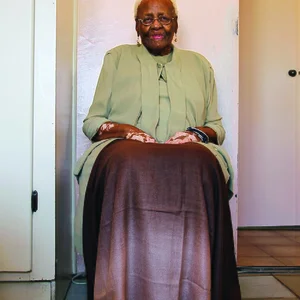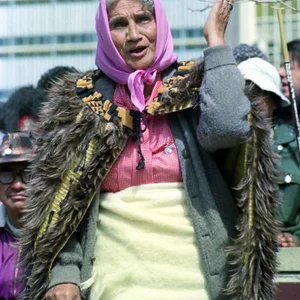

Collective nickname for the prominent Togolese businesswomen who dominated the wax fabric market in Lomé from the 1960s onward. Iconic figures of female entrepreneurship in West Africa, they earned their nickname from the Mercedes-Benz cars they could afford thanks to their commercial fortunes.
Nana Benz
Nana Benz
9 min read
Frequently asked questions
Key Facts
- The Nana Benz established themselves in the wax fabric trade in Lomé (Togo) from the 1960s onward, in the wake of the country's independence (1960).
- They controlled imports of wax fabric produced by Dutch (Vlisco) and Ghanaian firms, selling wholesale across the entire West African market.
- Their nickname 'Nana Benz' comes from the Mercedes-Benz cars they drove, a visible symbol of their exceptional economic success.
- At their peak in the 1970s–1980s, some Nana Benz ranked among the highest taxpayers in Togo.
- Their influence declined from the 1990s onward, with the arrival of Asian counterfeits and the Togolese economic crisis.
Works & Achievements
The Nana Benz established a system of informal exclusive rights over specific fabric patterns, creating a distribution network spanning Togo, Ghana, Benin, and Nigeria. This organization, based on no written contracts, relied entirely on reputation and word of honor.
Acting as informal patrons, several Nana Benz financed the secondary and university education of young people in their community, contributing to the development of Togolese human capital without any institutional recognition.
Using their commercial profits, many Nana Benz invested in real estate, constructing buildings that reshaped the urban landscape of the Togolese capital and diversified their wealth beyond the textile trade.
The Nana Benz organized an informal system of family-based apprenticeship that allowed their daughters and granddaughters to take over the trade. This oral transmission of complex entrepreneurial knowledge constitutes a recognized form of intangible cultural heritage.
By generating significant textile import flows, the Nana Benz helped make the Port of Lomé one of the most active on the West African coast, attracting other traders and strengthening Togo's economic role in the region.
Anecdotes
The Nana Benz did far more than sell fabric: they negotiated directly with Dutch manufacturers, particularly Vlisco, to secure exclusive rights over specific wax print patterns. Each woman had her own 'signature pagnes' that no other trader could sell without her permission. This informal system of exclusive commercial rights was governed entirely by word of mouth and reputation.
The nickname 'Nana Benz' emerged organically on the streets of Lomé when residents noticed that these businesswomen were the first women in the city to own Mercedes-Benz cars. The ultimate status symbol, the Mercedes became their trademark to the point where their social standing could be read from the model they drove. Some owned several, which they would lend to their daughters for special occasions.
At the height of their influence in the 1970s and 1980s, the Nana Benz controlled nearly 80% of the wax print fabric trade in Togo and across the wider West African region. Their network stretched from Ghana to Benin, passing through Nigeria. They also funded the education of many young people from modest backgrounds, acting as informal patrons within their communities.
The Nana Benz operated primarily out of the Grand Market in Lomé, where they held stalls passed down from mother to daughter. The trade was learned within the family: young women would accompany their elders from childhood, learning to assess fabric quality, negotiate prices, and manage relationships with foreign suppliers. This expertise was passed on orally, with nothing ever written down.
During the economic crisis of the 1990s and the flood of cheaper counterfeit Asian textiles, the Nana Benz gradually saw their grip on the market weaken. Even so, the most prominent among them were able to diversify into real estate and transport, preserving part of their wealth. Their legend lives on in Togo, where they are celebrated as pioneers of African women's entrepreneurship.
Primary Sources
We signed no contracts with the Dutch. Our word was enough. If you broke your word, you lost everything. That is how we built our empire.
The wax fabric market in Lomé is dominated by a network of independent female traders known as 'Nana Benz', whose combined turnover represents a significant share of Togo's textile imports.
These businesswomen, known as 'Nana Benz' for their taste for German saloon cars, are today the true economic pillars of the Lomé market and of Togolese commercial life.
The Nana Benz of Lomé represent a remarkable example of capital accumulation by women in a postcolonial context, built not on formal banking structures but on intra-community networks of trust.
Key Places
The heart of the Nana Benz commercial empire, this central market in Lomé was the main venue for selling and negotiating wax print fabrics. The stalls of the great traders were passed down from generation to generation as a family inheritance.
The gateway for bales of wax fabric imported from Europe (the Netherlands, the United Kingdom) and Asia. Controlling the flow of goods through the port was a strategic commercial concern for the Nana Benz, who maintained their own intermediaries there.
The primary source of authentic wax print fabrics for the Nana Benz. Delegations of Togolese traders would travel there to negotiate exclusive rights to certain patterns and place their annual orders.
A key regional market where many retailers sourced their fabrics, buying their wax prints from the Nana Benz of Lomé. The commercial reach of the Nana Benz extended well beyond the borders of Togo.
Where the wealthiest Nana Benz had grand villas built, symbols of their social rise. These homes also served as storage spaces and meeting places for family business affairs.
Liens externes & ressources
Références
Œuvres
Constitution du réseau exclusif de distribution du wax Vlisco en Afrique de l'Ouest
années 1960–1970
Financement de la scolarisation d'enfants issus de familles modestes à Lomé
années 1970–1990
Construction d'immeubles résidentiels et commerciaux à Lomé
années 1975–1995
Transmission du savoir-faire commercial aux générations suivantes
années 1980–2000
Participation au développement du port de Lomé comme hub régional
années 1960–1985