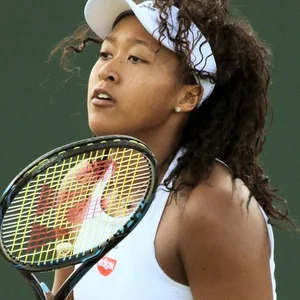

Naomi Ōsaka is a Japanese-American professional tennis player born in 1997 in Osaka. A former world number 1, she has won four Grand Slam titles. She has also been a vocal advocate for social justice and athletes' mental health.
Naomi Ōsaka(1997 — ?)
Naomi Ōsaka
Japon
7 min read
Frequently asked questions
Famous Quotes
« I think mental health awareness is very important.»
« I want to use my platform to start an important conversation.»
Key Facts
- Born on October 16, 1997, in Osaka, Japan, to a Haitian father and a Japanese mother
- Won the 2018 US Open against Serena Williams in a highly controversial final
- In 2019, became the first Asian player to reach world number 1 (WTA)
- Won four Grand Slam titles (US Open 2018, 2020; Australian Open 2019, 2021)
- Withdrew from the 2021 French Open to protect her mental health, sparking a global debate
Works & Achievements
The first Japanese player to win a Grand Slam, defeating Serena Williams. This historic, heavily covered match catapulted her to worldwide tennis stardom.
She wins her second Grand Slam and reaches the world No. 1 WTA ranking for the first time.
By wearing seven masks bearing the names of victims of racial violence, she turned each match into an act of resistance — and won the title, combining sport with social advocacy.
Her fourth and most recent Grand Slam title, cementing her place among the best players of her generation.
A powerful symbolic moment: Naomi Ōsaka is chosen to light the Olympic cauldron before the entire world, representing a modern, multicultural Japan.
A personal piece in which she opens up about her depression and calls for better mental health support for elite athletes.
Following the birth of her daughter Shai in 2023, she made a widely celebrated comeback, inspiring many female athletes on balancing motherhood and a professional career.
Anecdotes
In 2018, at just 20 years old, Naomi Osaka defeated Serena Williams in the US Open final in a historic but tense match. After the umpire issued several penalties against Williams, the crowd booed loudly. Naomi, in tears during the trophy ceremony, apologized for winning — an image that went around the world and revealed her extraordinary sensitivity.
At the 2021 French Open, Naomi Osaka decided to boycott the mandatory press conferences, citing the negative impact of media on her mental health. She was fined and then withdrew from the tournament. Her decision sparked a global debate about the psychological well-being of elite athletes and their right to protect their mental health.
During the 2020 US Open, held amid the Covid-19 pandemic and in the context of police violence against Black Americans, Naomi Osaka wore seven different masks throughout the tournament, each bearing the name of a victim of racial violence — including George Floyd and Breonna Taylor. She won the title, turning each victory into a tribute.
Naomi Osaka was born to a Haitian-American father and a Japanese mother. Having grown up in the United States, she chose to represent Japan in international competition. In 2021, she had the honor of lighting the Olympic flame during the opening ceremony of the Tokyo Games, becoming a powerful symbol of multicultural Japan.
Primary Sources
I think the best thing for the tournament, the other players and my well-being is that I withdraw so that everyone can focus on the tennis.
We ask athletes to be courageous on the court, but we forbid them from admitting they are struggling off it. I want to change that.
I wanted people to know who I was talking about. I wanted those names to be heard. If you want to know what message I was trying to send, what's the most important thing you learned this week?
I am someone who has suffered from long bouts of depression since the US Open 2018, and I am not very good at communicating about these things.
Key Places
Naomi Ōsaka's birthplace, from which she takes her name. Although she grew up in the United States, she chose to represent Japan and has partially settled there.
The stage for her two US Open victories (2018, 2020), this stadium is the site of her greatest triumphs and iconic moments of social activism.
Naomi has won two titles here (2019, 2021), cementing her status as a world champion. Rod Laver Arena was where she became world number 1.
It was here that Naomi Ōsaka lit the Olympic flame during the opening ceremony of the Tokyo Games in July 2021, watched by billions of viewers around the world.
In 2021, her withdrawal from this tournament to protect her mental health made headlines around the world and changed how professional sports views the psychological well-being of athletes.
Liens externes & ressources
Références
Œuvres
Victoire à l'US Open 2018
8 septembre 2018
Victoire à l'Open d'Australie 2019
26 janvier 2019
Victoire à l'US Open 2020 avec les masques militants
12 septembre 2020
Victoire à l'Open d'Australie 2021
20 février 2021
Allumage de la flamme olympique — Tokyo 2020
23 juillet 2021
Essai « It's O.K. Not to Be O.K. » dans Time Magazine
Juillet 2021
Retour en compétition après maternité — Open d'Australie 2024
Janvier 2024