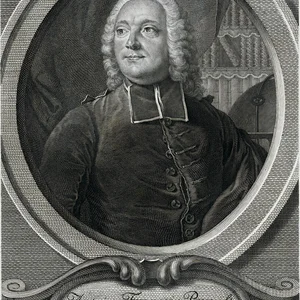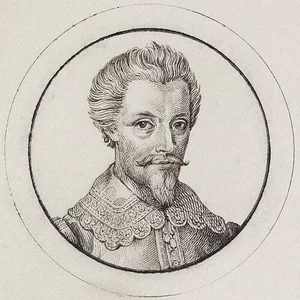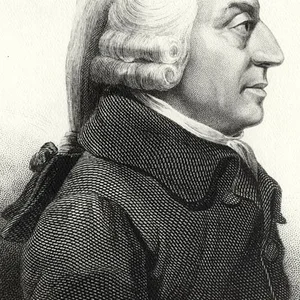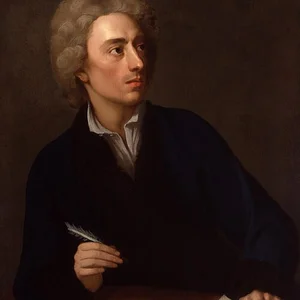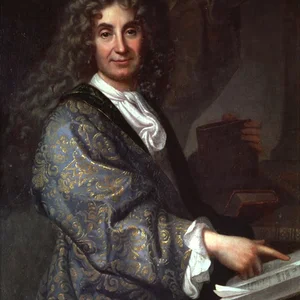

French poet and literary critic of the 17th century, nicknamed the “legislator of Parnassus”. His Art poétique (1674) established the rules of French classicism. A friend of Molière, Racine, and La Fontaine, he served as royal historiographer to King Louis XIV.
Nicolas Boileau(1636 — 1711)
Nicolas Boileau
France
8 min read
Frequently asked questions
Famous Quotes
« At last came Malherbe, who, the first in France, made verse feel a just cadence.»
« Love reason, then; let your writings always borrow from her alone their luster and their worth.»
« Whatever is well conceived is clearly said, and the words to say it flow with ease.»
« Make haste slowly, and without losing heart, put your work back on the loom twenty times.»
« A fool always finds a greater fool to admire him.»
Key Facts
- 1636: born in Paris
- 1660–1668: publication of the Satires, which brought him fame
- 1674: publication of L'Art poétique, manifesto of classicism
- 1677: appointed royal historiographer alongside Racine
- 1711: died in Paris, having championed the Ancients in the Quarrel of the Ancients and Moderns
Works & Achievements
A collection of satirical poems in which Boileau sharply criticizes the manners of his time, poor literature, and social follies. These texts earned him an immediate reputation and many enemies.
A verse treatise in four cantos codifying the rules of French classicism: clarity, reason, verisimilitude, and respect for literary genres. This foundational text influenced French literary creation for more than a century.
A mock-heroic poem in six cantos recounting a petty quarrel among canons over the placement of a lectern. A model of the classical burlesque genre, it showcases Boileau's talent for elegant irony.
Verse letters addressed to friends (Racine, Molière) or to the king, blending moral reflections, literary advice, and celebration of friendship. They reveal the man behind the stern critic.
A work of maturity in which Boileau defends the Ancients against Perrault during the Quarrel of the Ancients and the Moderns. This text bears witness to his lifelong attachment to Greco-Latin literary models.
Anecdotes
At the age of two, Nicolas Boileau was attacked by a turkey that inflicted a serious and permanent wound. This mishap had a lasting impact on his health and, according to some biographers, may have helped forge his sharp wit and often melancholic temperament.
Boileau formed a circle of literary friends with Molière, Racine, and La Fontaine, who regularly gathered in Parisian taverns and salons. It is said that Louis XIV once asked him who were the greatest poets of his reign — Boileau answered without hesitation: “Sire, it is Molière,” to the great astonishment of the monarch.
In 1677, Louis XIV appointed Boileau and Racine as royal historiographers, tasked with recounting his military campaigns with grandeur. Unaccustomed to the rigors of camp life, Boileau attended the siege of Ghent in 1678 without enthusiasm. He long continued to prefer the pen to the sword.
His *Satires* earned him many enemies among the authors he mocked with ferocity. Some of the ridiculed poets tried to respond with pamphlets or to have him censored. Boileau, however, enjoyed royal protection, which shielded him from the most serious reprisals.
The Quarrel of the Ancients and the Moderns pitted Boileau, a staunch defender of Greek and Latin authors, against Charles Perrault, champion of contemporary writers. This intellectual debate captivated the entire Republic of Letters for several years, revealing how central literature was as a social and cultural battleground in the seventeenth century.
Primary Sources
Before you write, then, learn to think. According as our thought is more or less obscure, the expression follows it, either less clear or more pure.
That you know how to rhyme, and even quite happily: But rhyme is an art that demands years; Follow the learned counsel of sound Reason.
In vain does a minister league against the Cid: all Paris looks upon Chimène with Rodrigue's eyes. Though the Académie as a body censures it, the outraged public persists in admiring it.
Let a single completed action, in one place and one day, keep the theater full until the very end.
Key Places
Nicolas Boileau was born on November 1, 1636, in a house on the Île de la Cité, in the heart of 17th-century Paris. He lived in the capital for many years before retiring to Auteuil.
Boileau acquired a house in Auteuil, then a village on the outskirts of Paris, where he spent his final years. This rural retreat, frequented by Racine and Molière, became a hub of classical literary society.
As royal historiographer and a poet admired by Louis XIV, Boileau was a regular at the court of Versailles. He would sometimes read his works before the king and took part in the cultural life of the grandest palace in Europe.
Boileau was admitted to the Académie française in 1684. This institution, founded by Richelieu in 1635, was the temple of the French language and literature, and the highest honour a man of letters could receive.
Liens externes & ressources
Références
Œuvres
Satires
1666–1711
L'Art poétique
1674
Le Lutrin
1674–1683
Épîtres
1669–1698
Réflexions critiques sur quelques passages du rhéteur Longin
1694–1710