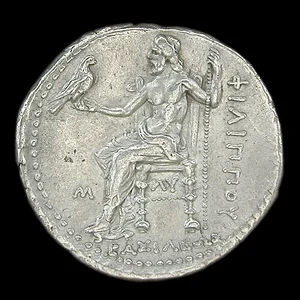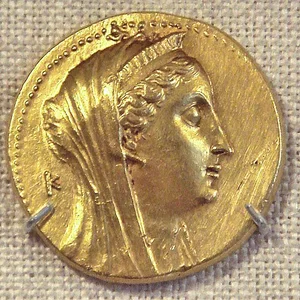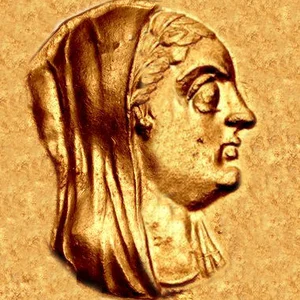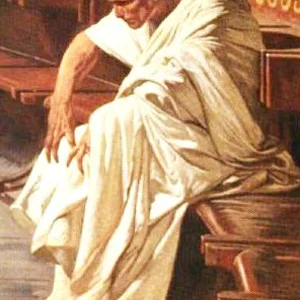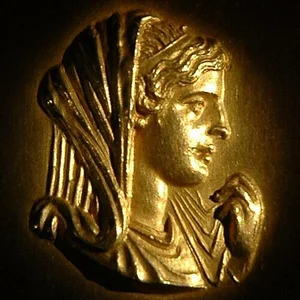

Princess of Epirus and Queen of Macedon, Olympias was the wife of Philip II and the mother of Alexander the Great. A formidable wielder of power, she played a major political role during the Wars of the Diadochi following her son's death.
Olympias(374 av. J.-C. — 315 av. J.-C.)
Olympias
royaume de Macédoine
8 min read
Frequently asked questions
Key Facts
- c. 375 BC: born in Epirus, daughter of King Neoptolemus I
- 357 BC: married Philip II of Macedon
- 356 BC: birth of her son Alexander, the future Alexander the Great
- 316 BC: executed on the orders of Cassander after attempting to secure the throne for Alexander's lineage
Works & Achievements
During Alexander's campaigns, Olympias conducted an active diplomatic effort from Pella, maintaining regular correspondence with her son and intervening in the affairs of the city-states. Several letters mentioned by Plutarch attest to her central political role.
In Alexander's absence during his conquest of Asia, Olympias exerted considerable influence over Macedonian politics, in rivalry with the regent Antipater. She served as an essential royal counterweight in preserving dynastic legitimacy.
At the head of an Epirote army, Olympias invaded Macedon to defend the rights of her grandson Alexander IV against Philip III Arrhidaeus. Her mere presence was enough to turn the opposing troops, revealing the symbolic and military authority she had built over the years.
After Alexander's death, Olympias worked actively to establish his divine cult, seeking to consolidate her grandson's legitimacy. She had monuments erected and ceremonies organized in honor of her deified son.
Anecdotes
According to Plutarch, on the night before her wedding to Philip II, Olympias dreamed that a bolt of lightning struck her womb, igniting a great fire. This omen was interpreted as a divine sign of Alexander's future conception. Olympias herself nurtured this legend to reinforce her son's exceptional nature.
Olympias was a devoted follower of the Dionysiac cult and took part in nocturnal mystical ceremonies in Macedonia. According to ancient sources, she handled tame snakes during these rituals, which inspired intense fear in those around her — including Philip II himself.
After the assassination of Philip II in 336 BC, Olympias had Cleopatra Eurydice, Philip's new wife, killed along with her newborn daughter. Some sources even accuse her of having orchestrated the king's murder. She placed a golden crown on the head of the assassin, Pausanias, before having his body burned.
During the Wars of the Diadochi, Olympias took up arms in the most literal sense: in 317 BC, she led an army into Macedonia to defend the rights of her grandson Alexander IV. Her opponents — the soldiers of Cassander — refused to fight against the mother of Alexander the Great, and her rival Philip III Arrhidaeus was captured and executed on her orders.
Captured by Cassander in 316 BC, Olympias refused to humble herself before her judges. She was sentenced to death, but no soldier dared raise a hand against Alexander's mother. Cassander ultimately had to send the families of her victims to carry out the execution. She died, it is said, with absolute royal dignity, without shedding a single tear.
Primary Sources
It is said that the night before the marriage was consummated, the bride dreamed that a thunderbolt fell upon her breast, from which a great fire burst forth and spread into many flames.
Olympias, having gathered an army and invaded Macedonia, seized the kingdom without a fight, as the soldiers refused to take up arms against the mother of Alexander.
Philip repudiated Olympias, alleging that she had been unfaithful; she, for her part, maintained that her son was of divine birth and not Philip's.
Alexander, before his death, sent letters to Antipater, but nothing in those letters concerned Olympias, which caused the queen great despair.
Key Places
An oracular sanctuary of Zeus located in Epirus, the homeland of Olympias. The king of the gods was said to speak through the rustling leaves of a sacred oak tree. Olympias, who came from the Molossian people, had a deep attachment to the site and made dedications there.
Capital of the Macedonian kingdom and the main residence of Olympias as queen. It was at Pella that she raised Alexander and wove the political intrigues that would come to define the Macedonian court.
An island in the Aegean Sea and home to the cult of the Cabiri, mysterious deities associated with fertility and the protection of sailors. It was during the Samothracian Mysteries that Olympias first met Philip II.
The ancient ritual capital and royal necropolis of Macedonia. It was at Aigai that Philip II was assassinated during his daughter's wedding, and it was here that the Macedonian kings were traditionally buried.
A coastal city in Macedonia where Olympias took refuge during Cassander's siege in 317–316 BC. Weakened by famine, she was forced to surrender, and was subsequently condemned to death and executed.
Typical Objects

Olympias was renowned for keeping tame serpents, associated with the cult of Dionysus. These reptiles were her ritual companions during the nocturnal mystic ceremonies in which she participated with great fervor.

The emblem of power worn by the queen of Macedon, the diadem was a band of white cloth or gold worn around the forehead. Olympias cherished it as a symbol of her dynastic legitimacy — one she defended until her dying day.

A staff topped with a pine cone, the thyrsus was an attribute of the god Dionysus used in Bacchic ceremonies. Olympias, initiated into the Dionysian mysteries, wielded it ritually during nocturnal festivals held in the god's honor.

Macedonian queens used engraved seals to authenticate their diplomatic correspondence. Olympias, who served as de facto regent during Alexander's absences, used hers to sign official letters addressed to Greek city-states.

A small stone or metal structure used for offerings and libations to the gods. Olympias was known for her intense piety and performed sacrifices frequently, seeking favorable omens for her son Alexander.

A woolen garment dyed purple — a color reserved for individuals of high rank in the Greek world. Olympias's purple dress signaled her status as queen and her enduring claim to power.
School Curriculum
Vocabulary & Tags
Key Vocabulary
Tags
Daily Life
Morning
Olympias began her day with libations and prayers to the gods — particularly Dionysus and Zeus — at the altars in her royal apartments at Pella. She would then receive reports from her servants and messengers, managing palace affairs during the frequent absences of Philip II, who was occupied with his military campaigns.
Afternoon
Afternoons were devoted to political audiences, meetings with ambassadors from allied city-states, and overseeing young Alexander's education. Olympias also took part in court activities, including formal meals where she held a place of honor, even though women were generally expected to remain in the gyneceum.
Evening
Olympias's evenings could take two very different forms: official banquets alongside Philip II and the Macedonian nobility, or nocturnal Dionysiac mystery rites in which she participated with her companions. These nighttime ceremonies — which unsettled those around her — involved ecstatic trances, dancing, and the handling of sacred serpents.
Food
The Macedonian royal table was rich in roasted meats (beef, lamb, and game), fish from the Aegean Sea, barley or wheat bread, and an array of cheeses, olives, and fruit. Wine, usually diluted with water in keeping with Greek custom, was served generously at banquets. Olympias likely observed dietary restrictions tied to her mystical religious practices.
Clothing
As queen of Macedonia, Olympias wore peplos and chitons made of fine wool or linen, dyed in purple — a color reserved for royalty. Her garments were fastened with gold fibulae and embellished with embroidery. She adorned herself with sumptuous jewelry: a diadem, necklaces, bracelets, and earrings crafted in gold, often set with semi-precious stones.
Housing
Olympias resided in the royal apartments of the palace at Pella, a city built on a regular grid plan with spacious homes decorated with pebble mosaics depicting mythological scenes. Her gyneceum, the women's quarter, was adorned with frescoes and tapestries. She also maintained residences in Epirus, her homeland, including one at Dodona near the sanctuary of Zeus.
Historical Timeline
Period Vocabulary
Visual Style
Portraiture hellénistique dramatique mêlant la noblesse classique grecque à l'intensité mystique des cultes à mystères, avec des tons profonds de pourpre, d'or et de bronze.
Sound Ambience
Atmosphère sonore de la cour royale macédonienne mêlant cérémonies officielles et rites nocturnes dionysiaques, avec la présence omniprésente de l'armée et des sanctuaires religieux.
Liens externes & ressources
Références
Œuvres
Correspondance diplomatique avec les cités grecques
336-323 av. J.-C.
Régence effective de Macédoine
334-323 av. J.-C.
Campagne militaire en Macédoine
317 av. J.-C.
Promotion du culte héroïque d'Alexandre
323-316 av. J.-C.