 flip
flipTa — conical emmer sourdough bread
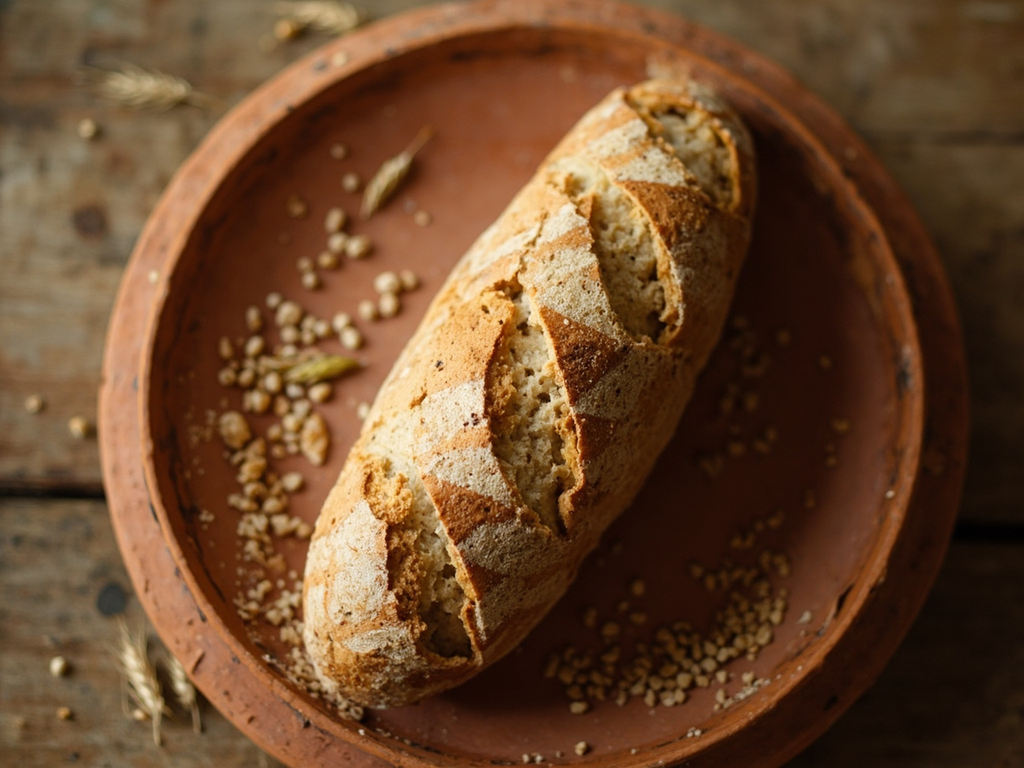
Ta — conical emmer sourdough bread
Why this dish? The conical loaf is the primary offering placed at Abydos, the holy city of Osiris, before his cenotaph. Sprouting the grain and then rebirthing it as leavened bread is the exact image of the god who died and was resurrected; no altar of Osiris was opened without it.
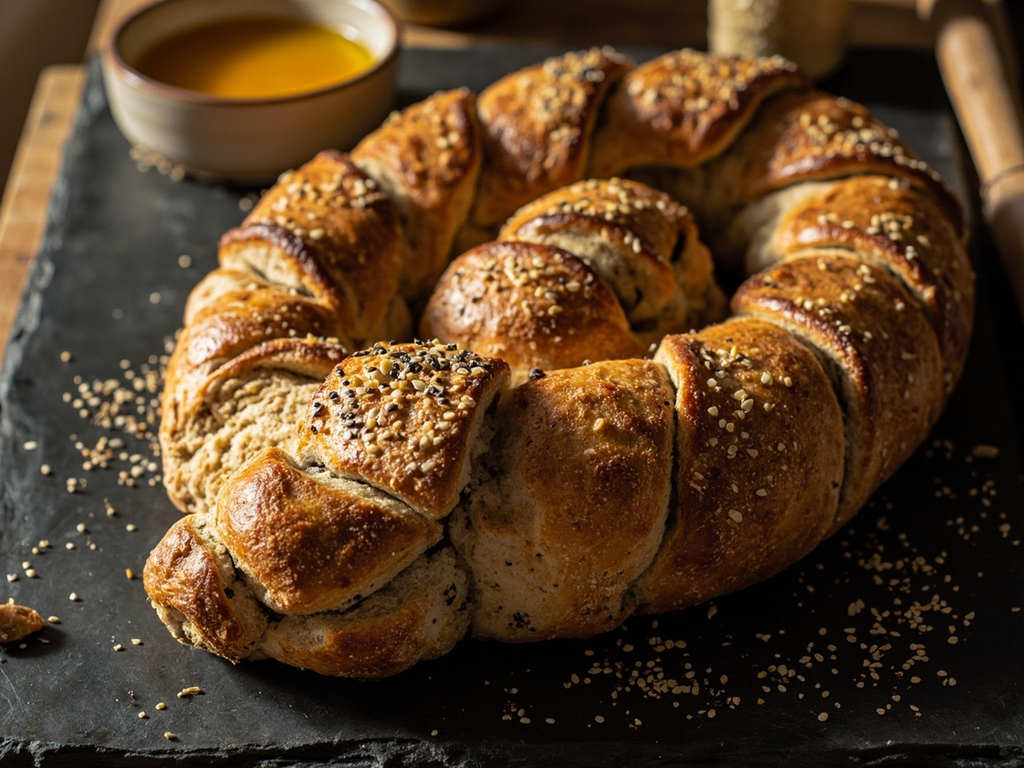
A dense, slightly tangy bread made from emmer flour (an ancient wheat) with a natural sourdough starter, shaped into a cone or thick disk and baked in a clay oven. It was the daily bread of the living and the eternal food of the dead.
Approach, you who still breathe. See this bread set upon my table of eternity: it is my body, the grain that is buried and rises again. My priests at Abydos ground the emmer on the millstone, let the dough sour overnight as the Nile lingers, then baked it until it sounded hollow. Eat of it and remember: what dies beneath the earth always returns as an ear of grain.
- •Emmer flour (hulled wheat) — as needed, freshly ground (base)
- •Natural sourdough starter (barley or sour dough) — one part (leavening and acidity)
- •Nile water — as needed for dough (hydration)
- •Desert salt (food-grade natron) — a pinch (seasoning)
Ta — conical emmer sourdough bread
A dense, slightly tangy bread made from emmer flour (an ancient wheat) with a natural sourdough starter, shaped into a cone or thick disk and baked in a clay oven. It was the daily bread of the living and the eternal food of the dead.
Why this dish? The conical loaf is the primary offering placed at Abydos, the holy city of Osiris, before his cenotaph. Sprouting the grain and then rebirthing it as leavened bread is the exact image of the god who died and was resurrected; no altar of Osiris was opened without it.
Approach, you who still breathe. See this bread set upon my table of eternity: it is my body, the grain that is buried and rises again. My priests at Abydos ground the emmer on the millstone, let the dough sour overnight as the Nile lingers, then baked it until it sounded hollow. Eat of it and remember: what dies beneath the earth always returns as an ear of grain.
Ingredients (period version)
- Emmer flour (hulled wheat) — as needed, freshly ground (base)
- Natural sourdough starter (barley or sour dough) — one part (leavening and acidity)
- Nile water — as needed for dough (hydration)
- Desert salt (food-grade natron) — a pinch (seasoning)
Ingredients
- Einkorn or small spelt flour — 500 g (base)
- Active natural sourdough starter — 150 g (leavening and acidity)
- Warm water — 300 ml (hydration)
- Salt — 9 g (seasoning)
Method
- Mix flour, starter, and water; let rest 30 min (autolyse).
- Add salt and knead until a supple dough forms.
- Let rise 3–4 hours at room temperature until doubled.
- Shape into a thick cone or domed disk; place on a floured baking sheet.
- Let proof 1 hour, then bake at 230°C for 30–35 minutes until golden brown and hollow-sounding when tapped.
How it was made : Egyptians baked bread in preheated conical clay molds (bedja) or as flat loaves on the walls of a bell-shaped oven. Analysis of bread found in tombs shows that dough was sometimes mixed with millstone grit — hence the worn teeth of mummies.
The contemporary twist : Serve sliced with a drizzle of toasted sesame oil and a touch of honey: the bread of the gods, brunch-style.
Sources : Delwen Samuel, archaeobotanical research on bread and beer at Amarna · Pierre Tallet, La cuisine de l'Égypte ancienne
Osiris · Charactorium