 Flip the card
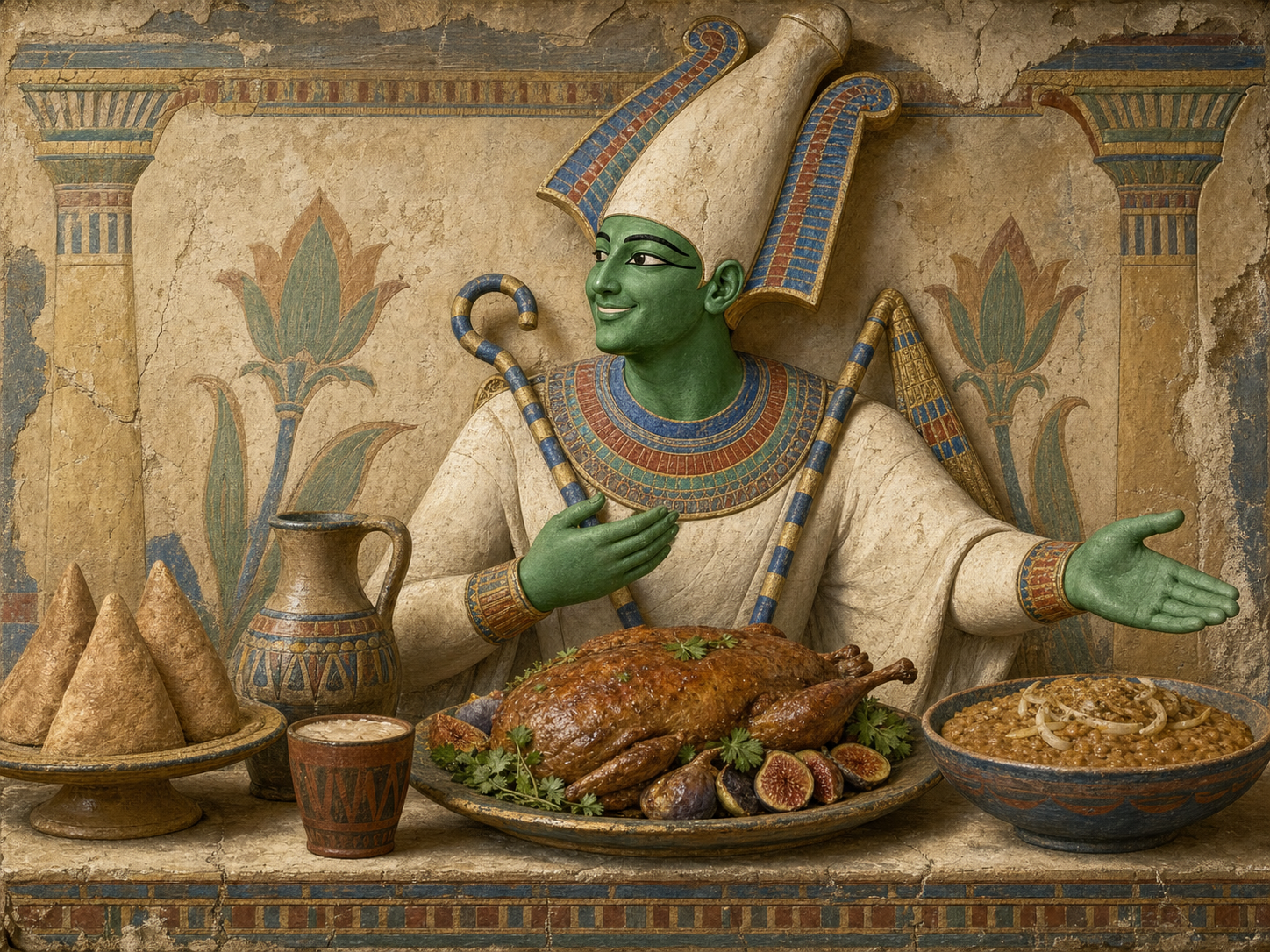
Osiris at the table
On the menu
The offering table (hotep)
In ancient Egypt, meals were not served in successive courses: a funerary offering table, the *hotep*, was set before the statue or mummy of the god and the deceased. The formula *hotep di nesu* (an offering which the king gives) symbolically activated conical loaves, beer jars, poultry, vegetables, fruits, and cakes arranged together. Everything was presented at once, abundant and piled high, so that the *ka* (vital force) of Osiris and the dead could feed on it. Bread and beer formed the invariable foundation; festive meat, everyday vegetables, and preserved sweets completed the altar.
Signature : Sprouted emmer (barley and wheat of the Nile)
The bread-beer pairing of emmer and barley is the soul of every Egyptian offering. The grain that is sprouted, dies under the millstone, and is reborn as leavened bread is the very emblem of Osiris: the Egyptians planted 'Gardens of Osiris,' molds of silt sown with barley that were watered to turn green, an image of his resurrection.
click to flip back
Osiris at the table
5 period recipes
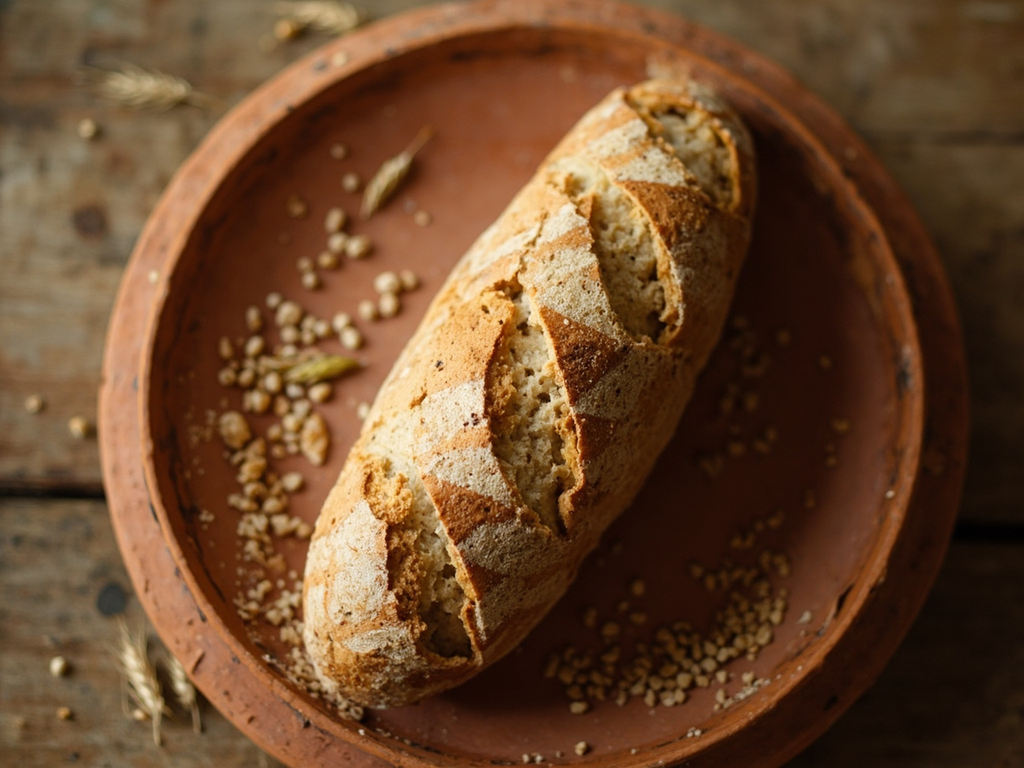 Offering
Ta — conical emmer sourdough bread
Foundation of the offering table (ta bread)
🫙 🧂· 5 h (including rising)
View the recipe
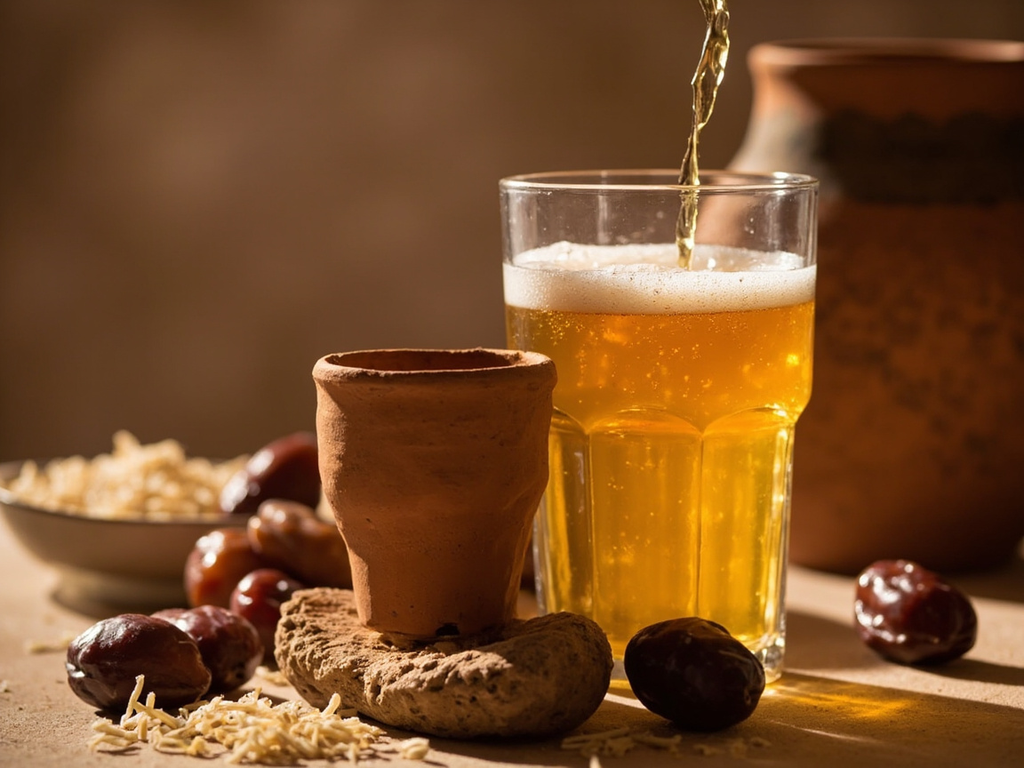 Drink
DrinkHenqet — barley offering beer
Libation of the offering table (henqet)
🫙 🍋· 4 days (including fermentation)
View the recipe
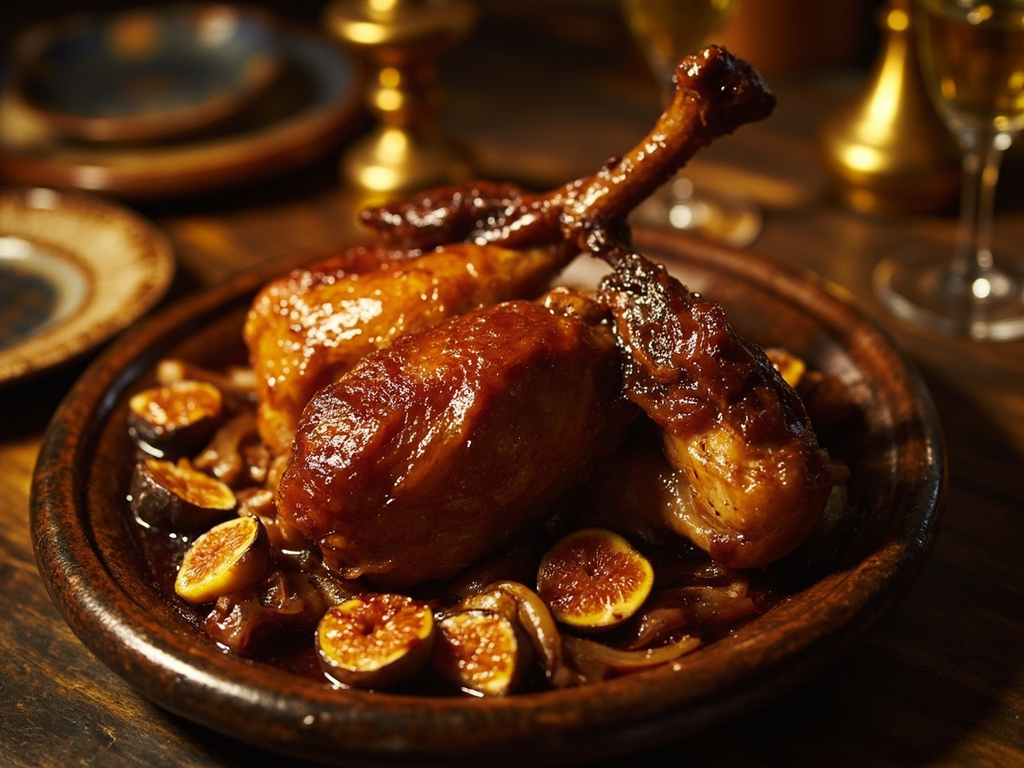 Festive
Honey-glazed roast goose with figs and coriander
Centerpiece of the funerary banquet
🍯 🍄 🧂· 1 h 30
View the recipe
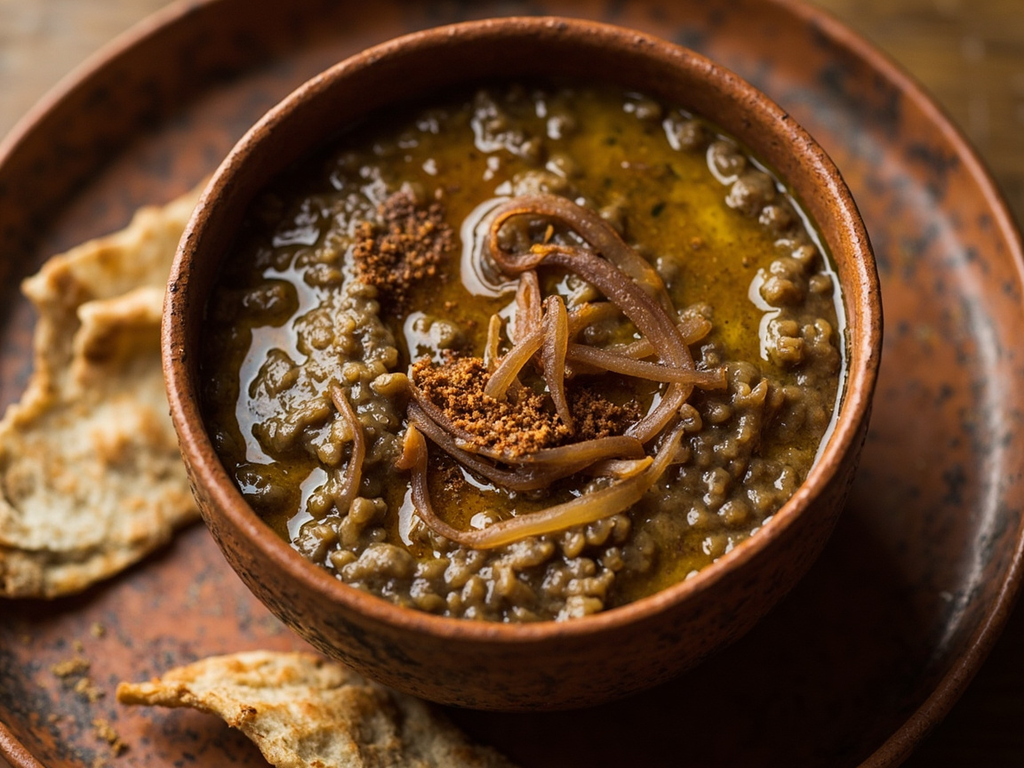 Everyday
Lentil purée with onion and cumin
Everyday dish of the Nile people
🧂 🍄· 50 min
View the recipe
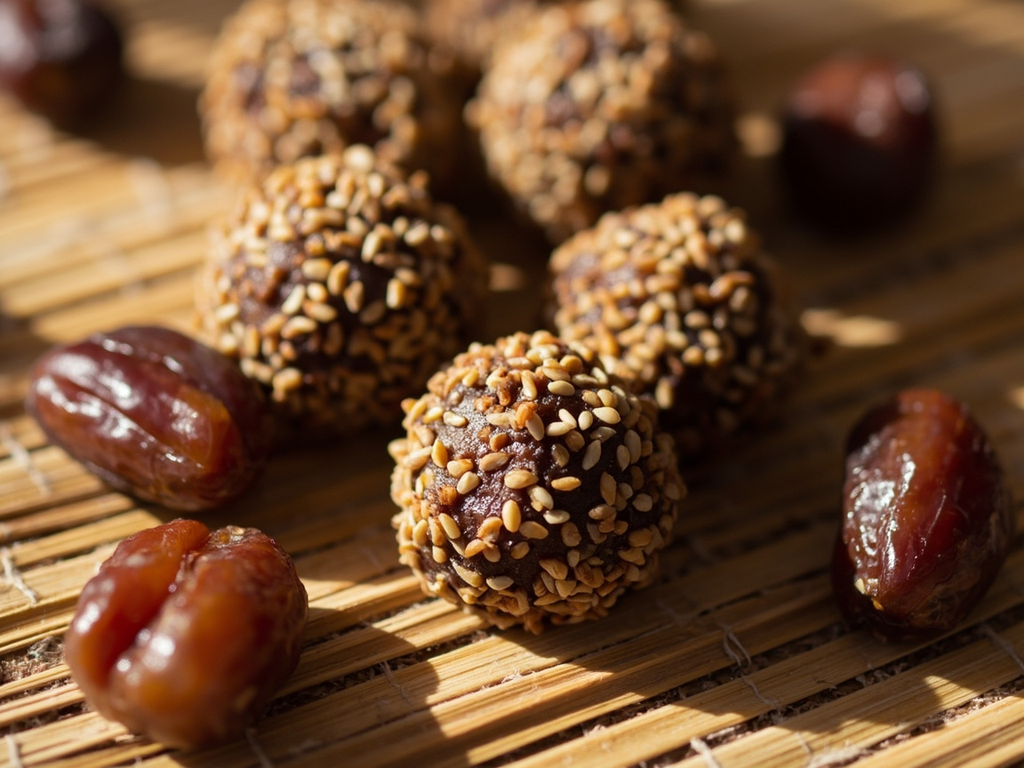 Preserving
Shat — pressed date, fig, and tiger nut cakes
Preserved and travel sweet (shat cake)
🍯· 30 min
View the recipe