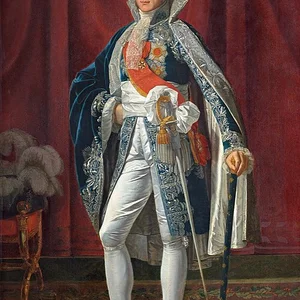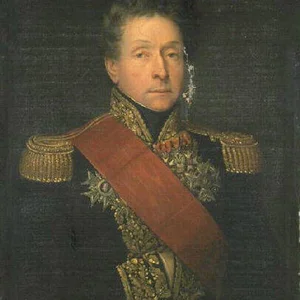

French general born in 1773, Baron of the Empire under Napoleon I. He took part in the major Napoleonic campaigns and was appointed Baron of Saint-Avold. His name lives on through the Pelleport metro station in Paris (line 3bis).
Pierre de Pelleport(1773 — 1855)
Pierre de Pelleport
France
8 min read
Frequently asked questions
Key Facts
- Born on 3 October 1773 in Bordeaux
- Appointed Baron of Saint-Avold under the Napoleonic Empire
- Took part in the military campaigns of the Revolution and the Empire
- His name given to a Paris street and metro station (line 3bis)
- Died on 13 July 1838
Works & Achievements
Like many young officers of his generation, Pelleport earned his spurs during the Revolutionary Wars. These formative campaigns gave him the experience needed to climb the ranks of the military hierarchy.
Pelleport took part in the great campaigns of the Empire in Germany and Italy. His conduct under fire and his qualities as a commander earned him promotion to the rank of general and the title of Baron of the Empire.
Napoleon conferred upon Pelleport the title of Baron of the Empire, a distinction reserved for officers who had rendered distinguished service. This title, associated with the name of Saint-Avold, officially consecrated his place within the new meritocratic imperial nobility.
After 1815, Pelleport had to adapt to the return of the Bourbons. Some generals were reinstated in the royal army, others placed on half-pay, navigating between past loyalties and present necessities — a moral ordeal characteristic of his generation.
Anecdotes
Pierre de Pelleport joined the revolutionary army in his youth, at the height of political upheaval. Navigating the Revolution, the Consulate, the Empire, and the Restoration, he served under no fewer than five different political regimes — embodying the singular fate of officers of his generation, who were forced to adapt to the constant fractures reshaping France.
During the Napoleonic campaigns, Pelleport distinguished himself under fire and showed a strong sense of command. Napoleon, who personally rewarded his most deserving officers, granted him the title of Baron of the Empire — a mark of exceptional recognition reserved for a military elite. This title, linked to the name of Saint-Avold in Lorraine, rooted his imperial nobility in a specific geographical tradition.
After the defeat of Waterloo in 1815, Pelleport had to navigate between loyalty to his Bonapartist past and the necessity of coexisting with the restored Bourbons. Many officers of the Empire were placed on half-pay, reduced to a precarious and morally difficult existence; for those who, like Pelleport, survived this period, longevity itself became a form of resistance.
Dying in 1855 at the remarkable age of 82, Pierre de Pelleport had lived through nearly the entire first half of the nineteenth century, from the Revolution to the Second Empire. His name lives on today in the geography of Paris: the Pelleport metro station, on line 3bis in the 20th arrondissement, quietly reminds commuters of the existence of this now-forgotten general.
Primary Sources
His Majesty the Emperor and King, wishing to give a mark of his satisfaction for services rendered, has conferred the title of Baron of the Empire upon Pierre de Pelleport, general officer of his armies, with attachment to the name of Saint-Avold.
General Pelleport served in the armies of the Republic and the Empire for more than twenty consecutive years, having taken part in the principal campaigns in Germany and Italy, and distinguished himself by his zeal and bravery.
Among the barons created by imperial decree appear several general officers, including the Baron de Saint-Avold (Pierre de Pelleport), in recognition of his eminent service record under the French colors.
The noble titles conferred upon officers of the Empire, including those of baron, are registered under the seal of the State and are heritable under the conditions laid down by the present senatus-consultum establishing the imperial nobility.
Key Places
The Pelleport metro station on line 3bis keeps the general's name alive in the Parisian cityscape. The Pelleport neighborhood and street in the 20th arrondissement preserve the memory of this soldier of the Empire.
A town in Lorraine whose name is tied to the title of Baron of Saint-Avold granted to Pelleport. This kind of geographical attachment was common practice under the Empire, used to root the new imperial nobility in the national territory.
A cornerstone of French military memory, the Invalides houses Napoleon's tomb and the army archives. It is here that the service records of the Empire's general officers, including Pelleport, are preserved.
Pelleport took part in the great Napoleonic campaigns across Europe. These regions — from the Po Valley to the plains of Germany — were the battlegrounds where he forged his reputation as a seasoned general officer.
Napoleon's official residence and the heart of imperial power, the Tuileries was where generals received their titles, assignments, and direct favors from the Emperor.
Typical Objects

The personal weapon of the Empire's generals was a richly ornamented saber, often engraved with its owner's coat of arms. It symbolized both military status and the victories in which its bearer had taken part.

An official document signed by Napoleon and sealed with the imperial arms, certifying the creation of the title of baron. For Pelleport, this parchment represented the crowning achievement of a military career in the service of Napoleonic France.

Blue coat with gold embroidery, gold epaulettes, bicorne hat adorned with tricolor plumes: the generals' uniform was both a combat dress and a badge of rank, allowing the senior officer to be immediately identified on the battlefield.

Napoleonic generals used detailed topographic maps to plan their maneuvers and anticipate enemy movements. These hand-annotated documents were essential for conducting large-scale military operations.

Created by Napoleon in **1802**, the Legion of Honor rewarded acts of bravery and services rendered to France. A general who was also an imperial baron was almost certainly decorated with it and wore it on all official occasions.

Many officers of the Empire kept notebooks recording their campaigns, tactical observations, and personal reflections. These documents are today invaluable primary sources for historians of the Napoleonic period.
School Curriculum
Vocabulary & Tags
Key Vocabulary
Daily Life
Morning
A general of the Empire began his day at dawn, especially on campaign. He would review his troops, read the scouts' reports, and issue marching orders. When garrisoned or in peacetime, the morning was devoted to official correspondence and the administrative business of command.
Afternoon
The afternoon was the time for inspections, military exercises, and staff meetings. On campaign, generals studied maps with their officers and planned the next day's movements. In peacetime, they received junior officers or attended audiences with their superiors in the chain of command.
Evening
When not on active operations, generals' evenings had a more social character: dinners among officers, reading the bulletins of the Grande Armée or the political gazettes, and sometimes writing up the campaign journal. In the field, the evening was spent drafting battle reports and preparing the following day's orders.
Food
The food of a general officer differed radically from that of the common soldier. On campaign, Pelleport had access to a field kitchen and could obtain meats, bread, and local wines requisitioned from the territories the army passed through. In France, his table reflected his social rank: generous meals and quality wines, in keeping with the gastronomic traditions of the era.
Clothing
Off duty, an Imperial baron wore elegant civilian bourgeois dress — a dark frock coat, trousers, a tall white cravat, and a top hat. On duty, his general's uniform — a blue dress coat richly embroidered in gold, epaulettes, and a decorated bicorne hat — made his rank and decorations unmistakably clear, with the Légion d'honneur worn prominently.
Housing
A general baron of the Empire enjoyed comfortable accommodations: a private mansion in Paris or a residence in the provinces, with servants and household staff. On campaign, he occupied the best available rooms at inns or in private homes, sometimes even in requisitioned châteaux, following the customary practice of the Napoleonic armies.
Historical Timeline
Period Vocabulary
Liens externes & ressources
Références
Œuvres
Participation aux campagnes de la Révolution française
1792-1799
Participation aux campagnes napoléoniennes
1800-1813
Obtention du titre de baron d'Empire — baron de Saint-Avold
vers 1810-1813
Service militaire sous la Restauration
1815-1830