 flip
flipBarley maza with oil and thyme
Barley maza with oil and thyme
Why this dish? Maza, a barley flatbread or paste, was THE bread of the ordinary Greek and the foundation of the frugal diet that Pythagoras imposed on his community in Croton: grains above all, without meat or fish. It was the everyday bread of the disciples, eaten in silence and moderation.
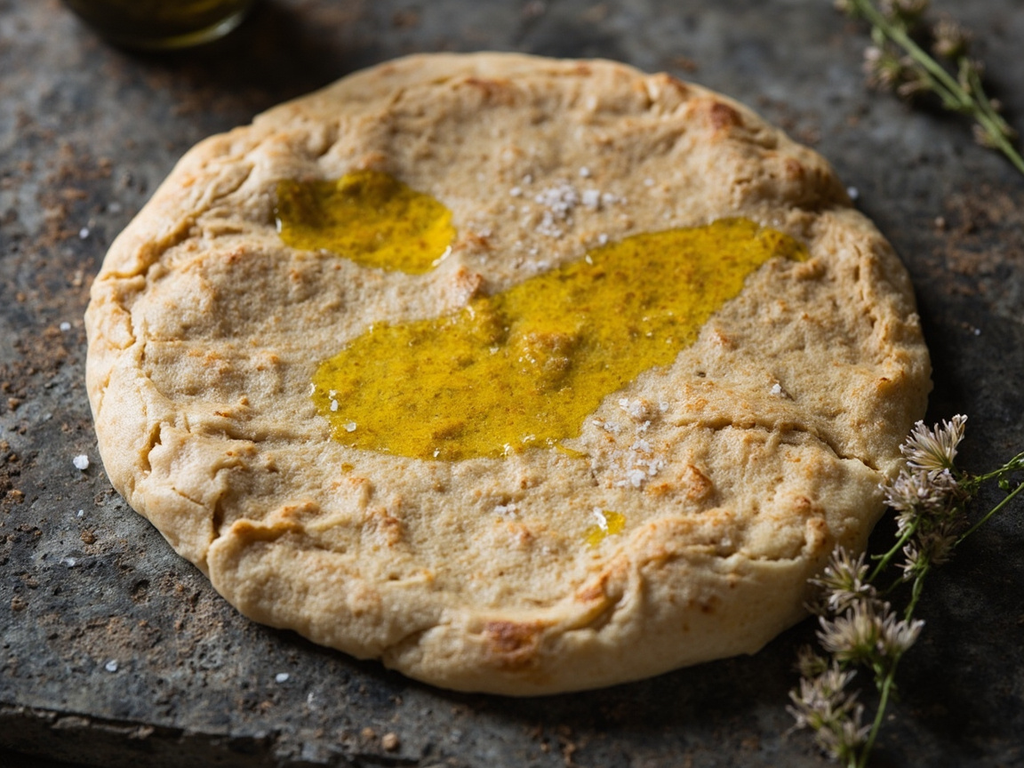
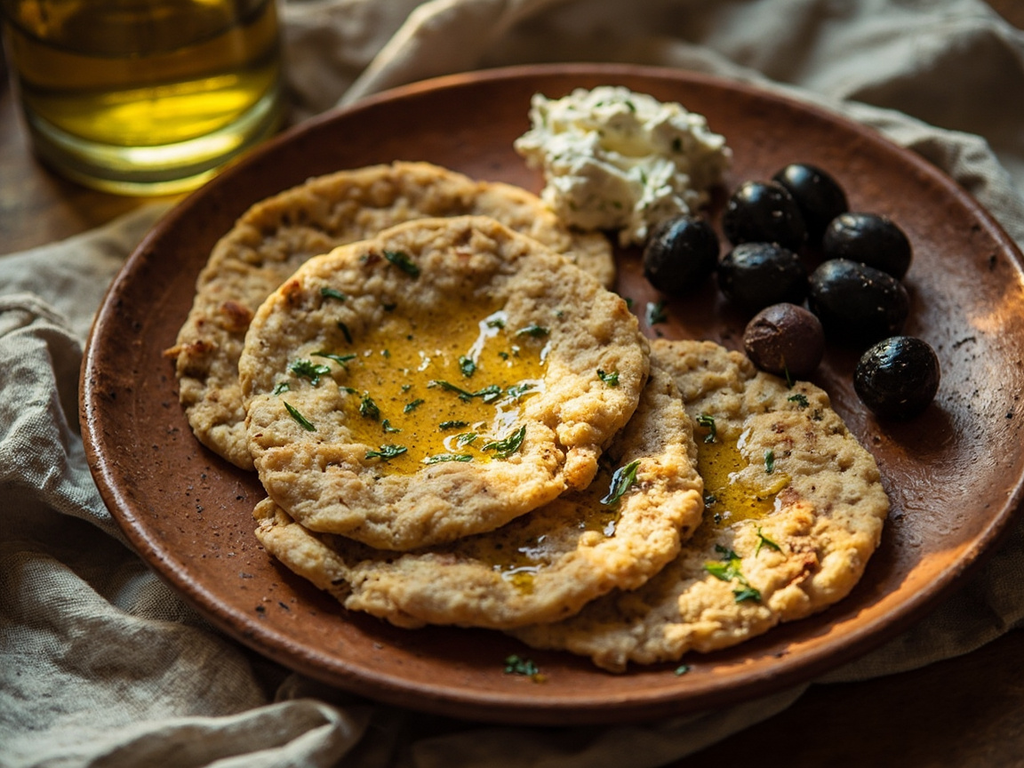
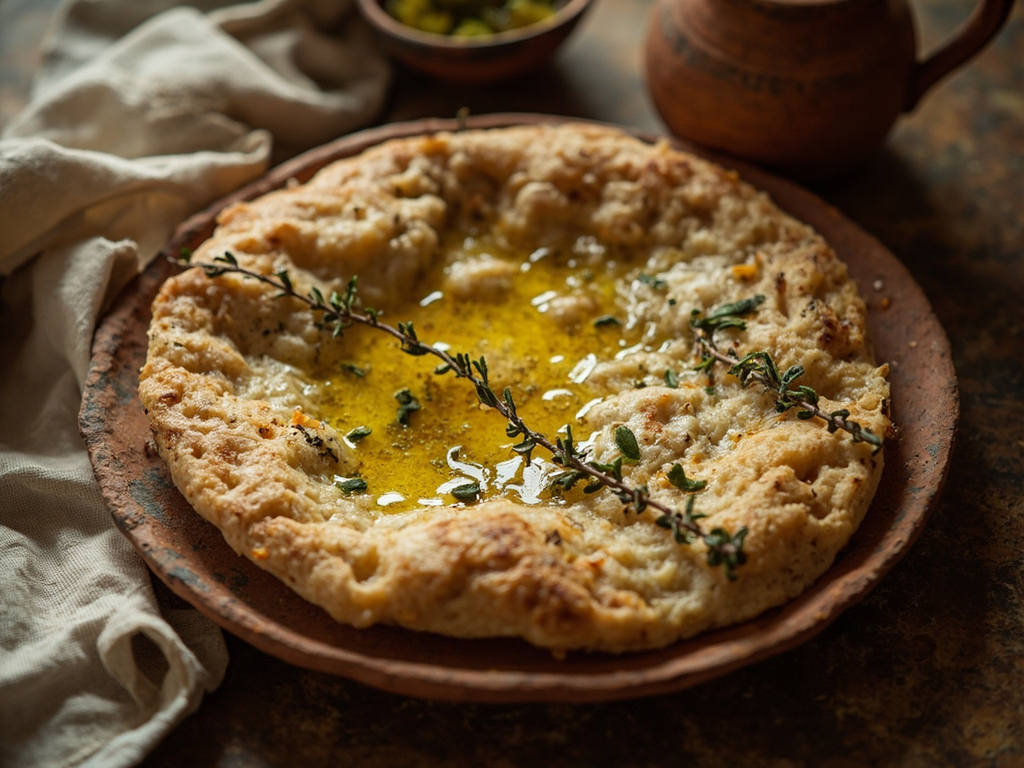
A dense flatbread of toasted and ground barley, simply bound with water and olive oil, seasoned with thyme and a pinch of salt. Rustic, slightly bitter and earthy, it is eaten to accompany vegetables or dipped in a drizzle of oil.
Approach, you who wish to learn, and see what a man eats who wants to hear the harmony of the world: barley, nothing but ground barley, pure water, and the oil of the olive tree. We first toast the grains to awaken their soul, then we grind them and knead them without haste, for what is made with measure nourishes better than what is made with greed. Expect from me neither flesh nor fish: who knows what soul hides in the beast? Eat little, eat simply, and let your belly never be the master of your mind.
- •Barley grains — two full handfuls (grain base, toasted then ground)
- •Spring water — enough to bind (binder)
- •Olive oil — a good drizzle (fat, binder)
- •Fresh thyme — a few sprigs (flavoring)
- •Sea salt — a pinch (seasoning)
Barley maza with oil and thyme
A dense flatbread of toasted and ground barley, simply bound with water and olive oil, seasoned with thyme and a pinch of salt. Rustic, slightly bitter and earthy, it is eaten to accompany vegetables or dipped in a drizzle of oil.
Why this dish? Maza, a barley flatbread or paste, was THE bread of the ordinary Greek and the foundation of the frugal diet that Pythagoras imposed on his community in Croton: grains above all, without meat or fish. It was the everyday bread of the disciples, eaten in silence and moderation.
Approach, you who wish to learn, and see what a man eats who wants to hear the harmony of the world: barley, nothing but ground barley, pure water, and the oil of the olive tree. We first toast the grains to awaken their soul, then we grind them and knead them without haste, for what is made with measure nourishes better than what is made with greed. Expect from me neither flesh nor fish: who knows what soul hides in the beast? Eat little, eat simply, and let your belly never be the master of your mind.
Ingredients (period version)
- Barley grains — two full handfuls (grain base, toasted then ground)
- Spring water — enough to bind (binder)
- Olive oil — a good drizzle (fat, binder)
- Fresh thyme — a few sprigs (flavoring)
- Sea salt — a pinch (seasoning)
Ingredients
- Barley flour (or ground toasted barley) — 200 g (base)
- Warm water — 120 to 150 ml (binder)
- Extra virgin olive oil — 3 tbsp (fat)
- Fresh thyme leaves — 1 tsp (flavoring)
- Salt — 1 pinch (seasoning)
Method
- If starting from barley grains, dry-toast them in a pan until fragrant, then grind finely.
- In a bowl, mix the barley flour, salt, and thyme.
- Add the oil, then gradually add warm water while kneading, until you get a soft but not sticky dough.
- Shape into a flatbread about 1 cm thick.
- Cook on a hot stone or dry pan, 4 to 5 minutes per side, until golden.
- Serve warm, drizzled with olive oil.
How it was made : Maza was the quintessential Greek food, as opposed to leavened wheat bread (artos), which was rarer and more urban. It was eaten raw (simple kneaded barley paste) or cooked, sometimes with added honey, cheese, or oil. Barley was toasted before grinding, producing alphita, the basic flour of the common people.
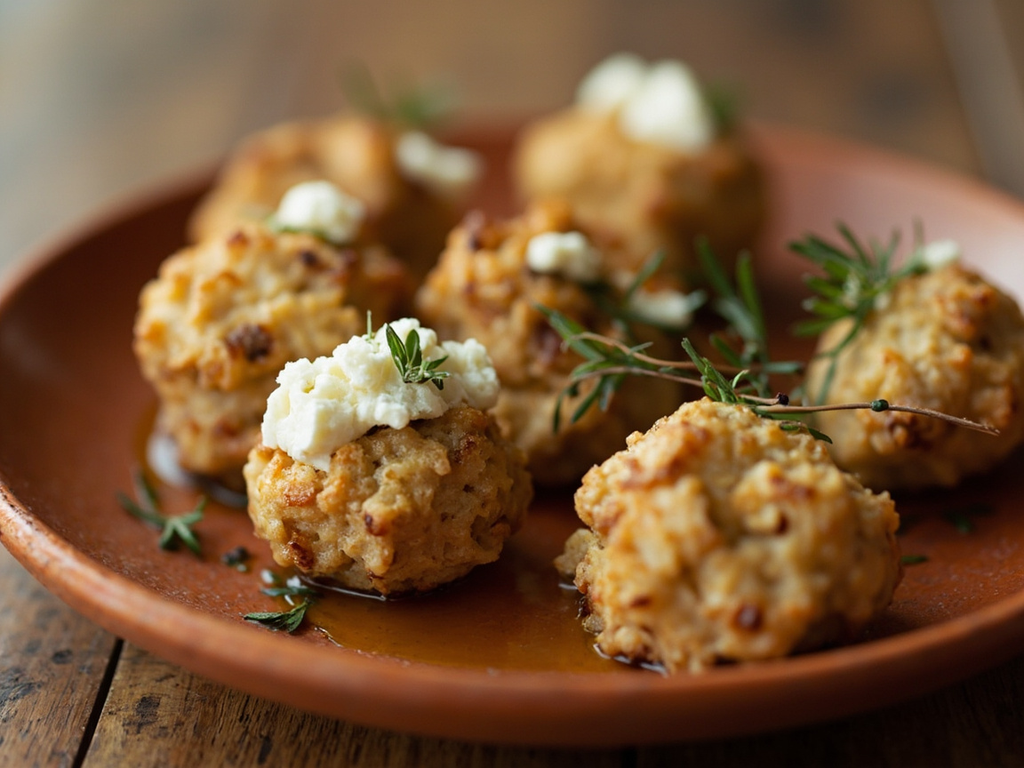
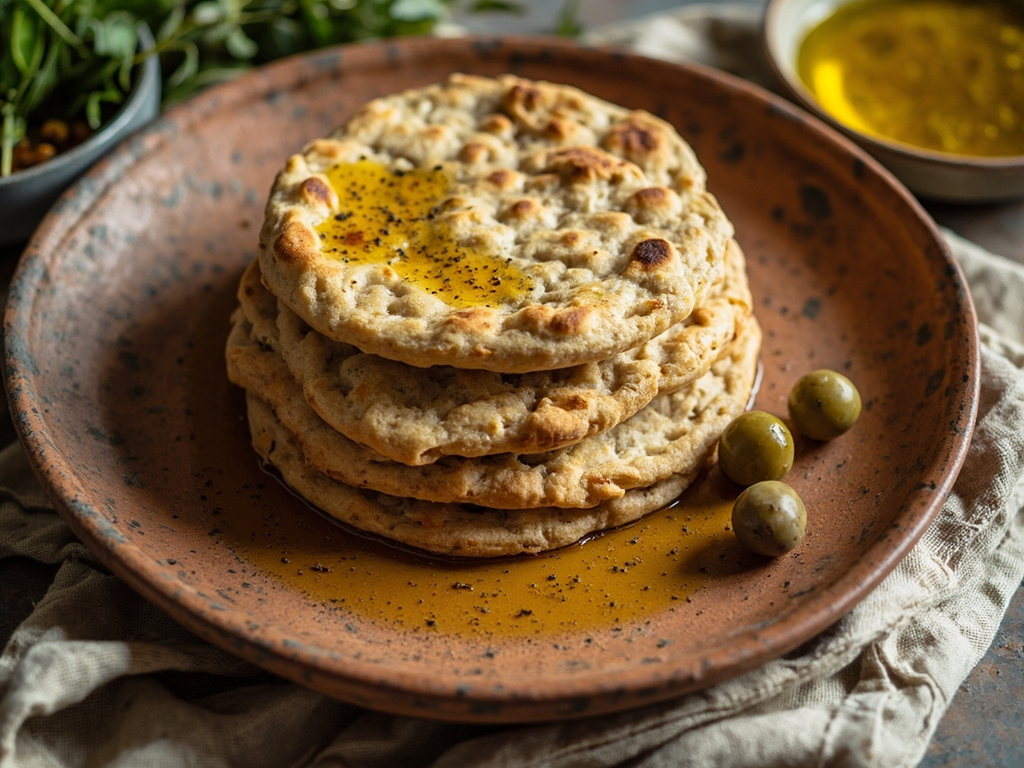
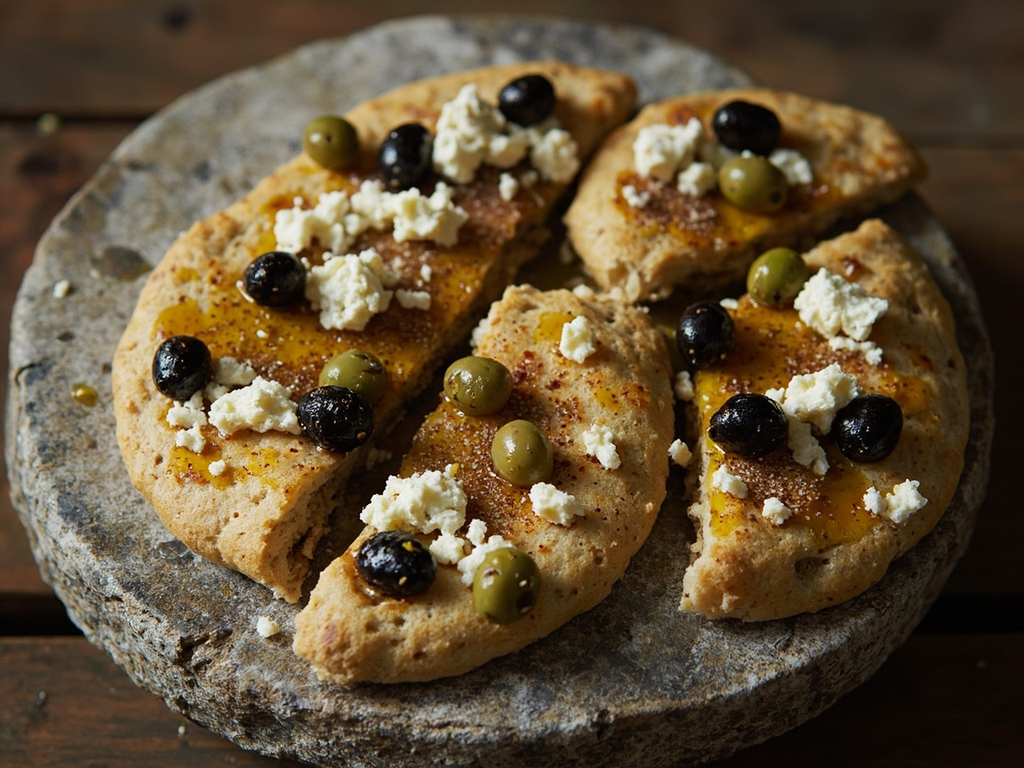
The contemporary twist : Serve as mini appetizer flatbreads on a slate board, with a drizzle of olive oil and a black olive — the philosopher's snack, tapas style.
Sources : Andrew Dalby, Siren Feasts: A History of Food and Gastronomy in Greece · Athenaeus of Naucratis, The Deipnosophists (The Banquet of the Learned)
Pythagoras · Charactorium