 Flip the card
Pythagoras at the table
582 av. J.-C. — 490 av. J.-C.
On the menu
Sitos & opson (the grain base and its accompaniment)
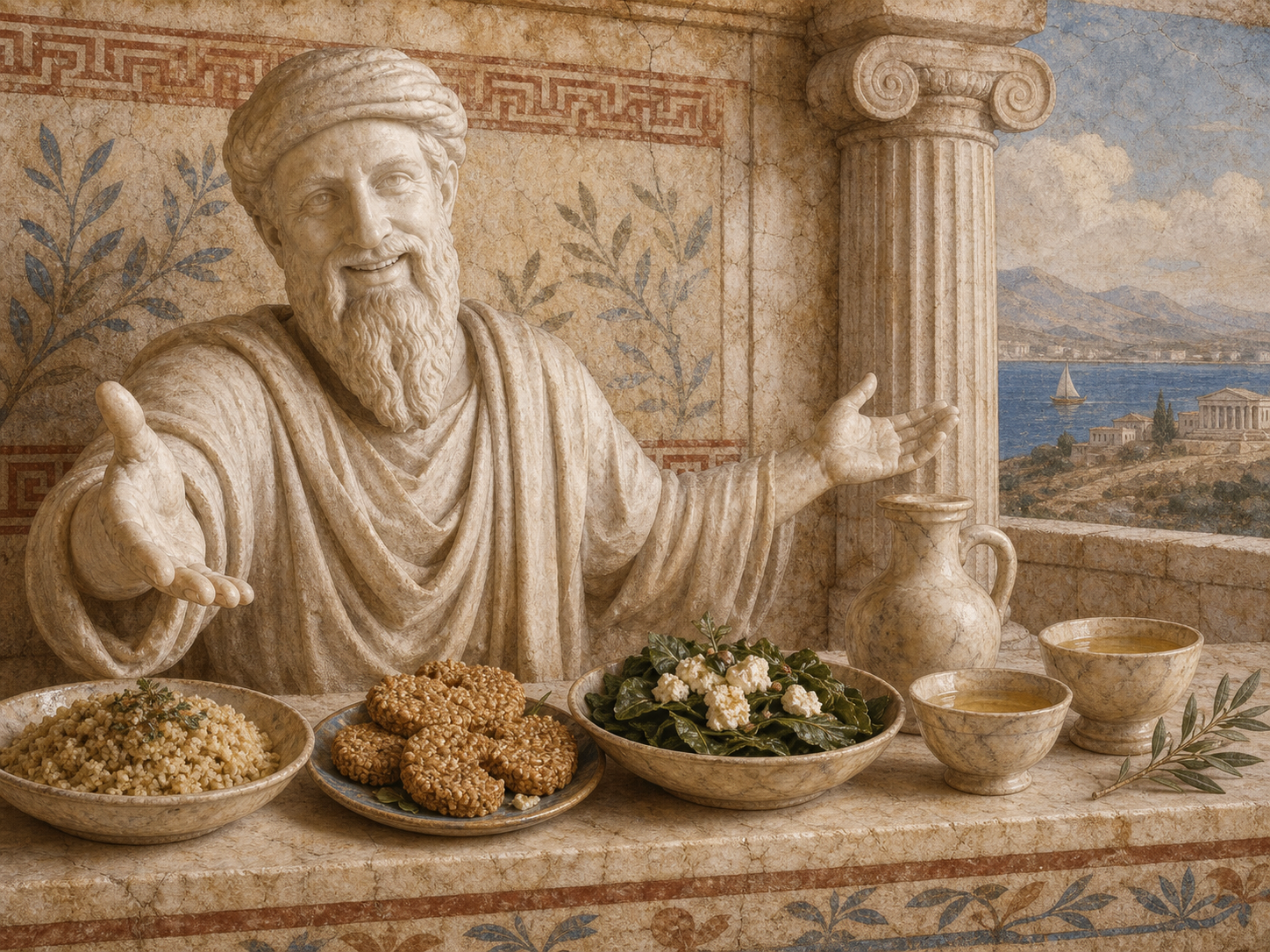
The ancient Greek meal is not thought of in terms of starter-main-dessert, but as two poles: the sitos, the nourishing grain base (barley bread, flatbread, or maza porridge), and the opson, what accompanies it and gives it flavor (vegetables, cheese, olives, honey). At Pythagoras' table, opson excludes meat and fish: metempsychosis forbids devouring a soul. One eats sparingly, almost as an act of purification, and beans are banned for ritual reasons. Sweetness (honey, fig, sesame) serves as celebration.
Signature : Greek honey (thyme honey)
In a kitchen without animal flesh, honey — especially the fragrant thyme honey of the Aegean hills — becomes the great enhancer: it sweetens festival cakes, perfumes the sacred drink, and softens the austerity of the diet. It embodies the permitted against the forbidden (the bean), the pure against the impure.
click to flip back
Pythagoras at the table
582 av. J.-C. — 490 av. J.-C.
4 period recipes
 Everyday
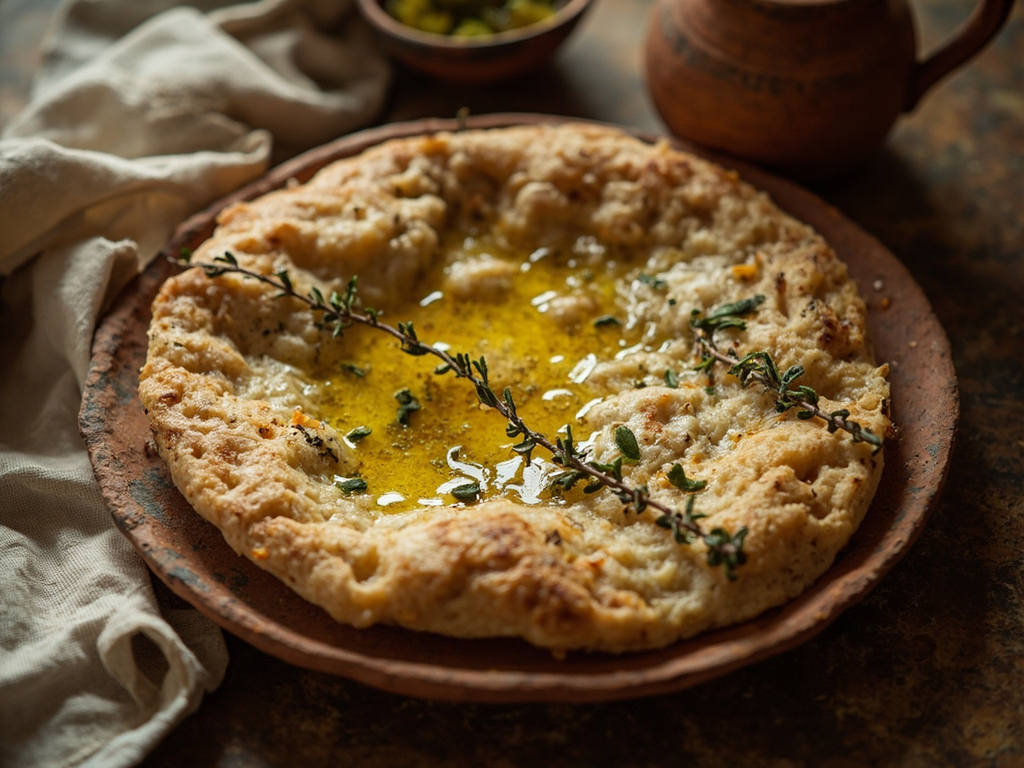
Barley maza with oil and thyme
Sitos — the grain base of the meal
☕ 🧂· 30 min
View the recipe
 Festive
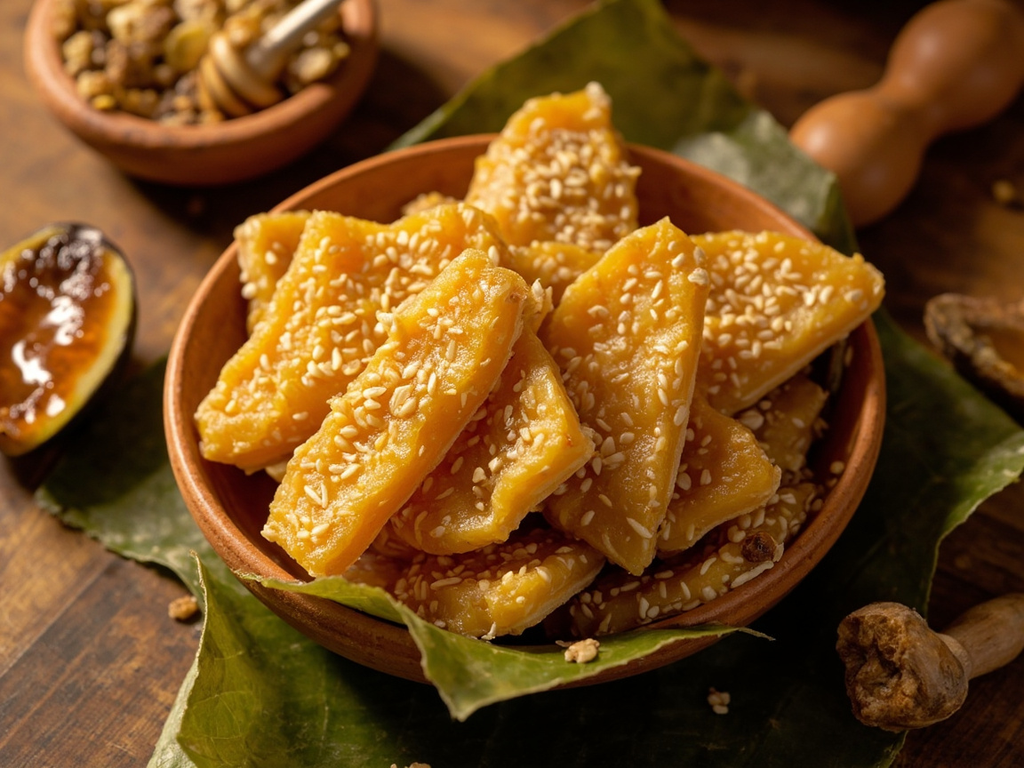
Sesamis — sesame honey cakes
Tragemata — the sweets of the second course of the banquet
🍯· 25 min
View the recipe
 Remedy
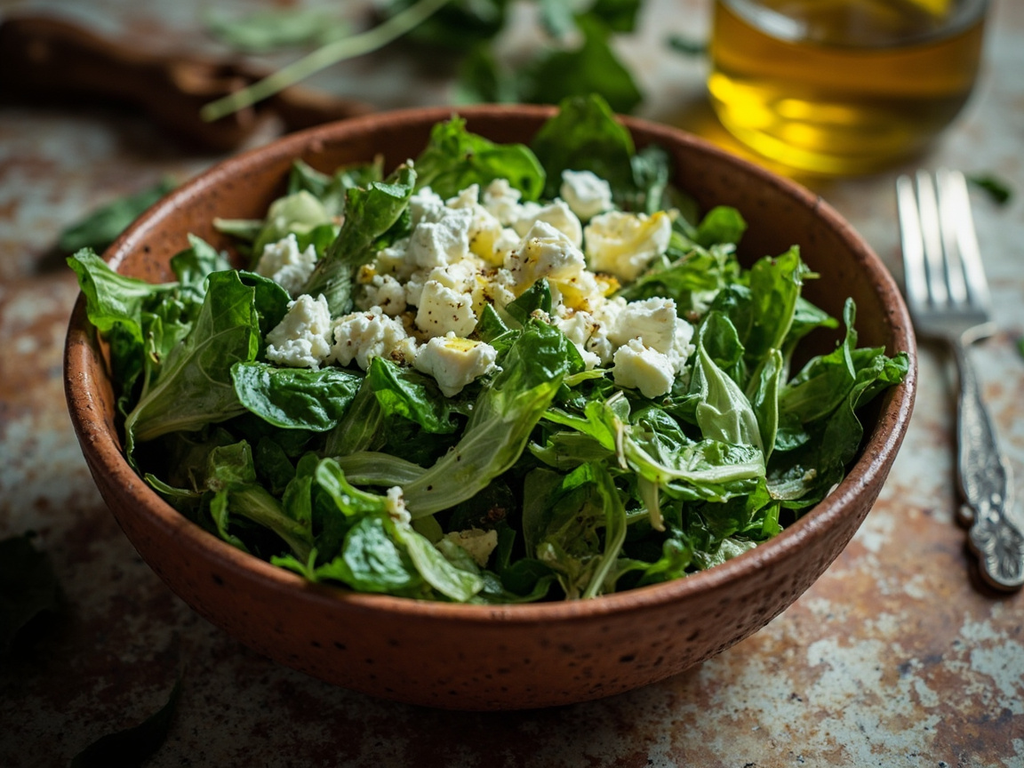
Mallow and fresh cheese with oil and vinegar
Opson — the vegetable accompaniment to sitos
🍋 🧂· 15 min
View the recipe
 Drink
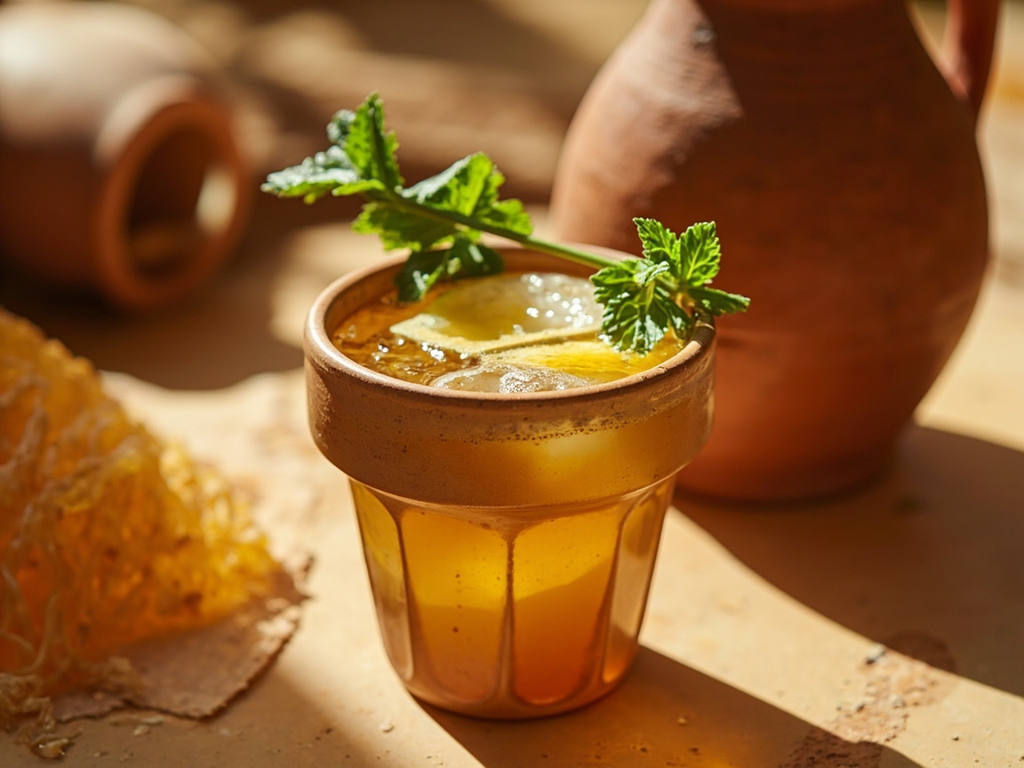
DrinkMelikraton — sweet non-fermented honey drink
Poma — the drink, also offered as a libation
🍯· 15 min
View the recipe