 flip
flipRoasted Beef Leg with Onions and Coriander
Roasted Beef Leg with Onions and Coriander
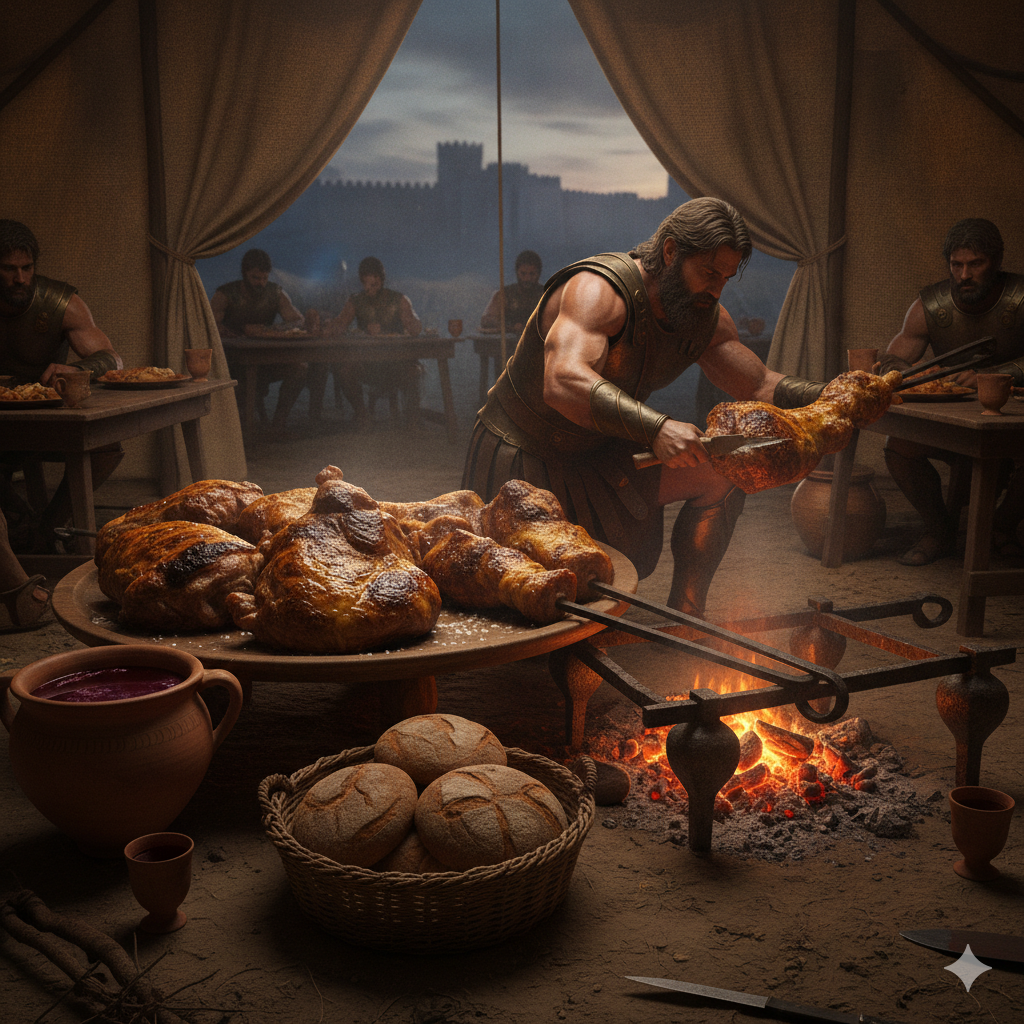
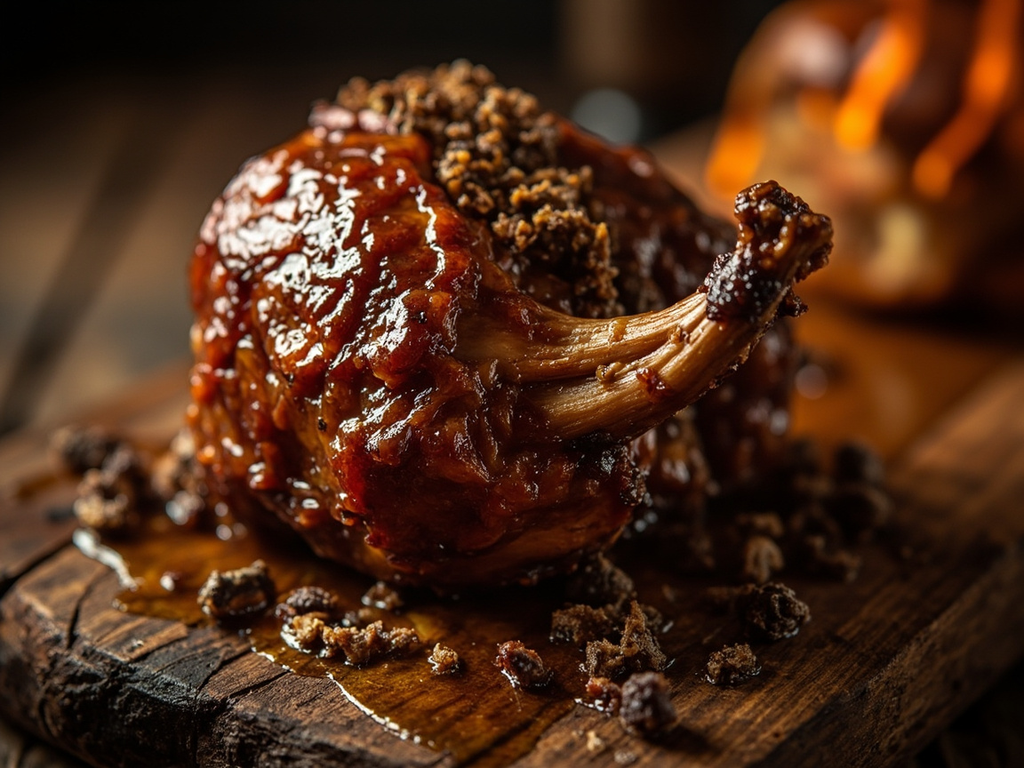
Why this dish? Fat beef is the most prestigious offering presented to Ra at the great solar temple of Karnak. During festivals, hundreds of cattle were sacrificed and the foreleg (khepesh), still quivering, was presented to the god as the choicest portion before being shared.
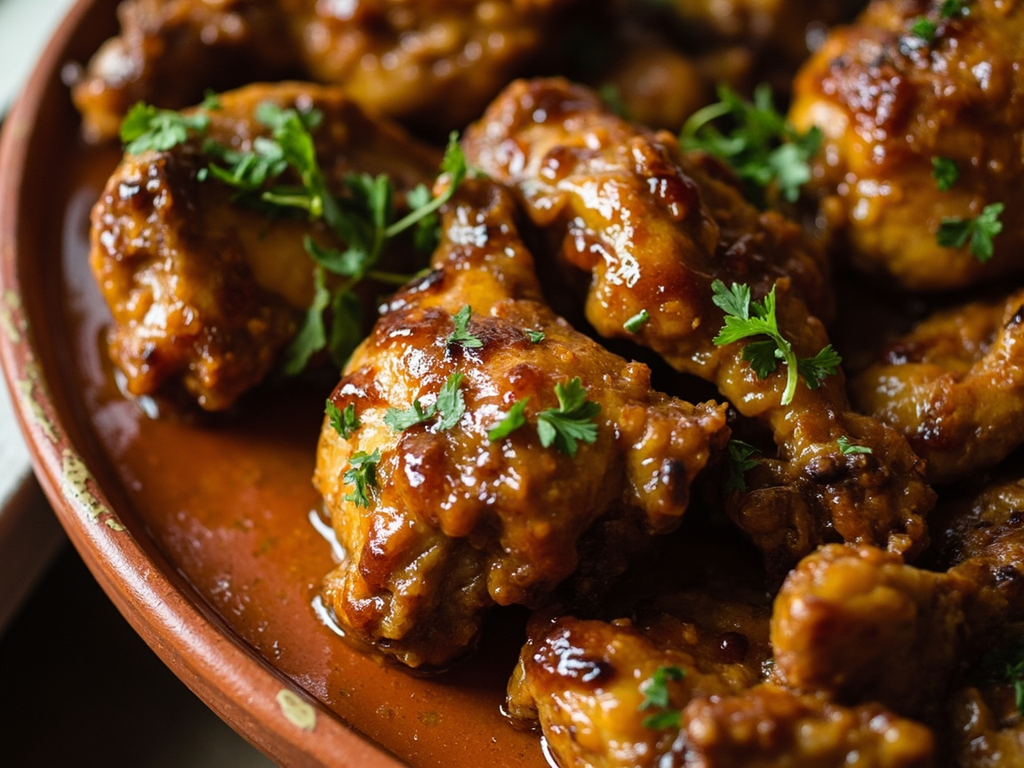
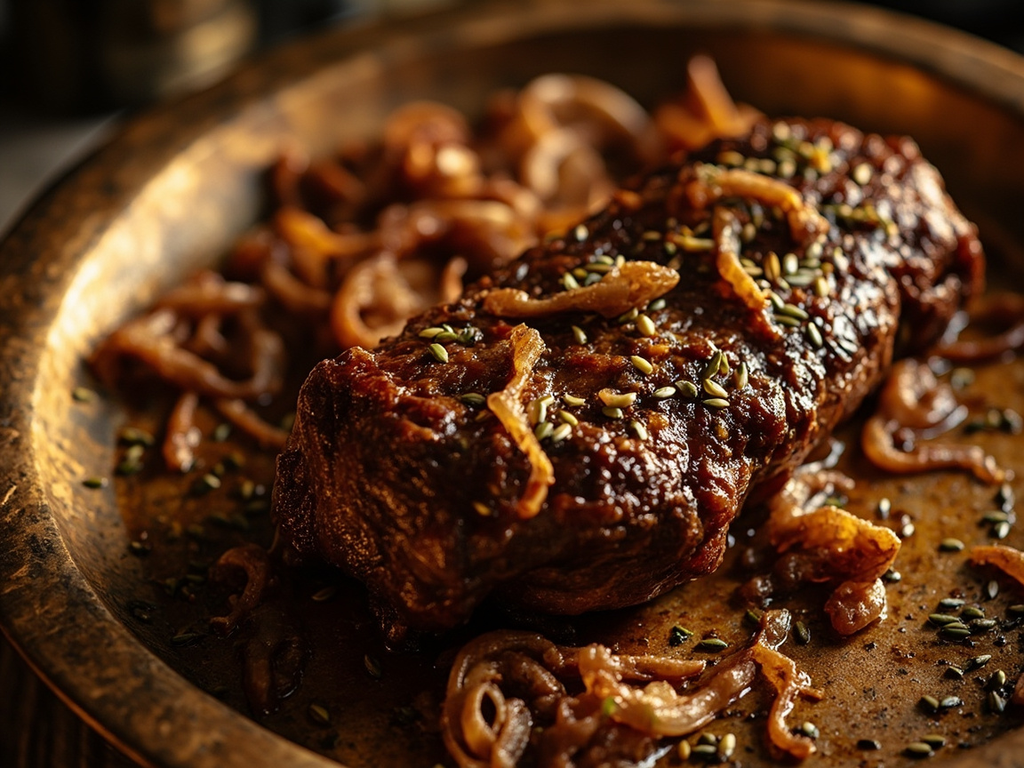
A piece of beef slowly roasted, basted with fat, flavored with onion, garlic, coriander, and cumin. A festive meat, reserved for great occasions and the gods.
I, Ra, master of festivals, accept the fat bull brought to me adorned with bandages. Let the foreleg be cut and set before my face, for it is the portion of the king of the gods! My servants rub it with fat, crushed onion, and the coriander of the Delta, then turn it over the embers until the perfume rises to the sky like incense. What I have tasted with my breath, share among yourselves: thus the god's table also nourishes men.
- •Leg or piece of fat beef — one large piece (festive meat)
- •Beef fat — for basting (cooking and sheen)
- •Onions — several (aromatic)
- •Garlic — a few cloves (aromatic)
- •Coriander and cumin seeds — one measure (spices)
- •Salt — a handful (seasoning)
Roasted Beef Leg with Onions and Coriander
A piece of beef slowly roasted, basted with fat, flavored with onion, garlic, coriander, and cumin. A festive meat, reserved for great occasions and the gods.
Why this dish? Fat beef is the most prestigious offering presented to Ra at the great solar temple of Karnak. During festivals, hundreds of cattle were sacrificed and the foreleg (khepesh), still quivering, was presented to the god as the choicest portion before being shared.
I, Ra, master of festivals, accept the fat bull brought to me adorned with bandages. Let the foreleg be cut and set before my face, for it is the portion of the king of the gods! My servants rub it with fat, crushed onion, and the coriander of the Delta, then turn it over the embers until the perfume rises to the sky like incense. What I have tasted with my breath, share among yourselves: thus the god's table also nourishes men.
Ingredients (period version)
- Leg or piece of fat beef — one large piece (festive meat)
- Beef fat — for basting (cooking and sheen)
- Onions — several (aromatic)
- Garlic — a few cloves (aromatic)
- Coriander and cumin seeds — one measure (spices)
- Salt — a handful (seasoning)
Ingredients
- Beef roast (chuck or brisket) — 1.2 kg (main piece)
- Oil (or melted beef fat) — 3 tbsp (cooking)
- Onions — 3 large (aromatic)
- Garlic — 4 cloves (aromatic)
- Ground coriander seeds — 1 tbsp (spice)
- Ground cumin — 1 tsp (spice)
- Salt — to taste (seasoning)
Method
- Mix the melted fat, crushed garlic, coriander, cumin, and salt into a paste.
- Generously coat the beef and let marinate for 1 hour.
- Slice the onions and spread them in a deep dish.
- Place the meat on top, add a little water.
- Roast in the oven at 160 °C for about 2.5 hours, basting and turning regularly.
- Increase to 220 °C for the last 15 minutes to brown, then let rest before slicing.
How it was made : Butchery scenes in tombs (Saqqara, Thebes) show the slaughter of cattle and the removal of the khepesh. Grilled or boiled meat was a luxury: common people ate mostly fish and poultry. Egyptians knew onion, garlic, leek, coriander, and cumin, but neither chili nor black pepper (imported much later).
The contemporary twist : Slice thinly and arrange in a radiating fan around a center of caramelized onions — a 'beef sun' worthy of a temple table.
Sources : Pierre Tallet, La cuisine des pharaons, Actes Sud, 2003 · Butchery scenes, mastabas of Saqqara (Old Kingdom)
Ra · Charactorium