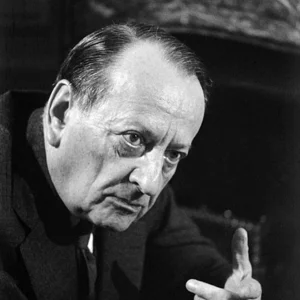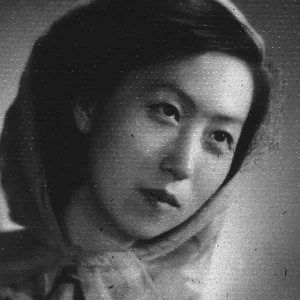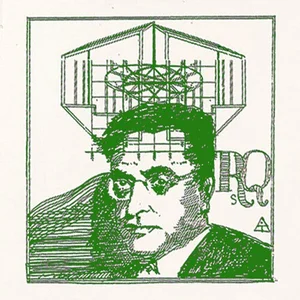

French writer, poet, and mathematician (1903–1976), co-founder of the Oulipo. Author of Zazie in the Metro and Exercises in Style, he explored formal constraints and wordplay.
Raymond Queneau(1903 — 1976)
Raymond Queneau
France
8 min read
Frequently asked questions
Famous Quotes
« A poem is a small thing, but not writing one is even less.»
« Literature is principally the art of using words.»
Key Facts
- Born 21 February 1903 in Le Havre, died 25 October 1976 in Paris
- Co-founded the Oulipo (Workshop of Potential Literature) in 1960 with François Le Lionnais
- Published Zazie in the Metro in 1959, adapted for the screen by Louis Malle in 1960
- Author of Exercises in Style (1947), 99 versions of the same mundane anecdote
- Literary director at Gallimard and director of the Encyclopédie de la Pléiade
Works & Achievements
Queneau's debut novel, in which he experiments with the phonetic transcription of spoken French and a geometrically structured narrative. Hailed as a strikingly original work, it foreshadows the whole of his future aesthetic.
The same mundane anecdote retold in 99 different ways. A landmark of experimental literature, widely studied in secondary schools to illustrate the concept of style and the relationship between form and meaning.
A playful and exuberant novel following an impertinent little girl loose in Paris. An immediate success adapted for the screen by Louis Malle, it showcases Queneau's genius for inventive and subversive language.
A revolutionary book-object made up of ten sonnets whose lines are interchangeable, generating 10^14 possible poems. An absolute masterpiece of constrained literature and of combinatorics applied to art.
A novel interweaving two narratives set 175 years apart, playing with time, history, and reverie. Considered his most formally accomplished work, it blends erudition, humor, and a vertiginous sense of temporal drift.
Queneau oversaw this encyclopedia of human knowledge published by Gallimard, assembling the foremost specialists across every discipline. An encyclopedic undertaking that occupied him for more than twenty years.
Anecdotes
In 1947, Queneau published Exercises in Style: he tells the same mundane scene — a man jostled on a Parisian bus — in 99 different ways, in alexandrines, in bureaucratic jargon, in telegraphic style... This tour de force proves that style is not an optional ornament, but the very substance of literature.
In 1961, Queneau invented Hundred Thousand Billion Poems: a book whose pages are cut into strips, allowing each line of a sonnet to be combined with lines from any of the nine others. The result is staggering: 10^14 possible poems — roughly 200 million years of reading at a rate of one poem per minute. A mathematical achievement as much as a poetic one.
As a young man, Queneau had joined André Breton's Surrealist group and practiced automatic writing. In 1929, he broke with it sharply. Far from being undone by the split, he chose to forge his own path — more rigorous and more playful at once — and this rupture proved foundational to his entire career.
Queneau admitted that he had received no scientific education in his youth. To fill this gap, he taught himself mathematics as an adult, reading treatises on logic and combinatorics. This unusual passion for a writer directly inspired him to co-found the Oulipo in 1960.
Literary director at Gallimard from the 1940s onward, Queneau also oversaw the Encyclopédie de la Pléiade, a colossal project to synthesize human knowledge. He personally selected contributors from among the finest specialists, revealing an encyclopedic curiosity worthy of the philosophers of the Enlightenment.
Primary Sources
In the S bus, in the rush hour. A chap of about 26, felt hat with a cord instead of a ribbon, neck too long, as if someone had been pulling at it. Gets off. Seen again in front of the Gare Saint-Lazare.
Howcanaystinksotho, wondered Gabriel irritably. All these people crowding around him — they did wash, didn't they?
Mathematics and literature are not two worlds foreign to each other; both proceed from the same demand for rigor and the same curiosity about the hidden structures of reality.
Oulipo is not a literary school. It is a laboratory. We seek new forms, constraints which, far from shackling creation, liberate it by forcing it to find unexpected solutions.
From a distance, at an angle, he was watching the café terrace. At that hour, the waiters were folding the chairs and closing the parasols. Night was not far off.
Key Places
Queneau's birthplace, where he spent his childhood and adolescence in a modest family. This port city, open to the world, shaped his taste for social diversity and popular speech.
Queneau studied philosophy here in the 1920s. This intellectual training fed his reflection on language, logic, and the representation of the world — threads that run through his entire body of work.
Queneau worked at Gallimard on rue Sébastien-Bottin for several decades as literary director. It was there that he rubbed shoulders with Sartre, Camus, and Gide, and oversaw major publishing projects.
Queneau lived in Neuilly during the second half of his life. It was in this suburb on the western edge of Paris that he wrote most of his major postwar works, and where he died in 1976.
Queneau was a fixture of Saint-Germain-des-Prés, frequenting its cafés (the Flore, the Deux Magots) where postwar intellectuals, publishers, and artists gathered. He also held informal Oulipo meetings there.
Typical Objects

Queneau typed his own manuscripts and drafted his many stylistic variations on a typewriter. The object was central to his systematic rewriting process, particularly for the 99 versions of Exercises in Style.

A self-taught scientist, Queneau filled notebooks with calculations, logical notations, and combinatorial diagrams. These notes fed directly into the invention of One Hundred Thousand Billion Poems.

As literary director, Queneau read and annotated hundreds of manuscripts a year. He was among the first to champion authors such as Michel Leiris and helped shape the Gallimard catalogue of the twentieth century.

Queneau oversaw this ambitious synthesis of knowledge published by Gallimard. The bound Pléiade volumes, which he selected and coordinated, symbolize his encyclopedic ambition inherited from the Enlightenment.

Fascinated by popular language and street speech, Queneau collected slang and neologism dictionaries. Zazie in the Metro is riddled with phonetic distortions and linguistic inventions born of this passion.

For his combinatorial exercises, Queneau used graph paper on which he drew tables and grids mapping out the possible combinations of verse lines or narrative structures.
School Curriculum
Vocabulary & Tags
Key Vocabulary
Daily Life
Morning
Queneau devoted his mornings to writing and mathematical exercises in the quiet of his home in Neuilly. He filled his notebooks with notes, poetic sketches, and combinatorial structures before the telephone began to ring.
Afternoon
His afternoons were taken up by his editorial duties at Gallimard, on the rue Sébastien-Bottin in Paris. He read manuscripts, received authors, and attended editorial committee meetings — activities he carried out for more than thirty years with rigor and humor.
Evening
In the evenings, Queneau enjoyed meeting friends in the cafés of Saint-Germain-des-Prés. Passionate about jazz and American cinema, he frequented Parisian movie theaters and the jazz cellars of the neighborhood, an enthusiast of popular culture as much as of highbrow pursuits.
Food
Queneau led a life of no particular excess, enjoying traditional French cuisine and meals taken in good company. Lunches at Gallimard or in the brasseries of the 7th arrondissement were equally occasions for lively intellectual exchange.
Clothing
Queneau favored a discreet, bourgeois elegance: dark suit, white shirt, and tie — the standard dress of a Parisian literary director of the 1950s–70s. He made no effort to stand out by his appearance, preferring to let his work speak for itself.
Housing
Queneau lived for many years in Neuilly-sur-Seine, in a comfortable apartment in the western suburbs of Paris. His personal study was organized around his books and working notebooks, mathematical and literary volumes side by side.
Historical Timeline
Period Vocabulary
Liens externes & ressources
Références
Œuvres
Le Chiendent
1933
Exercices de style
1947
Cent mille milliards de poèmes
1961
Les Fleurs bleues
1965
Encyclopédie de la Pléiade (direction)
1955–1976