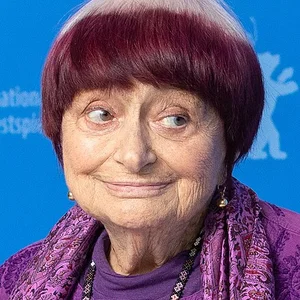
An American actor, director, and screenwriter of the silent film era, Roscoe 'Fatty' Arbuckle was one of Hollywood's biggest comedy stars of the 1910s. His career was destroyed by a legal scandal in 1921, despite his acquittal.
Roscoe Arbuckle(1887 — 1933)
Roscoe Arbuckle
États-Unis
8 min read
Frequently asked questions
Key Facts
- Born in 1887 in Smith Center, Kansas, he got his start in vaudeville before moving into film
- Joined Mack Sennett's Keystone Studios around 1913 and became a worldwide star of slapstick comedy
- Mentor to Buster Keaton, whom he launched in film in 1917
- Accused of murder at a party in 1921, he was acquitted after three trials in 1922, but his career was destroyed
- Died in 1933 in New York, following a quiet attempt at a comeback behind the camera
Works & Achievements
The first film from Comique Film Corporation, notable for marking Buster Keaton's screen debut. It perfectly showcases Arbuckle's acrobatic comedy style, as he plays an inventive and clumsy butcher's assistant.
A burlesque romantic comedy co-starring Mabel Normand, Arbuckle's go-to partner at Keystone. One of the best-preserved films from his Sennett period and among the most praised by contemporary critics.
A comic short written, directed, and performed by Arbuckle alongside Buster Keaton, showcasing the refinement of their choreographed gags and their comic chemistry at its peak.
The last film Arbuckle and Buster Keaton made together. A true masterpiece of slapstick, it combines mechanical gags, choreographed stunts, and absurdist humor in a hilariously chaotic auto garage setting.
A romantic comedy filmed just before the scandal and released during the trials. One of the few surviving Arbuckle feature films, it reflects his ambition to broaden his range toward more dramatic territory.
Anecdotes
Despite his nickname "Fatty" and his 286 pounds, Roscoe Arbuckle was an acrobat of astonishing agility: he could perform back flips, pirouettes, and perfectly controlled pratfalls. This unexpected nimbleness was one of the cornerstones of his comedy, surprising audiences with physical feats that seemed impossible for a man of his size.
It was Arbuckle who introduced Buster Keaton to the world of cinema in 1917. Having crossed paths with the young vaudevillian in a studio hallway, he invited him to appear alongside him in *The Butcher Boy*. Keaton was so brilliant from the very first take that the scene was shot only once, and their collaboration gave birth to one of the greatest comic duos in silent film history.
In 1921, Arbuckle signed a three-million-dollar, three-year contract with Paramount Pictures — one of the largest ever granted to an actor at the time. Just weeks after signing, a scandal erupted at a party in San Francisco, abruptly ending his career at the very height of his fame.
Acquitted after three successive trials in 1922 — the jury even handed him a written letter of apology — Arbuckle was nonetheless banned from the screen by Will Hays, Hollywood's new "morality czar." Forced to hide behind the pseudonym "William B. Goodrich
he continued directing films while never being able to publicly claim his own work.
On the night of June 28, 1933, Arbuckle celebrated at a New York restaurant the signing of a contract with Warner Bros. that was meant to mark his triumphant return to the screen. He fell asleep contentedly in his hotel room and never woke up, carried off by a heart attack at just 46 years old — the eve of his first scheduled day of filming.
Primary Sources
Acquittal is not enough for Roscoe Arbuckle. We feel that a great injustice has been done him. We also feel that it was only our plain duty to give him this exoneration, under the evidence, for there was not the slightest proof adduced to connect him in any way with the commission of a crime.
Roscoe Arbuckle has signed with Paramount for three years at a reported total of three million dollars, making him one of the highest-paid performers in the motion picture industry.
Roscoe 'Fatty' Arbuckle, famous movie comedian, was arrested today in connection with the death of Virginia Rappe, who died following a Labor Day party held at the Hotel St. Francis.
After consulting with producers and distributors, I have determined that the pictures of Roscoe Arbuckle are of a character which should not be exhibited to the public at the present time.
Key Places
Small Midwestern town where Roscoe Arbuckle was born on March 24, 1887. His difficult childhood in this rural region led him early toward the vaudeville stages of the American West Coast.
Studio founded by Mack Sennett where Arbuckle honed his comedic craft from 1913 to 1917. This was the birthplace of Hollywood slapstick comedy and the home of the famous Keystone Kops.
Luxurious San Francisco hotel where, on September 5, 1921, a party was held during which actress Virginia Rappe was gravely injured. Her death a few days later triggered the scandal that irreparably destroyed Arbuckle's career.
Major Hollywood studio with which Arbuckle signed in 1918, and again in 1921 for a historic three-million-dollar contract. His rise at Paramount marked both the peak and the sudden collapse of his acting career.
City where Arbuckle died of a heart attack in a hotel on June 29, 1933 — the very night he had celebrated signing a contract meant to mark his long-awaited official comeback to the screen.
Typical Objects
Professional camera used in Hollywood studios during the 1910s–1920s. Robust and precise, it was standard equipment on most Keystone and Arbuckle's Comique Film Corporation productions.

Iconic prop of Hollywood burlesque, popularized largely by the Keystone studios. Hurled into actors' faces, it embodies the physical and absurdist humor of slapstick — the genre in which Arbuckle truly excelled.
Arbuckle's signature comedy outfit: a jumpsuit or costume deliberately too small for his frame, amplifying the comic effect of his acrobatics and spectacular pratfalls.
A text panel inserted between scenes of a silent film to convey dialogue and narrative information. These intertitles were the only "speech" available to audiences before the invention of synchronized sound.
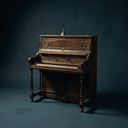
A musical instrument found in small popular movie halls to provide live accompaniment for silent films. Nickelodeons, priced at just five cents admission, used these pianos to punctuate the on-screen action and heighten audience emotion.
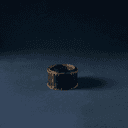
The physical medium of cinema at the time, made from highly flammable and chemically unstable nitrate celluloid. Most of Arbuckle's films were lost or destroyed due to the fragility of this material, leaving only partial archives behind.
School Curriculum
Vocabulary & Tags
Key Vocabulary
Tags
Daily Life
Morning
In the 1910s and 1920s, a shooting day for Arbuckle began very early: arriving at the studio at dawn for makeup sessions and costume preparation. Hollywood studios relied on natural light as much as possible, setting schedules that followed the California sun.
Afternoon
Afternoons were devoted to long hours of filming, often without a written script, with actors improvising their gags under the direction of Mack Sennett or Arbuckle himself. Stunts and complex physical sequences were rehearsed and reshot dozens of times to achieve the desired comic effect.
Evening
Outside of filming, Arbuckle led the intense social life typical of Hollywood stars: dinners at the finest restaurants in Los Angeles, private parties, and evenings at jazz clubs and vaudeville venues. It was at one such gathering in San Francisco in 1921 that his life changed irrevocably.
Food
Arbuckle favored the rich, abundant cuisine of Hollywood and San Francisco's upscale restaurants: generous steaks, seafood, and plentiful alcohol despite Prohibition being in effect from 1920. His lavish, celebratory lifestyle contributed to his large frame, which had itself become part of his comedic persona.
Clothing
On screen, Arbuckle wore his trademark comic costumes — absurdly too small and ill-fitting for his build. In everyday life, like any Hollywood star of the 1920s, he dressed with elegance: carefully tailored three-piece suits, felt hats, and two-tone shoes, in keeping with the American men's fashion of the era.
Housing
At the height of his fame, Arbuckle lived in luxurious properties in Los Angeles and owned a fleet of prestige automobiles — status symbols of the great Hollywood stars. After the scandal, his assets were partly liquidated to fund his three costly trials, gradually forcing him into a more modest way of life.
Historical Timeline
Period Vocabulary
Liens externes & ressources
Références
Œuvres
The Cook
1918
Leap Year (sorti sous son nom)
1921