 flip
flipSikbaj, Sweet-and-Sour Lamb Stew with Vinegar and Dates
Sikbaj, Sweet-and-Sour Lamb Stew with Vinegar and Dates
Why this dish? Sikbaj was renowned as the king of dishes — legend attributed it to the Persian sovereign Khosro. Saladin, who received emirs, ambassadors, and envoys of the Crusaders, offered his guests these refined stews where vinegar and honey converse, a mark of the great court taste of Damascus.
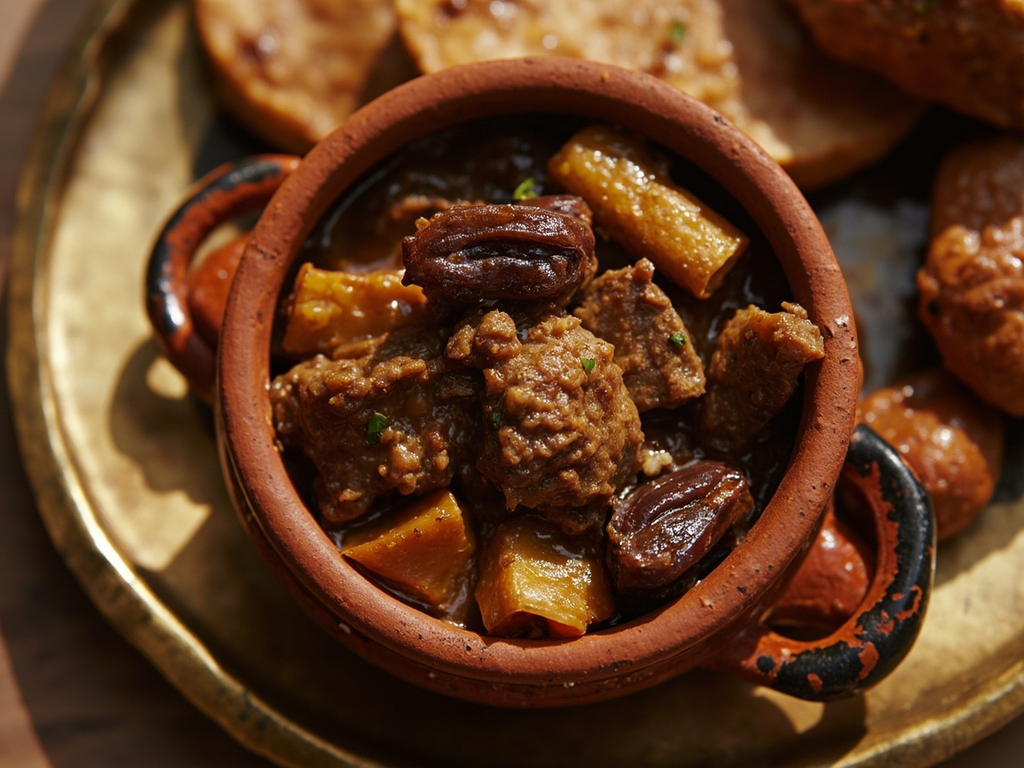
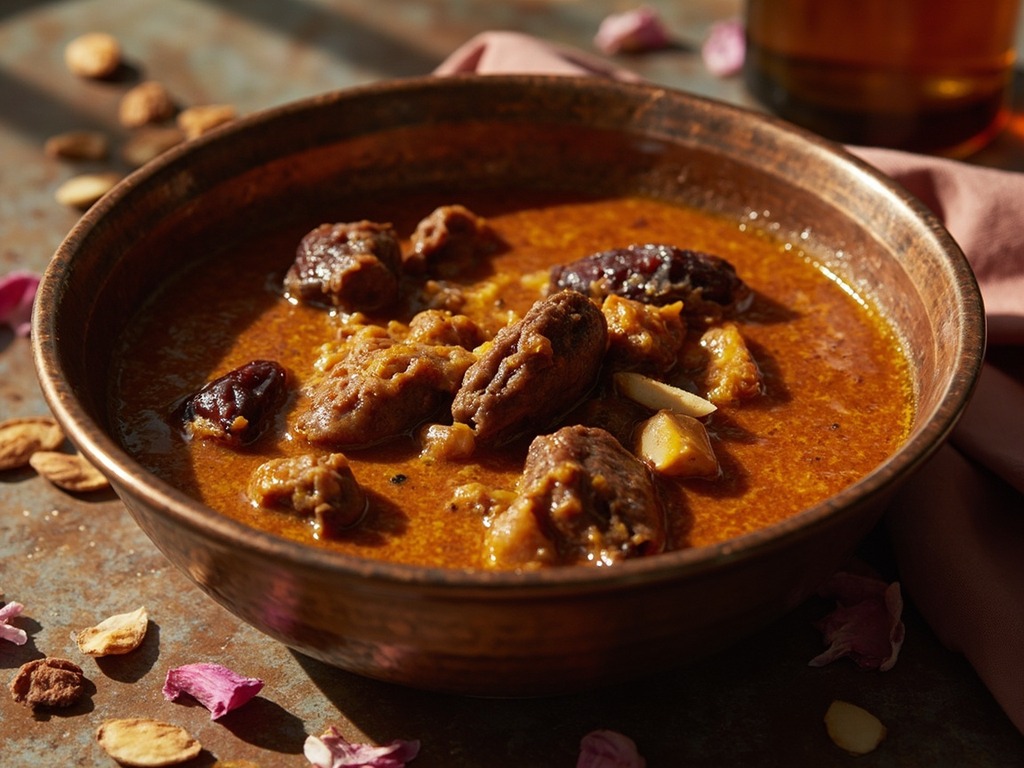
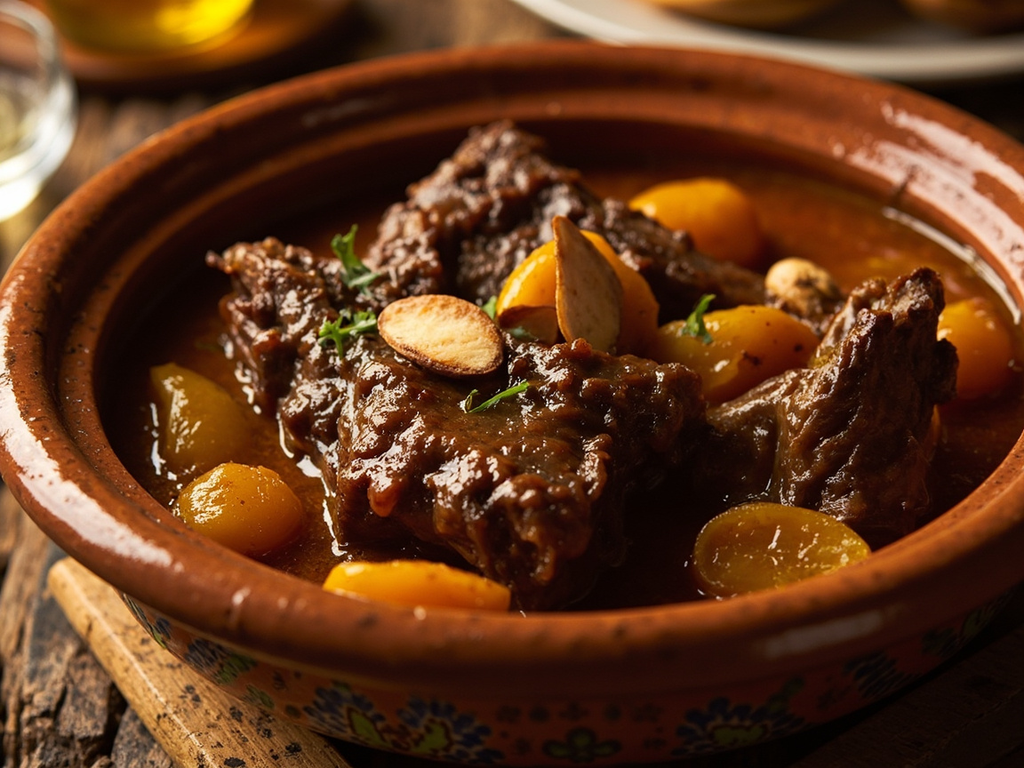
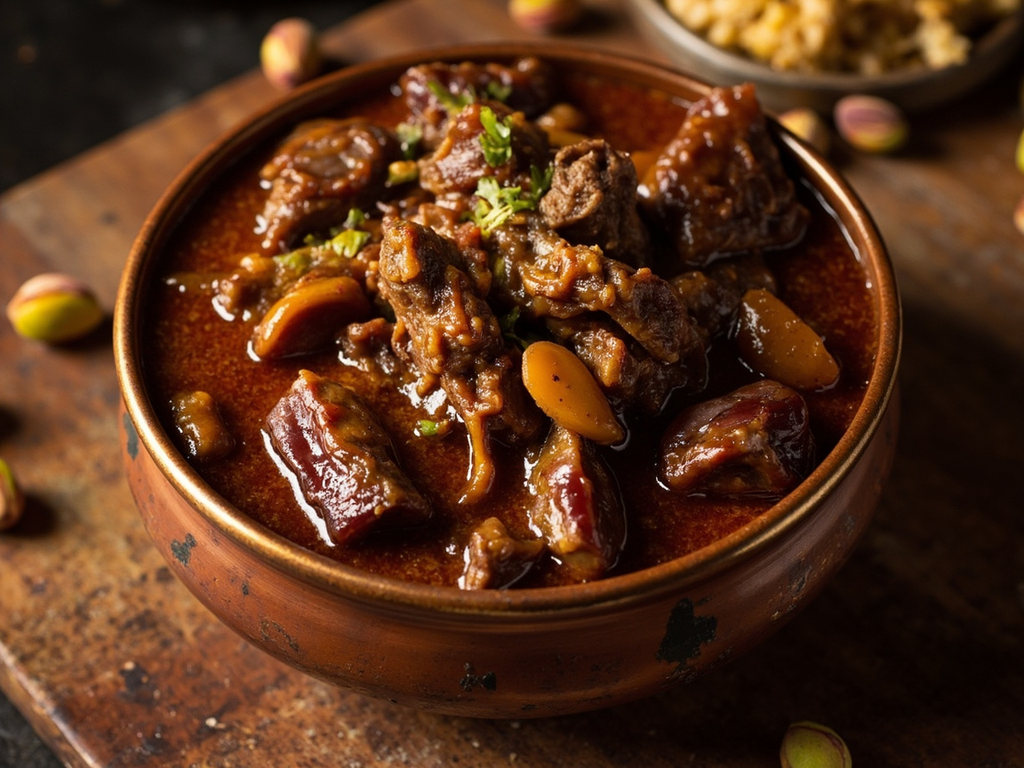
A lamb stew simmered long with vinegar, honey, and dates, perfumed with coriander and cinnamon. The acidity of the vinegar, softened by honey and fruit, coats tender meat. The most prestigious dish of the medieval Eastern table.
When an emissary presented himself in Damascus, even if he were the envoy of the Franks, honor commanded me to set before him the noblest of my kitchen. We chose fat lamb, seared it, then came the vinegar — sharp as a blade — immediately soothed by honey and the dates of my Egypt. Let it simmer without haste, O guest, for patience is half of cooking as it is half of war. And when the sauce coats the meat with an amber veil, know that you are eating the taste of the kings who came before me.
- •Fat lamb (leg or neck) — a fine piece (meat)
- •Wine vinegar — a splash (acidity)
- •Honey or date syrup (dibs) — to taste (sweetness)
- •Pitted dates — a handful (fruit and binder)
- •Onions — a few (base)
- •Coriander, cinnamon, dried ginger, saffron — at discretion (spices)
Sikbaj, Sweet-and-Sour Lamb Stew with Vinegar and Dates
A lamb stew simmered long with vinegar, honey, and dates, perfumed with coriander and cinnamon. The acidity of the vinegar, softened by honey and fruit, coats tender meat. The most prestigious dish of the medieval Eastern table.
Why this dish? Sikbaj was renowned as the king of dishes — legend attributed it to the Persian sovereign Khosro. Saladin, who received emirs, ambassadors, and envoys of the Crusaders, offered his guests these refined stews where vinegar and honey converse, a mark of the great court taste of Damascus.
When an emissary presented himself in Damascus, even if he were the envoy of the Franks, honor commanded me to set before him the noblest of my kitchen. We chose fat lamb, seared it, then came the vinegar — sharp as a blade — immediately soothed by honey and the dates of my Egypt. Let it simmer without haste, O guest, for patience is half of cooking as it is half of war. And when the sauce coats the meat with an amber veil, know that you are eating the taste of the kings who came before me.
Ingredients (period version)
- Fat lamb (leg or neck) — a fine piece (meat)
- Wine vinegar — a splash (acidity)
- Honey or date syrup (dibs) — to taste (sweetness)
- Pitted dates — a handful (fruit and binder)
- Onions — a few (base)
- Coriander, cinnamon, dried ginger, saffron — at discretion (spices)
Ingredients
- Lamb leg or neck — 700 g in large cubes (meat)
- Red wine vinegar — 5 tbsp (acidity)
- Honey — 2 tbsp (sweetness)
- Medjool dates, pitted — 6 (fruit and binder)
- Onions — 2 large, sliced (base)
- Ground coriander, cinnamon, ginger — 1 tsp each (spices)
- Saffron — 1 pinch, infused (color and aroma)
Method
- Sear the lamb cubes on all sides in a pot, set aside.
- Melt the onions, add the spices, and return the meat.
- Deglaze with vinegar, let reduce for 2 minutes to soften the acidity.
- Cover with water, add the infused saffron, and simmer covered for 1 hour 30 minutes.
- Add the honey and dates at the end of cooking, let thicken uncovered for 20 minutes until a syrupy sauce coats the meat.
- Serve very hot, the amber sauce napped over the lamb.
How it was made : Sikbaj (from Iranian sik, "vinegar") is the matrix of all medieval sweet-and-sour stews; several versions appear in Arabic recipe collections. Murri was often used as a complement, and the dish was sometimes cooled to be eaten as a jelly. Date syrup (dibs) served as sugar before the widespread use of cane sugar.
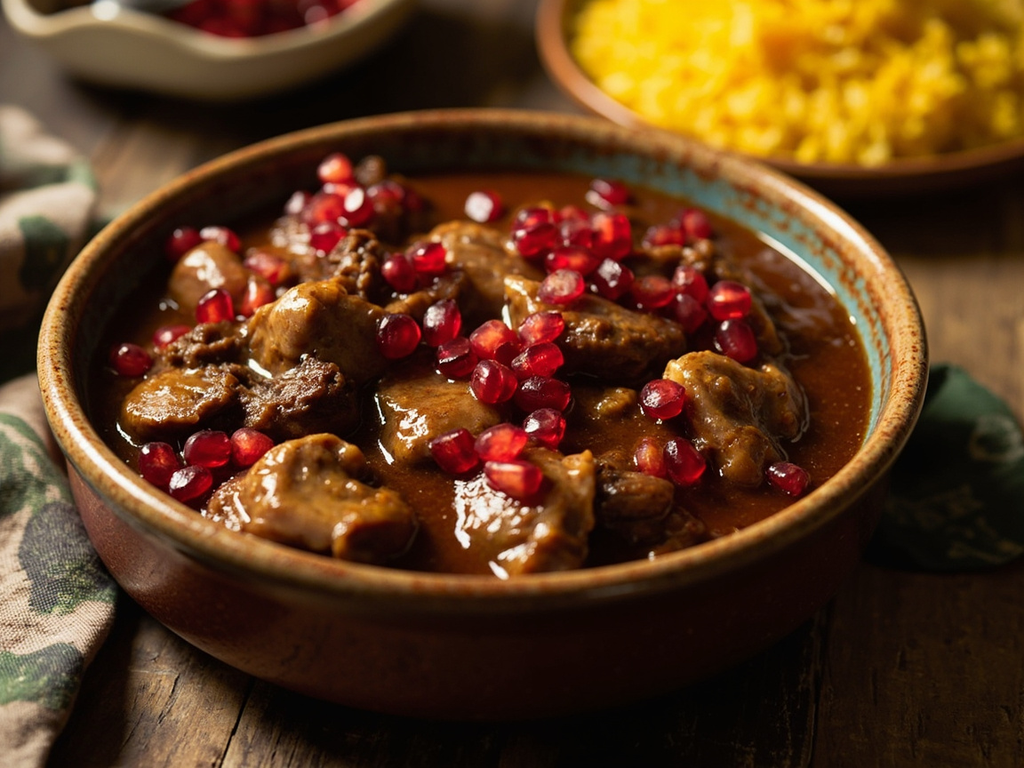
The contemporary twist : Serve sprinkled with crushed pistachios and dried rose petals, and a drizzle of pomegranate molasses to intensify the sweet-and-sour sheen.
Sources : Kitab al-Wusla ila al-habib (Syrian culinary collection from the 13th century, attributed to Ibn al-'Adim) · Maxime Rodinson, « Recherches sur les documents arabes relatifs à la cuisine », Revue des études islamiques, 1949
Saladin · Charactorium