 flip
flipTharid of Lamb with Soaked Bread
Tharid of Lamb with Soaked Bread
Why this dish? Tharid is the most beloved dish in Islamic tradition — a hadith praises it above all other foods. An everyday dish, humble and nourishing, it was prepared both in the court of Cairo and under Saladin's campaign tent, a man known for his frugality and piety.
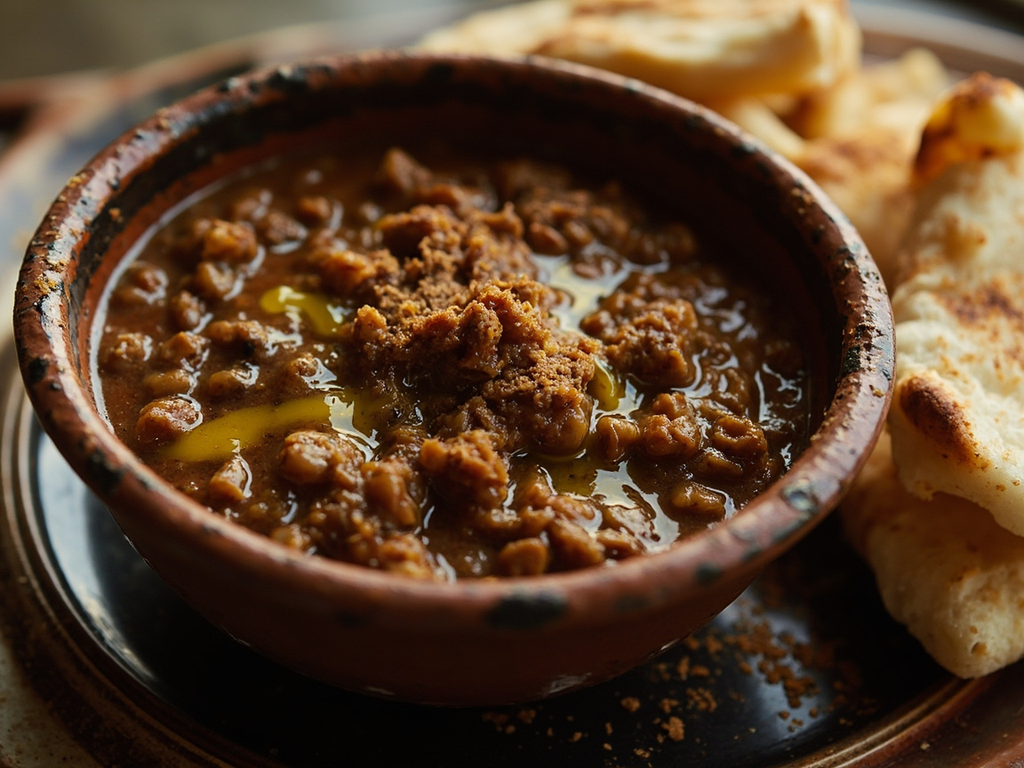
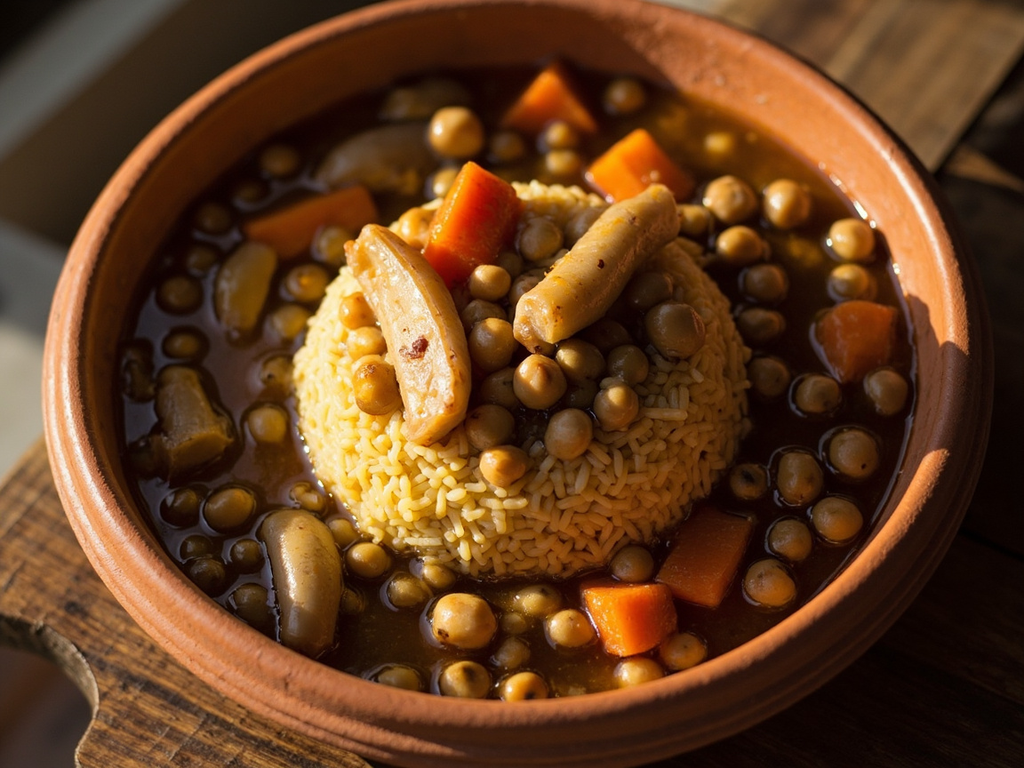
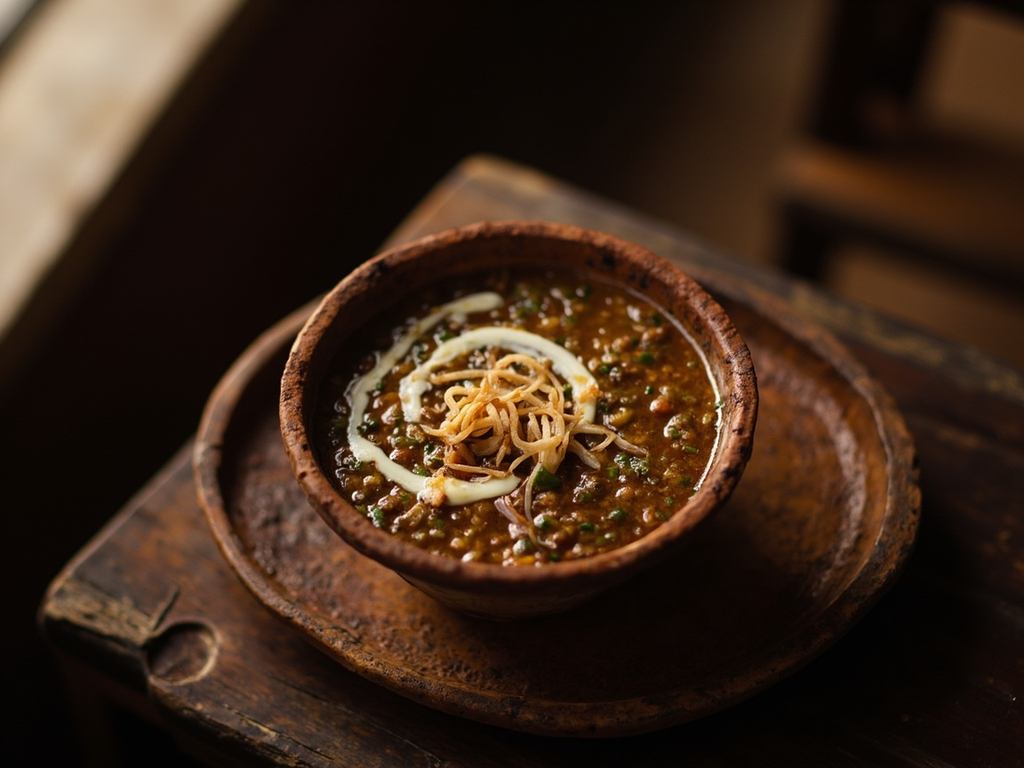
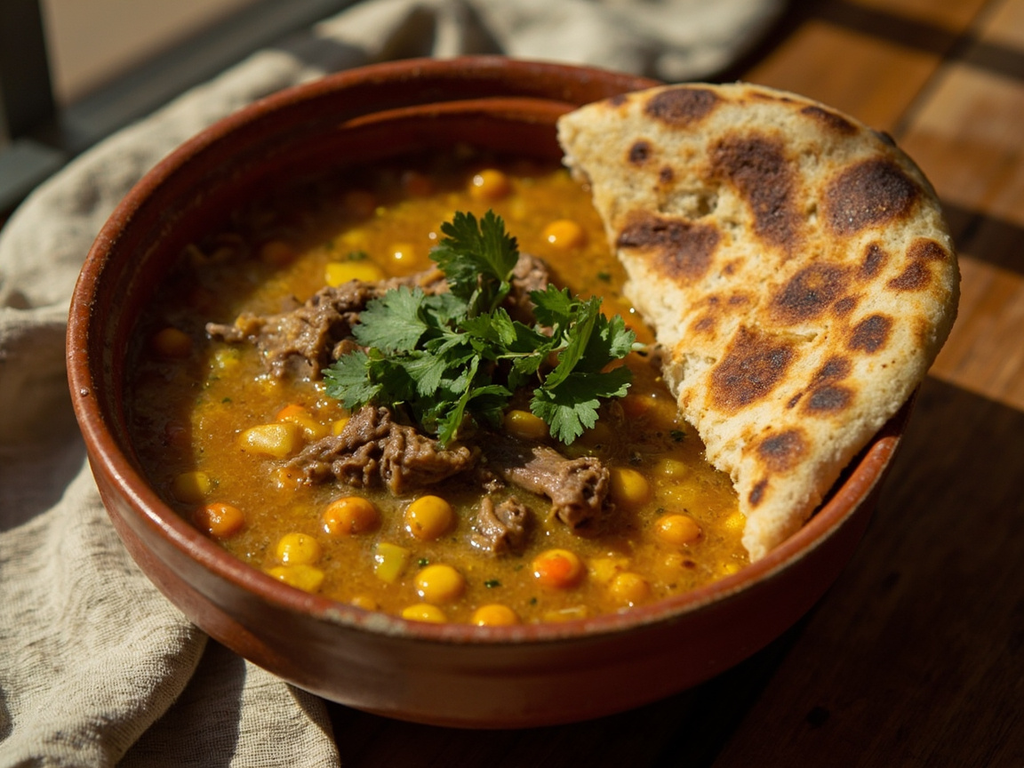
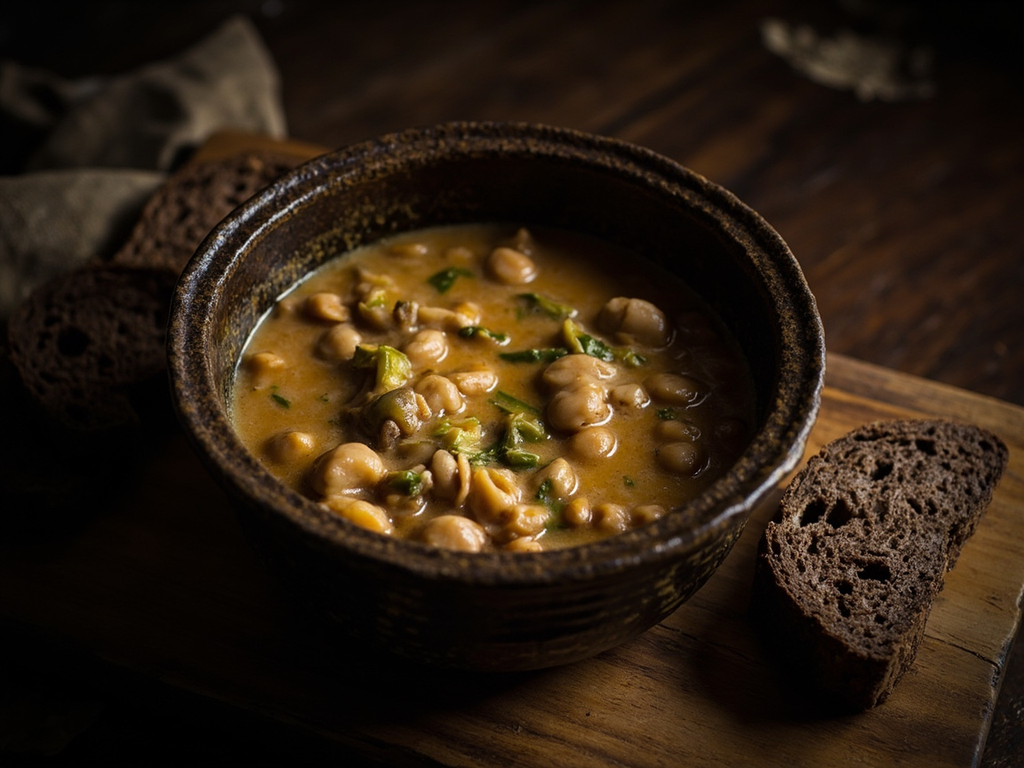
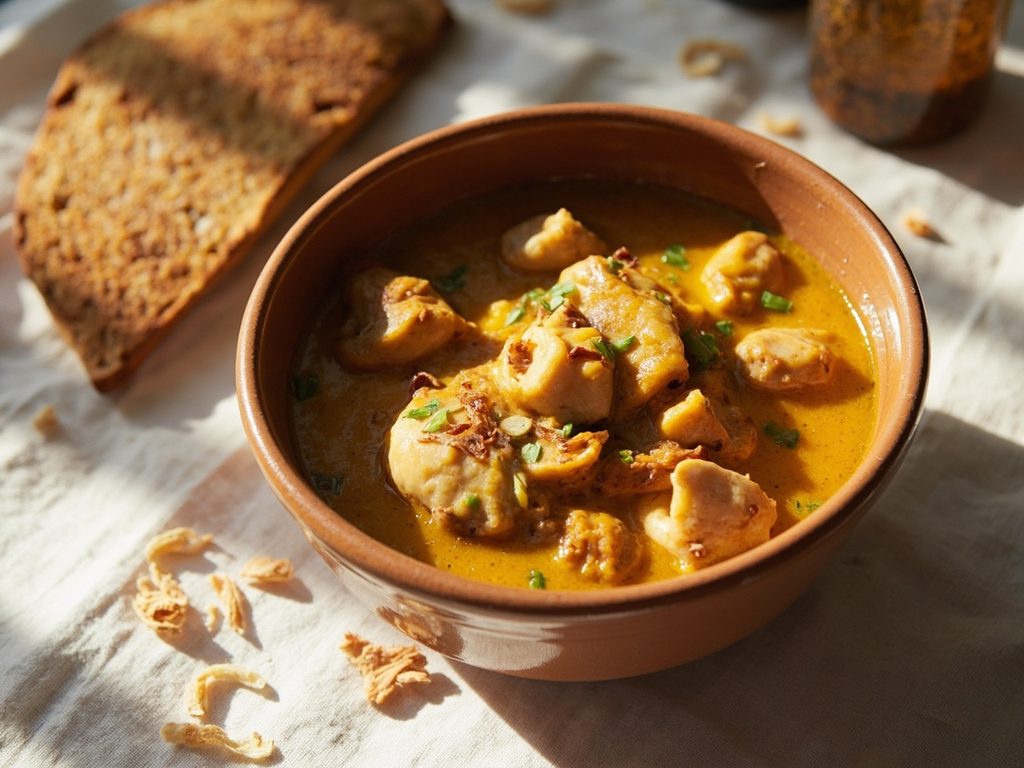
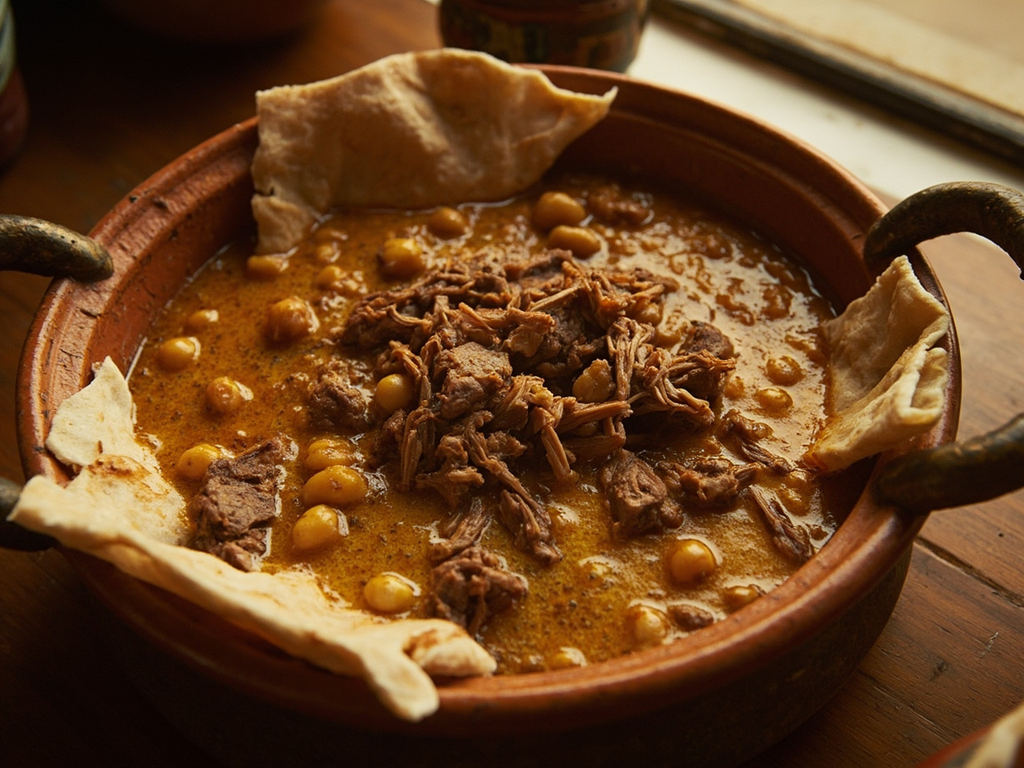
A lamb broth with chickpeas and vegetables, poured boiling over pieces of stale flatbread that soak and melt. The bread replaces the spoon and becomes the heart of the dish. Comforting, economical, perfect for satisfying a large table.
Know, O you who share my cloth, that the Prophet — peace be upon him — preferred this dish above all others, and a sultan should not disdain what the humble loved. At my table as under my tent, we break yesterday's bread, lay it at the bottom of the dish, and pour over it the mutton broth in which chickpeas and onion have simmered. A drop of murri to awaken it all, and we eat together, with the right hand, giving thanks to Allah. Believe me: meat fattens pride, but this soaked bread nourishes gratitude.
- •Lamb shoulder — a good piece (meat and broth)
- •Stale flatbread (khubz) — several loaves (base of the dish)
- •Chickpeas — a handful, soaked (texture)
- •Onions — two or three (aromatic base)
- •Murri (fermented sauce) — a drizzle (salty umami)
- •Coriander, cumin, cinnamon — to taste (spices)
Tharid of Lamb with Soaked Bread
A lamb broth with chickpeas and vegetables, poured boiling over pieces of stale flatbread that soak and melt. The bread replaces the spoon and becomes the heart of the dish. Comforting, economical, perfect for satisfying a large table.
Why this dish? Tharid is the most beloved dish in Islamic tradition — a hadith praises it above all other foods. An everyday dish, humble and nourishing, it was prepared both in the court of Cairo and under Saladin's campaign tent, a man known for his frugality and piety.
Know, O you who share my cloth, that the Prophet — peace be upon him — preferred this dish above all others, and a sultan should not disdain what the humble loved. At my table as under my tent, we break yesterday's bread, lay it at the bottom of the dish, and pour over it the mutton broth in which chickpeas and onion have simmered. A drop of murri to awaken it all, and we eat together, with the right hand, giving thanks to Allah. Believe me: meat fattens pride, but this soaked bread nourishes gratitude.
Ingredients (period version)
- Lamb shoulder — a good piece (meat and broth)
- Stale flatbread (khubz) — several loaves (base of the dish)
- Chickpeas — a handful, soaked (texture)
- Onions — two or three (aromatic base)
- Murri (fermented sauce) — a drizzle (salty umami)
- Coriander, cumin, cinnamon — to taste (spices)
Ingredients
- Boneless lamb shoulder — 600 g, cubed (meat and broth)
- Stale Lebanese bread or pita — 3 loaves (base of the dish)
- Cooked chickpeas — 1 can (240 g drained) (texture)
- Onions — 2 large, sliced (aromatic base)
- Light soy sauce (instead of murri) — 1 tbsp (salty umami)
- Ground coriander, cumin, cinnamon — 1 tsp each (spices)
- Water or broth — 1.5 L (liquid)
Method
- Sauté the sliced onions in a little fat until tender.
- Add the lamb, sear it, then add the spices and soy sauce (murri).
- Cover with water or broth, add the chickpeas, and simmer for 1 hour 30 minutes over low heat until the meat shreds.
- Tear the stale bread into pieces and line the bottom of a large deep dish.
- Pour the boiling broth and meat over the bread, let soak for 2 minutes, and serve immediately at the center of the table.
How it was made : Tharid (or tharida) is attested as early as pre-Islamic Arabia and is ubiquitous in medieval cookbooks. Stale bread, too precious to be thrown away, found a second life; it was "resurrected" in the broth. Murri, a sauce made from long-fermented barley flour, served as a universal salty enhancer, similar to Roman garum.
The contemporary twist : A pinch of sumac and a few toasted slivered almonds at serving, for a tangy crunch that awakens the melting bread.
Sources : Charles Perry (trad.), A Baghdad Cookery Book (Kitab al-Tabikh d'al-Baghdadi, 1226) · Lilia Zaouali, L'Islam à table. Du Moyen Âge à nos jours, La Découverte, 2004
Saladin · Charactorium