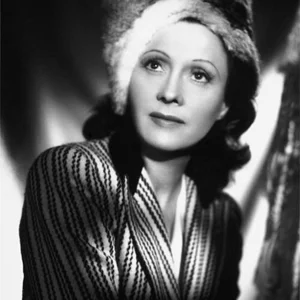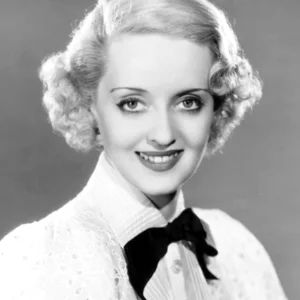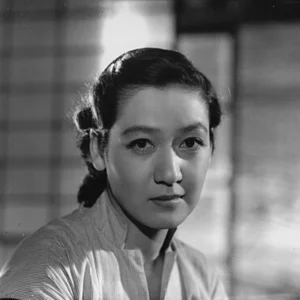

A Japanese actress considered one of the greatest in Japanese cinema, she is inseparable from the films of Yasujirō Ozu. Her radiant smile and restrained presence earned her the nickname “Eternal Goddess.” She mysteriously retired from cinema in 1963.
Setsuko Hara(1920 — 2015)
Setsuko Hara
Japon, empire du Japon
8 min read
Frequently asked questions
Key Facts
- Born Masae Aida on June 17, 1920, in Yokohama, she adopted the stage name Setsuko Hara from the very start of her career.
- Discovered by Akira Kurosawa in No Regrets for Our Youth (1946), she embodied strong female figures in postwar Japan.
- Her collaboration with Yasujirō Ozu reached its peak with Tokyo Story (1953), a masterpiece of world cinema.
- In 1963, at the height of her fame, she withdrew permanently from public life without explanation, living as a recluse until her death.
- She died on September 5, 2015, though her death was not publicly announced until three months later.
Works & Achievements
Directed by Akira Kurosawa, this film marks the beginning of Setsuko Hara's international fame. She plays a young woman who chooses her convictions over militarism, in a Japan still raw from the wounds of war.
The first installment of the "Noriko trilogy" directed by Ozu. Setsuko Hara plays a daughter who keeps putting off marriage to stay by her aging father's side, exploring with quietly devastating restraint the themes of sacrifice and filial love.
The second installment of the Noriko trilogy, in which Setsuko Hara plays a modern young woman who chooses her own husband against her family's wishes — a delicate portrait of the shifting values of postwar Japanese society.
Ozu's undisputed masterpiece and one of the greatest films ever made. Setsuko Hara plays a devoted daughter-in-law who welcomes her aging parents-in-law with an unpretentious, deeply moving generosity.
One of Ozu's darkest films, in which Setsuko Hara takes on the unusual role of a woman deeply scarred by life. This striking departure demonstrates the full range of her talent, far beyond her trademark smile.
Setsuko Hara's last major role with Ozu. She plays a widowed mother trying to arrange her daughter's marriage, cleverly reversing the situation of *Late Spring* made eleven years earlier — a melancholic circle back to life slipping by.
Anecdotes
Setsuko Hara was born Masae Aida on November 17, 1920, in Yokohama. She adopted her screen name at the very start of her film career in 1935, when she was barely fifteen years old, at the urging of Nikkatsu studios, who saw in her face an ideal presence for the big screen. She quickly became one of the most popular figures in Japanese cinema.
In 1946, a year after Japan's defeat, Akira Kurosawa cast her in the lead role of “No Regrets for Our Youth” (*Waga Seishun ni Kuinashi*). This bold film, which criticized Japanese militarism while the wounds of war were still raw, made Setsuko Hara a symbol of the modern, independent young woman in postwar Japan.
Director Yasujirō Ozu cast her in six films between 1949 and 1960. To embody the character of Noriko in “Late Spring” (1949), “Early Summer” (1951), and “Tokyo Story” (1953), Setsuko Hara developed a way of smiling in every circumstance — even in sorrow — that moved audiences deeply and earned her the nickname “Eternal Goddess” (*Eien no Shojo*).
In 1963, at the height of her fame, Setsuko Hara announced her retirement from cinema without any public explanation. She settled in the city of Kamakura and for more than fifty years refused every interview, every public appearance, and all contact with the press. Her death, which occurred on September 5, 2015, was not officially announced until November 25, 2015 — two and a half months later.
By the time Ozu's “Tokyo Story” appeared on international critics' lists among the greatest films in cinema history, Setsuko Hara had already been retired for decades. She attended none of the ceremonies held in her honor and never spoke about the worldwide legacy of her work, letting her characters speak in her place.
Primary Sources
Hara-san doesn't need lengthy explanations of what we're looking for. She understands instinctively. You only need to point her in a direction and she finds the right path herself.
Setsuko Hara portrays Noriko with a restraint and human warmth that transcend mere acting. Her presence gives the film its moral and emotional dimension.
Setsuko Hara represented for Ozu the Japanese feminine ideal in transition: faithful to traditional values while remaining open to modernity. Their collaboration was unique in the history of Japanese cinema.
In 'Late Spring', Hara possesses that rare quality: she seems to live her character rather than play it. Every gesture, every silence carries a truth that belongs to her alone.
Key Places
Port city where Setsuko Hara was born on November 17, 1920. At the time, Yokohama was the most Westernized major city in Japan, which influenced the cultural cosmopolitanism of Japanese cinema of that era.
Setsuko Hara's primary workplace throughout her career. The majority of her films with Ozu were shot at these studios, in an atmosphere of rigorous and focused craftsmanship.
Coastal city of temples and gardens where Setsuko Hara settled after her retirement in 1963, living in complete self-imposed seclusion until her death in 2015. Kamakura was the setting for her long and mysterious silence.
A hub of cultural life and film premieres in Japan during the 1940s–1960s, where Setsuko Hara attended screenings of her films and promotional events throughout her active career.
Typical Objects

In her films with Ozu, Setsuko Hara often wears understated kimonos chosen by the director to reflect the precise social status of her characters. The kimono symbolizes the Japanese tradition that her roles seek to reconcile with modernity.

Ozu provided his actresses with scripts precise down to every word. Setsuko Hara was renowned for her ability to memorize her lines without altering the rhythm or musicality intended by the director.

A central fixture on Shochiku sets in the 1950s, Ozu positioned his Mitchell camera very low — nearly at floor level, at the eye-line of someone seated on a tatami mat. This signature framing magnifies the face and presence of Setsuko Hara.

The tea ritual is ever-present in Ozu's films featuring Setsuko Hara. These shared tea scenes are key moments of silent communication between characters, revealing family tensions and restrained emotions.

An everyday accessory of Japanese life that appears in several domestic scenes in Ozu's films. It symbolizes the quiet grace and restraint that define the characters Hara brought to the screen.

A symbol of postwar Japanese daily life, the bento appears in several films as a marker of the ordinary gestures that Setsuko Hara excelled at rendering deeply human and moving.
School Curriculum
Vocabulary & Tags
Key Vocabulary
Daily Life
Morning
During filming periods, Setsuko Hara arrived very early at the Shochiku studios in Ofuna, often before 8 a.m. She took care of her hair and makeup with the studio teams, then carefully read through the day's script. Since Ozu required many rehearsals before shooting, mornings always began with long sessions refining movements and lines.
Afternoon
Filming afternoons were devoted to shooting takes, sometimes repeated dozens of times until Ozu was satisfied with every last gesture. Between takes, Setsuko Hara often kept to herself, focused, avoiding small talk. Ozu's sets operated in an atmosphere of near-monastic concentration.
Evening
In the evenings after filming, Setsuko Hara returned to the Kamakura area and led a quiet, private life. She did not frequent the social circles of Tokyo's film industry, preferring a relatively withdrawn lifestyle even during her active career.
Food
Like the vast majority of postwar Japanese, Setsuko Hara followed a traditional Japanese diet: rice, fresh fish, pickled vegetables (*tsukemono*), miso soup, and green tea. The years of food shortages that followed Japan's defeat in 1945 had instilled a habit of frugality at the table in an entire generation.
Clothing
In daily life during the 1950s, Setsuko Hara wore both *kimono* for formal occasions and Western-style outfits — dresses, suits — that symbolized the modernity of the postwar Japanese woman. On set, her costume was carefully chosen by Ozu to reflect the precise social standing of her character.
Housing
Setsuko Hara always lived in the Kamakura area, close to the Shochiku studios. After her retirement in 1963, she settled permanently in a traditional Japanese house surrounded by gardens, where she lived in absolute seclusion for more than fifty years until her death.
Historical Timeline
Period Vocabulary
Liens externes & ressources
Références
Œuvres
Printemps tardif (Banshun)
1949
Début d'été (Bakushū)
1951
Fin d'automne (Akibiyori)
1960