
Shanakdakhete is the earliest known reigning queen of Meroë, capital of the Kingdom of Kush (Nubia), in the 2nd century BCE. A product of Meroitic civilization, she ruled in her own right, with no attested male consort. Her memory has been passed down through inscriptions in the Meroitic script and through the oral traditions of Nubian peoples.
Shanakdakhete(200 av. J.-C. — 160 av. J.-C.)
Shanakdakhete
8 min read
Frequently asked questions
Key Facts
- The earliest known reigning queen of Meroë, around the 2nd century BCE, according to archaeological sources (Meroitic inscriptions and pyramid reliefs)
- Ruled without any attested male consort, pointing to an autonomous royal status that was rare for the era
- Her name is carved in Meroitic script inscriptions — a language only partially deciphered — meaning written sources about her remain fragmentary
- Depicted on the reliefs of her funerary chapel at Naqa with royal attributes, including prisoners and weapons — imagery passed down through the Nubian visual tradition
- A forerunner of the kandakes (queen mothers or reigning queens) who would shape the history of the Kingdom of Kush through the 4th century CE
Works & Achievements
Shanakdakhete had her funerary pyramid and chapel built at Meroe North (Begrawiya), the site of the royal necropoles of Meroe. The reliefs in this chapel are the primary iconographic source on her reign.
Shanakdakhete governed the Kingdom of Kush on her own, overseeing trade routes, tribute collection, and diplomatic relations with Ptolemaic Egypt. Her reign without a recorded male co-ruler marks a first in Meroitic history.
Like all Meroitic rulers, Shanakdakhete funded and maintained the state religious cults. Her patronage of the temples of Amun legitimized her royal authority in the eyes of both the population and the priesthood.
The memory of Shanakdakhete has been preserved in Nubian oral traditions, passed down by griots and community elders. This intangible legacy kept the image of a founding queen alive long after the disappearance of the Meroitic writing system.
Anecdotes
Shanakdakhete is the earliest attested ruling queen of Meroë: she governed alone, without a documented male consort, at a time when most great civilizations reserved political power for men. Her reign stands as one of the oldest known examples of an independent female monarchy in the ancient world.
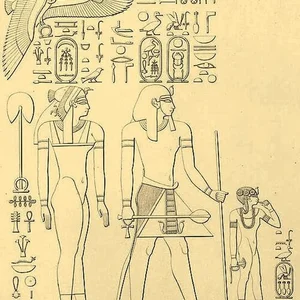
Her name and image were carved into the stone of Meroë's funerary chapels, where she is depicted in warrior attire, mace in hand, standing over defeated enemies. These reliefs show that she commanded the same symbols of royal power as the Meroitic kings.
Shanakdakhete belonged to the Meroitic civilization, which developed its own writing system — Meroitic script — distinct from Egyptian hieroglyphics. While inscriptions bearing her name have been identified, their full meaning remains partially mysterious, as this script has not yet been completely deciphered.
In Nubian oral traditions, the great queens of Meroë are often invoked as figures of wisdom and protective strength. Shanakdakhete, pioneer among these kandakes (queen mothers or reigning queens), is regarded as the symbolic ancestor of a long line of female rulers who left a profound mark on the history of ancient Sudan.
The Kingdom of Kush, of which Meroë was the capital, controlled the trade routes connecting sub-Saharan Africa to Egypt and the Red Sea. Shanakdakhete ruled over a prosperous empire that exported gold, ivory, ebony, and enslaved people, and maintained diplomatic relations with the great Mediterranean powers.
Primary Sources
The walls of the funerary chapels associated with Shanakdakhete's pyramid depict the queen in a warrior stance, holding a mace and dominating captives. These images follow Meroitic royal iconographic conventions and attest to her status as a ruler in her own right.
Inscriptions in the Meroitic script mention Shanakdakhete's name on several monuments at the site. Although the Meroitic language has not been fully deciphered, these texts confirm her royal rank and identity.
The oral traditions of the Nubian peoples, passed down from generation to generation by storytellers and elders, speak of the great queens of Meroë as founding figures. Shanakdakhete is portrayed as the first of the kandakes — a just and warrior queen, guardian of the cosmic order.
Ritual objects and stelae discovered in the temple complex of Amun at Meroë bear witness to the royal religious practices of Shanakdakhete's era, linking political power to the divine favor of the god Amun, the supreme deity of the Kingdom of Kush.
Key Places
The capital of the Kingdom of Kush and the seat of Shanakdakhete's power, Meroë was a thriving metropolis on the banks of the Nile. The Begrawiya site still hosts dozens of Meroitic royal pyramids today, including the one attributed to Shanakdakhete.
A major religious site of the Kingdom of Kush, Naqa features temples dedicated to Amun and Apedemak (the Meroitic lion god). Monuments from this era bear witness to the cultural and religious vitality of the kingdom under the Meroitic queens.
The ancient religious capital of the Kingdom of Kush, Napata remained an important sacred center during Shanakdakhete's time. Jebel Barkal, a sacred mountain associated with the god Amun, towered over this royal pilgrimage site.
The territory of the Kingdom of Kush stretched along the Nile between the cataracts, in the region now shared between Sudan and Egypt. This river corridor was the economic and military backbone of Shanakdakhete's kingdom.
Typical Objects

Both a weapon and a symbol of Meroitic royal power, the mace is depicted in Shanakdakhete's hands on the reliefs of her pyramid chapel. It symbolizes victory over enemies and the queen's warrior legitimacy.

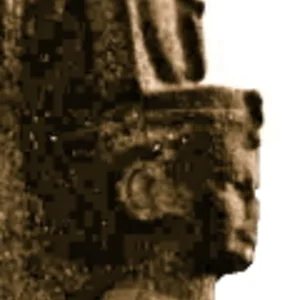
The queens and kings of Meroe wore a crown adorned with tall feathers and a solar disk, symbolizing their connection to the god Amun. Shanakdakhete is depicted wearing this headdress on the monuments associated with her.

Incense was burned during royal religious ceremonies in honor of Amun and Isis, the central deities of Meroitic worship. These ritual objects, found in the temples of Meroe, evoke the queen's daily religious life.

Inherited from Egyptian tradition, the scarab was a widely used protective amulet in Meroe. These objects, often engraved with the ruler's name, circulated as symbols of power and rebirth.

Meroitic ceramics, finely decorated with geometric and plant motifs, were used for ritual libations. These vessels accompanied funerary rites and offerings to the gods in royal temples.

Stone steles carved in Meroitic script are the primary written source on Shanakdakhete. These stone monuments commemorated royal deeds and preserved the memory of the reign for eternity.
School Curriculum
Vocabulary & Tags
Key Vocabulary
Tags
Daily Life
Morning
Shanakdakhete began her day with religious rites in the palace temple, offering incense and libations to the god Amun to secure his divine favor. Her priests recited ritual formulas while she donned her royal regalia — a plumed crown, a gold necklace, and a faience pectoral.
Afternoon
Afternoons were devoted to affairs of state: audiences with provincial governors, negotiations with merchants transporting gold and ivory to Egypt, and oversight of construction work on temples and royal necropolises. Surrounded by scribes and advisors, she settled disputes and made decisions on military matters.
Evening
In the evening, the royal court gathered for a shared meal accompanied by music, song, and the recitations of griots recalling the glories of royal ancestors. Shanakdakhete received reports from her generals and stewards before retiring to her chambers at the heart of the palace of Meroë, overlooking the Nile.
Food
The Meroitic royal diet included sorghum, millet, and barley — the cereal staples of Nubian cuisine — alongside dried or grilled fish from the Nile and beef and goat meat served at banquets. Date palm fruits, wild honey, and sorghum beer (merissa) rounded out the meals, supplemented by spices and condiments brought in along the caravan routes.
Clothing
Shanakdakhete wore fine white linen, dyed and embroidered in the royal Meroitic tradition, draped as loose tunics. Her ceremonial dress was adorned with solid gold jewelry — bracelets, multi-strand necklaces, scarab rings — and during official rituals she wore a tall plumed crown framing a solar disk.
Housing
The royal palace of Meroë was a vast residence of sandstone and fired brick, organized around inner courtyards that provided shade and light. The walls were decorated with brightly colored paintings and reliefs depicting scenes of royal victory and divine offerings. Irrigated gardens and pools enhanced the residential spaces, situated close to the great temple of Amun.
Historical Timeline
Period Vocabulary
Visual Style
Style méroïtique inspiré de l'art égyptien mais distinctif : personnages aux formes généreuses, pyramides à pentes raides, décors de grès doré baignés de lumière saharienne et de bleu nilotique.
Sound Ambience
Ambiance sonore de Méroé antique : le flux du Nil, les chants rituels du temple d'Amon, le martelage des forges et la vie animée d'une capitale commerciale africaine.
Liens externes & ressources
Références
Œuvres
Construction de la pyramide royale de Bégrawiya Nord (N11)
vers 170-150 av. J.-C.
Gouvernance autonome du royaume de Koush
vers 200-160 av. J.-C.
Patronage des temples d'Amon à Méroé et Napata
IIe siècle av. J.-C.
Transmission orale de la mémoire royale méroïtique
Depuis le IIe siècle av. J.-C.