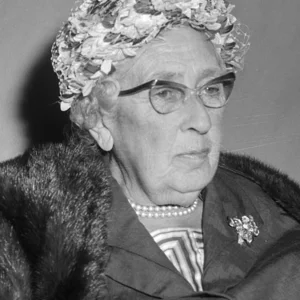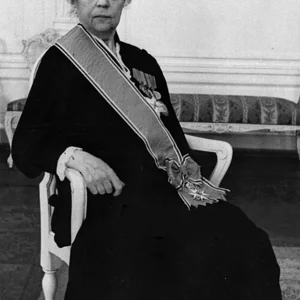

Sido (1835-1912) was the mother of the novelist Colette, who dedicated a celebrated autobiographical book to her published in 1930. An idealized maternal figure, she embodies the free-spirited woman, close to nature and to rural life in Burgundy.
Sido(1835 — 1912)
Sido
Allemagne, République démocratique allemande
7 min read
Frequently asked questions
Key Facts
- Born Sidonie Landoy in 1835 in Paris, died in 1912 in Saint-Sauveur-en-Puisaye
- Mother of the novelist Gabrielle Colette, who held her in profound literary admiration
- Colette dedicated the autobiographical account Sido (1930) to her, an intimate and lyrical portrait
- Central character in Colette's My Mother's House (1922)
- A symbol of the free woman, passionate about nature and truth, throughout Colette's body of work
Works & Achievements
A collection of letters sent by Sido to her daughter over more than twenty years, bearing witness to her sharp wit, her humor, and her maternal love. They are the only direct record of Sido's own voice.
Sido created and tended a remarkable garden for decades — a true life's work immortalized by Colette. The garden embodies Sido's art of living, blending kitchen-garden crops, wildflowers, and a keen, attentive observation of nature.
A literary portrait of Sido written by Colette eighteen years after her mother's death. This autobiographical text is considered one of the most beautiful tributes to a maternal figure in French literature.
A collection of Colette's childhood memories in which Sido holds a central place. Colette describes her mother's personality and their Burgundian childhood home with both tenderness and precision.
Anecdotes
Sido was passionate about her garden in Saint-Sauveur-en-Puisaye, which she tended with an almost mystical devotion. Colette recounts how she would rise at dawn to observe her plants and could name every flower, every insect. This communion with nature left a profound mark on her daughter's writing.
Sido kept up a diligent correspondence with her daughter Colette, whose novels she refused to read out of modesty, yet whom she supported unconditionally. These letters, remarkable for their liveliness and candor, were published after her death and reveal a woman of sharp, free-spirited wit.
Despite the financial hardships that ruined the family following Captain Colette's mismanagement, Sido never lost her serenity or her pride. She was forced to leave the family home in Saint-Sauveur in 1891, an ordeal she bore with a dignity that Colette admired for the rest of her life.
Sido had a reputation for being an unconventional woman for her time: she spoke her mind plainly, held pointless bourgeois conventions in contempt, and instilled in her children a love of freedom, nature, and truth. These values would run through the entirety of Colette's literary work.
In her final years, weakened and nearly blind, Sido continued to write letters to Colette, scrawled in a trembling hand. These notes bear witness to an undiminished intellectual vitality and a maternal love that never wavered.
Primary Sources
She was small, and old, and beautiful. Her rain-colored eyes… I see them still, always seeking what sprouts, what buds, what rushes toward the light.
My mother would look up, checking that her blue iris stood straight, that the peony bled red without fading… She was the center and the soul of this house.
I write to you for the pleasure of it, to embrace you from afar. You are my dear daughter and I miss you every day. Take care of yourself as you will take care of your art.
I think of my mother every morning when I see the garden awakening. She taught me that nature is the only true lesson in life that holds.
Key Places
Sido's birthplace in 1835, at the time the main town of the Ardennes. The Landoy family was established here before Sido left the region to settle in Burgundy.
A Burgundian village where Sido spent most of her life and raised her children, including Colette. The family home and its legendary garden inspired a large part of the novelist's work.
The town where the Colette family moved after the forced sale of the Saint-Sauveur house in 1891. Sido spent her final years here and died in September 1912.
A central natural space in Sido's life and in Colette's memory. This enclosed garden, abundant with flowers and vegetables, is described with wonder in *Sido* and *La Maison de Claudine*.
Typical Objects

An indispensable tool for Sido in her garden in Saint-Sauveur-en-Puisaye. Colette recalled her mother moving among the flower beds, watering can in hand, in the early hours of the morning.

Sido wrote regularly to her children — especially to Colette — in letters of remarkable liveliness. These pages are the direct trace of her voice and personality.

A passionate botanist, Sido collected and preserved dried plants, which she identified with great precision. This herbarium reflects her intimate relationship with the Burgundian countryside.

Colette evokes the silhouette of her mother moving through the night with a lamp to check on her plants during frosts. This object symbolizes Sido's watchfulness and maternal presence.

Sido loved to read and learn about plants and the seasons. Practical works on nature and gardening were her daily companions in the provincial household.

The characteristic working garment of rural bourgeois women in the nineteenth century, which Sido wore for her domestic activities — gardening, preserving, and preparing family meals.
School Curriculum
Vocabulary & Tags
Key Vocabulary
Daily Life
Morning
Sido rose at dawn to walk through her garden before the heat of the day set in. She carefully observed her plants, cut flowers, watered vegetables, and noted seasonal changes with almost scientific precision. This morning communion with nature structured her entire day.
Afternoon
In the afternoons, Sido attended to household tasks with her children and servants: sewing, preserving fruits and vegetables from the garden, preparing meals. She read, kept up with the news through newspapers and books, and answered correspondence from her children who had left home.
Evening
Evenings brought the family together around an oil lamp to read, talk, or listen to the Captain play music. Sido enjoyed reading aloud or telling stories. She went to bed early, faithful to the natural rhythms of the Burgundian countryside.
Food
Sido's diet was that of rural bourgeois families of the nineteenth century: vegetables from the garden, local meats, regional cheeses, country bread, and seasonal fruit. Preserves made in autumn ensured a varied diet throughout the winter, and Sunday dinner was a moment of family togetherness.
Clothing
Sido wore the plain, practical clothes of provincial middle-class women of the Third Republic: a long dress in wool or cotton depending on the season, a kitchen apron for domestic work, a shawl for cool outings. She did not succumb to Parisian fashions, preferring comfort over ostentatious elegance.
Housing
The family lived in a bourgeois house in Saint-Sauveur-en-Puisaye, surrounded by a large enclosed garden. The house included a drawing room, a dining room, and the children's bedrooms. Colette describes with nostalgia its thick walls, green shutters, and the smell of damp earth mingled with that of flowers.
Historical Timeline
Period Vocabulary
Liens externes & ressources
Références
Œuvres
Lettres à Colette (correspondance manuscrite)
1890-1912
Le jardin de Saint-Sauveur-en-Puisaye (réalisation)
1862-1891
Sido, par Colette (œuvre consacrée)
1930
La Maison de Claudine, par Colette (œuvre consacrée)
1922