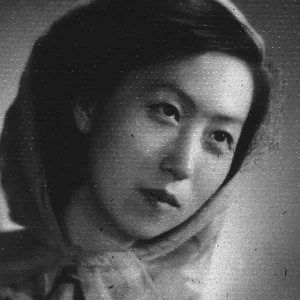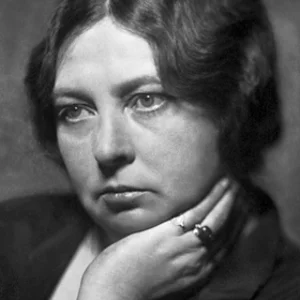

Norwegian novelist (1882–1949), Nobel Prize in Literature in 1928. Famous for her medieval trilogy Kristin Lavransdatter, she is one of the great voices of twentieth-century Scandinavian literature.
Sigrid Undset(1882 — 1949)
Sigrid Undset
Norvège
8 min read
Frequently asked questions
Famous Quotes
« Life is not what we had hoped it would be, but it is life as it is.»
Key Facts
- Born on May 20, 1882, in Kalundborg (Denmark), died in 1949 in Norway
- Nobel Prize in Literature in 1928 for her powerful descriptions of medieval Nordic life
- Published Kristin Lavransdatter (a trilogy) between 1920 and 1922, a masterpiece of Norwegian literature
- Converted to Catholicism in 1924, which profoundly influenced her work
- Went into exile in 1940 during the Nazi occupation of Norway and supported the resistance from the United States
Works & Achievements
Undset's first published novel, written in diary form. It portrays a middle-class Oslo woman confronted with adultery and guilt, foreshadowing the moral themes that run throughout her entire body of work.
A realist novel about a young Norwegian artist in Rome, torn between creative ambition and romantic desire. This book earned her national recognition and remains one of her most widely read works outside the medieval trilogy.
Undset's masterpiece, a three-volume fresco (*The Wreath*, *The Wife*, *The Cross*) tracing the life of a Norwegian woman in the fourteenth century. Translated throughout the world, this novel was decisive in her being awarded the Nobel Prize in 1928.
Another sweeping medieval fresco in four volumes, centered on a thirteenth-century man consumed by guilt and the search for redemption. Considered by some critics to be equal to or even greater than *Kristin Lavransdatter*.
A contemporary novel recounting the conversion to Catholicism of a young Norwegian man, clearly inspired by Undset's own spiritual experience. A valuable document on her religious vision.
A firsthand account written in English of the Nazi invasion of Norway and her subsequent exile. Written to alert American public opinion, the book was widely circulated in the United States and helped raise the profile of the Norwegian cause.
An autobiographical account of her childhood and her father's death. An intimate text that illuminates the origins of her literary vocation and her relationship to memory, history, and family.
Anecdotes
Sigrid Undset worked for ten years as a secretary at an electric company in Oslo, starting at age sixteen, following the early death of her father, which left the family in financial hardship. It was during these long office days that she wrote her first texts, composing in the evenings by lamplight, before going on to become one of the most widely read novelists in Scandinavia.
In 1924, Sigrid Undset converted to Catholicism, a decision that caused considerable surprise in the Lutheran Norway of the time. This long-considered conversion deeply influenced her work: her medieval novels explore with great precision the Christian faith of the Scandinavian Middle Ages, and she became an important Catholic voice in Europe.
When Nazi Germany invaded Norway in April 1940, Undset was forced to flee in haste. Her son Anders was killed in combat during the Battle of Kvam, just weeks after the invasion. She went into exile in the United States via Sweden and Russia, continuing to write and speak out against Nazism from New York, before returning to Norway at the Liberation in 1945.
When the Nobel Prize in Literature was awarded in 1928, the committee particularly highlighted the power with which Undset had depicted life in the medieval North. She was the third woman to receive the prize, and the first Scandinavian woman to do so. She dedicated a portion of the prize money to Catholic charities.
Undset lived at Bjerkebæk, her home in Lillehammer, surrounded by old wooden buildings she had relocated and restored. There she had recreated a way of life close to that of medieval Norway, which nourished her imagination, and she collected traditional craft objects. The house is today a museum open to the public.
Primary Sources
What has always drawn me to the Middle Ages is that the men and women of that era believed in their faith with an intensity we can barely imagine today. Their entire lives were oriented toward a reality that was invisible yet absolutely certain to them.
My father died when I was eleven. He had devoted his life to excavating the soil of Norway to recover the memory of a people; that memory I now carried within me as both an inheritance and a responsibility.
I am sending you the first volume of Kristin. I have tried to write a true story of medieval Norway — not a romantic tale or a museum reconstruction, but life as it was actually lived, with its joys and its sins.
We left Norway on a spring night, under the bombs. I took few things with me: a few manuscripts, my children's letters, and the certainty that this particular barbarity could not last, because nothing built on lies endures.
The young woman of the fourteenth century was not the passive creature we so often imagine: she managed the family estate, made complex economic decisions, and nurtured an intense spiritual life. Kristin Lavransdatter is the synthesis of everything I have read about these women.
Key Places
Birthplace of Sigrid Undset, born on May 20, 1882. Her father, an archaeologist, was working there temporarily. She left Denmark at a very young age and settled permanently in Norway.
Undset lived and worked here during her years as a secretary (1898–1909) and her early literary career. It was in this city that she published her first novels and established her reputation as a writer.
Undset's home in Lillehammer, acquired in 1919, where she lived until her death. She had recreated an environment inspired by medieval Norway. Today it is a national museum open to the public.
Undset stayed in Rome on several occasions and set part of her novel *Jenny* (1911) there. The city was also linked to her spiritual conversion and her growing embrace of Catholicism.
Undset's place of exile from 1940 to 1945, after fleeing Norway following the Nazi German invasion. There she bore witness against Nazism, published *Return to the Future*, and took part in the Norwegian cultural resistance in exile.
Typical Objects

Undset typed her own manuscripts on a typewriter, an indispensable tool in her work as a writer. She was in the habit of writing for long hours, producing novels of considerable scope.

The daughter of an archaeologist, Undset had been immersed in the Norse sagas from childhood. She used them as reference sources to accurately reconstruct the vocabulary, customs, and mindset of the Scandinavian Middle Ages.

After her conversion in 1924, Undset practiced her Catholic faith daily. These personal devotional objects symbolize the central spiritual dimension in her life and literary work.

Undset readily wore the bunad, the traditional Norwegian folk costume, particularly on public occasions. This choice reflected her deep attachment to Norwegian culture and identity.

At Bjerkebæk, her home in Lillehammer, she had gathered old craft pieces (textiles, utensils, carved wood) that recreated the medieval atmosphere she described in her novels.

During her years as a secretary, Undset would write at night by lamplight, after her long working days. This image of the writer toiling by night has remained part of her personal legend.
School Curriculum
Vocabulary & Tags
Key Vocabulary
Daily Life
Morning
Undset rose early and devoted her mornings to writing, which she regarded as serious work requiring discipline and concentration. At Bjerkebæk, she would settle at her desk in the main house, surrounded by her books and medieval objects, and write for several hours at a stretch before the household awoke.
Afternoon
Afternoons were given over to reading, to historical research in her many reference works on the Scandinavian Middle Ages, and to household tasks. She was a mother of several children and managed her home with care; family life shaped her days as much as her literary work did.
Evening
Evenings were often reserved for correspondence with her publishers, friends, and readers, as well as for prayer following her conversion in 1924. She took an active part in Norwegian intellectual and Catholic life, sometimes receiving visitors or attending religious services.
Food
Undset ate traditional Norwegian food, based on fish, rye bread, dairy products, and smoked or salted meats. She valued family meals and recipes inherited from the Norwegian countryside, in keeping with the attachment to local traditions she expressed throughout her novels.
Clothing
In everyday life, Undset wore simple, practical clothing suited to the Norwegian climate. For official or cultural occasions, she was happy to don the *bunad*, the regional folk costume, as a sign of her identification with Norwegian national identity.
Housing
Bjerkebæk, her property in Lillehammer acquired in 1919, consisted of several timber buildings, some of which were old peasant structures she had moved to the site and restored. The interior was furnished with antique and handcrafted objects evoking the Middle Ages, creating a unique atmosphere somewhere between a living museum and a family home.
Historical Timeline
Period Vocabulary
Liens externes & ressources
Références
Œuvres
Fru Marta Oulie
1907
Kristin Lavransdatter (trilogie)
1920-1922
Olav Audunssøn (tétralogie, Le Maître d'Hestviken)
1925-1927
Gymnadenia (La Brûlante Buisson)
1929
Return to the Future (Retour au futur)
1942
Elleve aar (Les Plus Longues Années)
1934