 flip
flipSpit-grilled heart, Fáfnismál style
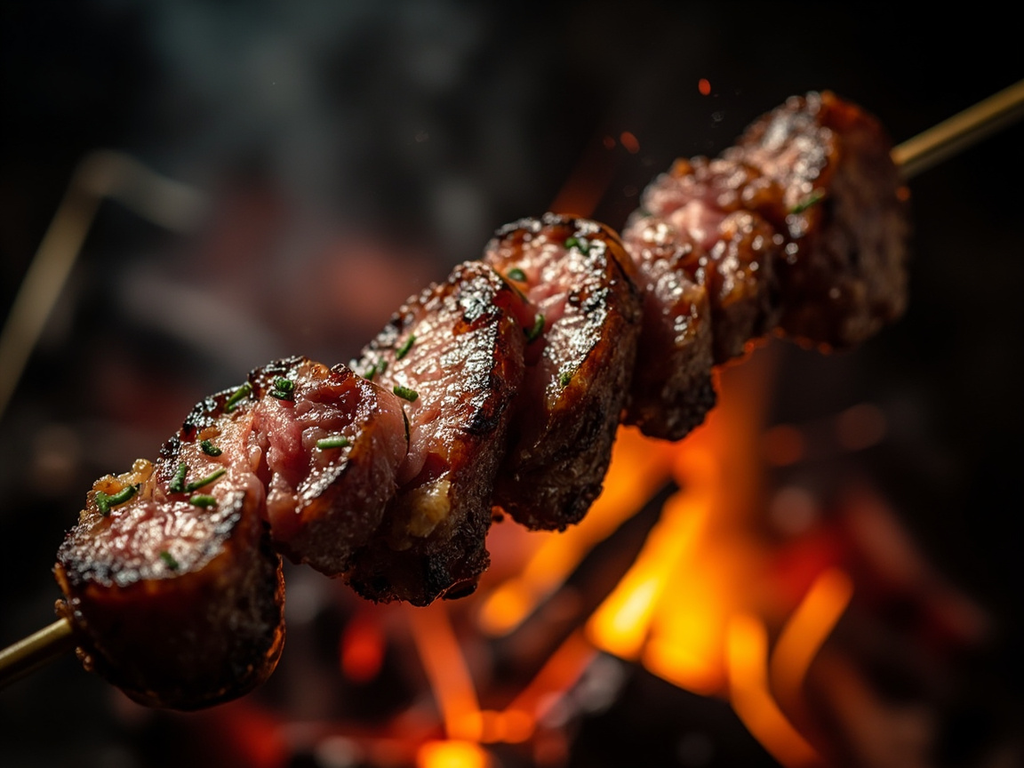
Spit-grilled heart, Fáfnismál style
Why this dish? This is THE dish of the legend: after killing the dragon Fáfnir, Sigurd roasts his heart at Reginn's request. Testing the cooking with his finger, he burns himself, brings his thumb to his mouth — and the dragon's blood gives him the understanding of birdsong. A simple spit-grilled heart, laden with meaning.
Heart (lamb or beef) skewered and grilled over embers, rubbed with salt and thyme, just seared to remain pink. Evocation of Sigurd's most famous gesture — a seemingly humble dish, immense in meaning.
They call me a coward who does not eat the heart of the beast he has slain? So I skewer Fáfnir's heart and hold it to the embers. With my fingertip I test if it is cooked — and the burn makes me bring my thumb to my lips. Taste the black blood of the dragon, and suddenly the birds of the heath speak to you like brothers. Seize it quickly, keep it tender: an overcooked heart says nothing more.
- •Heart of beast (game, sheep, cattle) — one whole (symbolic offal)
- •Salt — a pinch (seasoning)
- •Thyme or juniper — a little (flavoring)
- •Wood embers — a good bed (spit-roasting)
Spit-grilled heart, Fáfnismál style
Heart (lamb or beef) skewered and grilled over embers, rubbed with salt and thyme, just seared to remain pink. Evocation of Sigurd's most famous gesture — a seemingly humble dish, immense in meaning.
Why this dish? This is THE dish of the legend: after killing the dragon Fáfnir, Sigurd roasts his heart at Reginn's request. Testing the cooking with his finger, he burns himself, brings his thumb to his mouth — and the dragon's blood gives him the understanding of birdsong. A simple spit-grilled heart, laden with meaning.
They call me a coward who does not eat the heart of the beast he has slain? So I skewer Fáfnir's heart and hold it to the embers. With my fingertip I test if it is cooked — and the burn makes me bring my thumb to my lips. Taste the black blood of the dragon, and suddenly the birds of the heath speak to you like brothers. Seize it quickly, keep it tender: an overcooked heart says nothing more.
Ingredients (period version)
- Heart of beast (game, sheep, cattle) — one whole (symbolic offal)
- Salt — a pinch (seasoning)
- Thyme or juniper — a little (flavoring)
- Wood embers — a good bed (spit-roasting)
Ingredients
- Lamb heart (or beef heart, trimmed) — 2 lamb hearts or 400 g beef heart (offal to grill)
- Salt — to taste (seasoning)
- Fresh thyme — 3 sprigs (flavoring)
- Butter or oil — a little (for brushing)
- Crushed juniper berries — 1 tsp (optional) (Nordic flavoring)
Method
- Trim the heart (remove large vessels and fat), cut into wide strips or leave whole if small.
- Rub with salt, thyme, and a little juniper; brush with melted butter.
- Skewer and grill over hot embers (or very hot pan/grill) on high heat.
- Sear quickly, 2 to 3 minutes per side: the flesh should remain pink and tender — overcooked, it toughens.
- Rest 2 minutes, slice thinly, and serve immediately.
How it was made : Eating the heart or blood of slain game is an ancient and well-attested practice, laden with symbolism: one appropriates the beast's strength. In the Fáfnismál (Poetic Edda), it is by tasting the blood of Fáfnir's heart that Sigurd gains the language of birds. Offal, simply cooked over embers, was part of the real diet, wasting no part of the animal.
The contemporary twist : Serve as "dragon-slayer yakitori": grilled heart strips on small skewers, fleur de sel and lemon thyme — noble bites of a too-often forgotten offal.
Sources : Poetic Edda — Fáfnismál · Völsunga saga
Sigurd · Charactorium