 flip
flipSalamis grilled fish with herbs
Salamis grilled fish with herbs
Why this dish? Solon led the reconquest of the island of Salamis, the subject of one of his most famous poems that inflamed the Athenians. Fresh fish from the coasts of Salamis and the Saronic Gulf was the festive dish par excellence—an *opson* worthy of celebrating a victory.
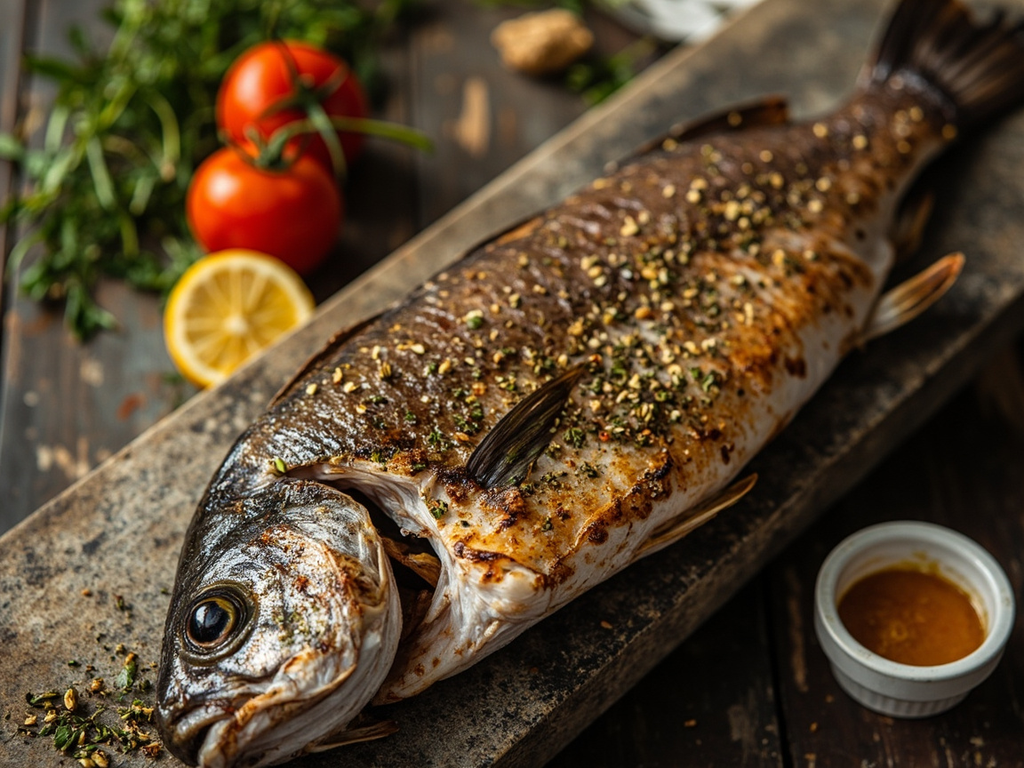
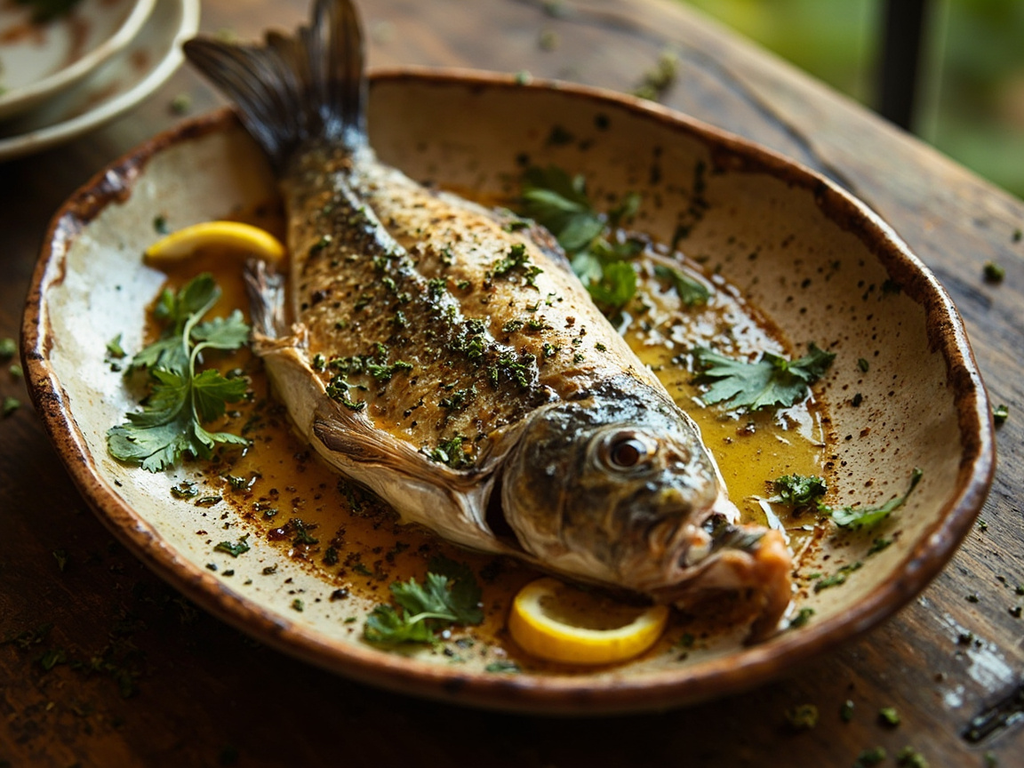
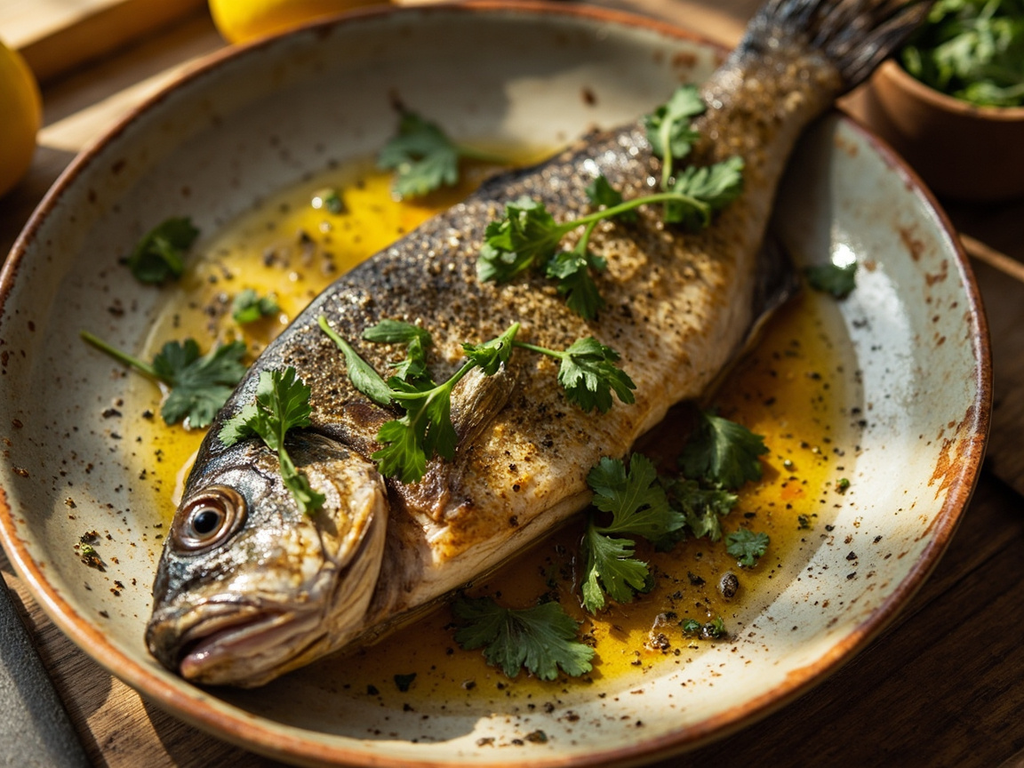
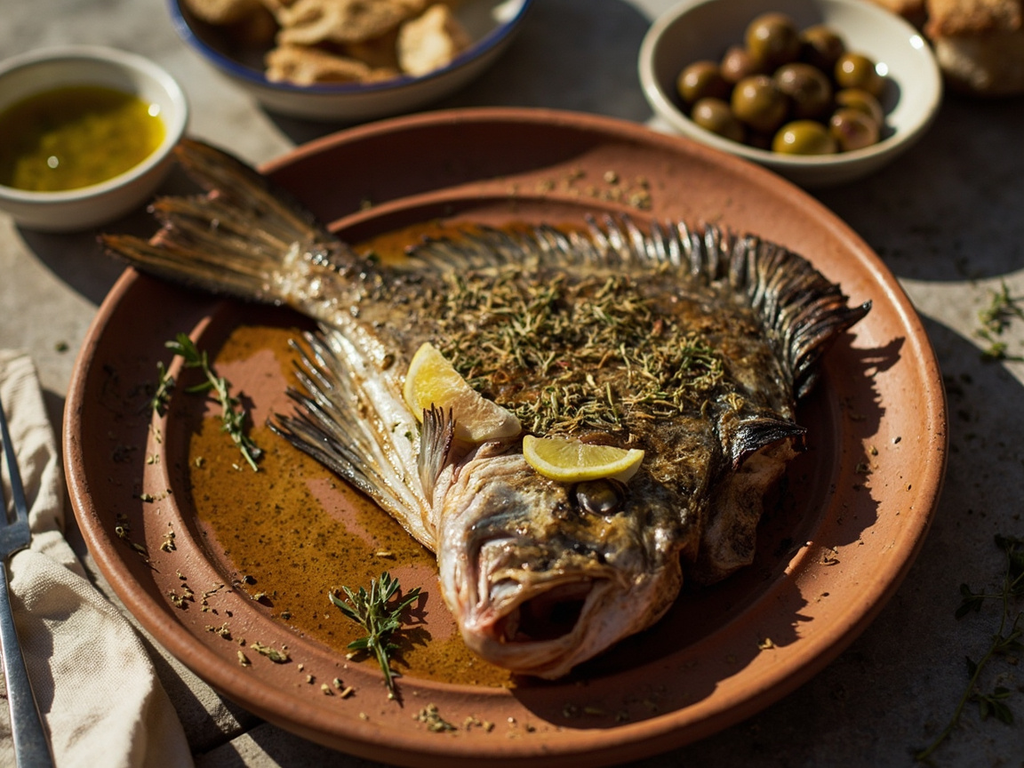
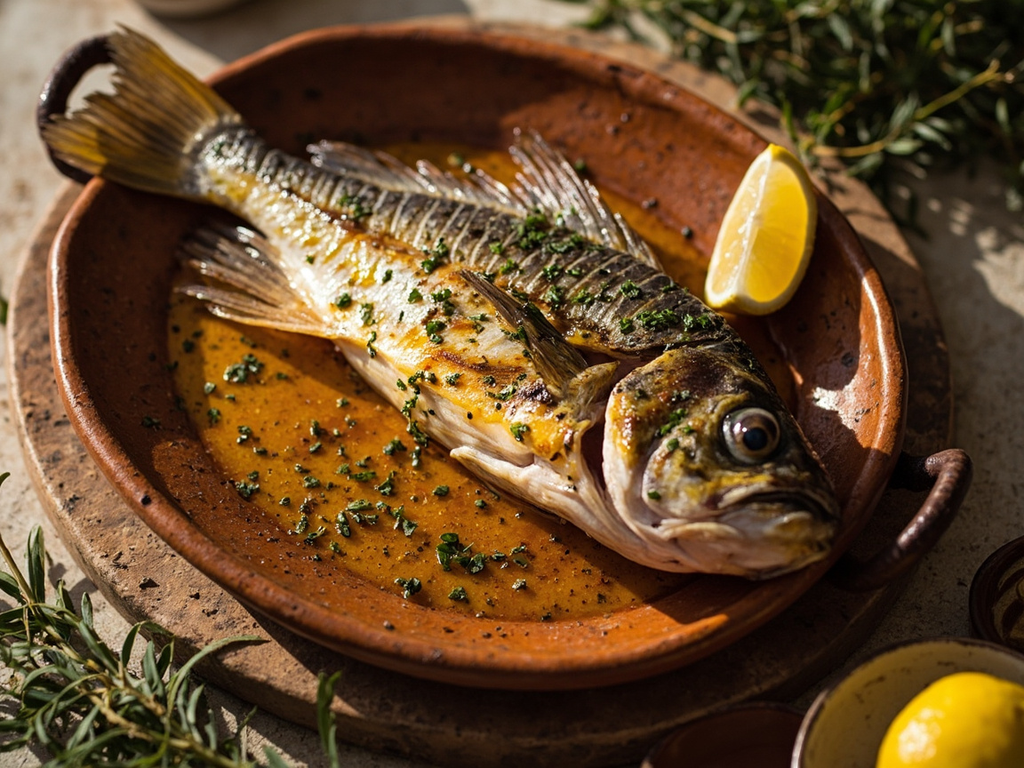
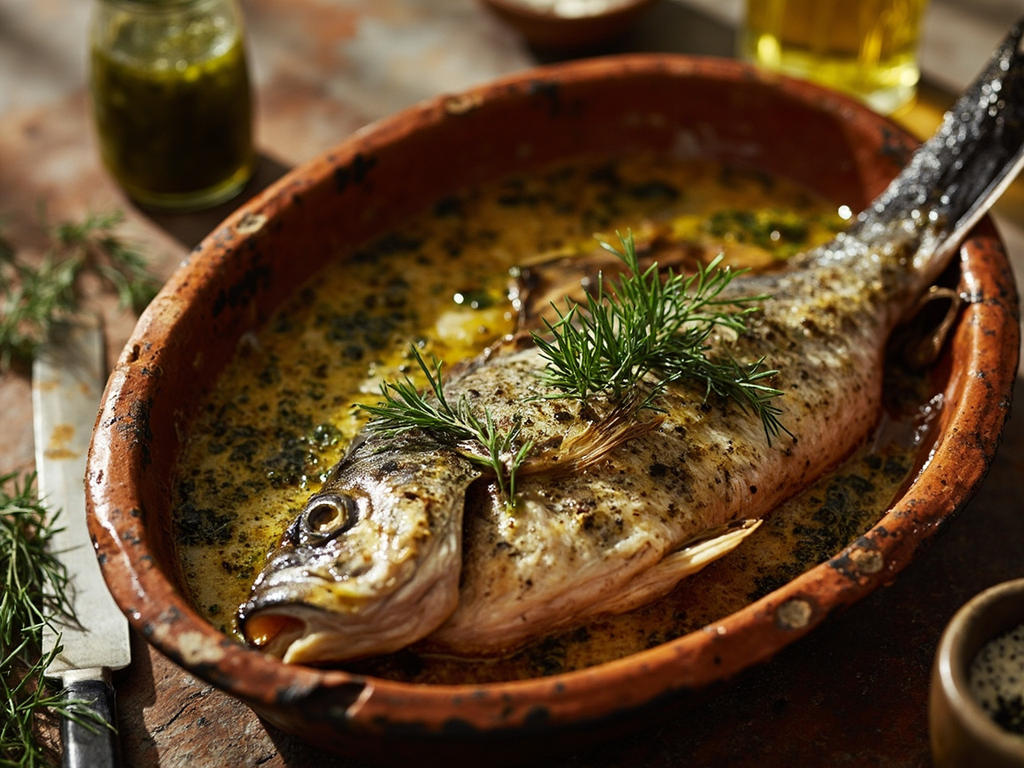
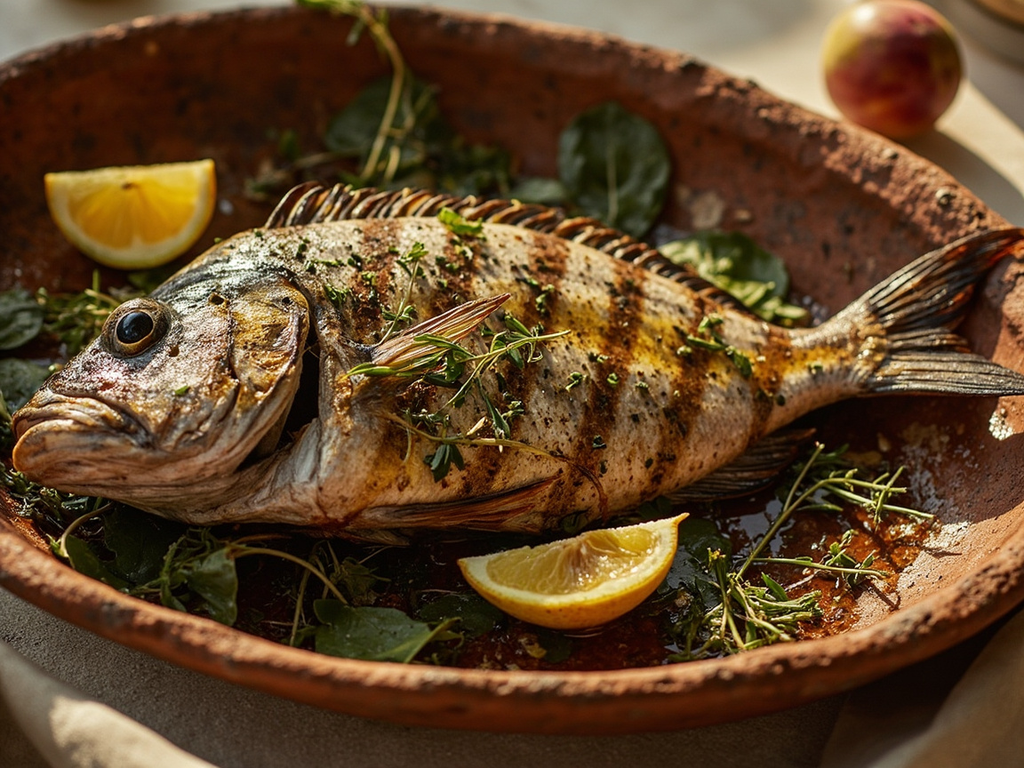
A whole fish from the Aegean Sea, grilled and drizzled with olive oil, perfumed with wild oregano and a splash of wine vinegar. Fresh fish was the sought-after dish for feast days, far above the salted fish of everyday.
On to Salamis!—that is how I woke my fellow citizens, and it is from its waters that I speak to you today. Choose a fish taken alive from the net, do not offend it with garish sauces: a little oil, sea salt, oregano picked from the hillside, and the embers do the rest. The rich cover their fish with spices to hide that it is no longer fresh; the wise man, however, honors the true fish. Here is a dish fit for a day of victory.
- •Whole sea fish (sea bream, red mullet, or mackerel) — one per person (centerpiece)
- •Olive oil — generously (cooking and flavor)
- •Wild oregano and thyme — a few sprigs (aromatics)
- •Sea salt — to taste (seasoning)
- •Wine vinegar — a splash (finishing)
Salamis grilled fish with herbs
A whole fish from the Aegean Sea, grilled and drizzled with olive oil, perfumed with wild oregano and a splash of wine vinegar. Fresh fish was the sought-after dish for feast days, far above the salted fish of everyday.
Why this dish? Solon led the reconquest of the island of Salamis, the subject of one of his most famous poems that inflamed the Athenians. Fresh fish from the coasts of Salamis and the Saronic Gulf was the festive dish par excellence—an *opson* worthy of celebrating a victory.
On to Salamis!—that is how I woke my fellow citizens, and it is from its waters that I speak to you today. Choose a fish taken alive from the net, do not offend it with garish sauces: a little oil, sea salt, oregano picked from the hillside, and the embers do the rest. The rich cover their fish with spices to hide that it is no longer fresh; the wise man, however, honors the true fish. Here is a dish fit for a day of victory.
Ingredients (period version)
- Whole sea fish (sea bream, red mullet, or mackerel) — one per person (centerpiece)
- Olive oil — generously (cooking and flavor)
- Wild oregano and thyme — a few sprigs (aromatics)
- Sea salt — to taste (seasoning)
- Wine vinegar — a splash (finishing)
Ingredients
- Whole sea bream or mackerel, gutted — 1 (approx. 400 g) per person (centerpiece)
- Extra virgin olive oil — 3 tbsp (cooking and flavor)
- Dried or fresh oregano — 2 tsp (aromatic)
- Thyme — a few sprigs (aromatic)
- Sea salt and wine vinegar — to taste (seasoning)
Method
- Gut and scale the fish, pat dry. Make two incisions on each side.
- Rub with olive oil, salt inside and out, tuck thyme into the belly.
- Grill over high heat (or embers), 5 to 7 minutes per side depending on size.
- Off the heat, sprinkle with oregano and drizzle with a splash of oil and a dash of wine vinegar.
- Serve immediately, with *maza* to mop up the juices.
How it was made : Fish was grilled over embers or boiled. The Greeks adored fresh fish (noble *opson*) but mainly consumed salted and dried fish (*tarichos*), cheaper and transportable. Oregano and thyme, herbs of the dry hills, flavored without masking.
The contemporary twist : Present the fish on a bed of fig leaves and name the dish "Salamis' portion": a nod to Solon's war poem.
Sources : James Davidson, Courtesans and Fishcakes: The Consuming Passions of Classical Athens, HarperCollins, 1997 · Andrew Dalby, Food in the Ancient World from A to Z, Routledge, 2003
Solon · Charactorium