 flip
flipFava bean purée with garum and oil
Fava bean purée with garum and oil
Why this dish? Theodora knew poverty before the Purple: daughter of a bear keeper at the Hippodrome, she grew up among the people of Constantinople, who lived mainly on bread and legumes. This fava bean purée, simple and nourishing, is the everyday Byzantine dish she never forgot, even in the palace.
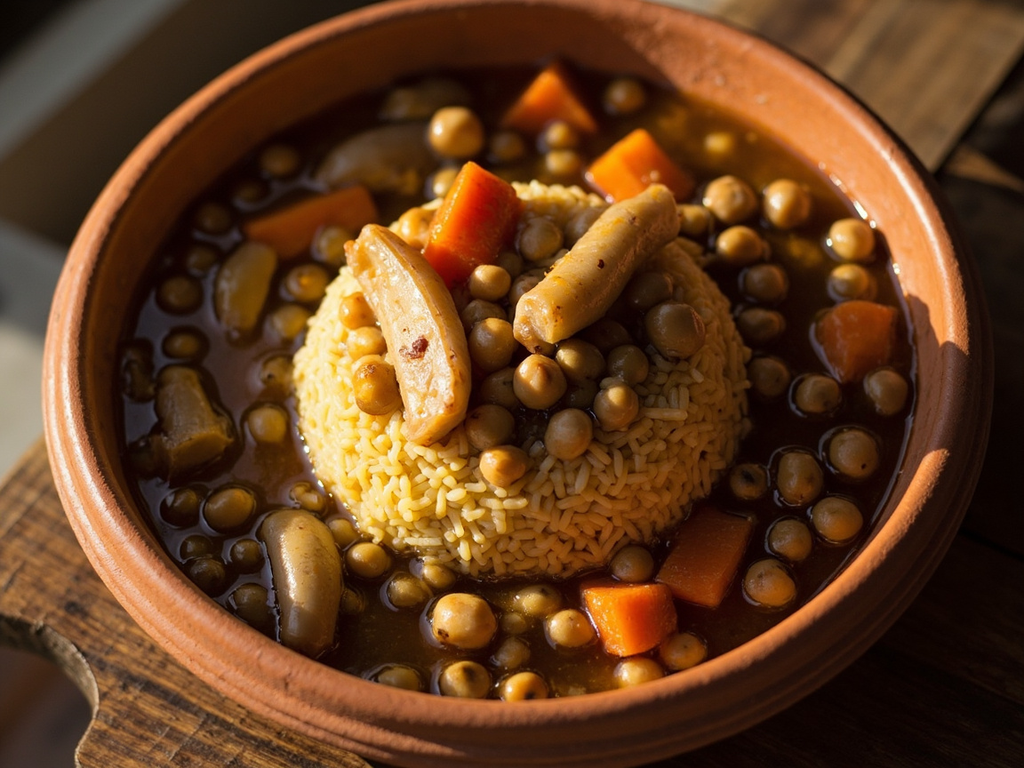
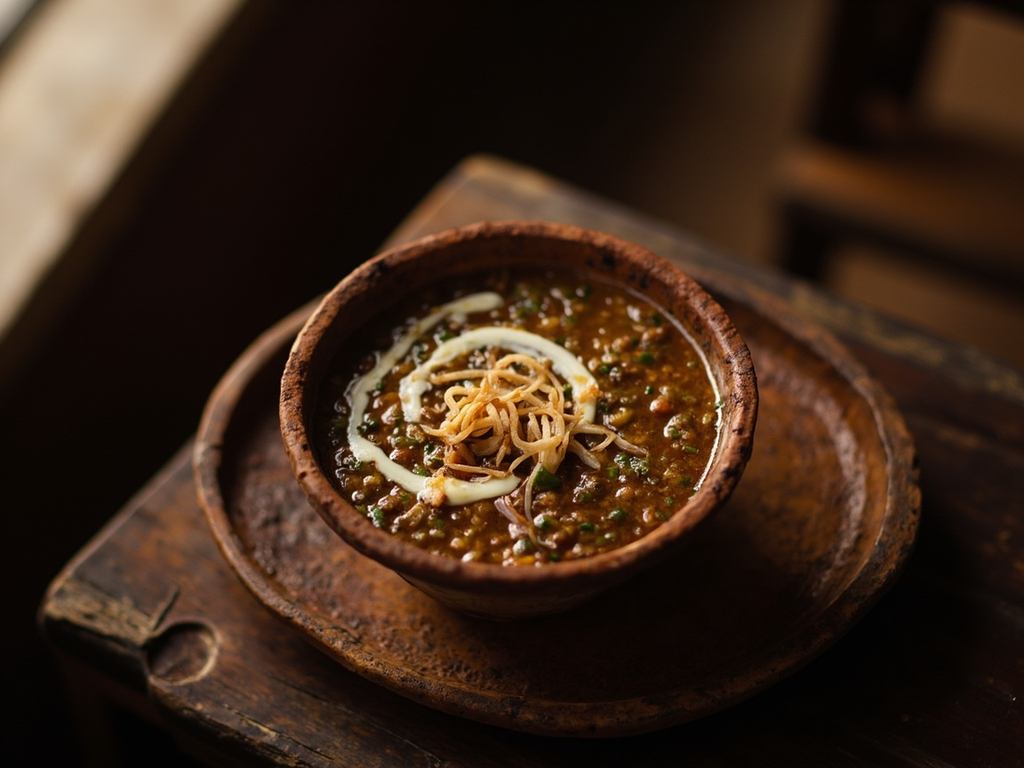
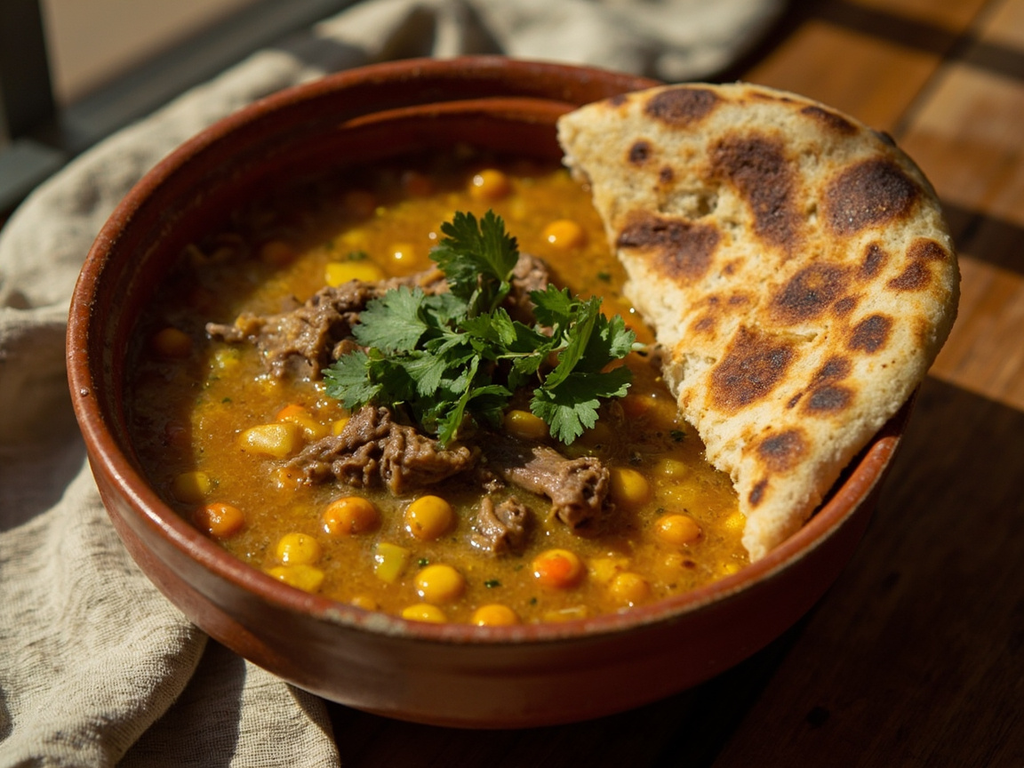
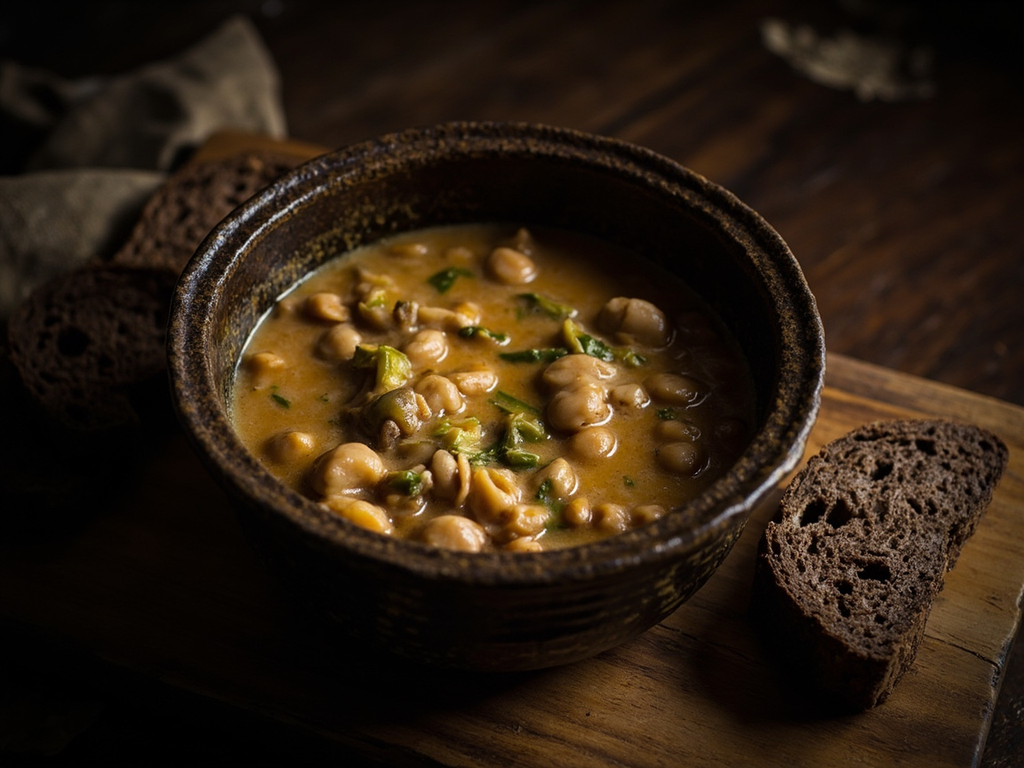
A creamy purée of dried fava beans, seasoned with a dash of garum and olive oil, eaten with bread. The daily dish, from the common people to the empress.
Do not think the Purple made me forget where I come from. As a child, in the tumult of the Hippodrome, I ate this fava bean porridge with a crust of bread, and nothing else. You soak the beans all night, cook them long until they melt, then pour in a dash of garum and a fine drizzle of oil. It is the meal of the humble — and I tell you, it feeds the soul as much as the body.
- •Dried shelled fava beans — two handfuls (base)
- •Onion — one (aromatic)
- •Garon (garum) — a dash (seasoning)
- •Olive oil — generously (binder and finish)
- •Cumin, coriander — to taste (spices)
Fava bean purée with garum and oil
A creamy purée of dried fava beans, seasoned with a dash of garum and olive oil, eaten with bread. The daily dish, from the common people to the empress.
Why this dish? Theodora knew poverty before the Purple: daughter of a bear keeper at the Hippodrome, she grew up among the people of Constantinople, who lived mainly on bread and legumes. This fava bean purée, simple and nourishing, is the everyday Byzantine dish she never forgot, even in the palace.
Do not think the Purple made me forget where I come from. As a child, in the tumult of the Hippodrome, I ate this fava bean porridge with a crust of bread, and nothing else. You soak the beans all night, cook them long until they melt, then pour in a dash of garum and a fine drizzle of oil. It is the meal of the humble — and I tell you, it feeds the soul as much as the body.
Ingredients (period version)
- Dried shelled fava beans — two handfuls (base)
- Onion — one (aromatic)
- Garon (garum) — a dash (seasoning)
- Olive oil — generously (binder and finish)
- Cumin, coriander — to taste (spices)
Ingredients
- Dried split fava beans (or split peas) — 250 g (base)
- Onion — 1 (aromatic)
- Fish sauce — 2 tsp (seasoning)
- Olive oil — 4 tbsp (binder and finish)
- Ground cumin and coriander — 1/2 tsp each (spices)
Method
- Soak the beans overnight (skip if using split peas).
- Cook with the chopped onion in plenty of unsalted water, simmering for 45 min to 1 h, until they fall apart.
- Drain, reserving some cooking water, then mash into a more or less smooth purée.
- Season with fish sauce, cumin, and coriander; thin with a little cooking water.
- Serve warm, drizzled generously with olive oil, with bread.
How it was made : Legumes (fava beans, lentils, chickpeas) formed the staple of Byzantine popular diet, with garum serving as salt everywhere. Anthimus recommends well-cooked beans and advises against eating them raw or poorly prepared.
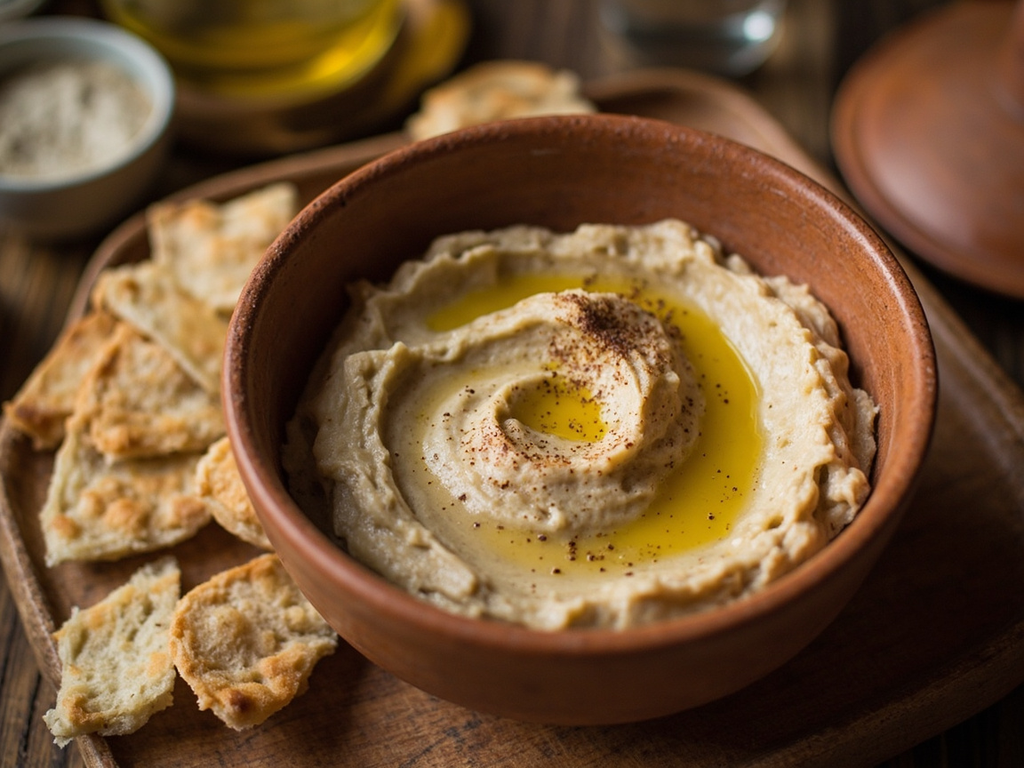
The contemporary twist : A spoonful of purée in a small bowl, oil in a spiral and a pinch of toasted cumin: today's Greek 'fava' descends directly from this dish.
Sources : Anthimus, De observatione ciborum (6th c.) · Oribasius, Collectiones medicae
Theodora · Charactorium