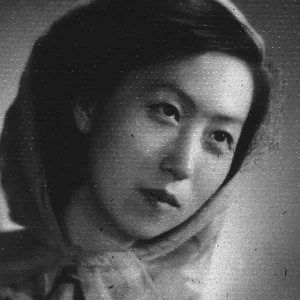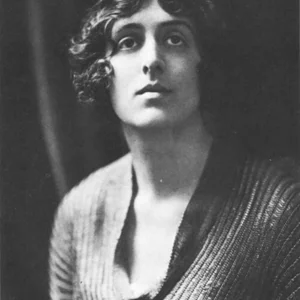

A British writer and poet of the 20th century, Vita Sackville-West is known for her novels, her poetry, and her gardens. She was the close friend of Virginia Woolf, who drew inspiration from her for the novel Orlando.
Vita Sackville-West(1892 — 1962)
Vita Sackville-West
Royaume-Uni
9 min read
Frequently asked questions
Key Facts
- Born on 9 March 1892 at Knole, Kent, into an aristocratic English family
- Published the long poem The Land in 1926, which earned her the Hawthornden Prize
- Close friend and inspiration of Virginia Woolf, who published Orlando in 1928 as a tribute to her
- Created the famous garden at Sissinghurst Castle with her husband Harold Nicolson from 1930 onwards
- Died on 2 June 1962 at Sissinghurst, Kent
Works & Achievements
A long lyric poem celebrating the seasons and agricultural life of Kent, written in the English georgic tradition. It won the Hawthornden Prize in 1927 and established Vita's reputation as one of the greatest British poets of her time.
A travel account of Persia during Harold Nicolson's diplomatic missions. Vita describes with sensitivity and wit an Orient she is encountering for the first time, weaving cultural observation together with personal introspection.
An autobiographical novel depicting life among the English aristocracy in the early twentieth century, seen through the eyes of a young heir in a country house reminiscent of Knole. An immediate bestseller, it sold more than 30,000 copies within a few weeks of publication.
Her most celebrated novel: an eighty-eight-year-old widow finally chooses to live for herself after a lifetime of sacrifice to social convention. Regarded as an early feminist plea, it remains her most widely read work of fiction.
A masterful horticultural creation designed with Harold Nicolson, laid out as a series of themed "rooms," including the famous White Garden planted entirely in white. Considered one of the most influential gardens of the twentieth century in England.
For fifteen years, Vita contributed a weekly gardening column to this major London newspaper. Collected into anthologies, these pieces remain a touchstone for British gardeners and are a testament to her botanical learning.
Anecdotes
Vita Sackville-West was Virginia Woolf's great love; in 1928, Woolf dedicated to her the novel *Orlando*, a whimsical tale of an aristocrat who travels through the centuries while changing sex. The novel is considered one of the most original love declarations in English literature. Woolf herself described it as a “biographical fantasy” made possible by Vita’s extraordinary personality.
Vita was the designated heir to Knole, the vast family manor in Kent with 365 rooms. But English law at the time prevented a woman from inheriting such a property; when her father died in 1928, the estate passed to a male cousin. This injustice haunted her all her life and inspired several of her works, including her intimate memoirs.
In 1930, Vita and her husband Harold Nicolson bought the crumbling ruins of Sissinghurst Castle in Kent for the sum of £12,375. What she created on that ravaged land became one of the most celebrated gardens in the world, now managed by the National Trust and visited by more than 200,000 people each year.
Every morning, Vita would write in a medieval tower set apart from the rest of Sissinghurst Castle, reached by a spiral staircase. There she wrote her novels, poems, and articles, taking care not to be disturbed. This tower has become a living symbol of the room “of one’s own” that Virginia Woolf called for to allow women to create freely.
Vita’s marriage to the diplomat Harold Nicolson rested on a tacit agreement of mutual freedom: each maintained relationships with people of the same sex, while preserving a deep friendship and intellectual companionship. Their son Nigel Nicolson revealed this truth in *Portrait of a Marriage* (1973), a book assembled from his mother’s own memoirs, provoking a mixture of scandal and admiration.
Primary Sources
“You have the quality I admire above all others: you are whole. Never divided, never hesitating — you are Vita, and that is enough to explain everything.”
“I am a creature of contradictions: I love solitude and company, the countryside and the city, men and women. That is what I am, and I no longer seek to apologise for it.”
“It is an ancient bond, that of man with the earth, stretching back to the first ploughings, when the gods were not yet forgotten and the seasons commanded life entirely.”
“The garden is the only place where time truly stands still: one plants for ten years hence, waters for tomorrow, and tends for today.”
“Our marriage withstood everything, not because it was ordinary, but precisely because it was not. We chose freedom and truth over convention.”
Key Places
An immense Tudor manor of 365 rooms where Vita was born and grew up. She was excluded from it upon her father's death due to her sex, an injustice that profoundly shaped her work and her relationship with identity and inequality.
Medieval ruins purchased in 1930 by Vita and Harold Nicolson and transformed into one of England's most celebrated gardens. The medieval tower served as Vita's writing study until her death and remains her most iconic home.
The London neighbourhood where the Bloomsbury Group gathered — the intellectual circle that included Virginia Woolf, John Maynard Keynes, and E. M. Forster. Vita regularly visited her writer friends there and forged her close relationship with Woolf.
Vita and Harold's first home after their marriage, where they lived from 1915 to 1930 and created their first garden before moving to Sissinghurst. It was here that her lifelong passion for horticulture began.
Vita accompanied Harold on his diplomatic postings to Persia in the 1920s, an experience that inspired her travel memoir *Passenger to Teheran* (1926) and broadened her worldview well beyond the confines of the English aristocracy.
Typical Objects

Vita spent hours in her garden at Sissinghurst and always wore her worn leather gloves, which had become inseparable from her public image. She kept them carefully in the tower where she wrote, a symbol of her two favourite pursuits.

Vita wrote by hand in her tower every morning, filling notebooks with poems, novel chapters, and letters. Handwriting was for her a daily, ritual practice she never delegated to a secretary.

Her hat had become her sartorial signature: she wore it equally in the garden and on her trips to London. This androgynous accessory asserted her deliberately non-conformist personal style.

A passionate horsewoman and walker, Vita wore her riding boots even away from the stables, embodying a free and spirited femininity that defied the dress codes of her era.

Vita helped popularise old rose varieties in her garden, most notably the 'Sissinghurst Castle' rose. Roses held a place of honour in her White Garden, her most celebrated horticultural creation.

For her final typescripts and professional correspondence, Vita used an Underwood typewriter, the standard tool of interwar writers. She typed her manuscripts herself before sending them to her publisher.

Vita kept miniatures and portraits of her Sackville ancestors in her tower, tokens of her fascination with family history and her painful attachment to Knole, the castle from which she had been unjustly excluded.
School Curriculum
Vocabulary & Tags
Key Vocabulary
Tags
Daily Life
Morning
Vita rose early and climbed alone to her tower at Sissinghurst, where she wrote for three to four hours without being disturbed. There she worked on her novels, poems, or newspaper columns, surrounded by her books and family portraits. The silence and isolation of the tower were for her absolutely indispensable conditions for creative work.
Afternoon
The afternoon was entirely devoted to the garden: Vita pulled on her leather gloves, picked up her tools, and worked side by side with the gardeners to plant, prune, and compose the new 'rooms' of Sissinghurst. She personally supervised the care of the rose bushes and yew hedges. These hours of physical labour provided her with an essential balance after the intellectual work of the morning.
Evening
Evenings at Sissinghurst were often enlivened by guests — writer friends, diplomats, neighbours — with whom Vita dined and conversed at length. Harold Nicolson frequently returned from London for these dinners. Reading and writing letters — she maintained a rich correspondence with Virginia Woolf and many other writers — filled the late hours.
Food
Vita's diet was that of the English rural aristocracy: produce from the garden and estate, roasted meats, and seasonal vegetables grown on site. She was particularly fond of afternoon tea — an unmissable ritual of English life — accompanied by scones and homemade jam. French wine was present at dinners with guests.
Clothing
Vita wore a recognisable and deliberately ambiguous style: breeches, leather boots, loose shirts, and a felt hat — an almost masculine outfit she fully embraced as an assertion of identity. In London society, she wore elegant dresses but always kept jewellery inherited from the Sackville family. Her style was a quiet manifesto of independence from the constraining feminine codes of her era.
Housing
Vita lived primarily at Sissinghurst Castle in Kent, a collection of restored Tudor buildings centred around a medieval tower. Each member of the Nicolson family had their own apartments in the different buildings of the estate, reflecting their shared preference for personal space and privacy. They also kept a pied-à-terre in London for their professional and social activities.
Historical Timeline
Period Vocabulary
Liens externes & ressources
Références
Œuvres
The Land (La Terre)
1926
Passenger to Teheran
1926
The Edwardians (Les Édouardiens)
1930
All Passion Spent (Toute passion abolie)
1931
Le jardin de Sissinghurst Castle
1930-1962
Chroniques de jardinage dans The Observer
1946-1961