Polish-Lithuanian Dinner (Obiad litewsko-polski)
At the table of the modest nobility and Polish émigrés, the meal is arranged not as starter-main-dessert, but around zupa (a sour or hot soup that opens the meal), followed by a danie (a single substantial dish based on cabbage, groats or braised meat), accompanied by ever-present black bread. The meal extends with honeyed sweets and often closes with a shared hot spiced drink. Fermentation (cabbage, rye) and honey are the two pillars of flavor.
Signature : Fermentation (kwaszenie) and honey from the forests of Lithuania (Litwa)
Two absolute markers of this cuisine: the living acidity of rye sourdough (zakwas) and sauerkraut (kapusta kiszona), which preserves and enlivens dishes all winter, and the sweetness of wild honey from Lithuanian forests, which perfumes drinks and gingerbread. It is sour and sweet, never neutral.
Adam Mickiewicz at the table
1798 — 1855
5 period recipes
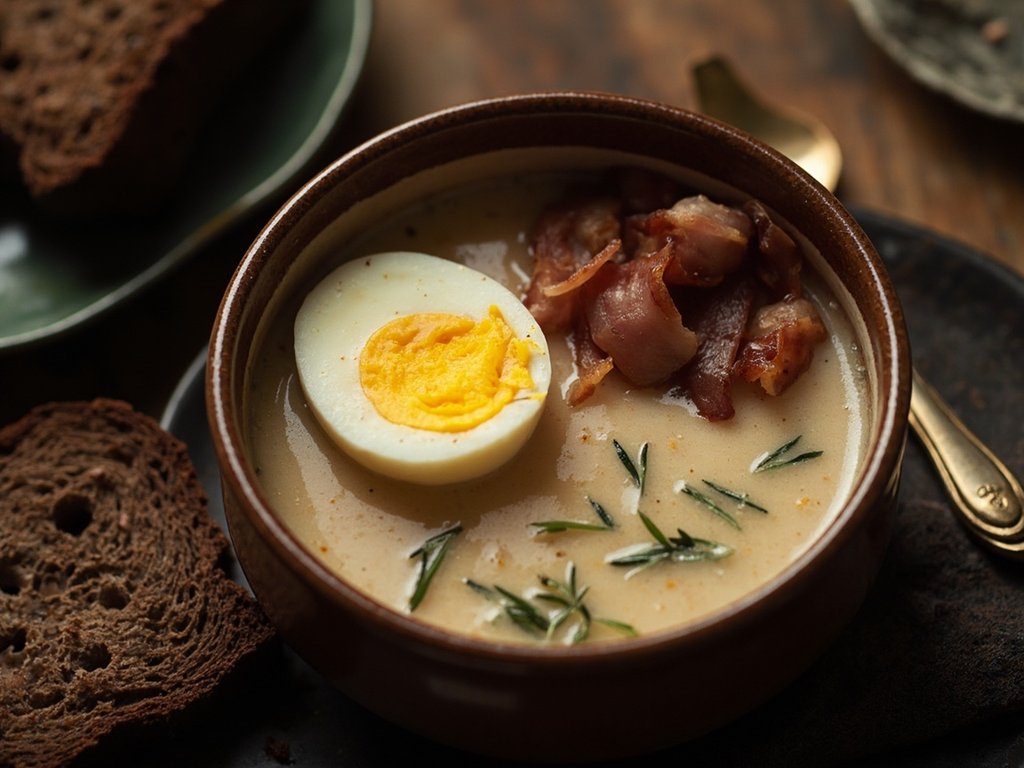 Everyday
Żur — Sour Rye Sourdough Soup
Zupa (soup that opens the obiad)
🫙 🍋· 40 min (+ 4-5 days for sourdough)
View the recipe
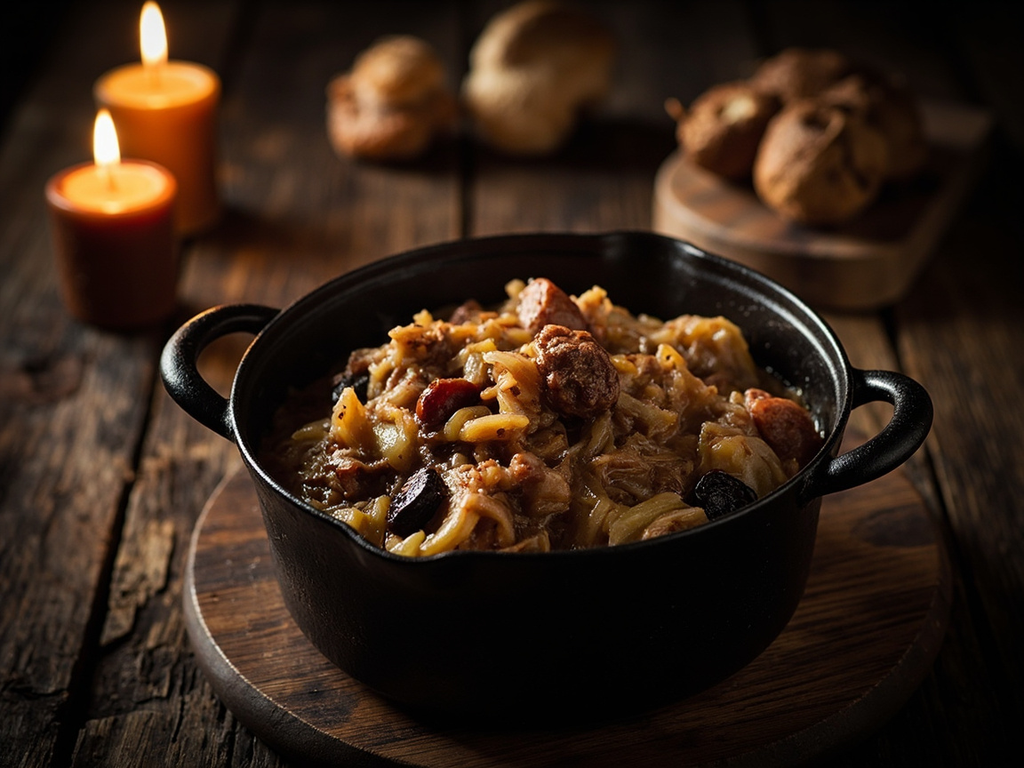 Festive
Bigos — Hunter's Sauerkraut Stew
Danie (substantial festive main dish)
🫙 🧂 🍄· 2 h 30 (best reheated the next day)
View the recipe
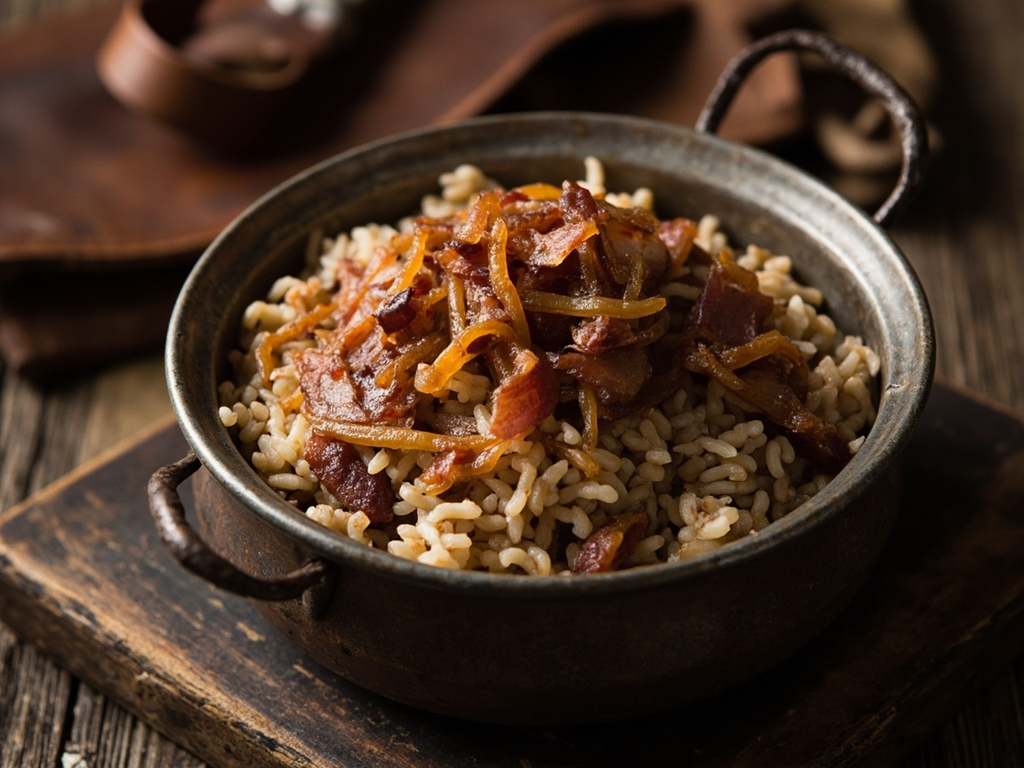 Travel
Kasza gryczana ze skwarkami — Buckwheat Groats with Cracklings
Travel dish (groats, endurance food)
🍄 🧂· 30 min
View the recipe
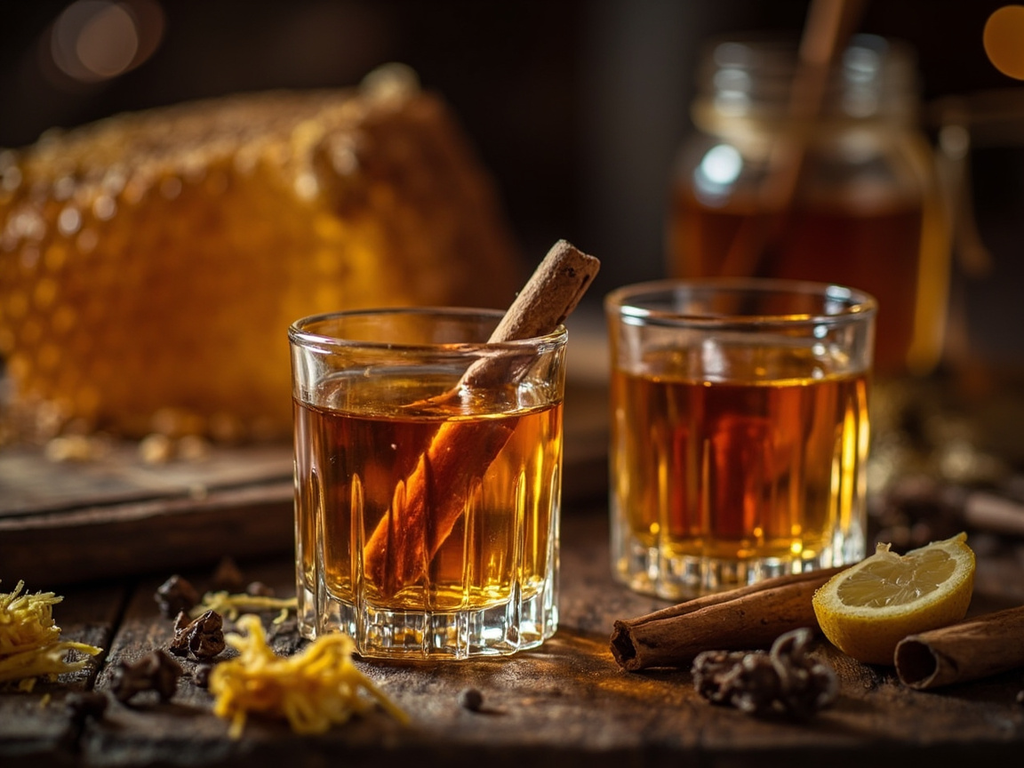 Drink
DrinkKrupnik — Warm Honey-Spiced Liqueur
Evening drink (shared at the end of the meal)
🍯 🌶️· 20 min
View the recipe
 Preserving
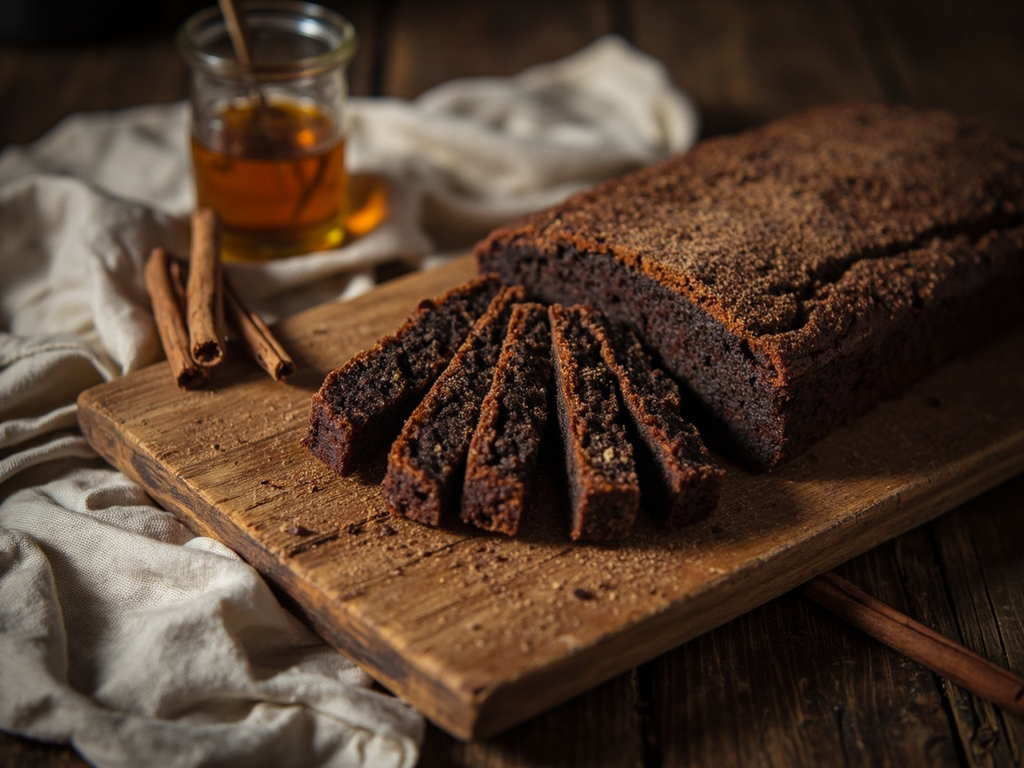
Piernik — Keeping Honey Gingerbread
Keeping sweet (given and carried)
🍯 🌶️· 1 h (+ recommended dough maturation)
View the recipe