Pottage and Bread (the Essex labourer's meal)
Among the poor folk of the English countryside in the 16th century, the meal was not divided into successive courses: it was built around two mainstays available all day. Pottage — a thick stew of grains and pot-herbs simmering endlessly in the iron pot hung from the chimney hook — and maslin bread, sliced for sopping. People ate mainly 'dinner' around noon and 'supper' at dusk, accompanied by small ale. Meat appeared only as salty scraps on ordinary days; sweets and good beer were reserved for feast days.
Signature : The perpetual cauldron and the garden pot-herbs
The emblematic technique of the peasant hearth: a single iron cauldron simmering constantly, fed each day with grains (barley, oats) and 'pot-herbs' pulled from the garden plot — leeks, cabbages, onions, broad beans, parsley, lovage, hyssop. No Eastern spices except on feast days: flavour came from herbs, salt, and time.
Agnes Waterhouse at the table
1502 — 1566
5 period recipes
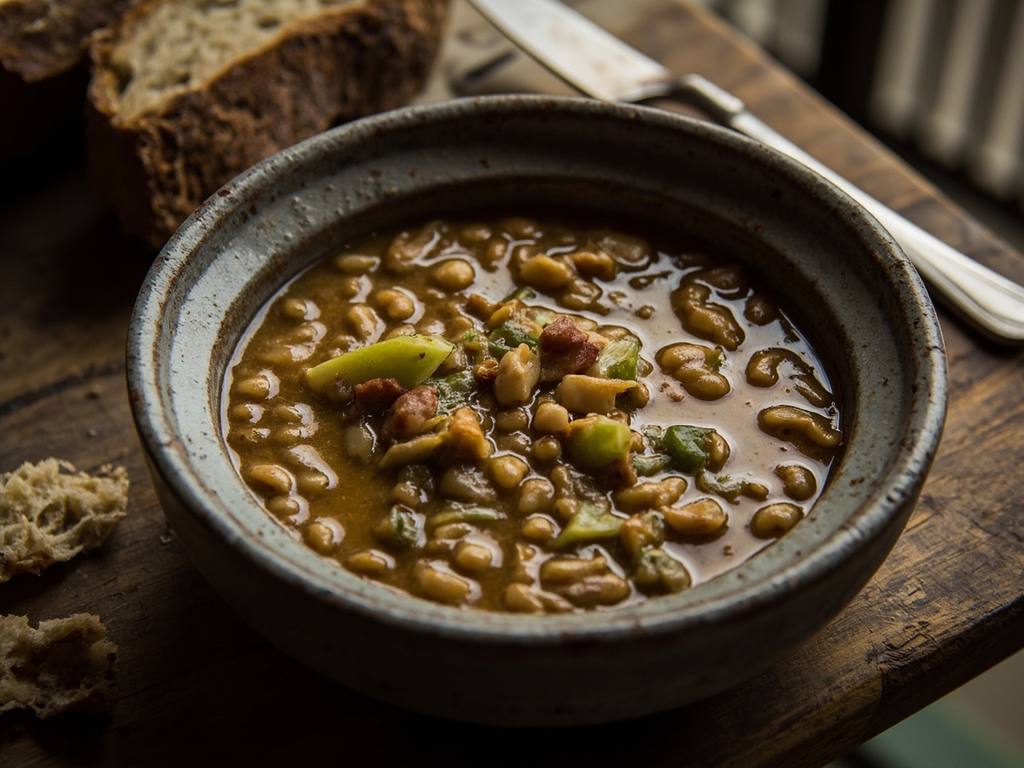 Everyday
Barley and Broad Bean Pottage with Leeks
Pottage (cauldron staple dish)
🧂 🍄· 1 h 30 (plus soaking)
View the recipe
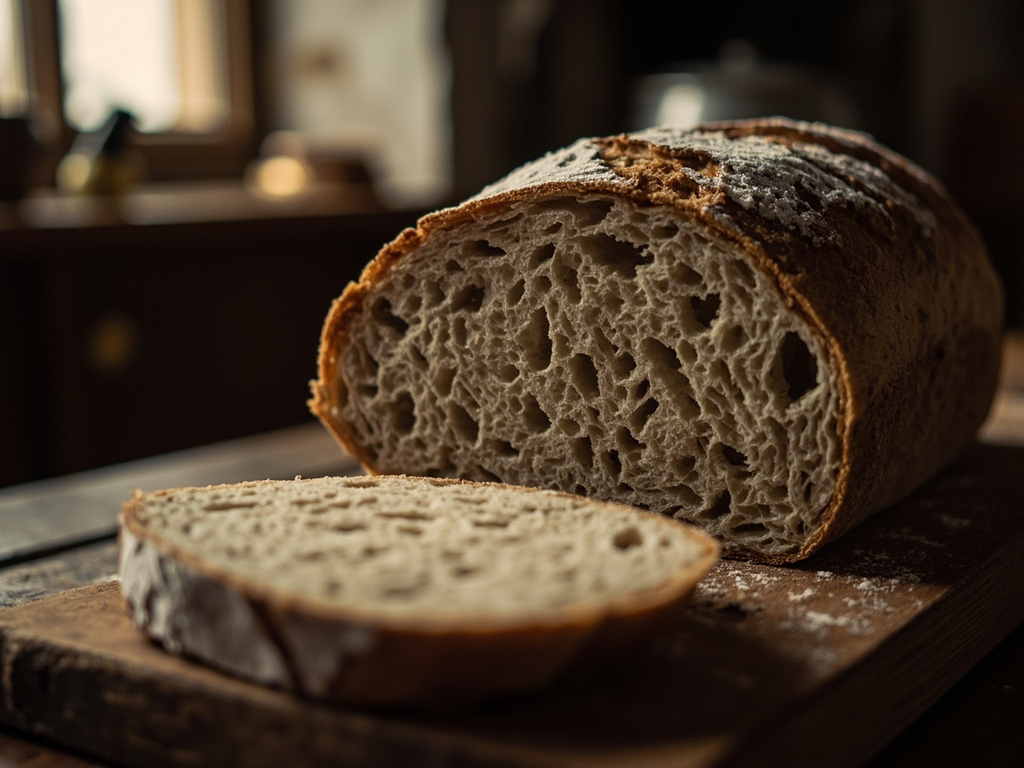 Preserving
Maslin Bread
Cheat bread / common household bread
🧂 🍋· 5 h (with rising) + 40 min baking
View the recipe
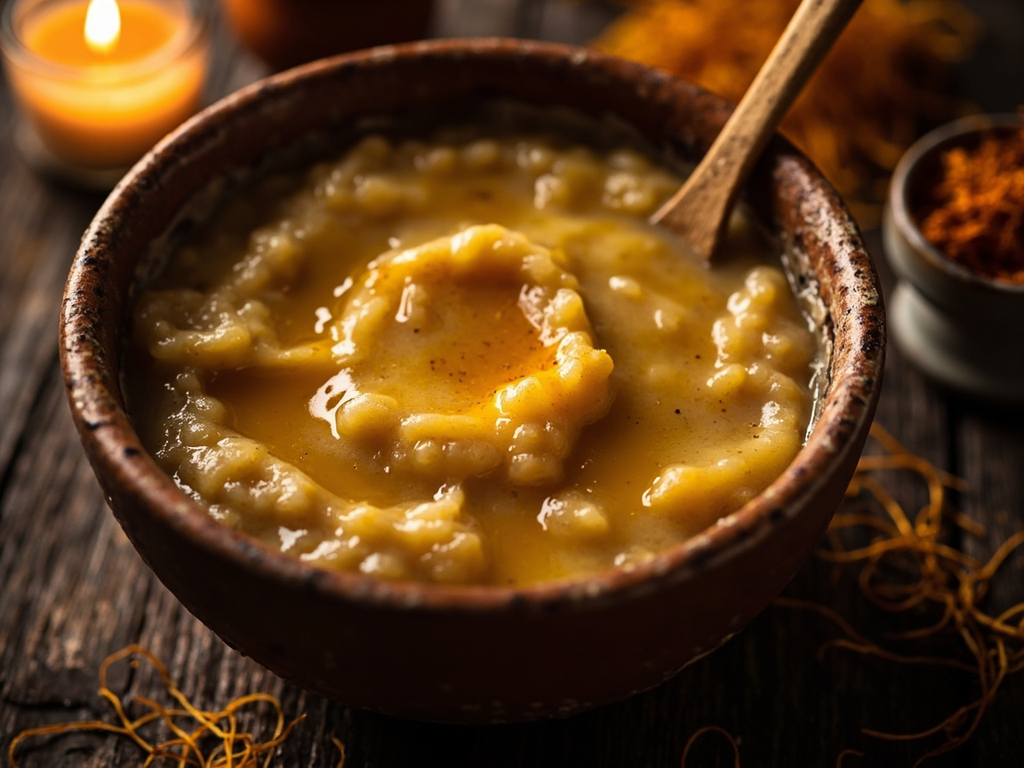 Festive
Frumenty with Honey and Saffron
Frumenty (feast-day dish)
🍯· 2 h 30 (plus soaking)
View the recipe
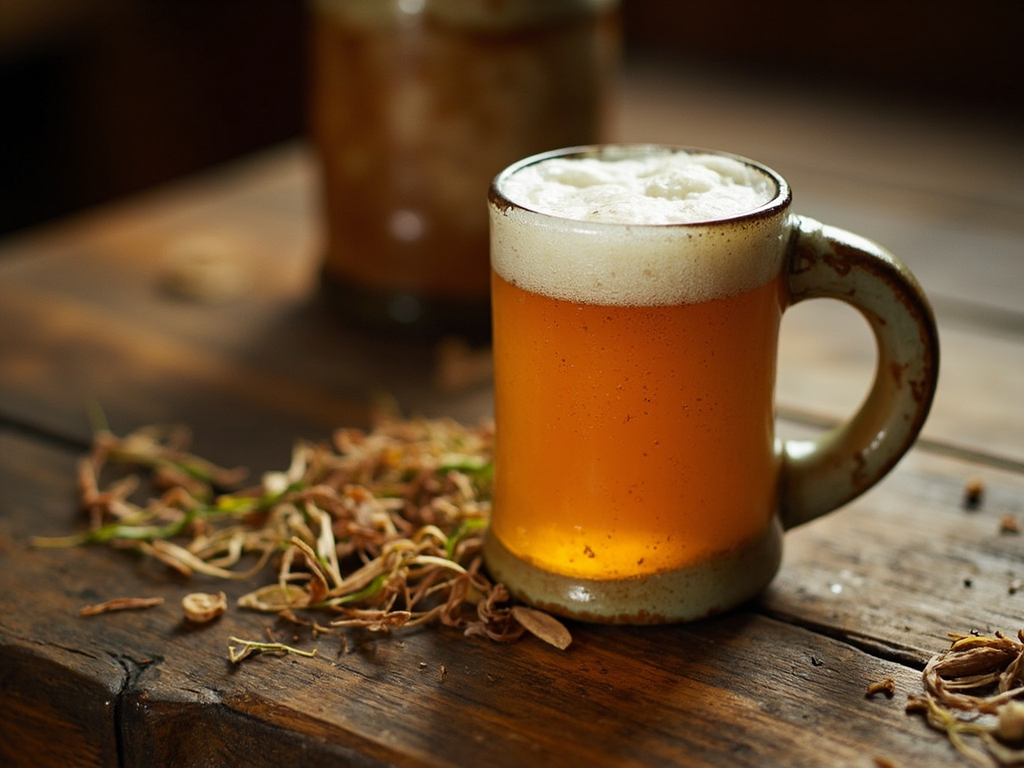 Drink
DrinkSmall Ale (Table Beer)
Small ale (daily table drink)
☕ 🫙· 3 h brewing + 5 days fermentation
View the recipe
 Remedy
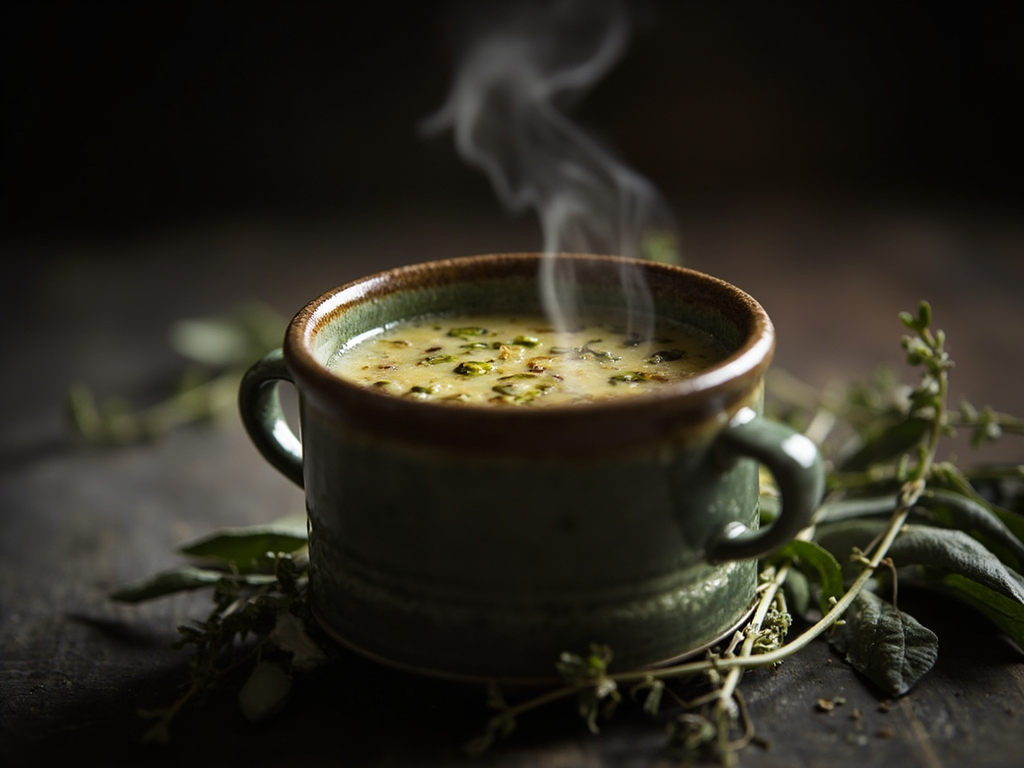
Herb Caudle with Oatmeal
Caudle (comforting broth / household remedy)
☕ 🍋· 20 min
View the recipe